
Antique Ceramic Ewer Pitcher
These antique ceramic ewer pitcher selections bring classical form and decorative presence to a room, offering both practical utility and sculptural weight.
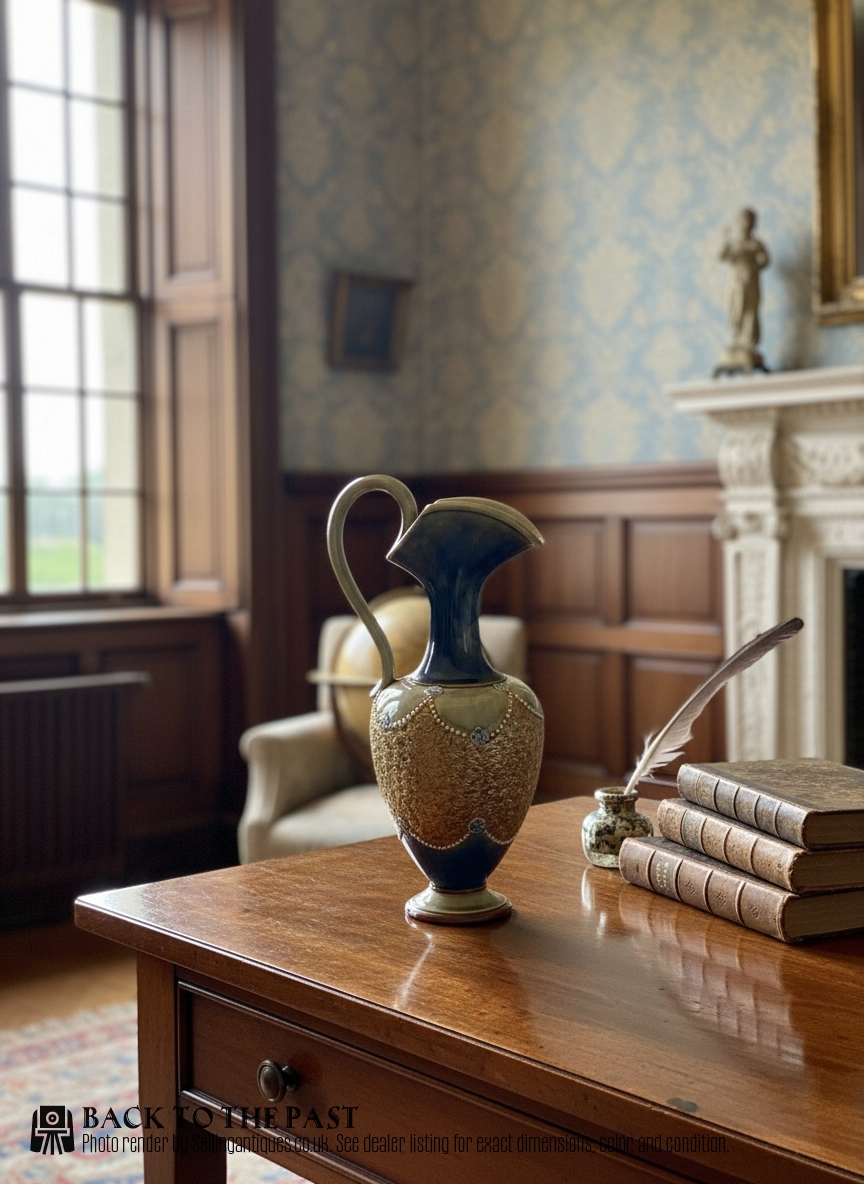
Antique Ceramic Ewer Pitcher
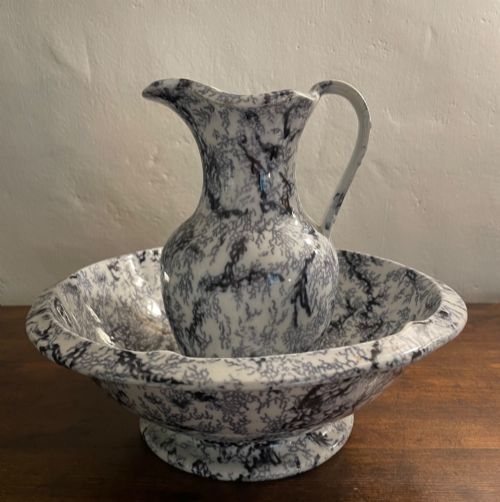
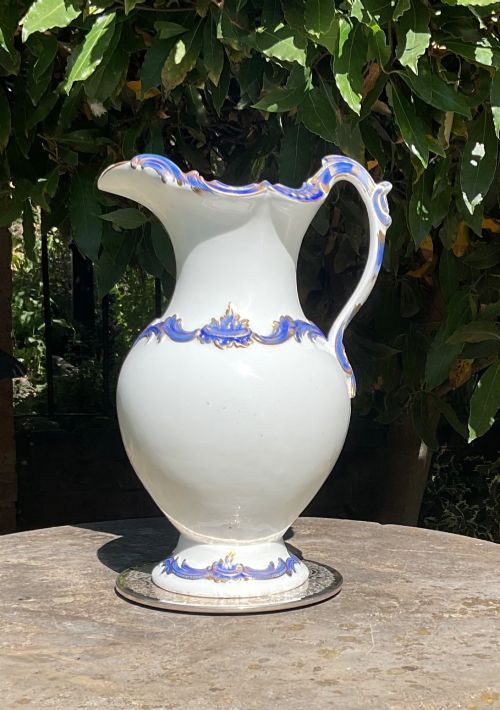
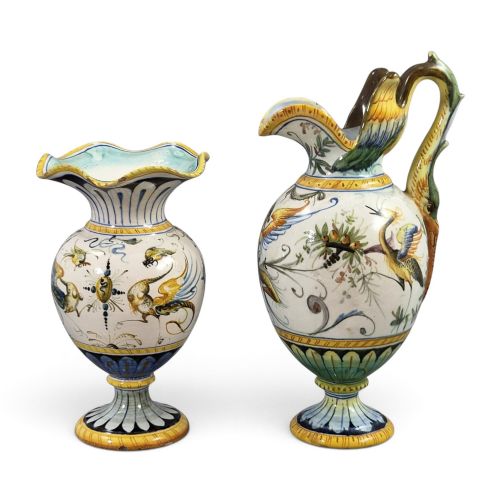
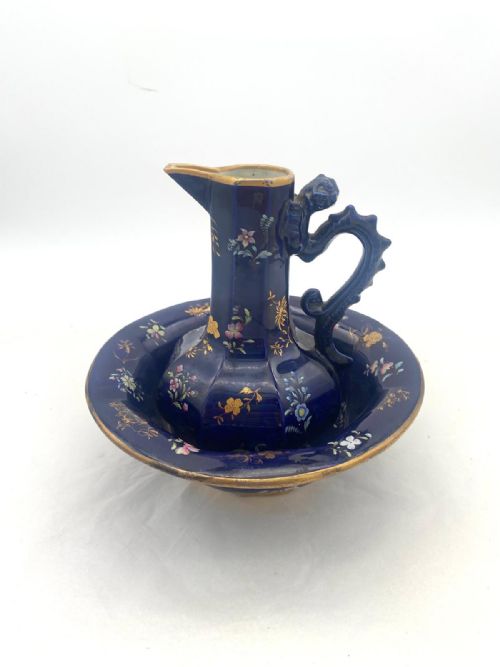
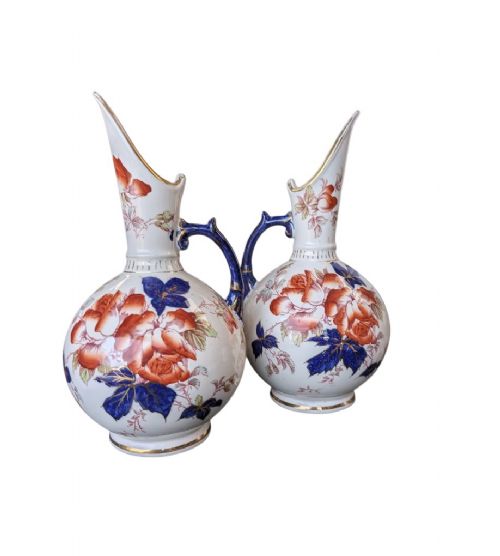
When you examine an antique ceramic ewer pitcher, you are looking at vessels spanning from the Georgian period through the Victorian and Edwardian eras up to the early twentieth century. These pieces encompass various forms including single decorative ewers, wash sets with basins, and utilitarian jugs designed for water, milk, or wine.
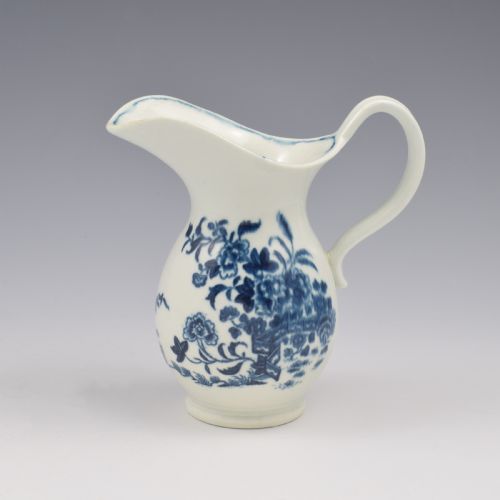
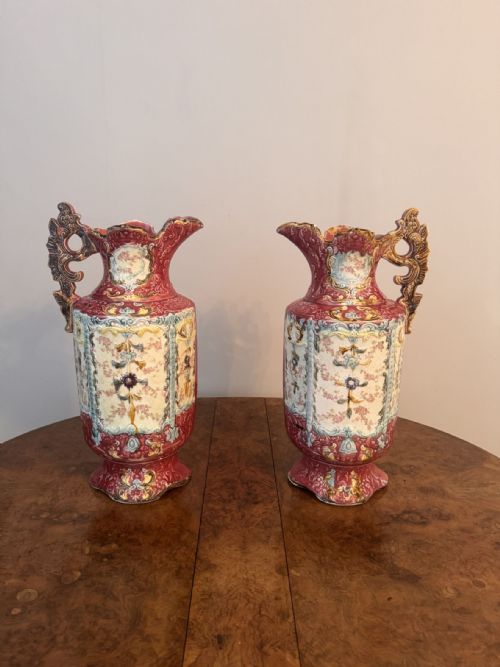
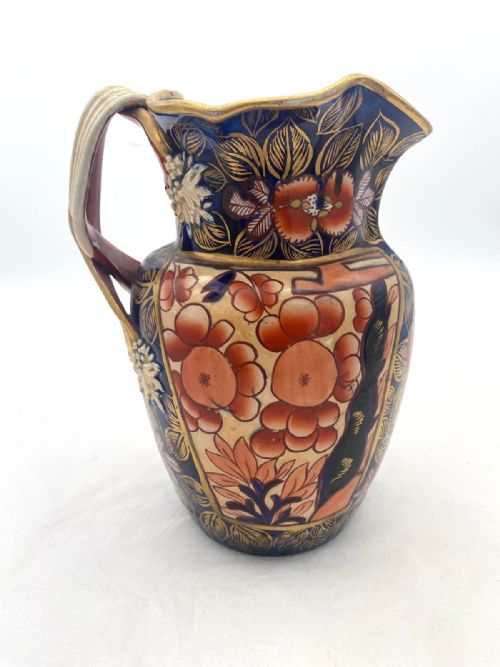
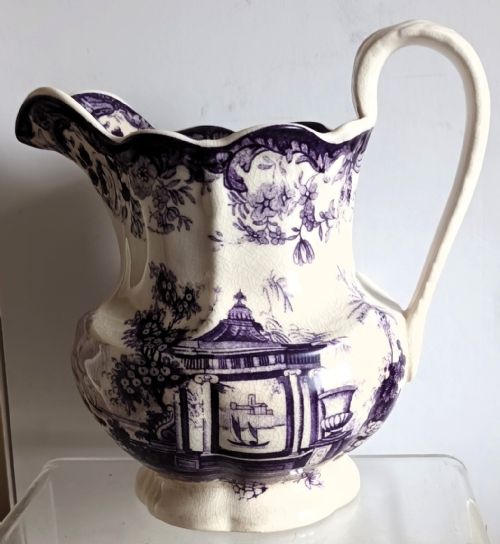
The version you are most likely to meet on this page is the nineteenth-century Victorian or Edwardian ceramic jug, often finished in ironstone, porcelain, or earthenware with transfer-printed or hand-painted decoration. Many examples reflect historical revivals, incorporating Renaissance, Gothic, or Oriental-inspired motifs.
Originating from English potteries such as Mason's, Worcester, and Doulton, alongside continental European and Asian workshops, these vessels range from simple domestic wash jugs to monumental exhibition pieces.
Materials and Construction
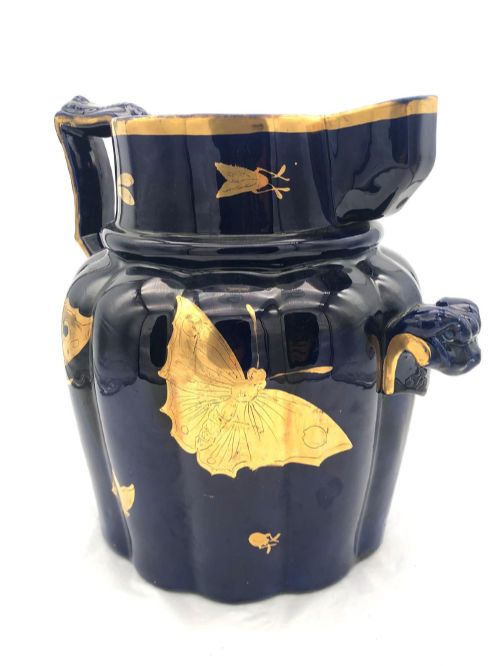
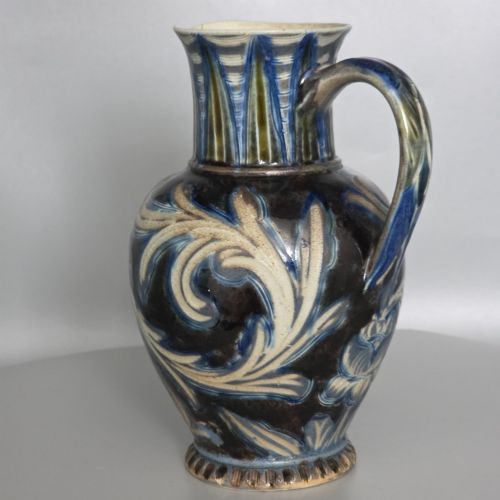
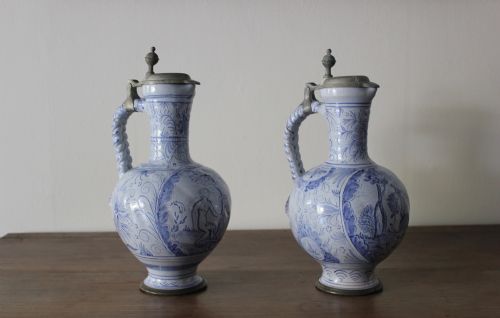
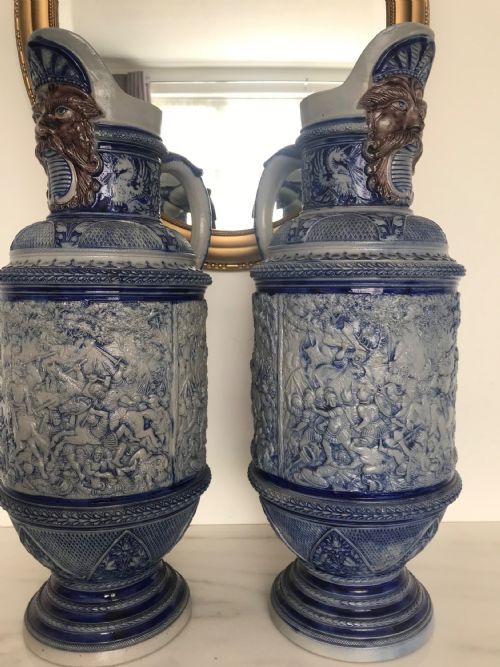
The pieces on this page are formed from ceramic bodies such as ironstone, earthenware, and porcelain, frequently treated with glazes, cobalt blue pigments, or salt glazing. Makers applied surface enrichment through transfer printing, hand-painting, and gilding with gold leaf.
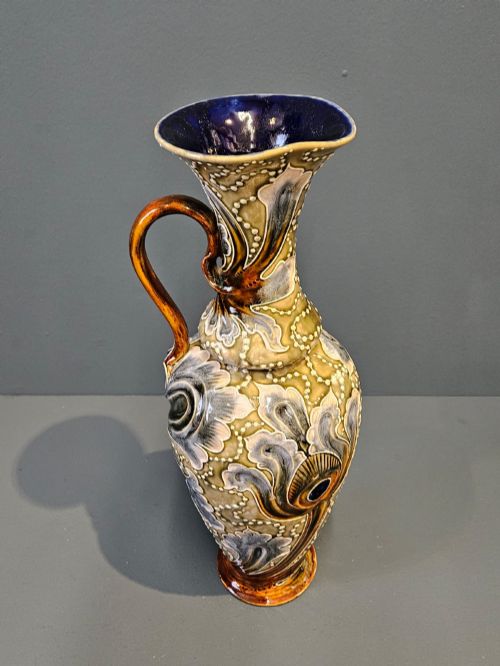
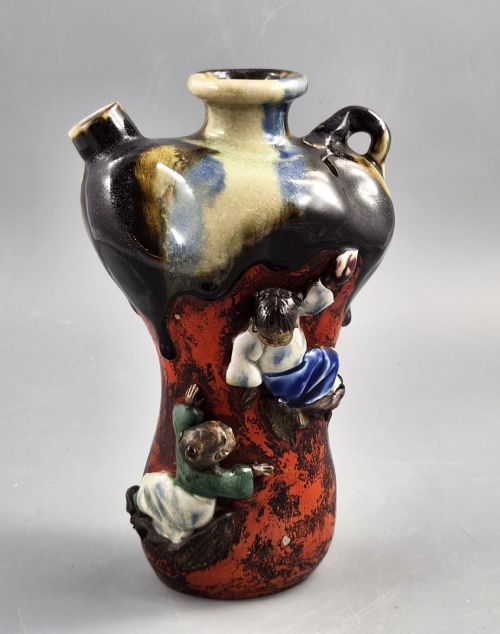
Structural details include moulded or applied handles, such as grotesque or serpentine grips, and spouts shaped to facilitate pouring. Potters utilised specialised techniques like reticulation, salt-firing, and tin-glazing to achieve specific surface textures and durability.
Listings feature ceramics from the Georgian, Victorian, and Edwardian periods, utilising porcelain, earthenware, ironstone, and salt-glazed stoneware.
Distinguishing Quality
Quality in these vessels rests on the crispness of the moulding, the complexity of the glaze or transfer print, and the ambition of the form. Pieces featuring hand-painted detail, intricate gilding, or unusual sculptural handles represent higher tiers of craftsmanship.
Makers known for technical precision and artistic collaboration, such as Doulton Lambeth or Royal Worcester, distinguish themselves through superior weight distribution, refined clay bodies, and well-executed decorative schemes.
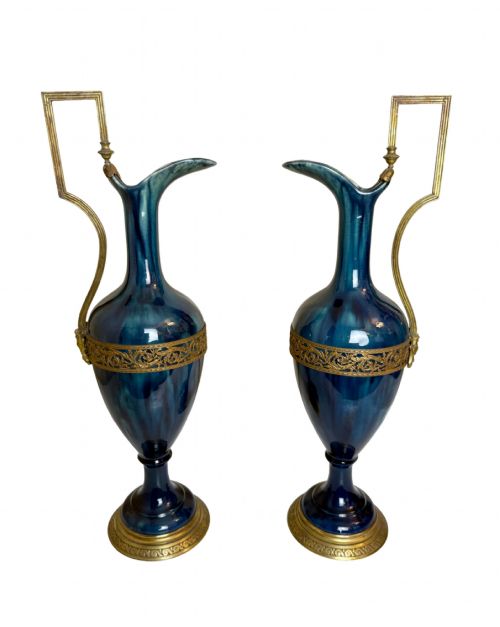
Mason s·Royal Worcester·Doulton Lambeth·Cantagalli Florence·Choisy-le-Roi or Sarreguemines
The Antique Ceramic Ewer Pitcher Glossary
- Ewer
- A large jug with a wide spout and a curved handle, traditionally used for holding water or wine.
- Ironstone
- A heavy, durable ceramic patented in the nineteenth century that mimics porcelain while offering greater strength.
- Transfer printing
- A decoration technique where an engraved copper plate transfers a design onto paper, which is then stamped onto the ceramic body.
- Reticulation
- An openwork pattern pierced through the ceramic body of a vessel before firing.
- Salt glaze
- A glassy, slightly textured finish created by throwing common salt into the kiln during high-temperature firing.
Antique Ceramic Ewer Pitcher: Frequently Asked Questions
How do I date a Victorian ceramic ewer?
Dating relies on maker marks stamped or printed on the base, combined with stylistic cues such as colour palettes and glazing methods. Victorian pieces often utilise registration diamonds or specific factory ciphers that narrow down production to a specific year or decade.
The integration of aesthetic movements, transfer printing styles, and body types like ironstone also helps place the piece within the broader nineteenth-century timeline.
Were these ewers used for washing?
Many of these vessels formed part of wash sets, paired with a matching basin for use in nineteenth-century bedrooms before indoor plumbing was common. They held water for morning ablutions and hand-washing.
Larger decorative ewers were created purely for display on sideboards or mantelpieces, reflecting status rather than fulfilling a washing function.
How should I display an antique ceramic pitcher?
These pieces suit placement on sturdy sideboards, open shelving, or dedicated display cabinets where their height and form remain visible. Ensuring stable placement away from high-traffic edges protects the handle and spout from accidental knocks.
Pairing a ewer with its matching basin creates a balanced focal point, while single jugs work well grouped by colour or ceramic body type.