




Victorian Doulton Lambeth Jug
These Victorian Doulton Lambeth jugs bring tactile texture and rich historic character to a room, offering genuine studio pottery achievement for any collector.
Victorian Doulton Lambeth Jug
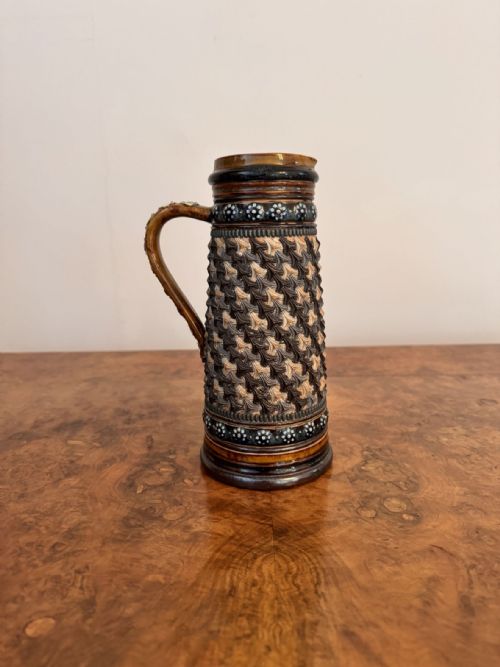
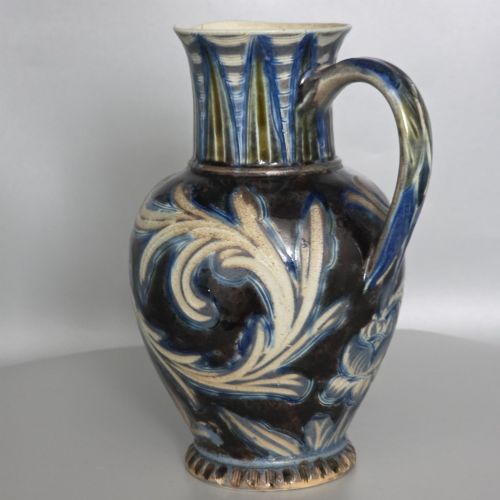
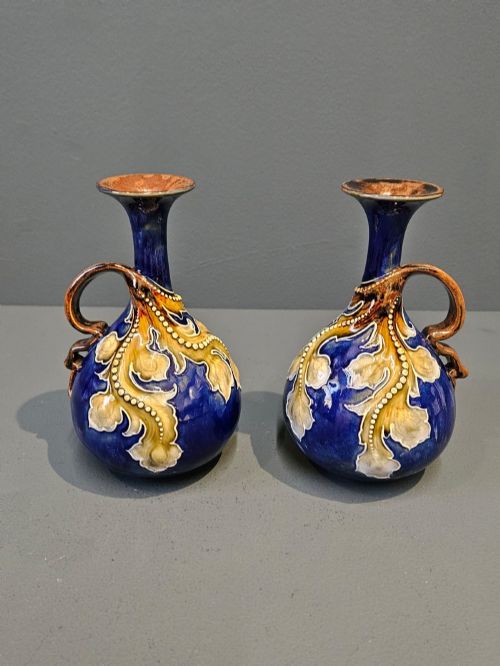
A Victorian Doulton Lambeth jug is a ceramic vessel produced by the famous London pottery during the nineteenth century. The examples on this page encompass various forms, from harvest jugs and ewers to puzzle jugs and water pitchers. Most pieces date from the decades spanning 1870 to 1900, reflecting the height of British art pottery production.
Buyers will encounter specific aesthetic movements represented across these items, notably Victorian Arts and Crafts, Art Nouveau, and Aesthetic style designs. Many vessels incorporate applied ornamentation, incised patterns, or silver rims, whilst matching basins and tea sets appear alongside standalone jugs. These forms served both decorative display and practical household functions.
How they were made
Makers shaped these vessels from clay and stoneware, often utilising salt glaze and salt-glaze ceramic techniques that produced textured, pebbled surfaces. Artisans applied enamel highlights and incised intricate botanical or geometric patterns directly into the damp body before firing.
Many high-end pieces featured specialised treatments such as Slater's Patent lace-impressed texturing, whilst other utility jugs received durable silver rims fitted to the top edges. The combination of salt glaze finish and hand-thrown clay bodies gave each vessel its distinct weight and tactile quality.
Victorian Doulton Lambeth Jug Retail Price Guide 2026
Typical asking prices for victorian doulton lambeth jug among the pieces listed under this phrase on Sellingantiques today, from the lower quarter to the upper quarter. They describe what is for sale here now, not the wider market.
Puzzle jugs challenge guests to drink ale without spilling through hidden spouts, proving the Victorians loved a tavern prank.
What varies in quality
The distinction between standard production and top-tier work rests on the crispness of the incised ornament and the ambition of the studio design. Pieces bearing named artist signatures or patent methods demonstrate a higher level of individual craftsmanship than anonymous utility items.
Proportion and decorative harmony also dictate the upper range of these ceramics. Vessels with balanced handles, rich salt glaze coloration, and added elements like hallmarked silver rims represent the more accomplished output of the Lambeth workshops.
Emma Shute·Doulton Lambeth·Royal Doulton
The Victorian Doulton Lambeth Jug Glossary
- Stoneware
- A dense, vitreous ceramic fired at high temperatures until non-porous. This material forms the durable foundation for nearly all Doulton Lambeth art pottery.
- Salt glaze
- A glassy, textured finish achieved by throwing common salt into the kiln during high-temperature firing. It creates a characteristic orange-peel texture on the ceramic surface.
- Harvest jug
- A traditional globular vessel, frequently adorned with sprigged brown stoneware hunting scenes or jovial drinking motifs. They were originally used for serving ale at harvest festivals.
- Puzzle jug
- An ingenious vessel featuring a perforated neck and multiple spouts that challenges the drinker to imbibe without spilling. These interactive pieces demonstrate the playful side of Victorian ceramic design.
- Ewer
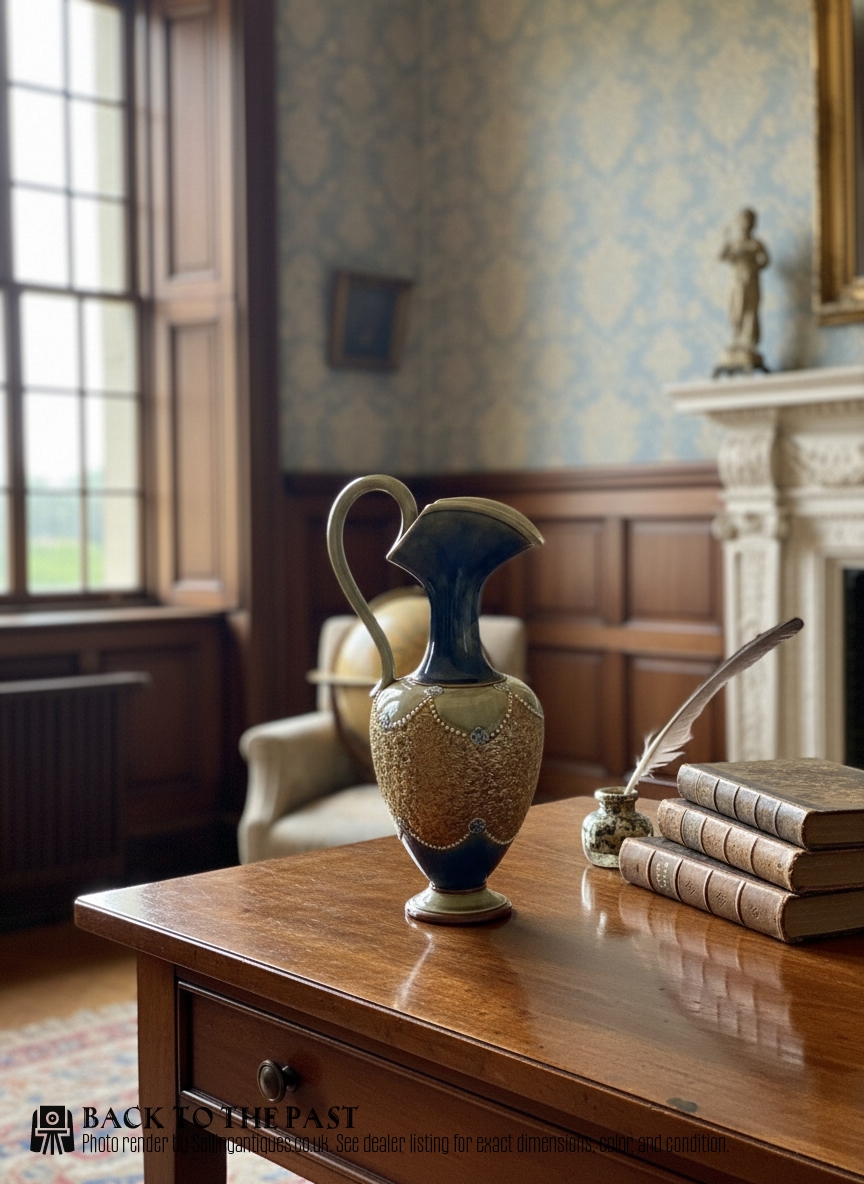
- A large jug with a flared spout and an ornate looped handle, traditionally designed for pouring water. Victorian examples often prioritize sculptural display over practical washing.
Victorian Doulton Lambeth Jug: Frequently Asked Questions
How do I date a Doulton Lambeth jug?
Examination of the stamped factory marks on the base provides the primary method for dating these ceramics. Stylistic clues such as Art Nouveau motifs or Jubilee commemorations also help narrow down the production decade.
Changes in company names from Doulton and Co. to Royal Doulton offer clear chronological markers for collectors. Comparing the style of the incised monograms with known studio artists refines the timeline further.
Were these jugs used for serving drinks?
Many of these vessels functioned as utilitarian tableware for water, whisky, or ale in Victorian homes. Larger harvest jugs and spirit containers were built to withstand daily household service.
Other examples, particularly those with delicate incised art pottery designs or puzzle mechanisms, served primarily as decorative parlour ornaments. The presence of silver rims often indicates a higher status piece intended for formal dining.
What is salt glaze pottery?
Salt glaze is a historic firing technique where salt is introduced into the kiln at peak temperature. The sodium reacts with the silica in the clay body to form a durable, glossy coating.
This process leaves a distinct pitted texture resembling orange peel across the stoneware surface. It rendered the vessels completely waterproof without requiring traditional liquid glaze dips.
How should I display my jug?
These stoneware pieces suit placement on sturdy sideboards, wooden bookshelves, or dedicated display cabinets where their textured surfaces catch the light. Grouping them with complementary art pottery vases creates a balanced historical arrangement.
Keeping them away from direct sunlight protects any enamel highlights from fading over time. Ensure they rest on stable surfaces away from high-traffic areas due to their substantial ceramic weight.