
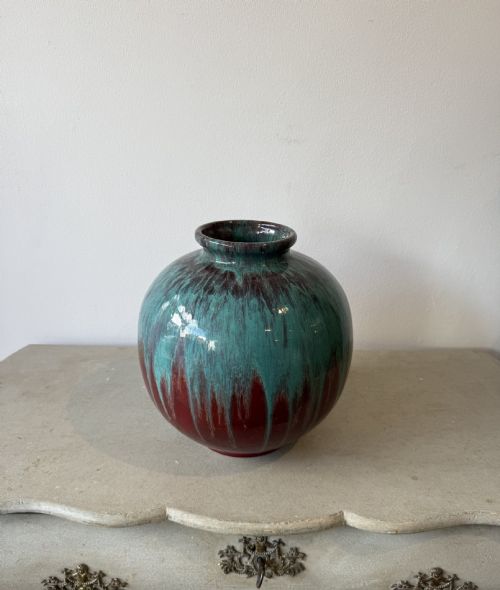


Turquoise Ceramic Vase
A turquoise ceramic vase brings a striking injection of colour and form to a room, drawing the eye with its vibrant glaze.
Turquoise Ceramic Vase
A turquoise ceramic vase encompasses various historical periods, ranging from Victorian pieces to Art Deco creations. These vessels serve primarily as decorative objects, often displaying rich monochrome or glazed surfaces that highlight the underlying form.
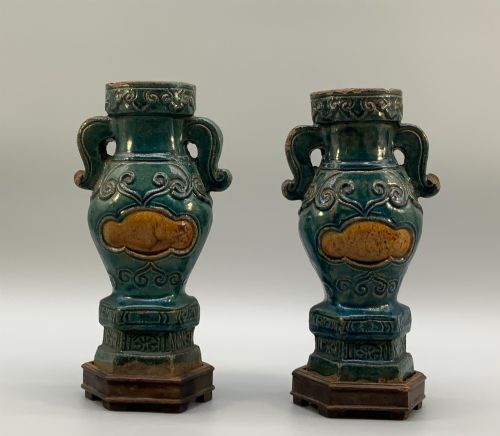
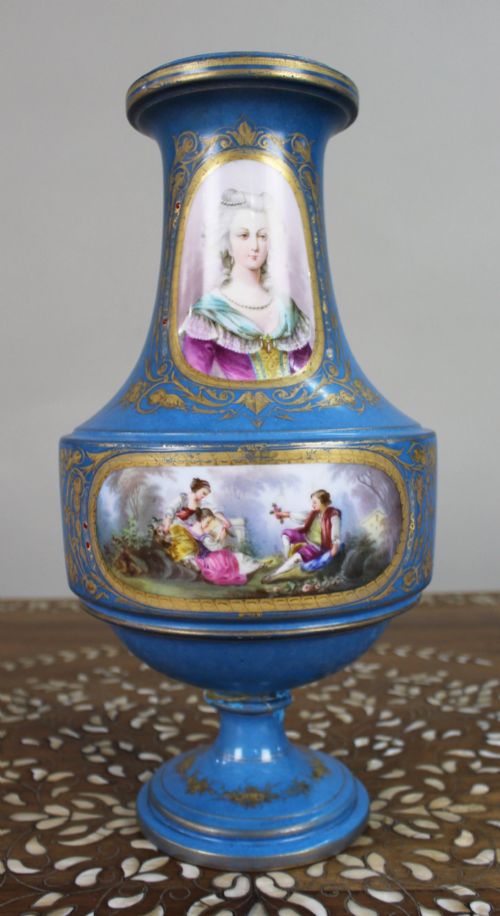
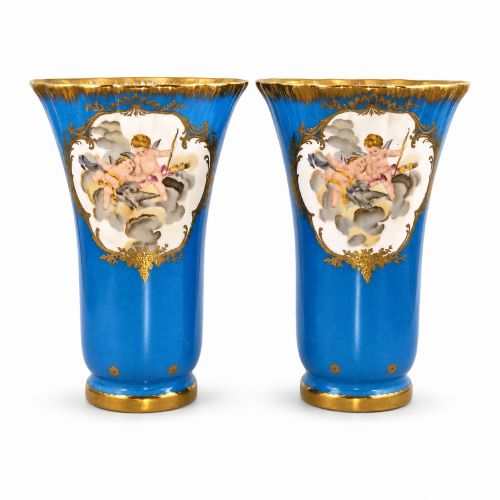
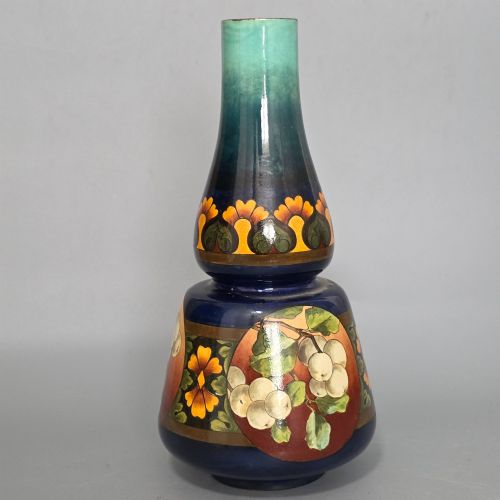
The pieces on this page appear in several distinct styles, including French studio pottery, Art Deco, twentieth-century Chinese, and Victorian Aesthetic. Each style brings a different aesthetic, from ribbed earthenware patterns to intricately incised peonies on porcelain.
Materials and construction
Potters utilised earthenware, porcelain, and general ceramic bodies to form the core structure of these vessels. Artisans then applied specialised glazes and enamels to achieve the characteristic turquoise colour finish.
Certain examples incorporate additional ornamentation, such as gold leaf accents, enhancing the decorative surface. Shaping methods varied from studio throwing to factory moulding depending on the origin and period.
Assessing quality and execution
Quality rests heavily on the depth and consistency of the turquoise glaze, alongside the precision of any incised or moulded decoration. Finer pieces demonstrate superior control during the firing process, resulting in an even, luminous surface.
Artistic execution also dictates value, particularly in the crispness of details like stylised peonies or ribbed patterns. Studio pottery and marked factory pieces often reflect higher individual design consideration than standard production items.
Shorter and Sons·Minton
The Turquoise Ceramic Vase Glossary
- Earthenware
- A porous pottery type fired at lower temperatures, commonly used for historical ceramic vessels. It requires a glaze to become impermeable to liquids.
- Porcelain
- A fine, hard ceramic material fired at high temperatures, known for its vitrified body and white appearance. It forms the base for many monochrome Chinese vases.
- Monochrome
- A colour scheme based on a single hue, frequently applied to Chinese ceramics to emphasise the purity of the form and glaze. The turquoise variants display subtle tonal variations across the surface.
- Ribbed pattern
- A surface design featuring parallel raised ridges that run vertically or horizontally along the body of the vase. This technique adds tactile depth and structural interest to Art Deco pieces.
Turquoise Ceramic Vase: Frequently Asked Questions
What periods do these vases come from?
The pieces span the Victorian Aesthetic era through to the Art Deco period and the twentieth century.
Individual dates reflect specific manufacturing eras like eighteen seventy, nineteen twenty, and nineteen thirty.
How do I care for a ceramic vase?
Keep delicate glazed surfaces away from direct, harsh sunlight to preserve the colour. Clean gently with a soft, dry cloth rather than harsh detergents.
Avoid submerging antique pieces in water if they show signs of hairline cracks or porous earthenware bodies.
What materials were used?
Makers utilised earthenware, porcelain, and general ceramic bodies as the foundation for these vessels. Glazes, enamels, and occasional gold leaf provide the surface finish.
Different periods favoured distinct clay types, moving from Victorian Aesthetic standards to twentieth-century studio pottery.