


Japanese Glazed Earthenware
When you search for Japanese glazed earthenware, you are looking for ceramic vessels decorated during the Meiji and Taishō periods.
Japanese Glazed Earthenware
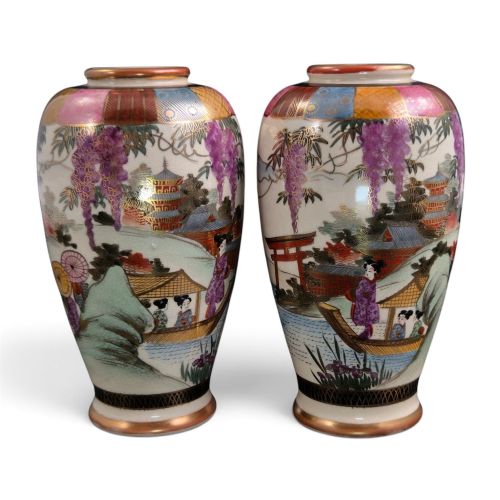
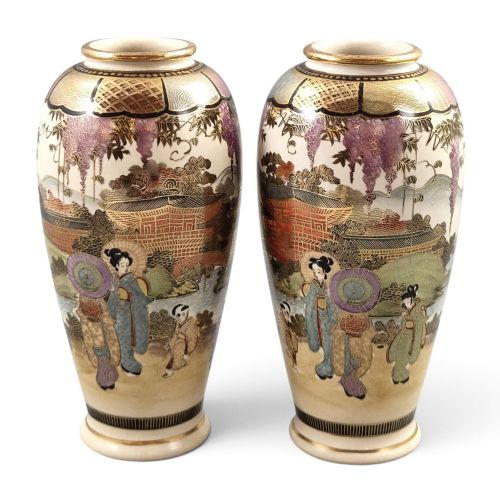
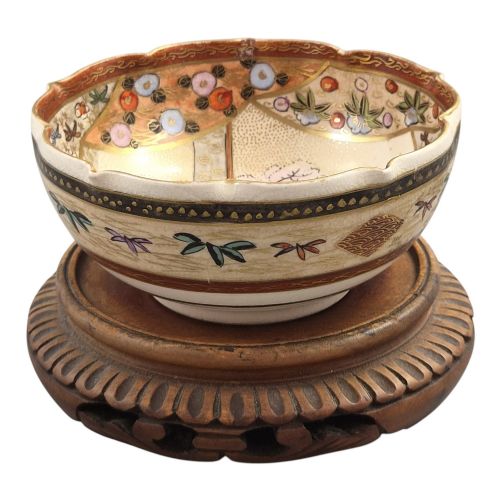
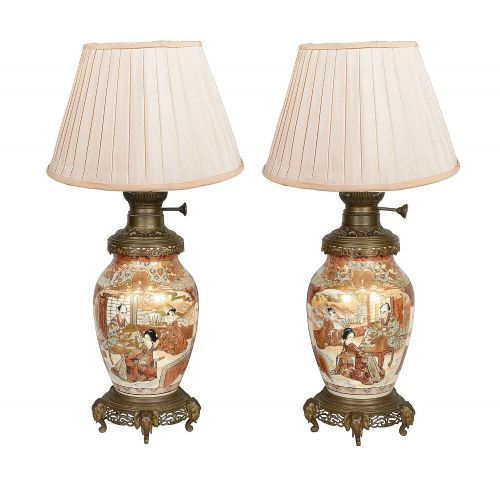
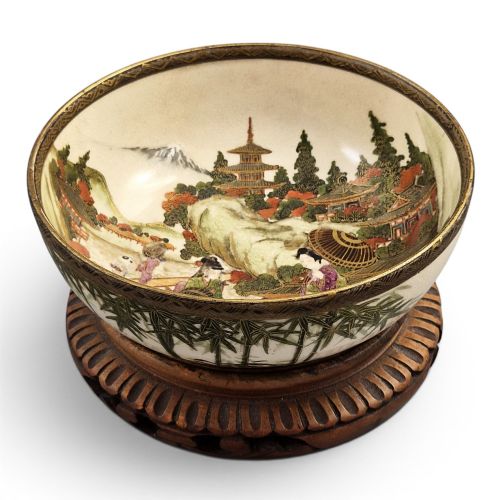
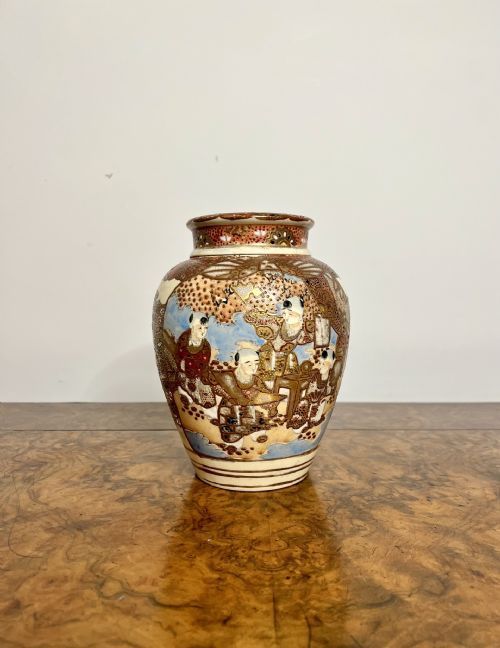
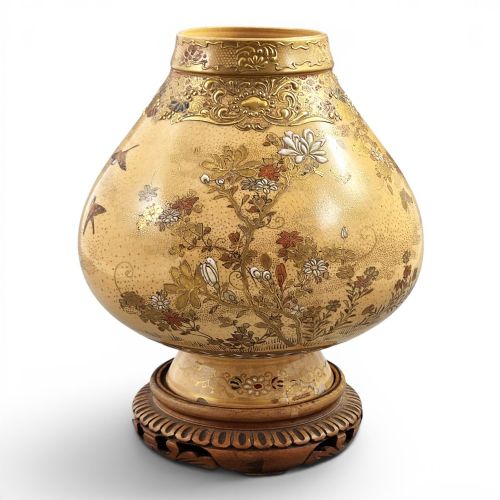
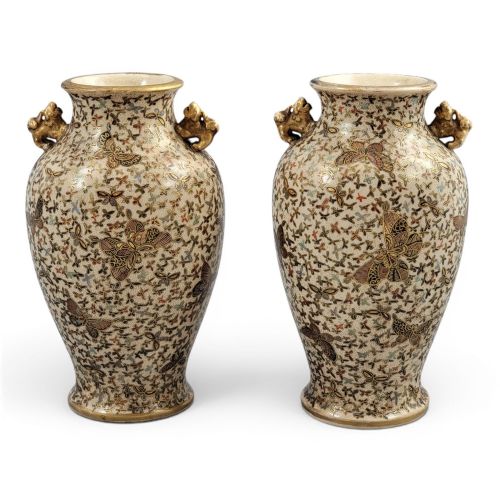
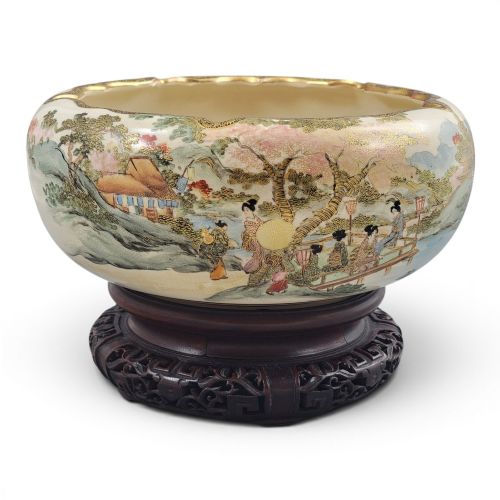
When buyers search for Japanese glazed earthenware, they encounter items originating from the 19th century through the early 20th century. The most common form on this page is the Satsuma vase, often accompanied by decorative bowls, ginger jars, and pitchers from the Meiji and Taisho periods.
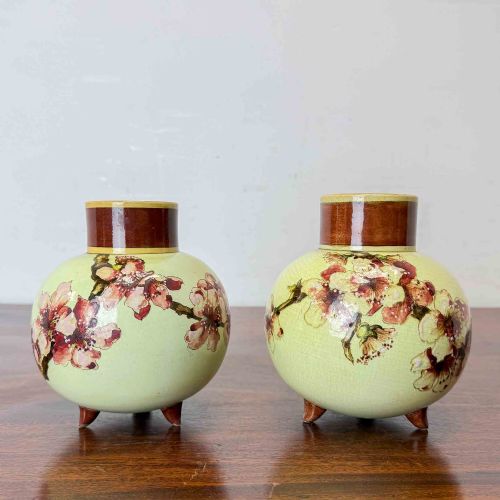
These ceramics take many shapes, including hexagonal vessels, ginger jars, tea containers, and figural models such as Buddhist lions. Pieces range from miniature vases to monumental examples decorated with figures, landscapes, and gold leaf.
The objects stem from distinct Japanese workshops and production centres, with Kyoto appearing frequently alongside Tokyo Taizan and regional makers. Items span domestic wares and ornamental pieces intended for export during the late Victorian and Edwardian eras.
Materials and Construction
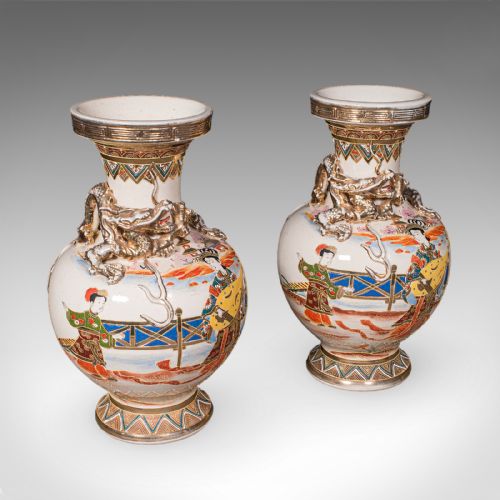
The pieces rely upon an earthenware body coated in a characteristic glaze, often enriched with enamel colours and gold leaf or gilt details. Certain workshops applied thick slip work, known as moriage, to create raised surface textures upon the ceramic base.
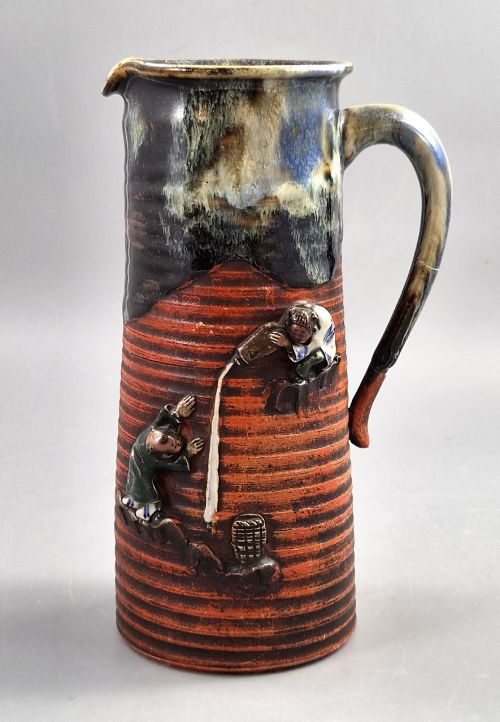
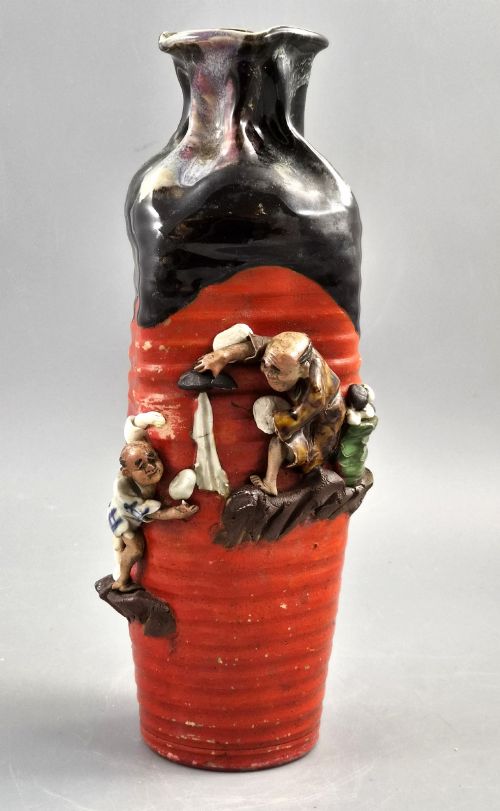
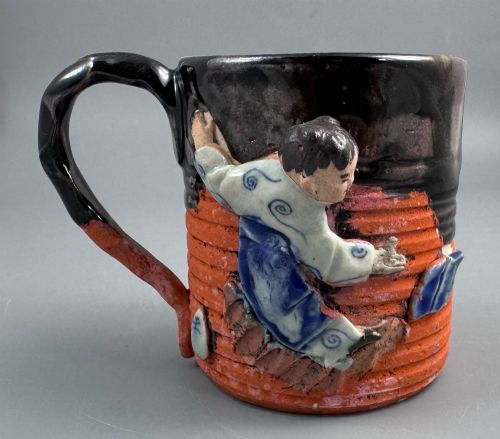
Makers utilised wood elements or applied figures modelled separately from the main vessel wall, as seen in Sumida Gawa mugs and pitchers. Gilding and meticulous enamel painting completed the decoration before final firing.
Listings feature items spanning the Victorian, Edwardian, Meiji, and Taisho periods, utilising earthenware, enamel, gold leaf, and glaze.
Variations in Quality
Quality depends upon the precision of the enamel painting and the delicacy of the gold leaf application across the earthenware body. Pieces bearing signatures from renowned masters or established workshops typically demonstrate superior control of detail in figural scenes and landscape motifs.
The refinement of the clay body and the evenness of the crackle glaze distinguish finer output from standard production wares. Complexity of form, such as unusual handle designs or intricate moulded figures, also separates standard items from exceptional examples.
Shozan Satsuma·Inoue Ryōsai·Kinkōzan Workshop·Kinzan·Shizan·Ryuzan·Chosei·Tokyo Taizan
The Japanese Glazed Earthenware Glossary
- Satsuma
- A type of Japanese earthenware featuring a pale, ivory-coloured crackle glaze that accepts fine enamel and gilt decoration. It originated in Satsuma Province and became popular for export during the Meiji period.
- Sumida Gawa
- A style of Japanese pottery characterised by heavy, dripping glazes and applied figures modelled in high relief. Items from this tradition often include mugs, pitchers, and vases with distinct pictorial scenes.
- Moriage
- A decorative technique where slip is piped onto the ceramic surface to create raised patterns and textured details before glazing and firing. This method adds tactile depth to court figures and floral designs.
- Kutani
- A style of Japanese ceramic noted for strong enamel colours and pictorial designs. Pieces from this tradition include figures of animals and mythological subjects.
- Meiji
- The period of Japanese history spanning from 1868 to 1912, corresponding to an era of significant output for export ceramics. Works from this time often combine traditional iconography with Western decorative preferences.
Japanese Glazed Earthenware: Frequently Asked Questions
What is Satsuma ware?
Satsuma ware is a distinct category of Japanese pottery identified by its earthenware body and fine crackle glaze. The surface typically serves as a canvas for detailed enamel paintings depicting figures, landscapes, and floral motifs.
Most pieces incorporate gold leaf or gilt highlights, defining the aesthetic of export ceramics from the late 19th century. Items range from small tea jars to large decorative vases.
How do I identify a Meiji period piece?
Meiji period pieces date between 1868 and 1912, aligning with an era of heightened international trade and artistic exchange. Many items carry artist signatures or workshop marks on the base, reflecting the pride of individual makers.
Stylistic cues include intricate figural processions, traditional deities, and refined landscape scenes executed in rich enamel palettes. The construction relies on earthenware bodies finished with characteristic glaze effects.
Where were these ceramics made?
These ceramics were produced in various regions and workshops across Japan, with Kyoto serving as a major centre for Satsuma output. Other pieces originated from Tokyo Taizan or specialised kilns producing distinct regional styles.
Export demand shaped much of the production during the late Victorian and Edwardian periods, leading to workshops tailoring designs for overseas markets while retaining traditional Japanese motifs.
How should I care for glazed earthenware?
Glazed earthenware requires gentle handling due to the delicate nature of the enamel and gold leaf decorations on the surface. Dusting with a soft, dry cloth is sufficient for routine maintenance.
Keep these ceramic pieces away from direct sunlight and moisture to protect the glaze and prevent wear to the gilt details over time.