4,391  PAGES BROWSED TODAY PAGES TODAY 46 ANTIQUES UPLOADED TODAYNEW ARRIVALS
46 ITEMS ADDED TODAY
Sort Order
Items Per Page
Browse Categories
Sort order
Relevant Links
Items per page
ID #SA1234310
FOR SALE
£500
Email Phone
Save
Japanese Satsuma Vase Pair, Wisteria and Lake Landscape, Boxed, C.1910–1920
For sale by Ritas Bazaar
for sale €585     $635
£500

Ritas Bazaar

Sellingantiques Verified Since Nov 2025
Browse dealers 243 items
Id #SA1234310
PDF SHARE
SAVE

Japanese Satsuma Vase Pair, Wisteria and Lake Landscape, Boxed, C.1910–1920

1900 - 1920
For Sale by Ritas Bazaar
Description

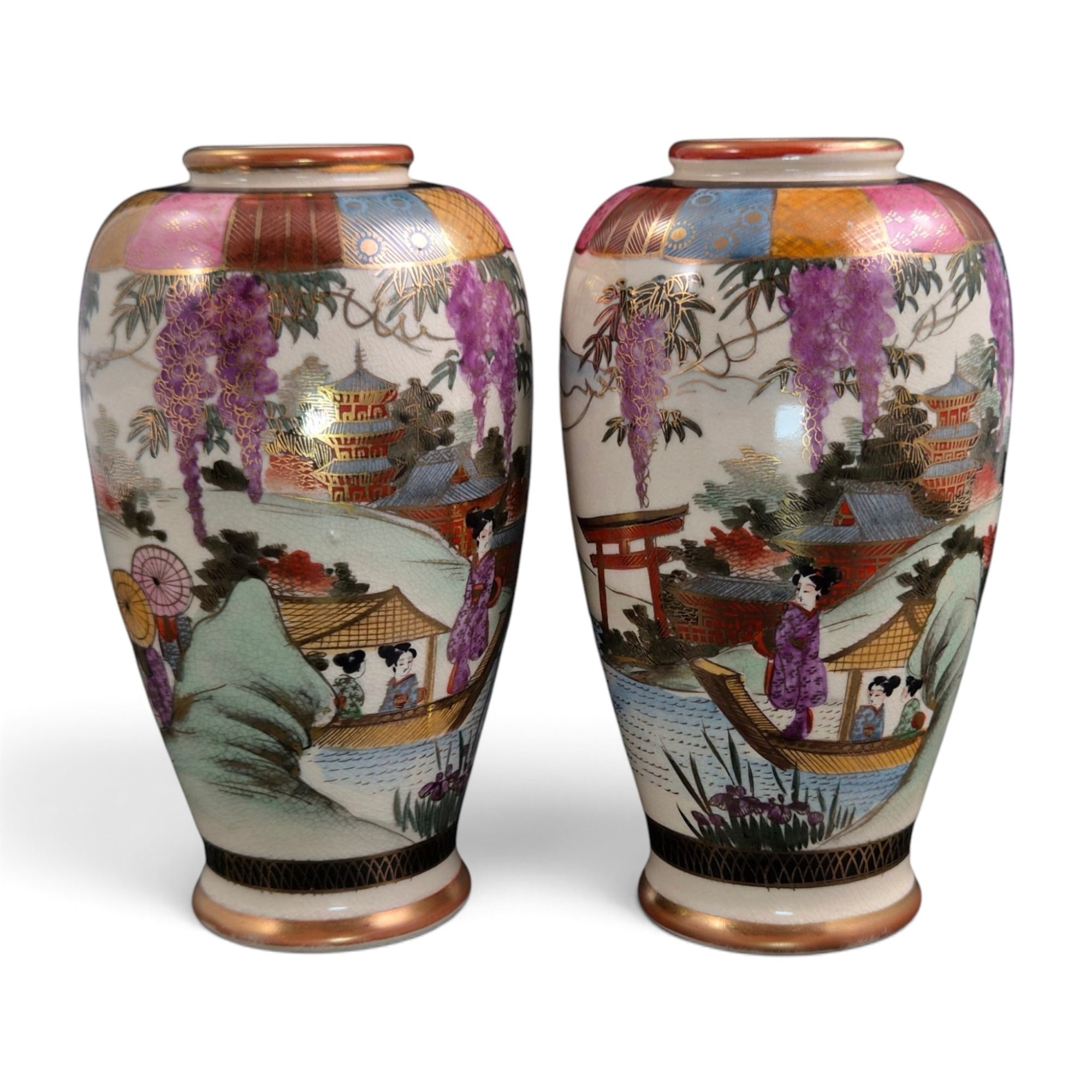
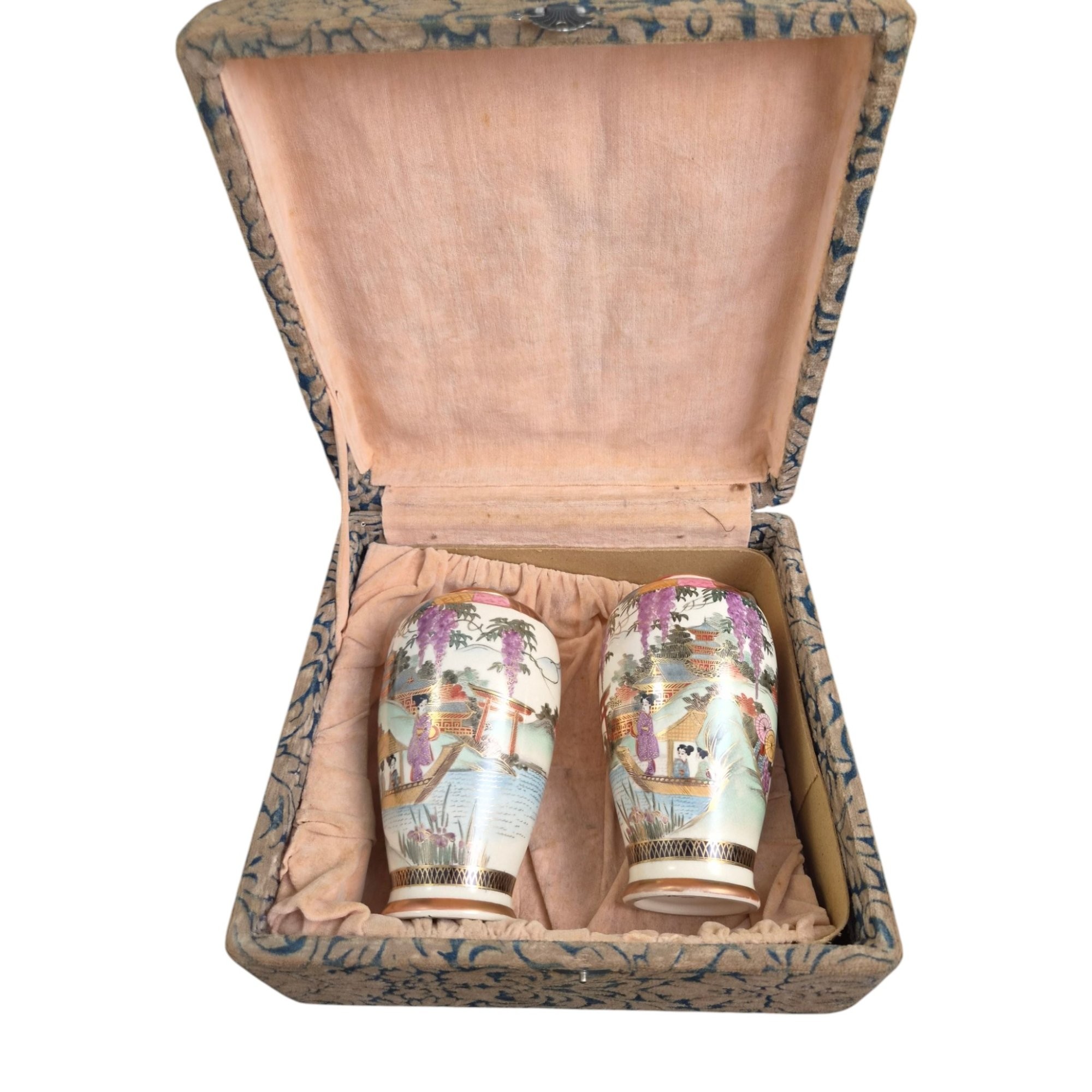
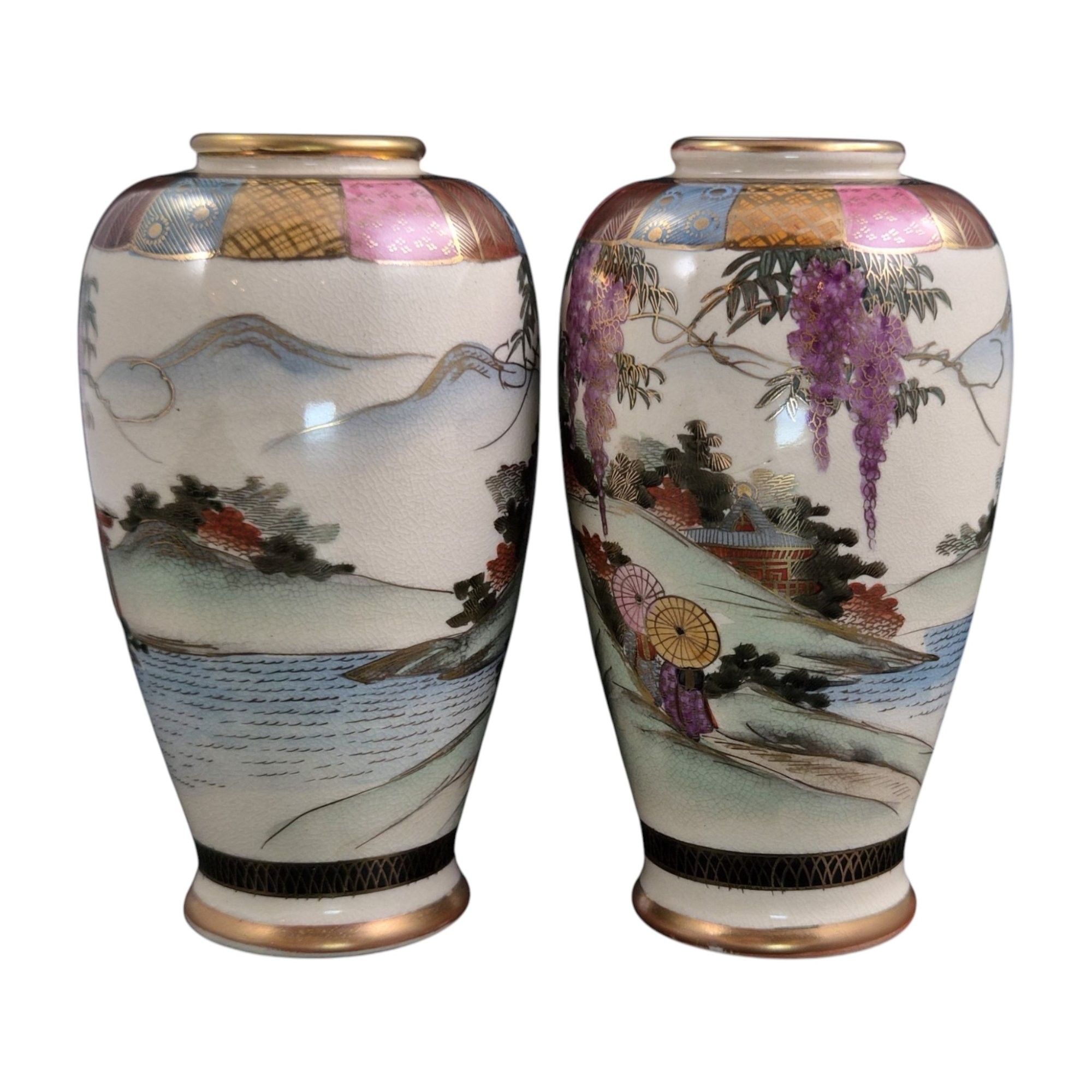
A pair of small Japanese Satsuma vases, preserved together with the original padded fitted box in which they were sold. Each vase is of ovoid form with a profiled neck and a spreading foot, the cream body covered by a fine, even crackle.

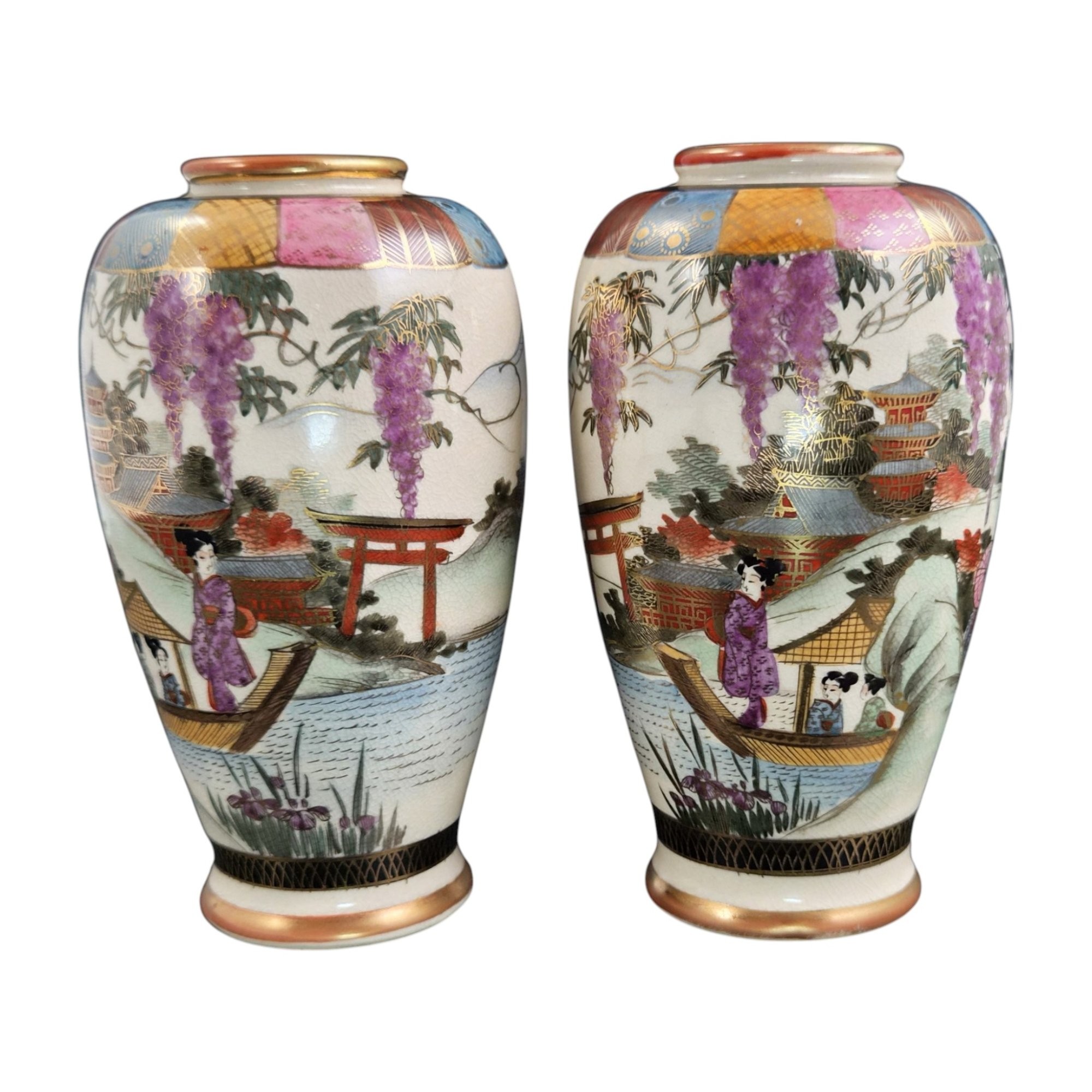
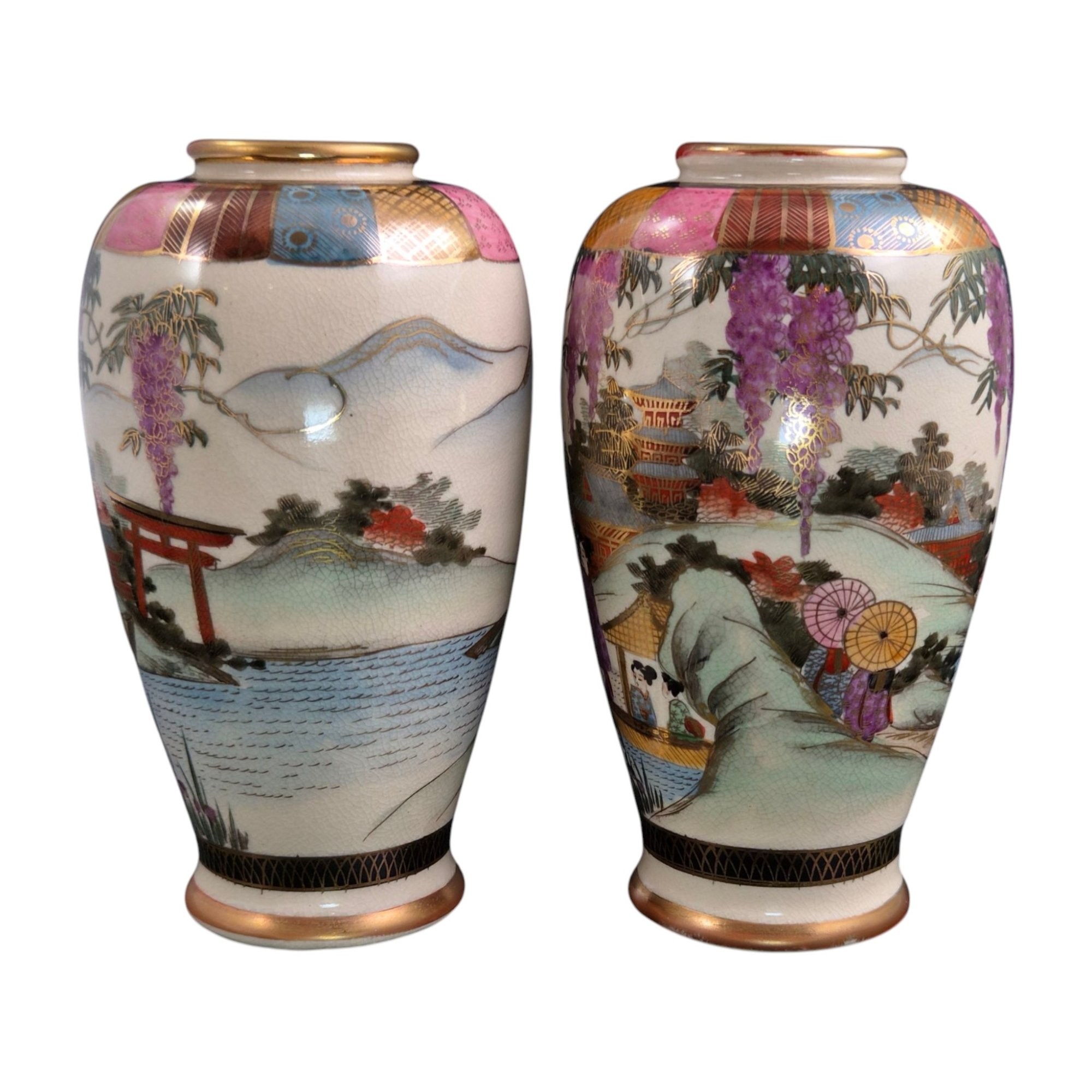
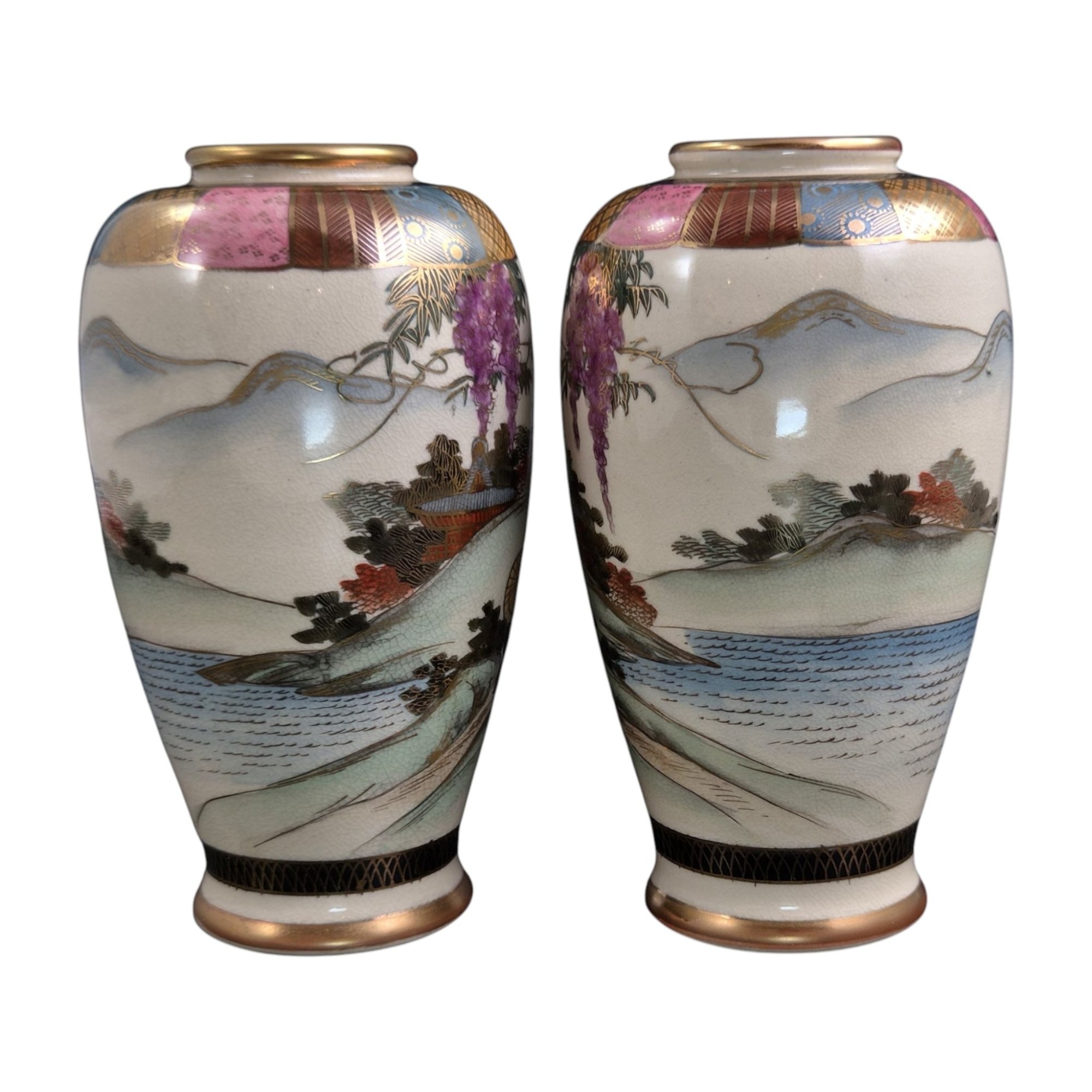
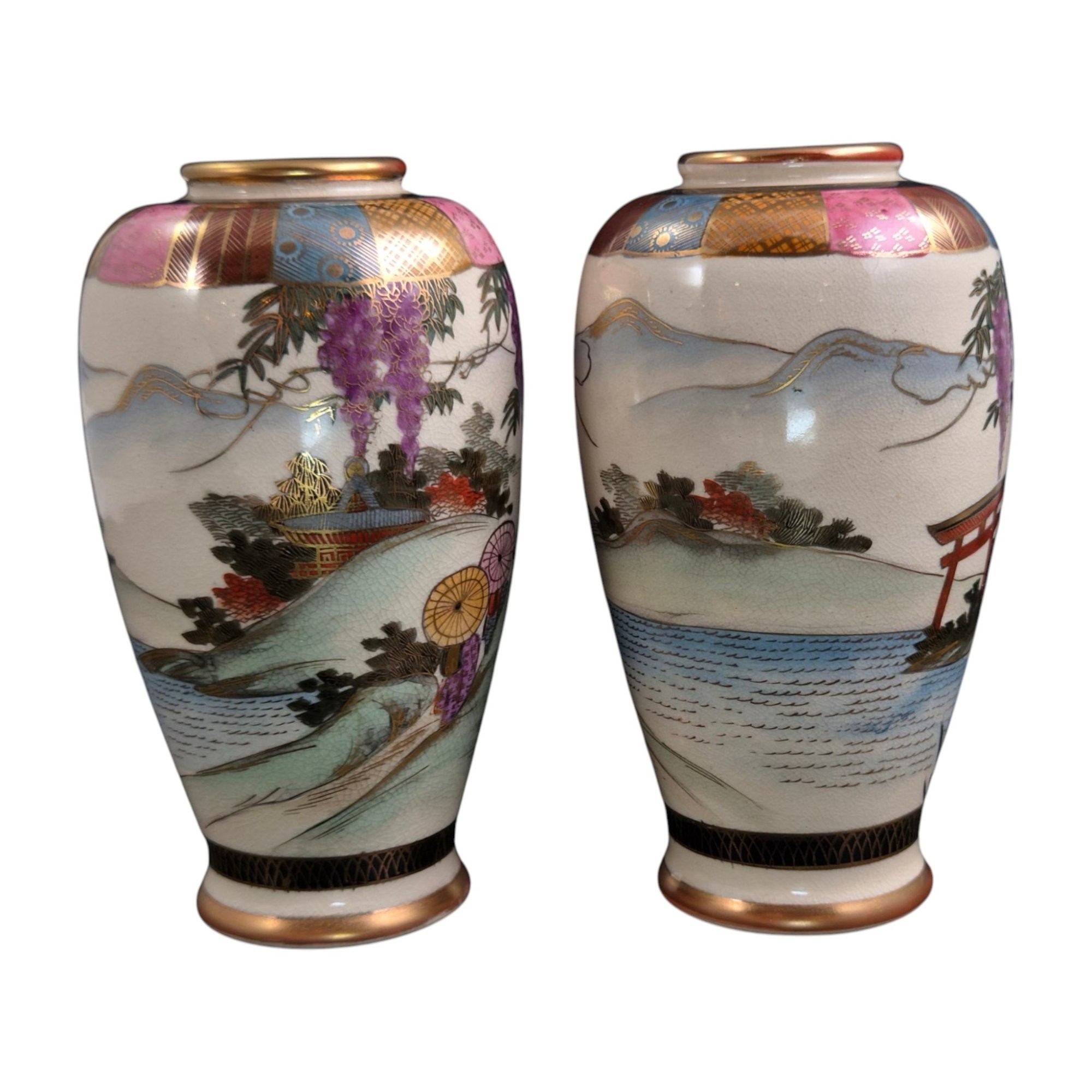
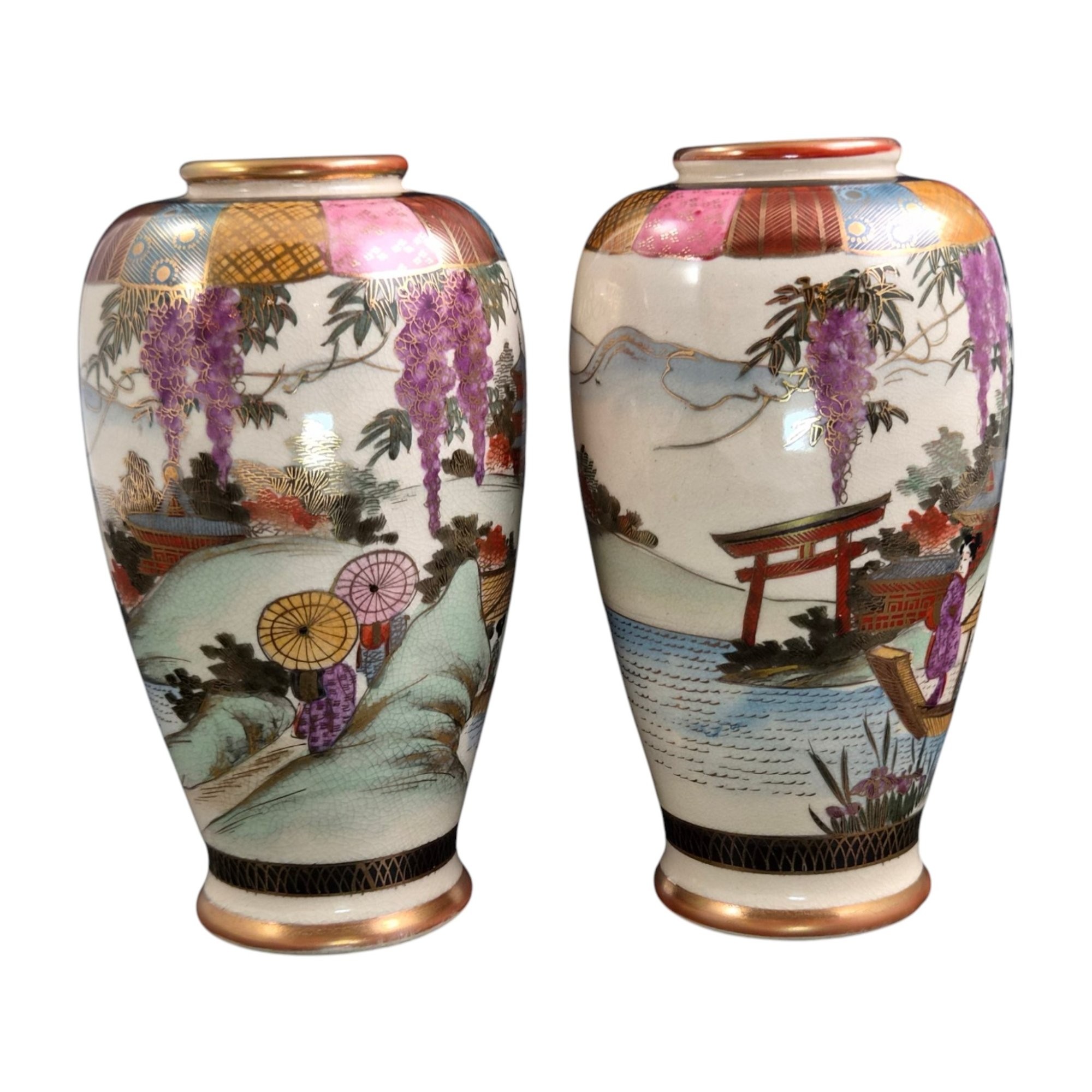
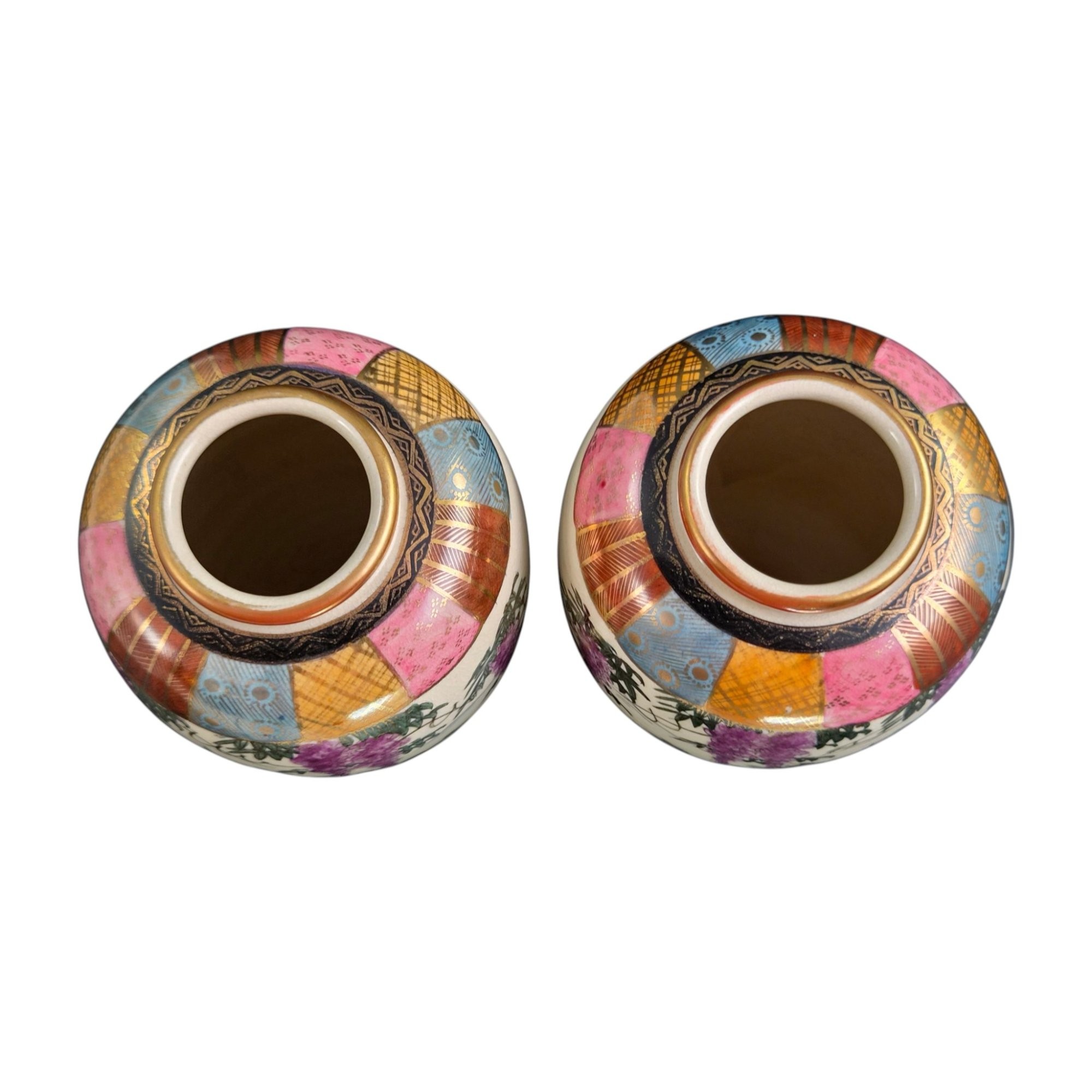
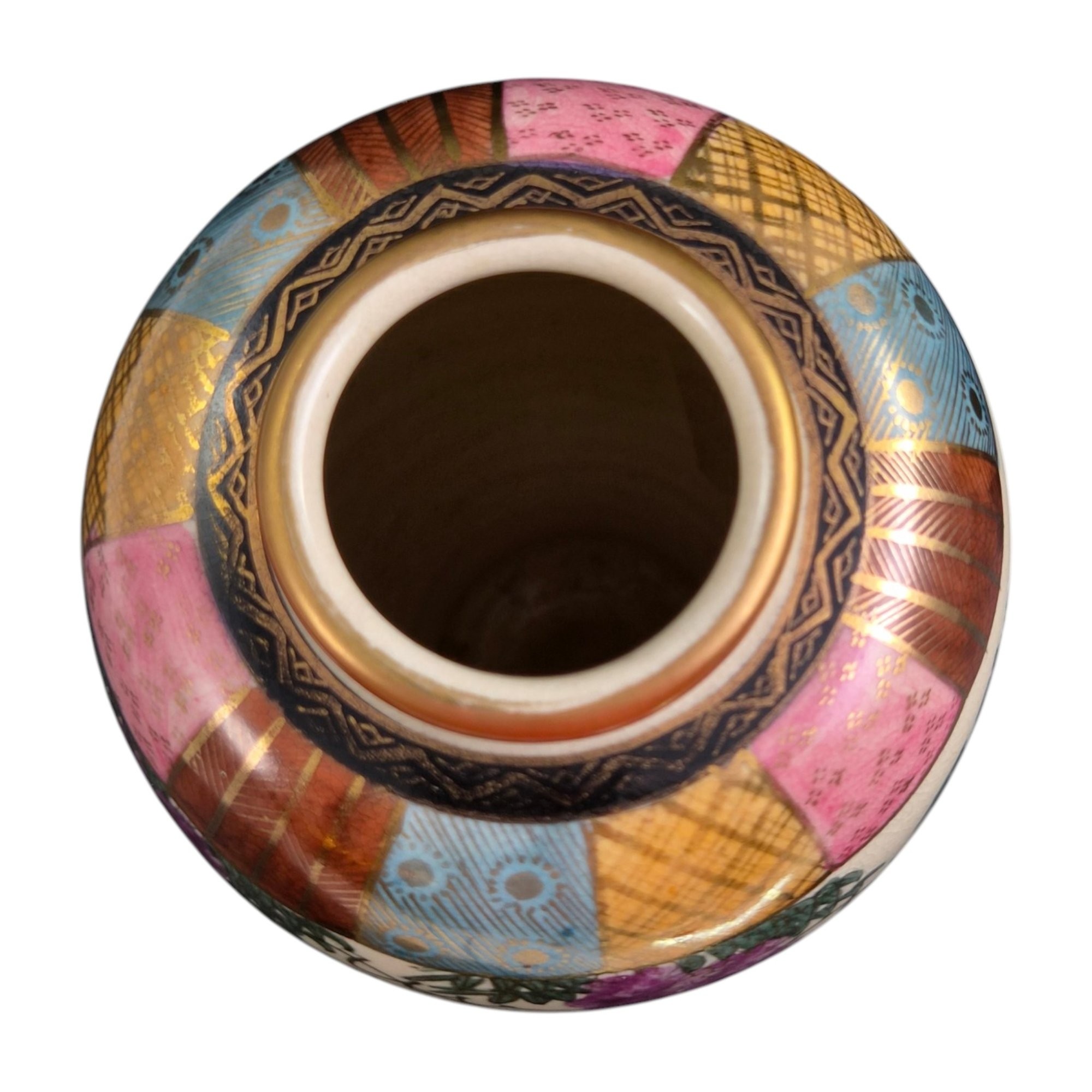
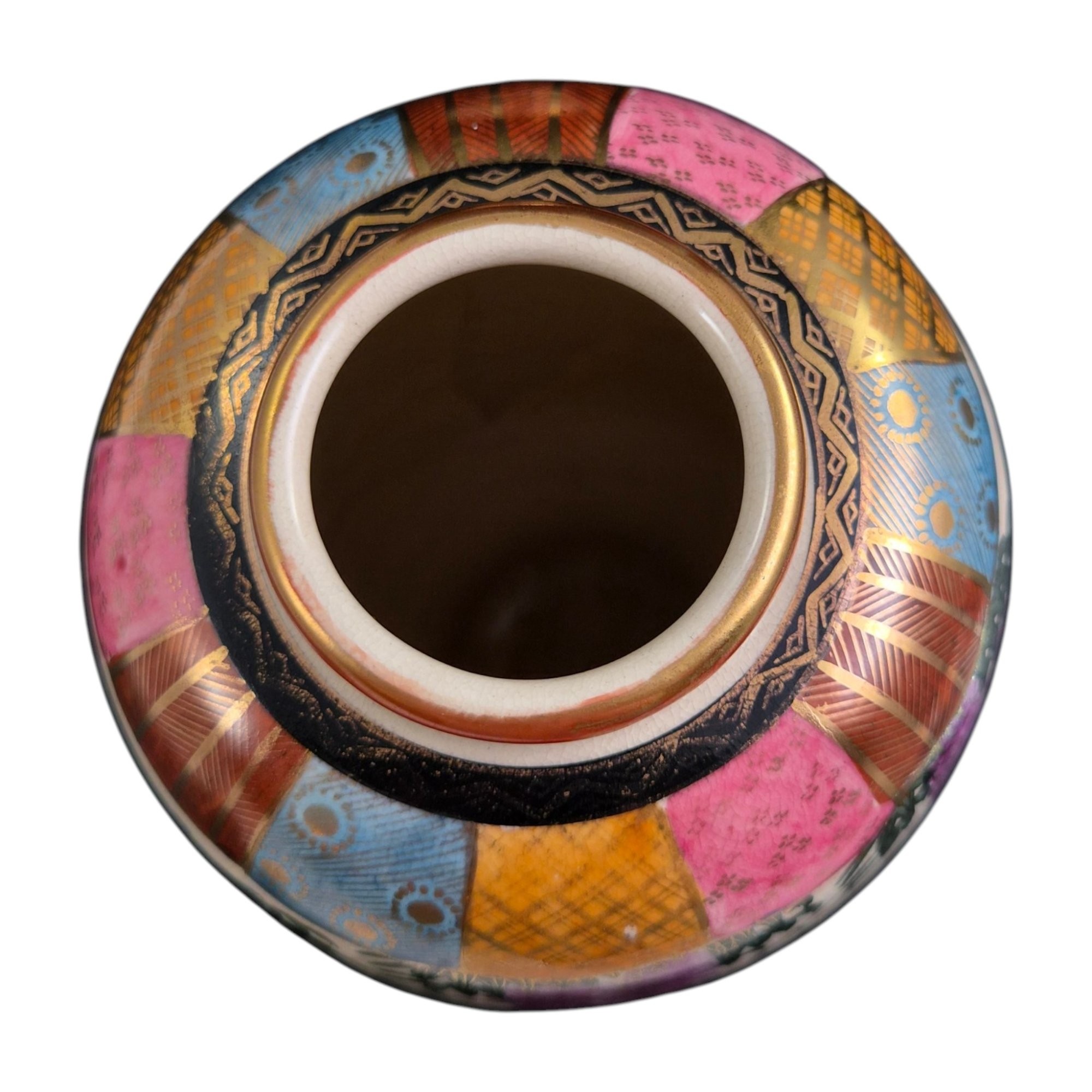
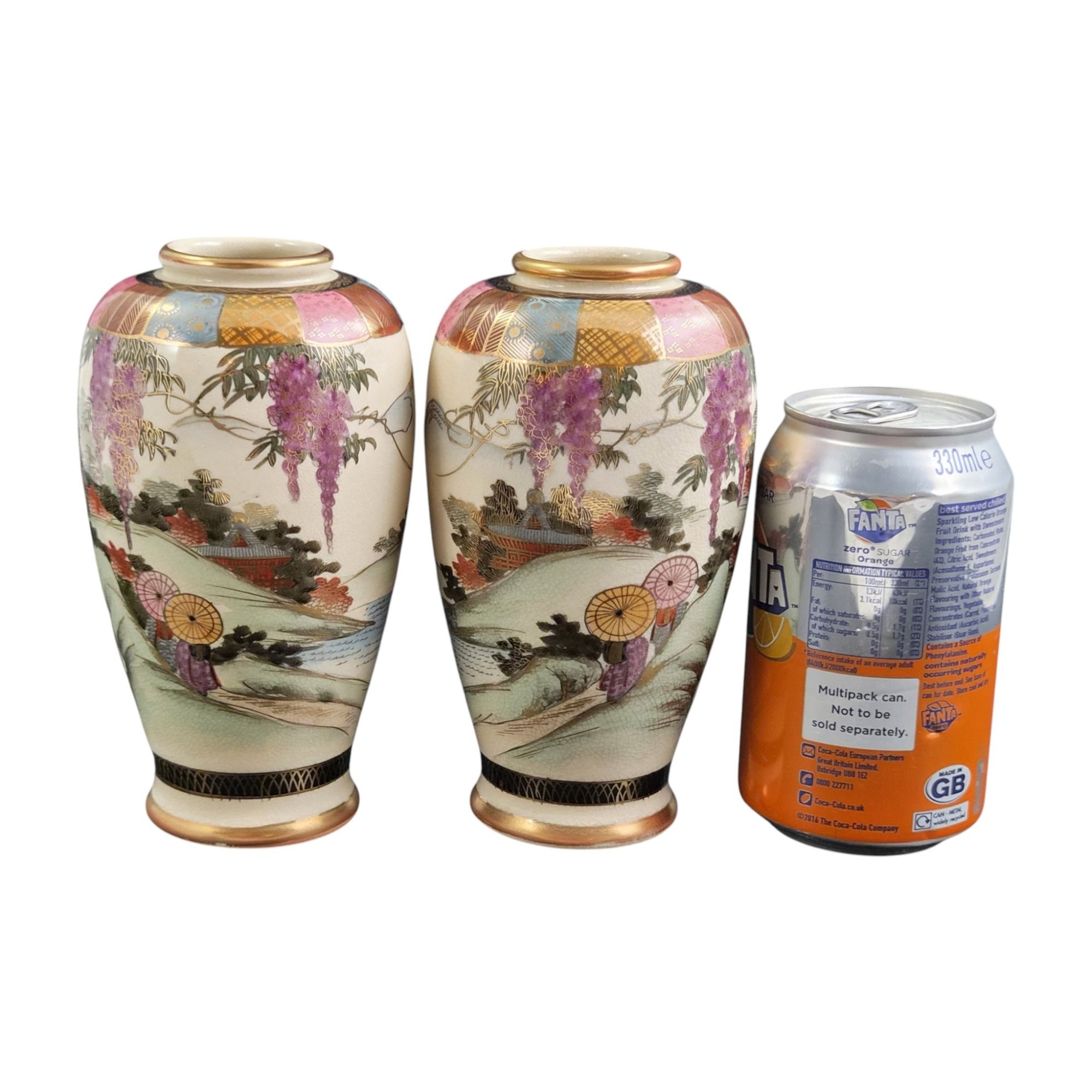
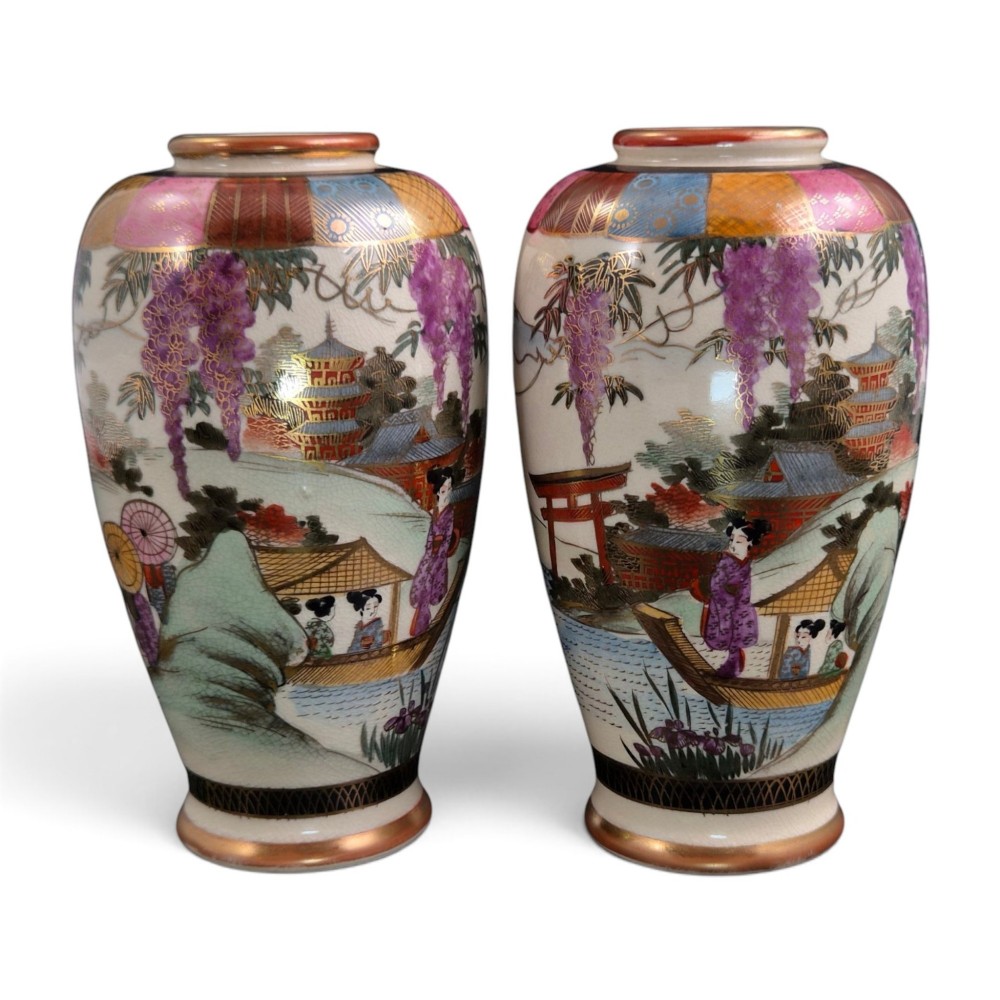
The decoration is hand-painted in overglaze enamels with generous gilding and forms a continuous landscape. Flowering wisteria hangs from above, a vermilion torii stands at the shore, and beyond the water the roofs of a temple and a pagoda rise among pines and maples. A pleasure boat carrying figures in kimono lies at the landing, travellers with parasols climb a hillside path, and irises grow at the water's edge. The shoulder is banded with a nishikide brocade border of overlapping fan-shaped segments in rose, sky blue, ochre and iron red, each filled with engraved gilding. The interior of the neck carries a black and gold key-fret band. The two vases form a mirrored pair rather than a repetition of the same design.

The quality of the work is very high. The landscape is painted by an experienced master: a confident fine line, carefully worked faces and figures, precise placement of the gilt outlines and impeccably controlled engraving through the gold of the brocade band. Both vases were conceived as a single composition, which demanded a unified idea and considerable discipline of execution.

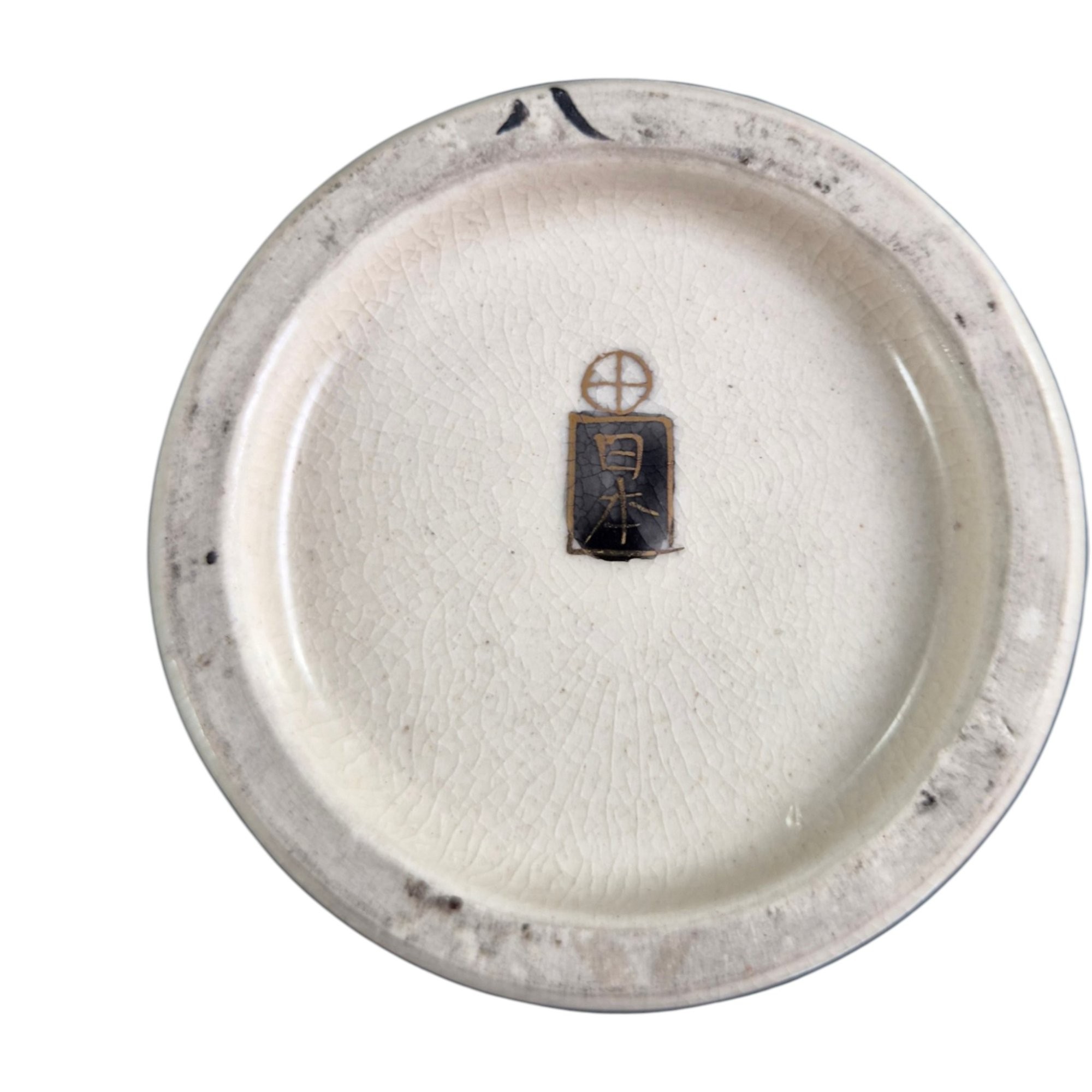
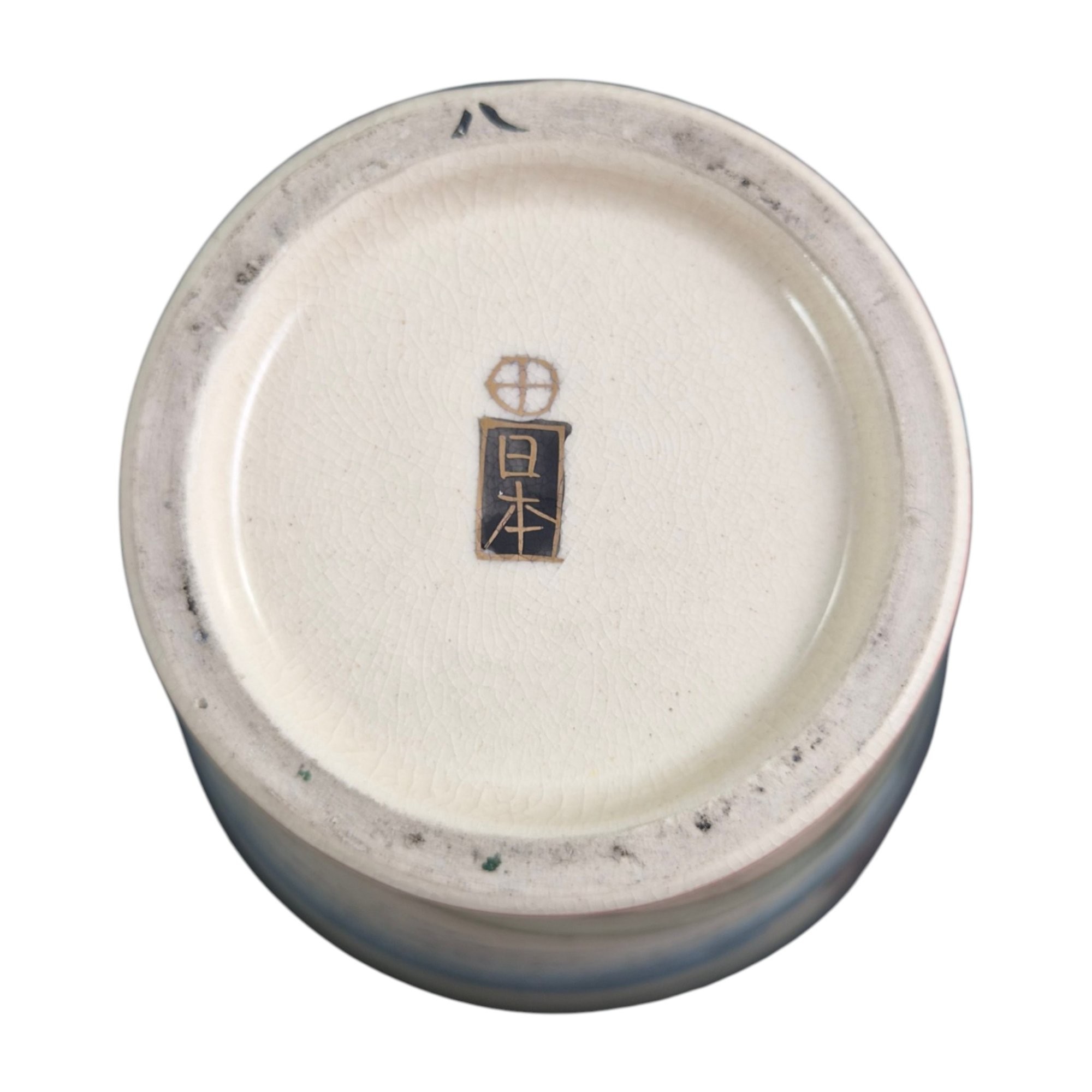
The underside of each vase bears, in gold, the crest of the Shimazu clan — a cross within a circle — above a black rectangular cartouche framed in gold containing two gold characters, 日本, Nihon, meaning Japan. On the outer wall of each foot the character 八, "eight", is painted in black, most probably a workshop model number. The cream body with its fine crackle, the delicate brushwork, the engraved gilding and the nishikide brocade borders are characteristic of the Kyō-Satsuma tradition, circa 1910–1920.

Collector interest in genuine Satsuma continues to grow steadily. These are not only an ornament for any interior but a sound investment: prices for authentic hand-painted and gilded pieces rise from year to year, and well-preserved pairs, particularly in their original box, are becoming increasingly scarce.

Dimensions

Vase 1: 15.3 cm high; 8.7 cm diameter; 300 g.

Vase 2: 15.3 cm high; 8.7 cm diameter; 274 g.

Condition

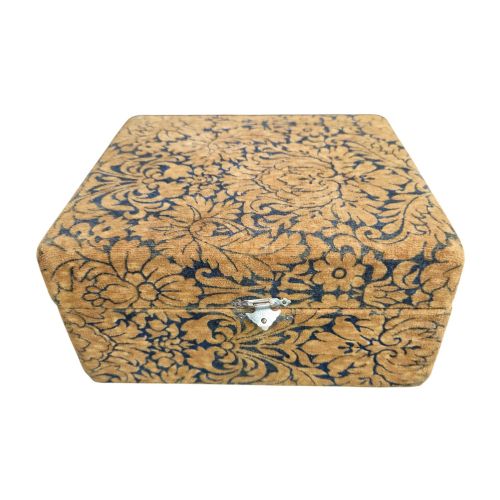
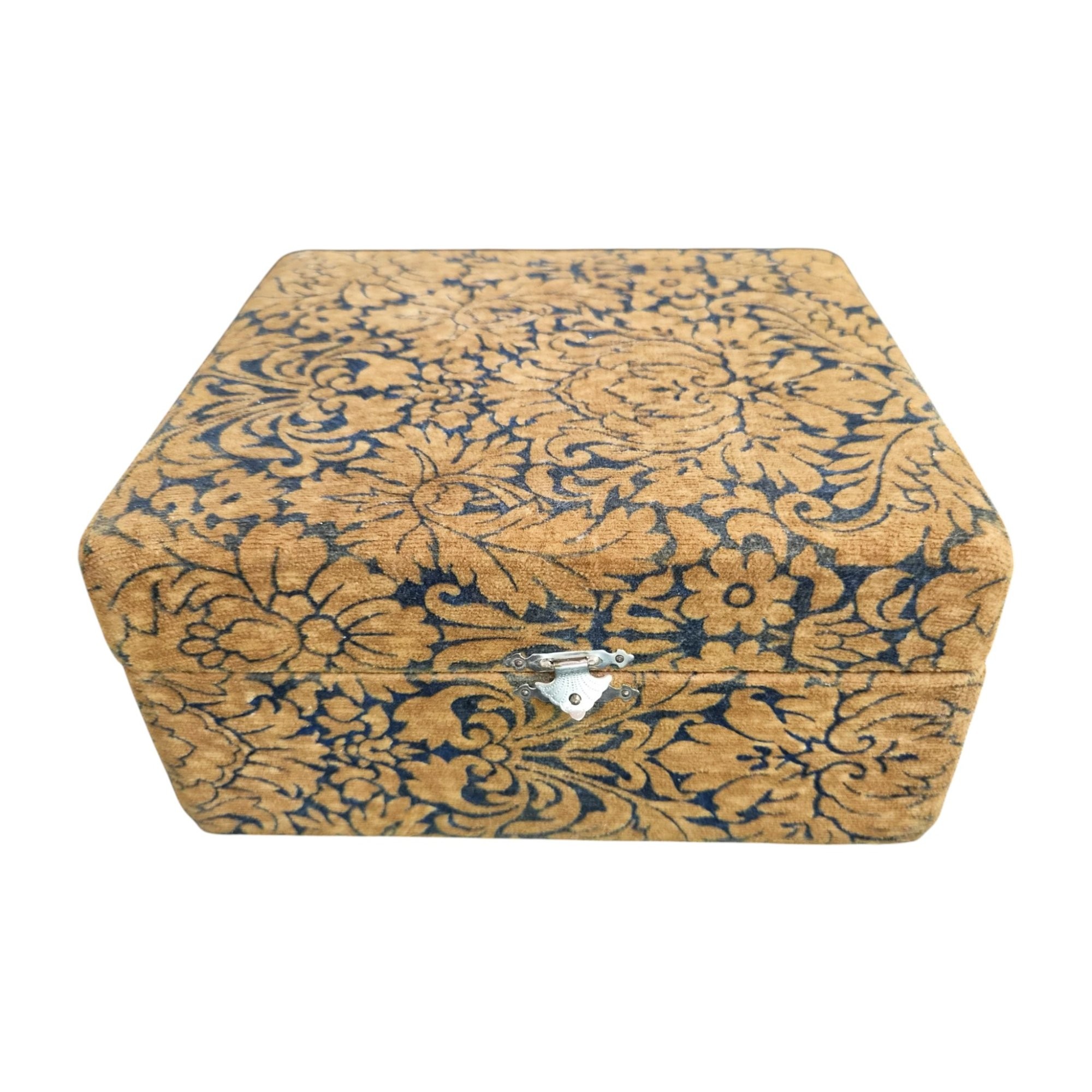
Excellent. UV inspection confirms the absence of restoration, overpainting, chips and cracks. Minor rubbing to the gilding on the rim and foot. The fine crazing of the glaze is inherent to this type of ceramic and is not a fault. The original box is complete and closes properly; the covering fabric and lining show signs of age.

Please study the accompanying photographs carefully as they form an integral part of this description. If you have any questions, we will be happy to answer them. The item will be shipped with full tracking and insurance. Shipping costs include handling, packaging and postage.

Physical Dimensions
Height
15.3cm (6.02")
Width
8.7cm (3.43")
Depth
8.7cm (3.43")
Declaration

Ritas Bazaar has dated this Japanese Satsuma Vase Pair to the Edwardian era.
Reference Numbers
Sellingantiques Reference
SA1234310
Dealers Internal Reference
B1866
Description
A pair of small Japanese Satsuma vases, preserved together with the original padded fitted box in which they were sold.
Each vase is of ovoid form with a profiled neck and a spreading foot, the cream body covered by a fine, even crackle.
Ritas Bazaar
fig 1. A pair of cream ceramic Satsuma vases decorated with hand-painted scenes of purple wisteria, figures in boats, and pagodas with gilded highlights.
fig 1. Japanese Satsuma Vase Pair, Wisteria and Lake Landscape, Boxed, C.1910–1920

The decoration is hand-painted in overglaze enamels with generous gilding and forms a continuous landscape. Flowering wisteria hangs from above, a vermilion torii stands at the shore, and beyond the water the roofs of a temple and a pagoda rise among pines and maples. A pleasure boat carrying figures in kimono lies at the landing, travellers with parasols climb a hillside path, and irises grow at the water's edge. The shoulder is banded with a nishikide brocade border of overlapping fan-shaped segments in rose, sky blue, ochre and iron red, each filled with engraved gilding. The interior of the neck carries a black and gold key-fret band. The two vases form a mirrored pair rather than a repetition of the same design.
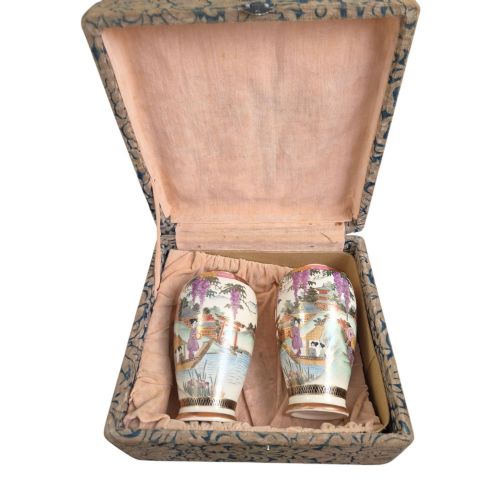
fig 2. A pair of cream ceramic Satsuma vases decorated with hand-painted scenes of purple wisteria, figures in boats, and pagodas with gilded highlights.
fig 2. Japanese Satsuma Vase Pair, Wisteria and Lake Landscape, Boxed, C.1910–1920

The quality of the work is very high. The landscape is painted by an experienced master: a confident fine line, carefully worked faces and figures, precise placement of the gilt outlines and impeccably controlled engraving through the gold of the brocade band. Both vases were conceived as a single composition, which demanded a unified idea and considerable discipline of execution.
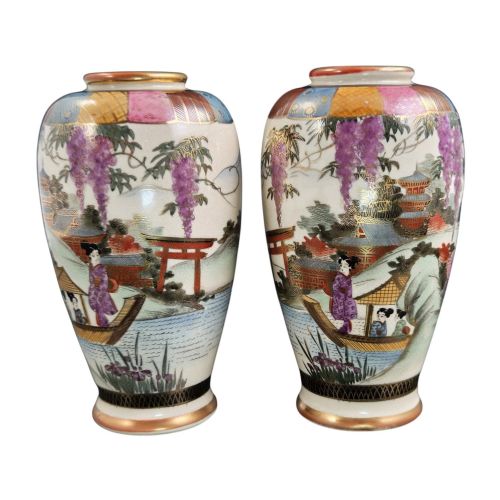
fig 3. A pair of cream ceramic Satsuma vases decorated with hand-painted scenes of purple wisteria, figures in boats, and pagodas with gilded highlights.
fig 3. Japanese Satsuma Vase Pair, Wisteria and Lake Landscape, Boxed, C.1910–1920

The underside of each vase bears, in gold, the crest of the Shimazu clan — a cross within a circle — above a black rectangular cartouche framed in gold containing two gold characters, 日本, Nihon, meaning Japan. On the outer wall of each foot the character 八, "eight", is painted in black, most probably a workshop model number. The cream body with its fine crackle, the delicate brushwork, the engraved gilding and the nishikide brocade borders are characteristic of the Kyō-Satsuma tradition, circa 1910–1920.
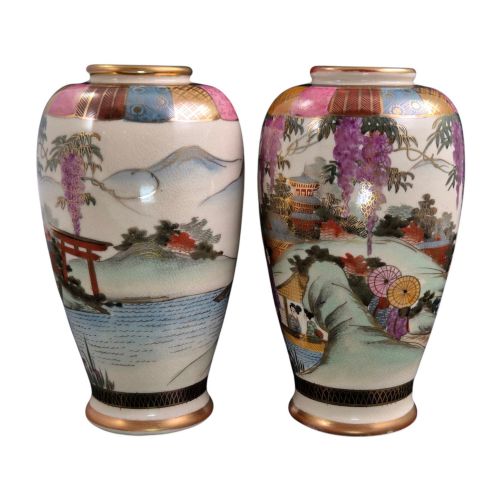
fig 4. A pair of cream ceramic Satsuma vases decorated with hand-painted scenes of purple wisteria, figures in boats, and pagodas with gilded highlights.
fig 4. Japanese Satsuma Vase Pair, Wisteria and Lake Landscape, Boxed, C.1910–1920

Collector interest in genuine Satsuma continues to grow steadily. These are not only an ornament for any interior but a sound investment: prices for authentic hand-painted and gilded pieces rise from year to year, and well-preserved pairs, particularly in their original box, are becoming increasingly scarce.
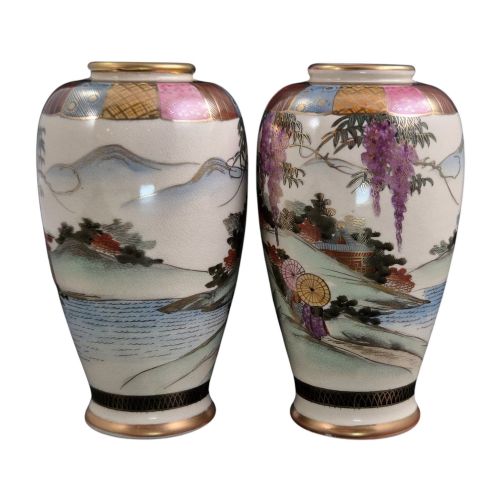
fig 5. A pair of cream ceramic Satsuma vases decorated with hand-painted scenes of purple wisteria, figures in boats, and pagodas with gilded highlights.
fig 5. Japanese Satsuma Vase Pair, Wisteria and Lake Landscape, Boxed, C.1910–1920

Dimensions

Vase 1: 15.3 cm high; 8.7 cm diameter; 300 g.

Vase 2: 15.3 cm high; 8.7 cm diameter; 274 g.

Condition

Excellent. UV inspection confirms the absence of restoration, overpainting, chips and cracks. Minor rubbing to the gilding on the rim and foot. The fine crazing of the glaze is inherent to this type of ceramic and is not a fault. The original box is complete and closes properly; the covering fabric and lining show signs of age.
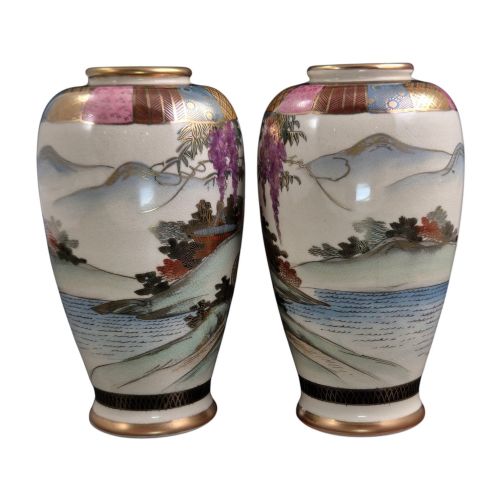
fig 6. A pair of cream ceramic Satsuma vases decorated with hand-painted scenes of purple wisteria, figures in boats, and pagodas with gilded highlights.
fig 6. Japanese Satsuma Vase Pair, Wisteria and Lake Landscape, Boxed, C.1910–1920

Please study the accompanying photographs carefully as they form an integral part of this description. If you have any questions, we will be happy to answer them. The item will be shipped with full tracking and insurance. Shipping costs include handling, packaging and postage.

Height
15.3cm (6.02")
Width
8.7cm (3.43")
Depth
8.7cm (3.43")
Date of Manufacture

Ritas Bazaar has dated this Japanese Satsuma Vase Pair to the Edwardian era.

Reference Numbers
Sellingantiques Ref
SA1234310
Dealers Internal Ref
B1866
Ritas Bazaar
Sellingantiques verified Since Nov 2025
Dealer Profile

You can view the stock and full dealer information on the Ritas Bazaar Profile Page
PDF SHARE
SAVE
A pair of cream ceramic Satsuma vases decorated with hand-painted scenes of purple wisteria, figures in boats, and pagodas with gilded highlights.
1 / 15
Archive I A pair of cream ceramic Satsuma vases decorated with hand-painted scenes of purple wisteria, figures in boats, and pagodas with gilded highlights.

Japanese Satsuma Vase Pair, Wisteria and Lake Landscape, Boxed, C.1910–1920
Archive II A pair of cream ceramic Satsuma vases decorated with hand-painted scenes of purple wisteria, figures in boats, and pagodas with gilded highlights. View II
Archive III A pair of cream ceramic Satsuma vases decorated with hand-painted scenes of purple wisteria, figures in boats, and pagodas with gilded highlights. View III
Archive IV A pair of cream ceramic Satsuma vases decorated with hand-painted scenes of purple wisteria, figures in boats, and pagodas with gilded highlights. View IV
Archive V A pair of cream ceramic Satsuma vases decorated with hand-painted scenes of purple wisteria, figures in boats, and pagodas with gilded highlights. View V
Archive VI A pair of cream ceramic Satsuma vases decorated with hand-painted scenes of purple wisteria, figures in boats, and pagodas with gilded highlights. View VI
Archive VII A pair of cream ceramic Satsuma vases decorated with hand-painted scenes of purple wisteria, figures in boats, and pagodas with gilded highlights. View VII
Archive VIII A pair of cream ceramic Satsuma vases decorated with hand-painted scenes of purple wisteria, figures in boats, and pagodas with gilded highlights. View VIII
Archive IX A pair of cream ceramic Satsuma vases decorated with hand-painted scenes of purple wisteria, figures in boats, and pagodas with gilded highlights. View IX
Archive X A pair of cream ceramic Satsuma vases decorated with hand-painted scenes of purple wisteria, figures in boats, and pagodas with gilded highlights. View X
Archive XI A pair of cream ceramic Satsuma vases decorated with hand-painted scenes of purple wisteria, figures in boats, and pagodas with gilded highlights. View XI
Archive XII A pair of cream ceramic Satsuma vases decorated with hand-painted scenes of purple wisteria, figures in boats, and pagodas with gilded highlights. View XII
Archive XIII A pair of cream ceramic Satsuma vases decorated with hand-painted scenes of purple wisteria, figures in boats, and pagodas with gilded highlights. View XIII
Archive XIV A pair of cream ceramic Satsuma vases decorated with hand-painted scenes of purple wisteria, figures in boats, and pagodas with gilded highlights. View XIV
Archive XV A pair of cream ceramic Satsuma vases decorated with hand-painted scenes of purple wisteria, figures in boats, and pagodas with gilded highlights. View XV
FURTHER BROWSING

Visitors also looked at these ⇣

Enlarged Archival View
Telephone 07434 626011
Location
Hertfordshire
United Kingdom
Verified Since Nov 2025
Items For Sale 243
Items Sold 46
Ritas Bazaar
Verified Since Nov 2025
View Dealer Info
Location: Hertfordshire, United Kingdom
Verified
Nov 2025
For Sale
243
Sold
46
A pair of cream ceramic Satsuma vases decorated with hand-painted scenes of purple wisteria, figures in boats, and pagodas with gilded highlights.
Japanese Satsuma Vase Pair, Wisteria and Lake Landscape, Boxed, c.1910–1920
Ref: SA1234310
A pair of cream ceramic Satsuma vases decorated with hand-painted scenes of purple wisteria, figures in boats, and pagodas with gilded highlights.
Detail View 1
Detail View 2
Detail View 3
Detail View 4
Detail View 5
Detail View 6
Detail View 7
Detail View 8
Detail View 9
Detail View 10
Detail View 11
Detail View 12
Detail View 13
Detail View 14
Archival Detail
Every single antique dealer on our platform is individually approved by our internal team. We verify their professional trade history, ethical standards, and photographic quality to ensure a secure, high-standard buying environment. Upon joining, every dealer agrees to a strict 9-point code of conduct. While issues can occasionally arise, our dealers typically resolve them swiftly and directly with the buyer. In fact, since our founding in 2002, Sellingantiques has only had to step in to help resolve an issue on roughly five occasions—a true testament to the quality of our dealers and their dedication to your happiness.
Our dealers are highly experienced in packing and shipping fragile, high-value antiques. Because you are in direct contact with the dealer, you will be able to easily go through all available shipping and insurance options together to ensure your item arrives safely.
Antiques are the ultimate green purchase. By choosing historical pieces over newly manufactured goods, you completely eliminate the carbon footprint of modern mass production while preserving exceptional, timeless craftsmanship.

Originating in Satsuma province during the late 16th century, Satsuma ware evolved significantly during the Meiji and Taisho periods. Developed predominantly for Western export, the style transitioned from rustic dark clays to light cream earthenware adorned with intricate enamels and gilt landscapes.

Satsuma pottery is constructed from a light-coloured earthenware body covered in a low-fired, finely crackled clear glaze. Artisans applied detailed overglaze enamel pigments and gold leaf application to depict flora, figures, and architectural landscapes.

Authentic period pieces display a characteristic micro-fine crackle pattern across the cream ground, along with crisp overglaze enamel brushwork. Look for Japanese character marks, maker signatures, or the Shimazu family crest stamped or painted on the underside of the base.

A pair of decorative ceramic vases can be arranged symmetrically on a sideboard top, mantelpiece, or shelving unit. Their warm cream tones and intricate metallic accents complement dark wood furniture, neutral backdrops, or eclectic gallery displays.

Dust regularly with a dry, soft-bristled brush or microfibre cloth to remove surface dirt. Avoid immersing the ceramic in water or using abrasive chemical cleaners, as moisture can penetrate the crackle glaze and damage delicate overglaze gilding.
items
Add keywords to the filter
Price
£100
£250000
Era
Movements
Material
Origin
Stock Location
Freshness
Online Payments
Categories