
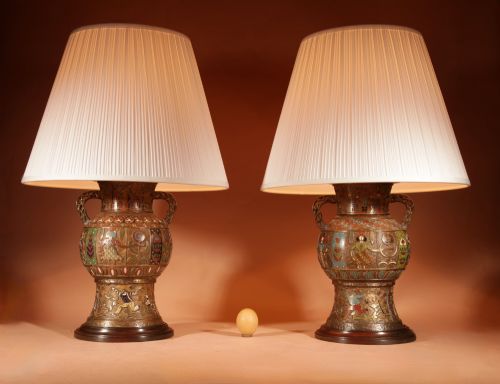
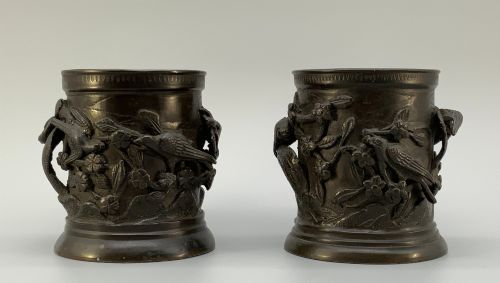
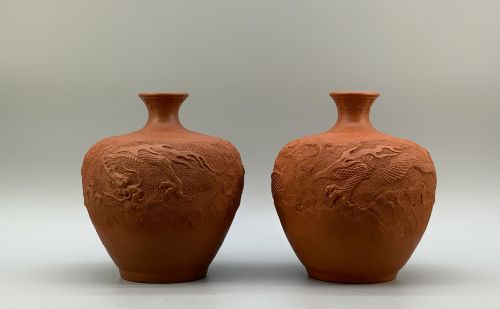
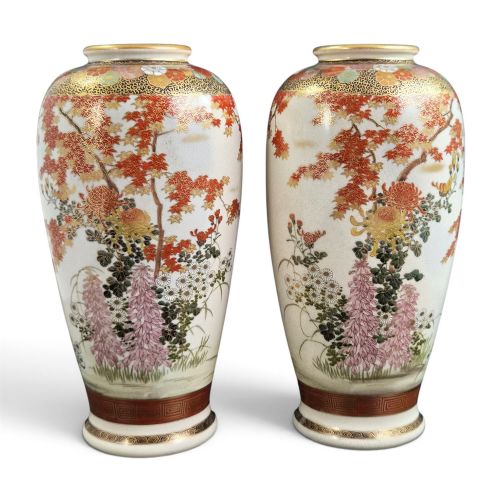

Pair Japanese Urns
Pair japanese urns bring substantial metalwork and earthenware from nineteenth-century workshops into modern rooms.

Pair Japanese Urns
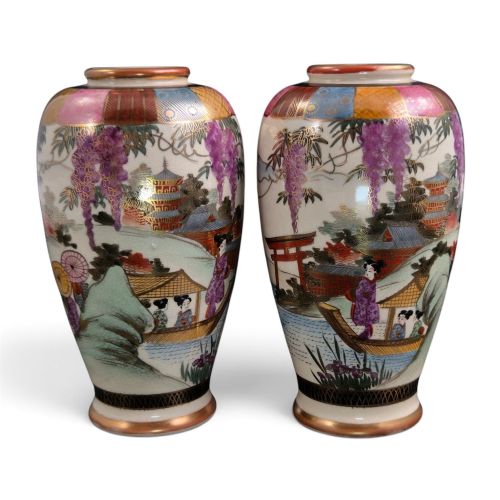
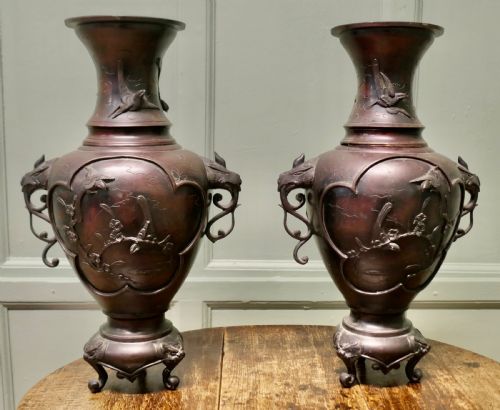
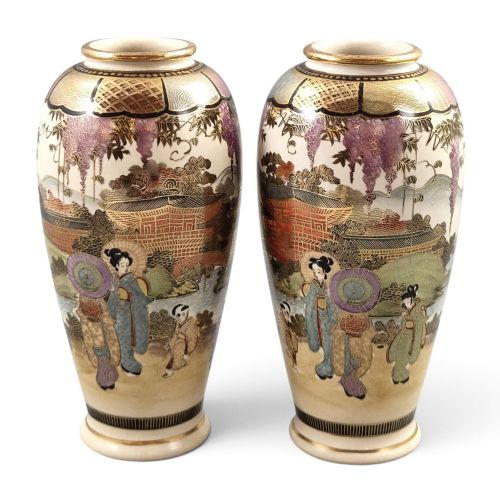
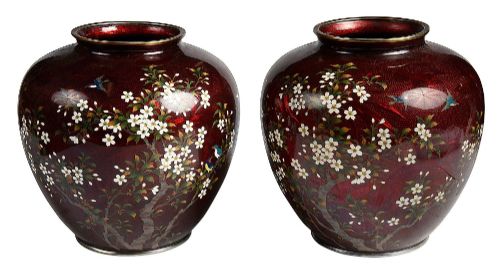
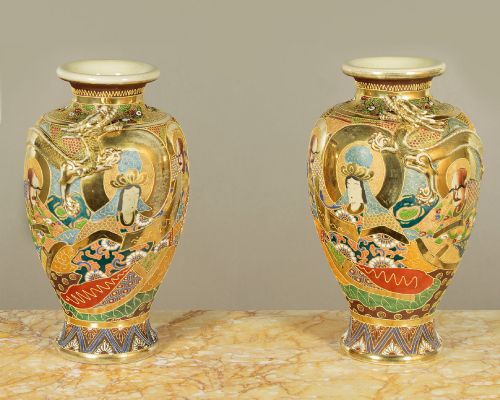
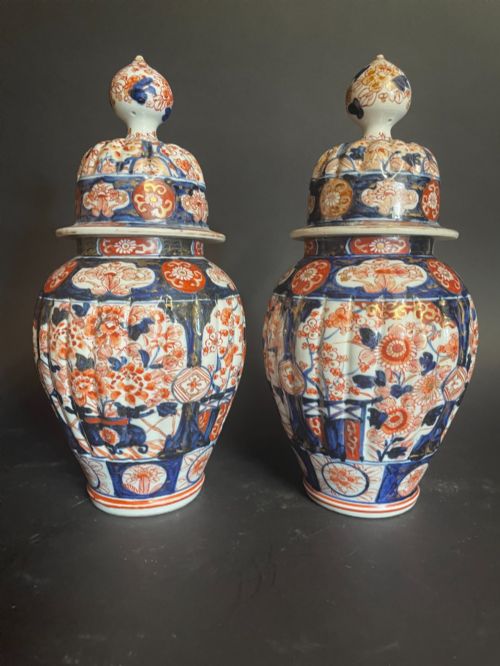
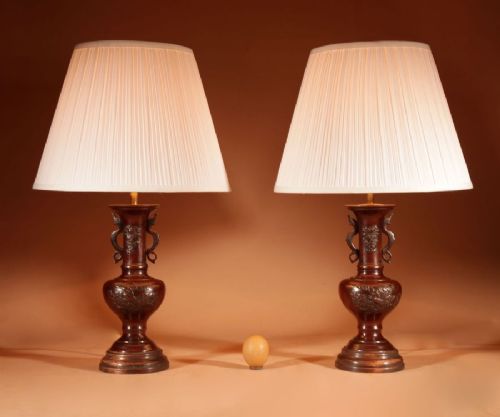
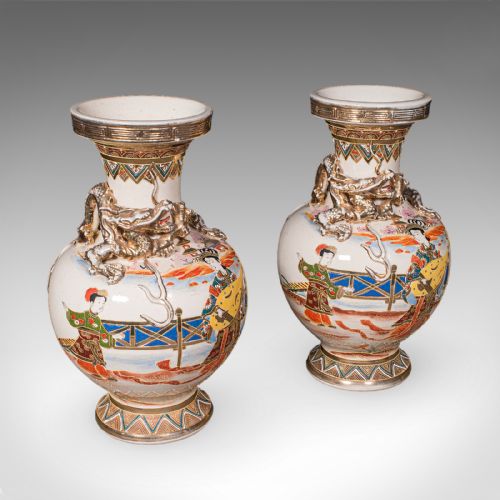
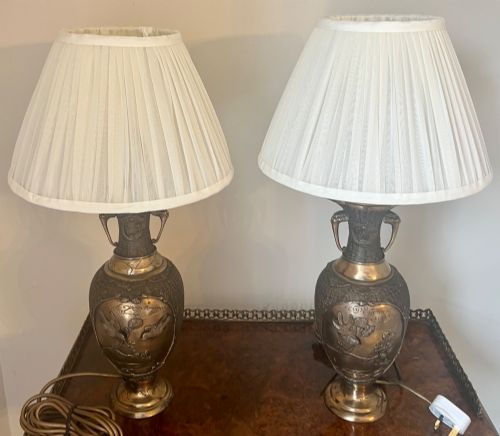
Pair japanese urns encompass decorative vessels and lidded jars produced across the Meiji, Taisho, and Showa periods. Buyers frequently encounter bronze specimens featuring birds, blossoms, or dragons alongside ceramic Satsuma and Imari earthenware.
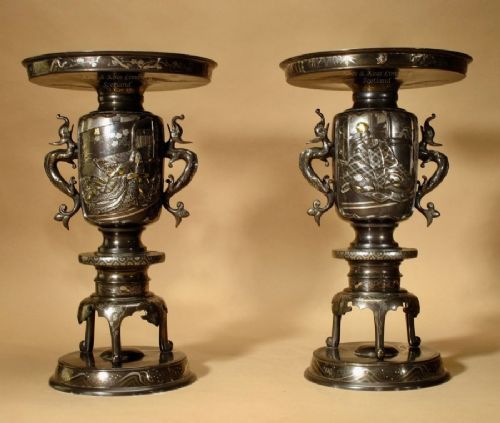
Makers fashioned these symmetrical compositions for display on mantels, tables, and pedestals in both traditional interiors and Victorian drawing rooms. Surviving examples range from small baluster vases to monumental floor-standing pieces mounted with twin handles.
How They Were Made
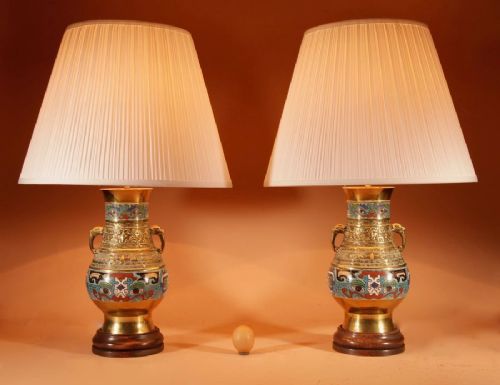
Artisans cast bronze and brass components with intricate relief details, often incorporating gold leaf, champlevé enamel, and inlaid wire. Potters shaped earthenware and porcelain bodies, applying slip decoration and vibrant polychrome glazes before kiln firing.
Many ceramic and metal surfaces received hand-painted pictorial scenes depicting landscapes, figures, and botanical motifs. Workshops utilised specialised techniques like cloisonné wirework to partition enamel pastes on metal bases.
Pair Japanese Urns Retail Price Guide 2026
Typical asking prices for pair japanese urns among the pieces listed under this phrase on Sellingantiques today, from the lower quarter to the upper quarter. They describe what is for sale here now, not the wider market.
Egrets, dragons, and fierce phoenixes occasionally double as functional handles.
What Varies in Quality
Subtlety of modelling and precision in surface decoration distinguish superior metal and ceramic pairs. Finer pieces demonstrate crisp casting lines, delicate brushwork, and secure enamelling without surface pitting.
The distinction between standard commercial output and master workshop production rests upon artistic execution and material weight. Original matching mounts and signed bases elevate the integrity of a matching set.
Maruni Kobe·Shozan·Manpei·Kinkōzan·Kato Sanhei
The Pair Japanese Urns Glossary
- Meiji Period
- The era spanning from eighteen sixty-eight to nineteen twelve, characterised by significant artistic output and international export of Japanese metalwork and ceramics.
- Satsuma
- An earthenware ceramic type featuring a crackle-glaze finish, typically decorated with polychrome enamel pigments and heavy gilding.
- Imari
- A distinct style of Japanese porcelain featuring a tripartite palette of underglaze blue, iron red, and gold.
- Champlevé
- An enamelling technique where troughs are carved into a metal surface and filled with vitreous paste prior to firing.
- Cloisonné
- A method of decorating metal objects by placing flat metal wires on edge to form compartments for enamel.
Pair Japanese Urns: Frequently Asked Questions
How do I style pair japanese urns at home?
Position symmetrical pairs on console tables, mantelpieces, or dedicated stands where their proportions can anchor a room. Ensure adequate lighting highlights the surface patination and painted details without crowding the surrounding space.
Allow sufficient clearance around larger bronze or ceramic specimens to showcase their form from multiple angles. Pair them simply with neutral backgrounds to let the metallic finishes and enamel colours stand out.
What distinguishes Satsuma from Imari ware?
Satsuma pieces utilise a cream-coloured earthenware body with a characteristic fine crackle glaze, usually painted with detailed figures and floral scenes. Imari items are hard-paste porcelains traditionally decorated in rich cobalt blue, iron red, and gilt.
Examining the weight and underside of the vessel reveals the distinct body fabric beneath the glaze. The tactile texture of slip and enamel on Satsuma differs notably from the smooth, vitrified surface of Imari porcelain.
How should I clean bronze and ceramic urns?
Dust metal and ceramic surfaces gently with a soft, dry cloth to prevent the accumulation of particles in recessed relief work. Avoid commercial chemical polishes that can strip original patination or damage delicate surface gilding.
Keep bronze and earthenware away from direct sunlight and damp environments to protect the integrity of the materials. Professional conservation advice is recommended for pieces showing structural wear.
Were these urns made for export?
Many Meiji-era metal and ceramic pairs were produced specifically for Western export following the opening of international trade routes. International exhibitions fuelled a strong demand for elaborate Japanese decorative arts in European and American homes.
Export pieces often adapted traditional forms, such as lidded jars and baluster vases, to suit Victorian interior design preferences. Workshops produced both utilitarian vessels and purely decorative display objects for this market.