




Japanese Pottery Pair
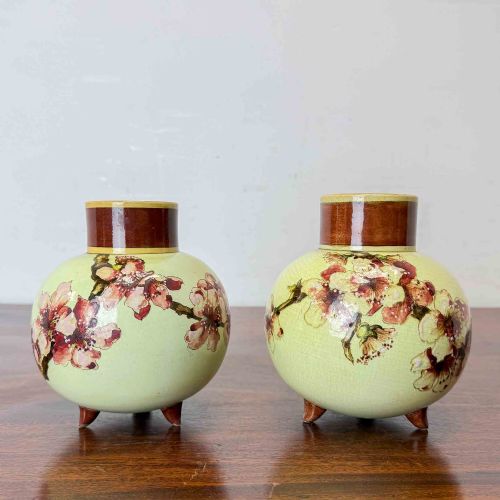
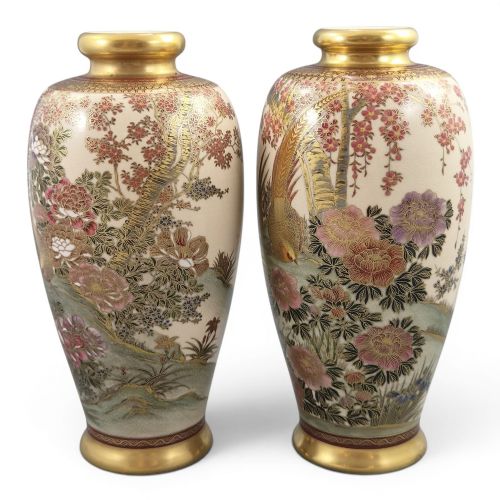
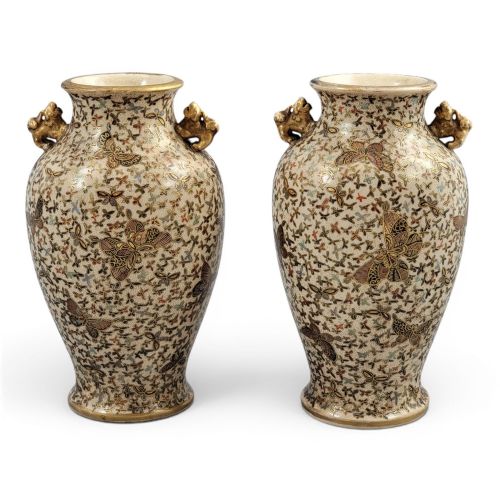
A Japanese pottery pair brings hand-painted narrative scenes and rich gilding straight into a room, offering matching balance and traditional form.
Understanding the Japanese Pottery Pair
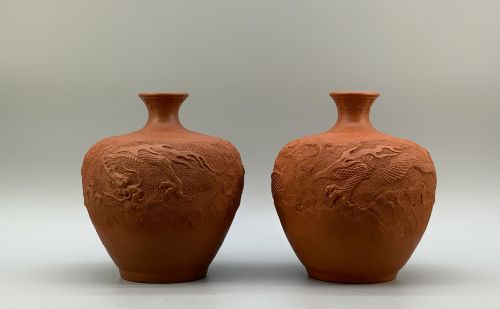
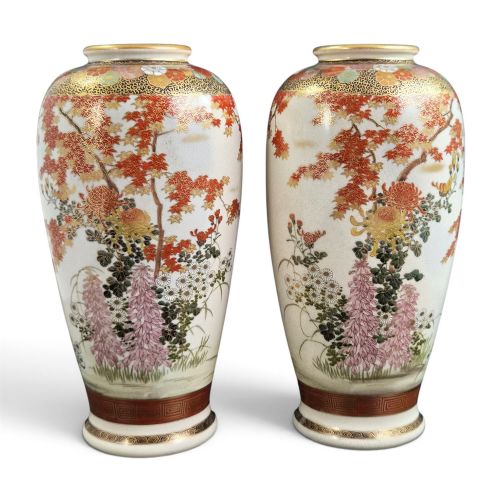
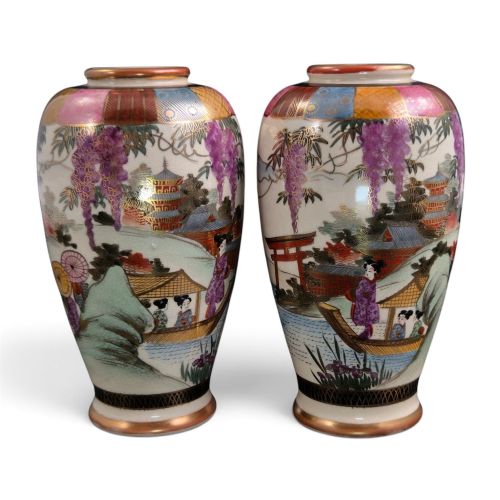
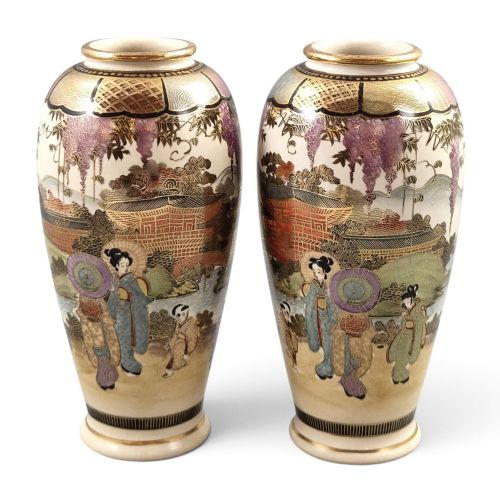
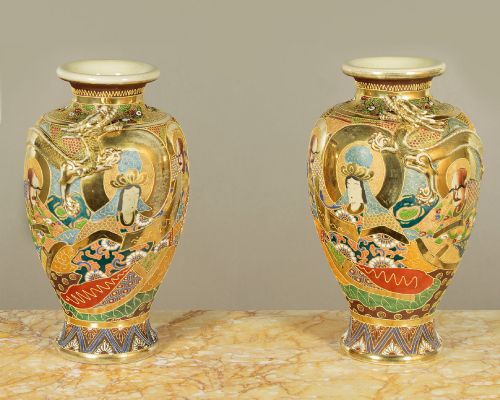
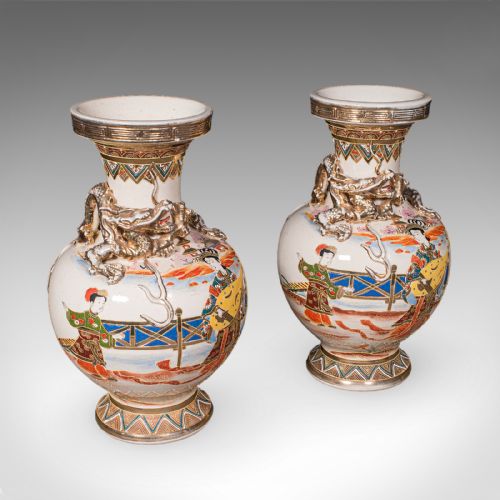
A Japanese pottery pair consists of matching decorative vessels created as counterparts, most frequently seen here as Satsuma vases dating from the Meiji and Showa periods. These ceramic works typically display detailed figural scenes, flora or mythological subjects set against crackle-glaze earthenware.
Buyers encounter forms ranging from large monumental display vases to smaller cabinet pieces, all sharing a unified decorative scheme across both items. The origins span renowned pottery centres such as Kyoto and Kobe, reflecting traditional Japanese export ceramic production for Western markets.
The aesthetic balances symmetry with intricate surface detail, where figures such as women, children and gods populate the panels. Such matching sets provide interior decorators and collectors with balanced focal points for mantelpieces or side tables.
Materials and Construction
These pieces are built from earthenware bodies finished with characteristic fine-crackled glaze, providing a textured canvas for subsequent decoration. Artisans then applied dense polychrome enamel paints alongside extensive gold leaf and gilt highlights to articulate intricate robes and borders.
Production methods relied heavily on careful hand-painting techniques, executed by skilled studio painters working within established ceramic workshops. Some items also incorporate fitted wooden presentation boxes, which protected the fragile pottery during transport and storage.
Retail Price Guide 2026
Typical UK retail prices for japanese pottery pair, calculated from the Sellingantiques database of over a million retail prices indexed since 2003. This retail price guide relies exclusively on Sellingantiques data; no external sources or auction records are used, so the figures do not describe the wider market.
Some past finds included hand-made ceramic storks alongside traditional deities, proving that Meiji potters were quite happy to translate ancient gods and wading birds into the exact same glaze.
Judging Quality and Execution
Superior examples distinguish themselves through the precision and fineness of the brushwork within the figural panels, where faces and garments retain sharp, clean lines. The application of gold leaf and enamel depth further separates standard commercial production from masterwork studio output.
The complexity of the narrative composition and the crispness of the underlying ceramic form also determine the standing of a piece. Better pairs maintain absolute symmetry in their decorative balance while executing minute patterns without crowding the surface.
Maruni Kobe·Shozan·Manpei·Kinkōzan·Hododa
The Japanese Pottery Pair Glossary
- Satsuma
- A type of Japanese earthenware featuring an ivory-coloured, crackled glaze that readily accepts polychrome enamel and gilt decoration. Originating in Satsuma Province, production later spread to major urban centres like Kyoto and Kobe to satisfy export demand.
- Meiji Period
- The era of Japanese history spanning from 1868 to 1912, characterised by rapid modernisation and a surge in decorative arts created specifically for Western international exhibitions and markets. Pieces from this time often display complex pictorial narratives and heavy gilding.
- Showa Period
- The period in Japanese history following the Taisho era, running from 1926 to 1989. Early Showa ceramics continued traditional Meiji decorative styles while adapting to changing international tastes.
- Gilt
- A thin layer of gold or gold-like material applied to the ceramic surface to highlight borders, garments and background motifs. It adds a reflective quality that catches ambient light.
- Enamel
- Opaque or translucent glass-like paints fused to the pottery surface during firing or low-temperature refiring. These colours provide the vibrant palette seen on figural and floral panels.
Frequently Asked Questions
What is Satsuma ware?
Satsuma ware is a distinct style of Japanese pottery recognised by its warm, ivory-coloured earthenware body and fine network of surface cracks. Artisans decorated these ceramic surfaces using detailed enamel paints and rich gold leaf.
This specific ceramic tradition gained immense popularity during the late nineteenth century as Japanese craftspeople produced ornate vases and decorative objects for international trade.
How were these vases displayed?
Historically, matched pairs of vases were placed symmetrically on mantelpieces, sideboards or tables within formal reception rooms. Their matching designs created visual balance and ordered composition within Victorian and Edwardian interiors.
Today, collectors continue to use them in pairs to anchor a room or display them on dedicated stands where both pieces can be viewed together.
How do I identify Meiji period pieces?
Meiji period ceramics typically date between 1868 and 1912, reflecting the artistic output of Japan's opening to Western trade. Look for intricate figural scenes, dense floral borders and signature cartouches identifying the studio or artist.
The presence of finely crackled glaze combined with heavy gilt highlights often points directly to this transformative era of Japanese craftsmanship.
Why do some items have wooden boxes?
Traditional Japanese ceramics of high quality were frequently housed in custom-made wooden storage boxes known as tomobako. These boxes often featured brushed ink inscriptions on the lid detailing the title, maker or workshop origin.
Such containers served to protect the fragile earthenware pieces from damage and provided a secure method for storage when not on display.