


Hand Painted Satsuma
Hand painted satsuma ceramics offer intricate Japanese artistry, bringing delicate figural scenes and rich gilding into traditional and modern interiors alike.
Hand Painted Satsuma
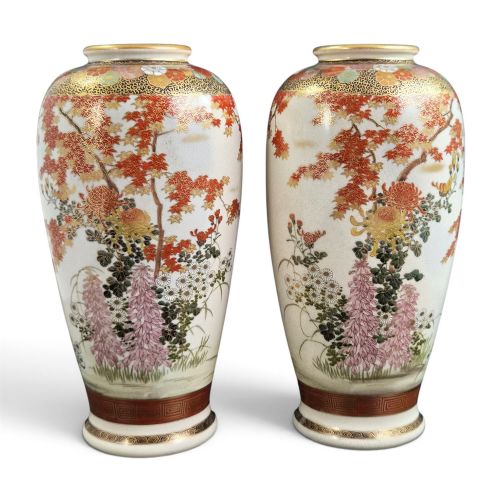
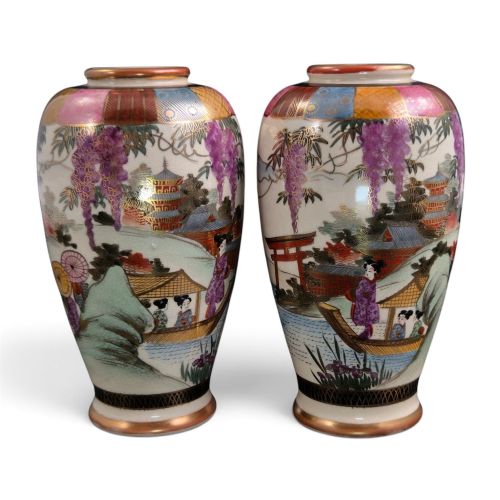
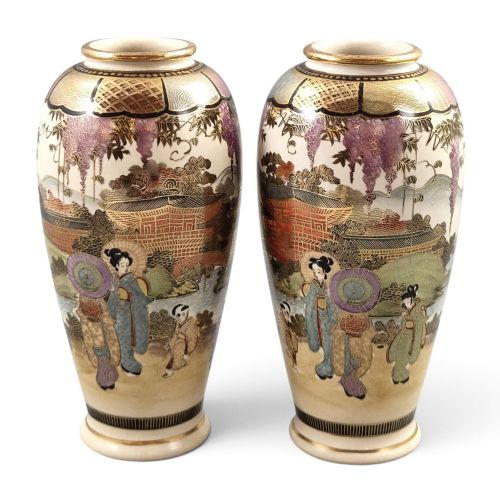
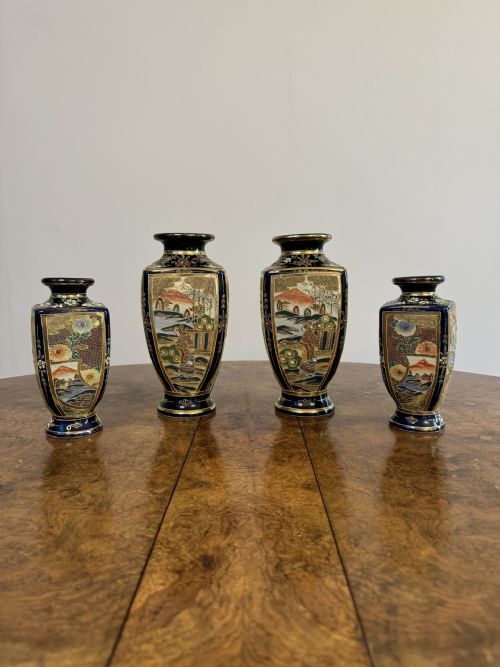
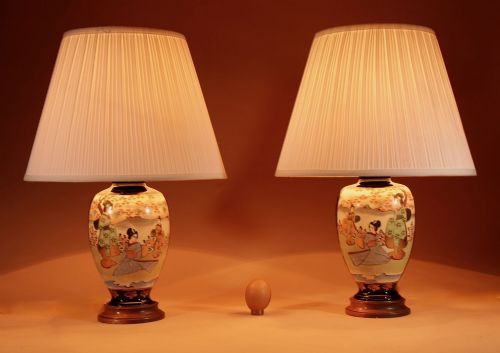
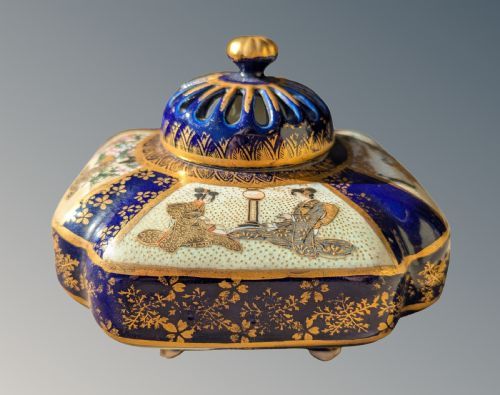
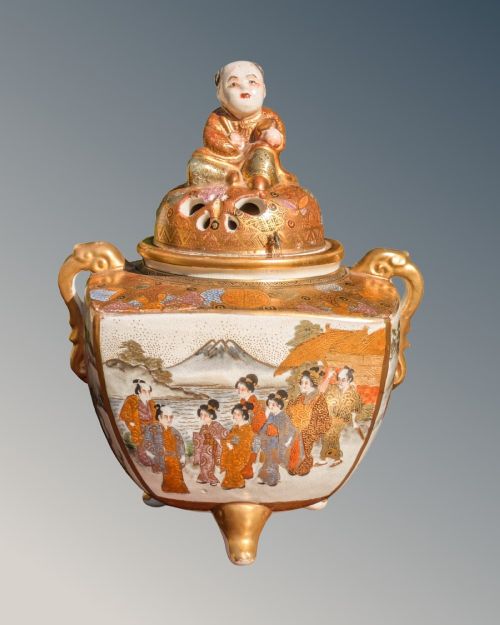
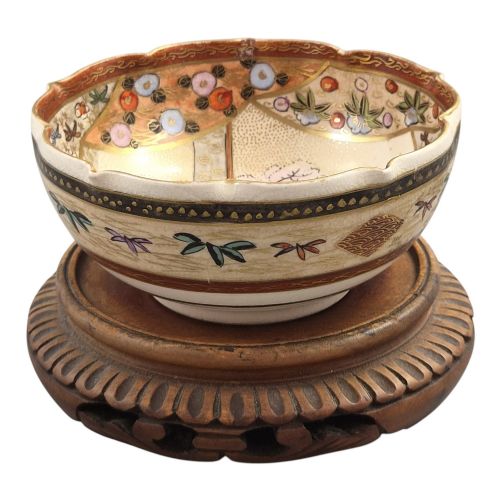
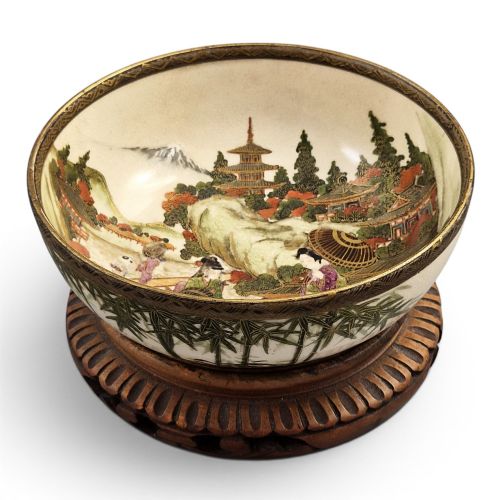
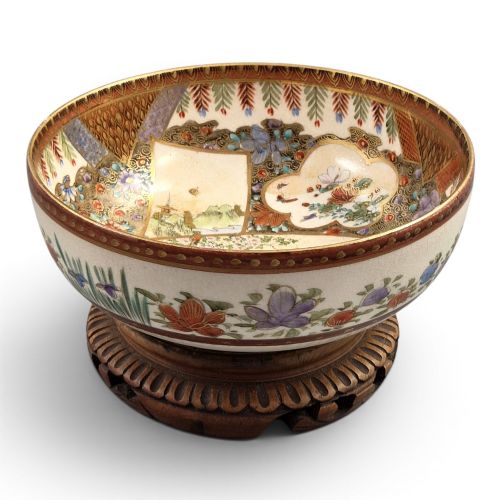
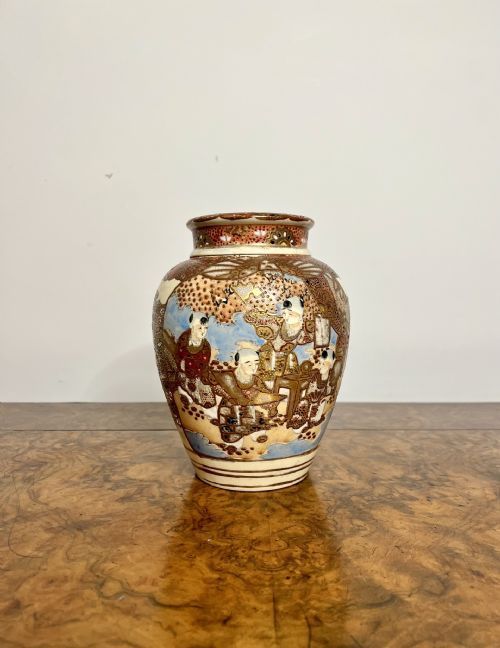
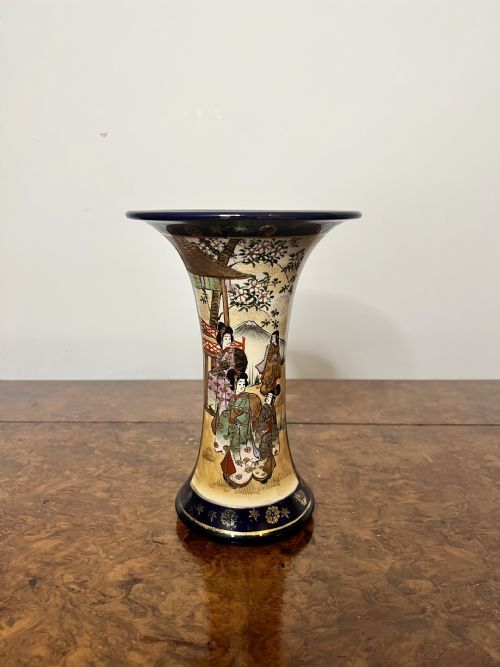
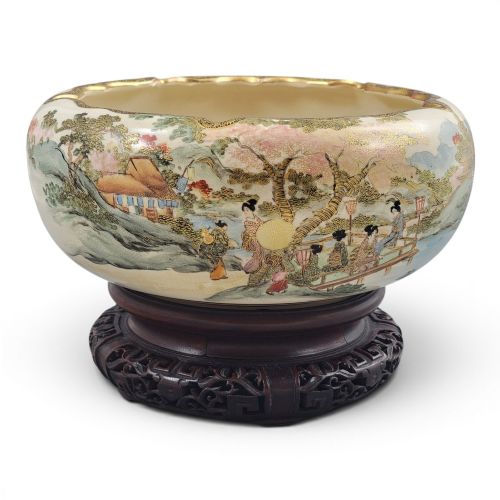
When you search for hand painted satsuma, you discover a distinctive tradition of Japanese ceramics spanning the late nineteenth century into the Taisho period. These items include large garniture vases, decorative bowls, miniature vessels, tea caddies, and tripod incense burners known as koro.
The objects commonly feature detailed courtly scenes, flora such as wisteria, and figures from Japanese folklore rendered across earthenware bodies. Most examples encountered here originate from the Meiji period and the Edwardian era, reflecting prolific workshop production centred in Kyoto and Kobe.
How they were made
Potters shaped these vessels from porous earthenware, applying a fine-crackle cream glaze that formed the characteristic canvas for subsequent decoration. Artisans then utilised mineral enamel paints alongside gold leaf and raised gilt detailing to build up multi-layered pictorial scenes.
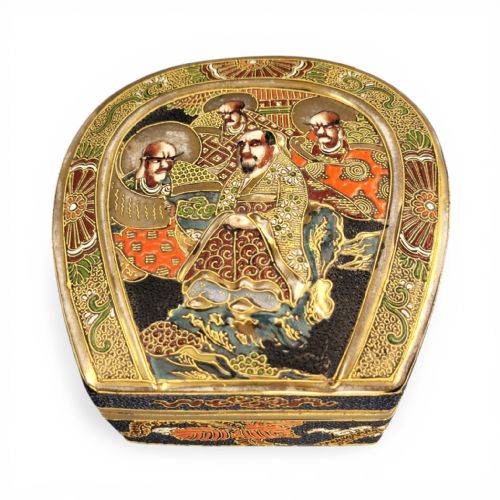
Many finer pieces incorporated moulded relief work known as moriage, adding tactile depth to robes, floral borders, and architectural motifs before final kiln firing.
Listings feature items spanning the Victorian era through the Edwardian period, the Meiji period, and the Taisho period.
What varies in quality
The application of gilding also separates tiers of execution, with the finest wares employing thick, burnished gold leaf that catches the light cleanly against the matte crackle glaze.
Koshida·Maruni Kobe·Shozan·Kizan·Kinkozan·Kozan·Shizan·Toshozan·Ryuzan·Chosei·Nikko·Hakusan·Hododa·Meizan·Gyokushu
The Hand Painted Satsuma Glossary
- Satsuma ware
- Japanese pottery originating in Satsuma Province, traditionally characterised by an ivory-coloured earthenware body covered in a fine, translucent crackle glaze.
- Koro
- A traditional Japanese tripod incense burner, usually fitted with a pierced lid, designed to diffuse scent from burning aromatics.
- Moriage
- A decorative ceramic technique where slip is piped onto the surface in raised dots or lines to create textured patterns before painting and gilding.
- Shimazu mon
- The heraldic badge or crest of the Shimazu clan, frequently stamped or painted as a mark on Satsuma pottery associated with the ruling lords of the domain.
- Natsume
- A small, flat-topped tea caddy traditionally used in Japanese chanoyu tea ceremonies, taking its name from its resemblance to a jujube fruit.
Hand Painted Satsuma: Frequently Asked Questions
What is hand painted satsuma ware?
Hand painted satsuma ware refers to Japanese earthenware ceramics decorated with intricate enamel scenes and rich gilding over a cream-coloured crackle glaze. These pieces were produced in large quantities for export during the late nineteenth and early twentieth centuries.
They encompass a wide variety of domestic and decorative forms, ranging from monumental temple jars down to miniature cabinet vases and tea caddies.
How do I identify Meiji period pieces?
Meiji period pieces are generally identified by their dense figural compositions, refined brushwork, and the inclusion of maker signatures or workshop stamps on the base. The era spans from eighteen sixty-eight to nineteen twelve, coinciding with a peak in Japanese ceramic artistry.
Many fine examples also bear the Shimazu clan crest alongside artist names associated with Kyoto and Kobe production centres.
How should I display satsuma ceramics?
These ceramics should be displayed away from direct sunlight to protect the delicate polychrome enamels and gold leaf from fading over time. Placing them on stable surfaces where their intricate details can be viewed up close allows the craftsmanship to be fully appreciated.
Larger garniture vases look striking on sideboards or mantelpieces, while smaller bowls and koro fit comfortably within enclosed cabinets.
Why does the glaze have cracks?
The crackled appearance is an intentional characteristic of genuine satsuma earthenware, created when the transparent glaze contracts at a different rate than the clay body during firing. This network of fine lines, known as crackle or craquelure, provides the textured backdrop for the painted scenes.
Darkening within these lines often develops naturally over decades as dust settles into the microscopic fissures.