



Japanese Relief Pottery
Japanese relief pottery brings sculptural figures and textured glazes together, offering distinct tactile forms that anchor a collection.
Japanese Relief Pottery
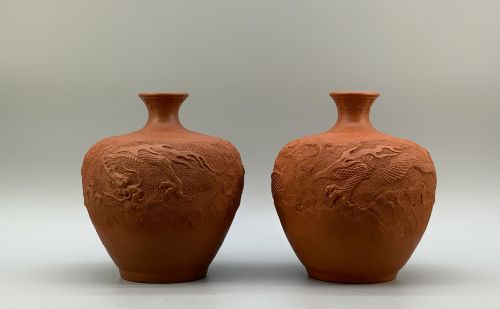
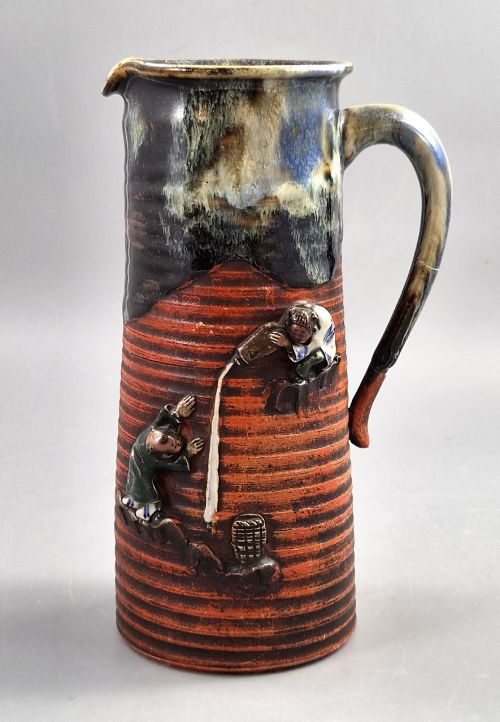
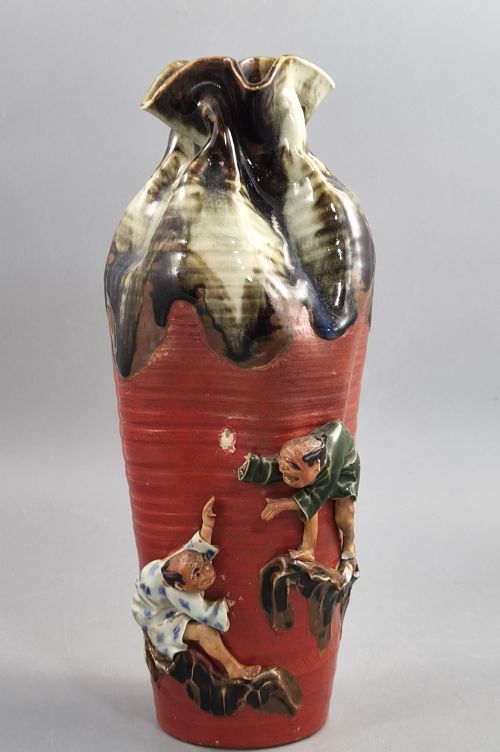
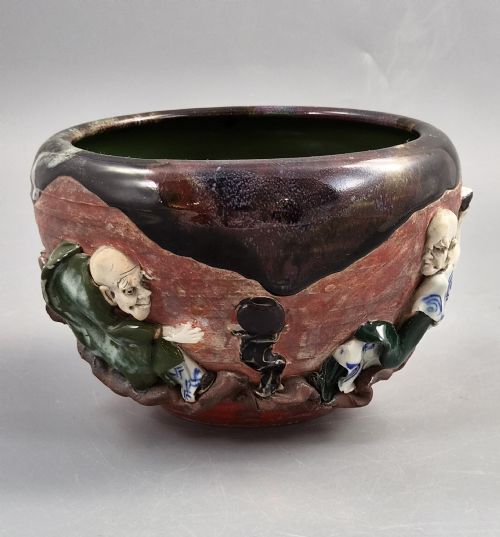
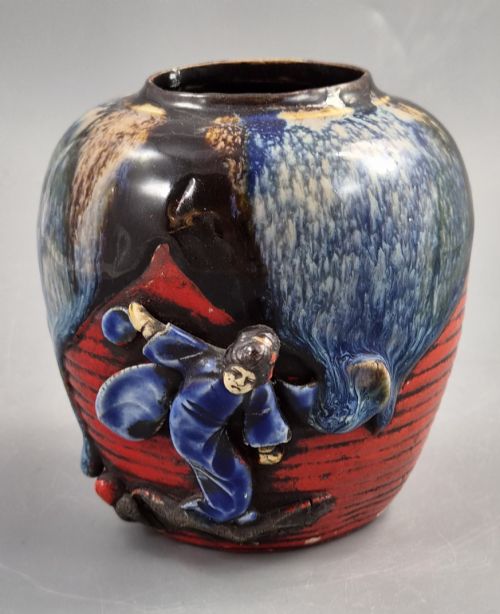
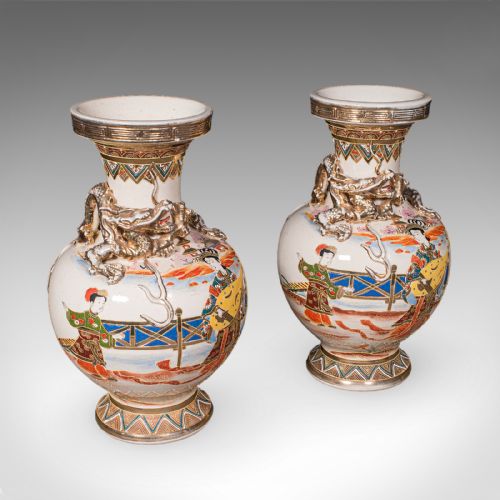
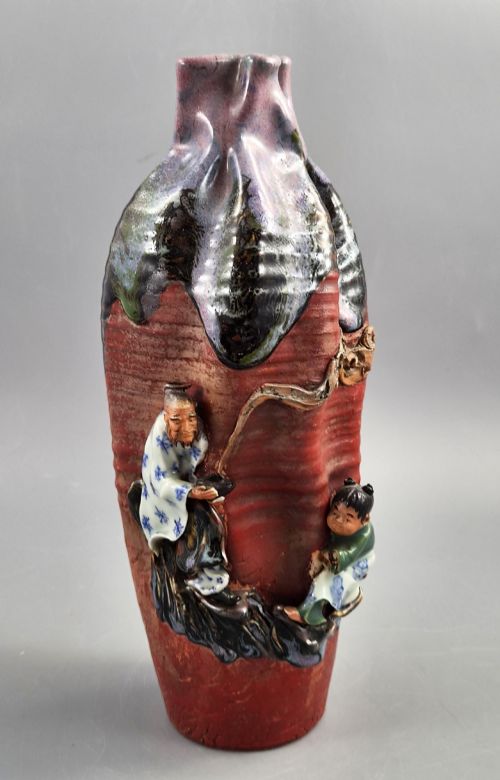
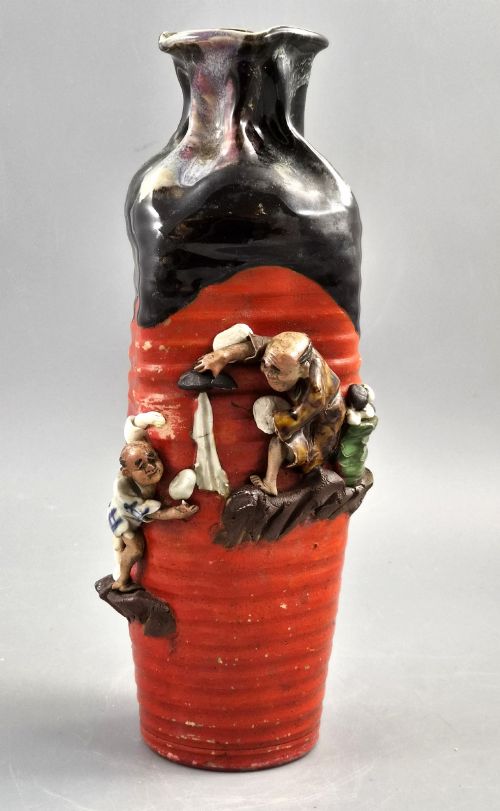
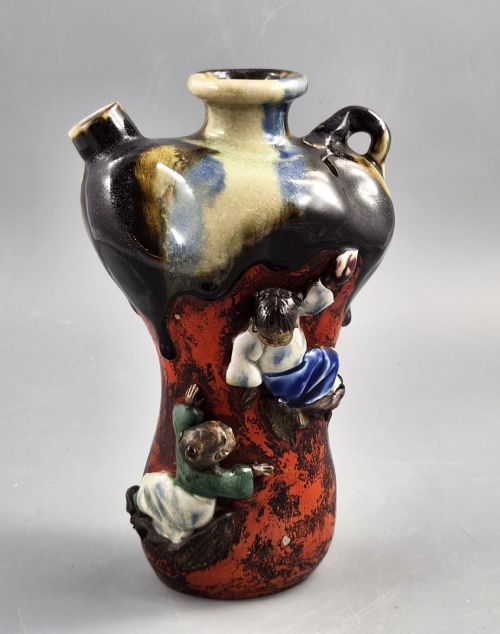
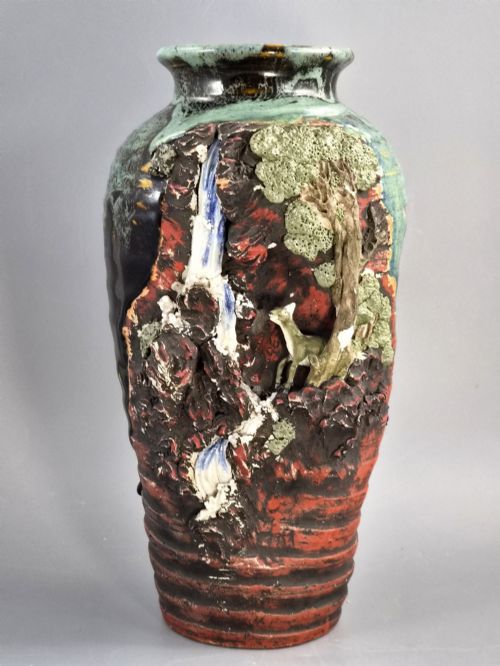
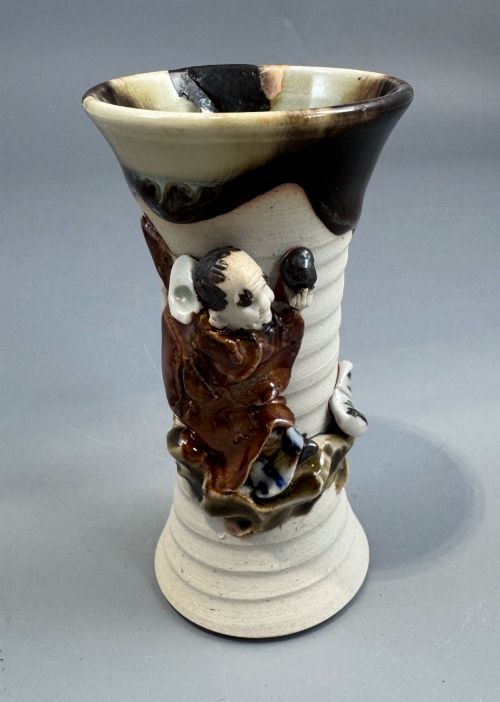
When you examine Japanese relief pottery, you encounter objects built with three-dimensional applied figures, craggy landscapes, and textured surfaces. The pieces span vases, pitchers, bowls, teacups, and jardiniere forms produced across the Meiji, Taisho, and Showa periods. You meet works featuring sages, children, dragons, and phoenixes modelled directly onto the body of the vessel.
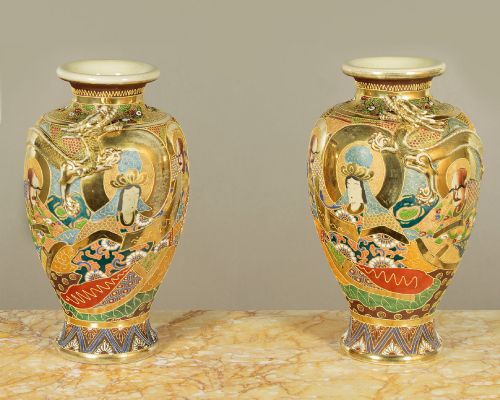
The Sumida Gawa tradition dominates the selection, recognisable by its heavy dripping glazes and hand-modelled figures clinging to the sides. Alongside these, Satsuma and Tokoname wares appear, bringing red clay bodies and painted enamel details into the category. The items range from small domestic mugs to tall sculptural vases designed to command a room.
How they were made
Potters built these pieces using earthenware, terracotta, and stoneware bodies, often shaping the foundation on a wheel or pressing it into a mould. Artisans then applied figures, trees, and animals by hand in high relief directly onto the wet or leather-hard clay surface before firing. This manual application ensures that no two applied scenes are identical.
Makers applied complex glazes over the bodies, utilising flambé, oxblood, blue, and lavender effects that pooled thickly around the applied elements. Some pieces incorporate gold leaf or enamel highlights painted over the fired glaze to accentuate specific details on the figures and robes.
Forms range from traditional vases and teapots to suiban brush washers, jardiniere planters, and sake pitchers.
What varies in quality
The vitality and expressiveness of the modelled figures dictate much of the standard, separating stiff, mechanical application from lively, deeply undercut sculpting. Master potters infused their sages and children with distinct postures and facial expressions that engage the viewer from multiple angles.
Control over the thick, dripping glazes marks the difference between a messy surface and a deliberate, balanced colour flow that complements the relief work beneath. The clarity of signatures from recognised makers and workshops further elevates individual pieces within the tradition.
Inoue Ryosai·Ban-ni·Hiroshi·Makuzu Kozan II
The Japanese Relief Pottery Glossary
- Sumida Gawa
- A type of Japanese pottery originating near the Sumida River in Tokyo, known for heavy, dripping flambé glazes and heavily modelled figures in high relief. These pieces often feature raw clay patches left unglazed to contrast with the glossy surface.
- Flambé glaze
- A streaked, variegated glaze achieved through reduction firing, producing dramatic runs of blue, lavender, red, and purple. The chemical reactions in the kiln create random patterns that make each glazed surface unique.
- Sennin
- Taoist immortals or sages frequently depicted in Japanese art and pottery, often shown with long beards and flowing robes. They appear climbing the sides of vases or gathered in landscape scenes.
- Karako
- Chinese children or boys depicted at play in traditional East Asian motifs, commonly modelled in relief on pottery vessels. They bring a lively, narrative element to the surface of mugs and jars.
- Stoneware
- A dense, hard ceramic fired at high temperatures until vitrified, rendering the body impermeable to liquids without glaze. It provides a durable foundation for heavy sculptural relief work.
Japanese Relief Pottery: Frequently Asked Questions
What is Sumida Gawa pottery?
Sumida Gawa pottery is a distinct type of Japanese ceramic featuring heavy, dripping glazes and figures modelled in high relief. These pieces originated near Tokyo and often depict sages, children, and landscapes applied directly to the vessel.
The style prioritises tactile surfaces, raw unglazed clay patches, and vivid flambé colour runs. They serve as sculptural centerpieces rather than simple utilitarian vessels.
How do I identify a signed piece?
Signatures on these ceramics usually appear impressed into the clay body or written in pigment near the base or among the relief figures. Names like Inoue Ryosai or Koko indicate specific workshop traditions from the Meiji and Taisho periods.
Not all authentic works carry a signature, as many workshop pieces and regional wares left the kiln unmarked. Examining the quality of the modelling and the specific glaze type helps determine authenticity when marks are absent.
Where were these pieces made?
The majority of these relief wares were produced in Japan during the Meiji, Taisho, and Showa eras, with production centred around Tokyo and regional kilns like Tokoname. Many items were created specifically for export to Western markets during the late nineteenth and early twentieth centuries.
Potters combined traditional Japanese sculpting techniques with forms suited for Western homes, resulting in pitchers, mugs, and jardiniere planters alongside traditional vases.
How should I display them?
Display these ceramics where adequate lighting can catch the depth of the applied figures and the variations in the dripping glaze. Placing them on a sturdy shelf or table allows viewers to appreciate the three-dimensional modelling from multiple angles.
Keep them away from direct foot traffic where the protruding figures might suffer accidental impacts. Their textured surfaces draw the eye, making them natural focal points in a room.