


Antique Japanese Stoneware
Antique japanese stoneware brings robust, tactile presence to a room through heavy-bodied vessels and sculptural figures finished in rich glazes.
Antique Japanese Stoneware
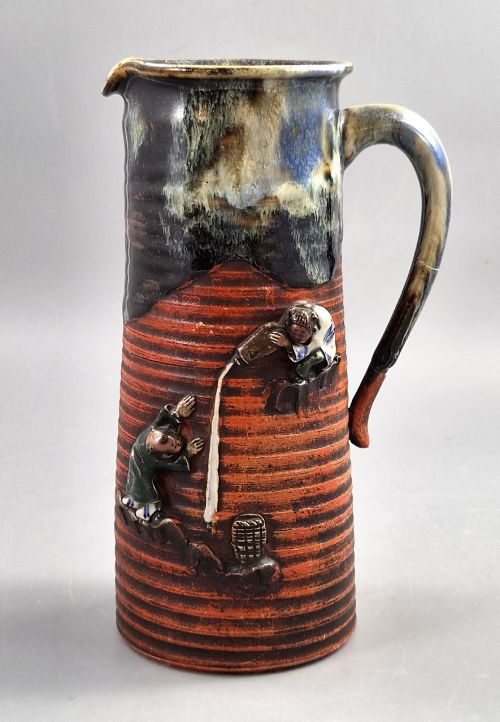
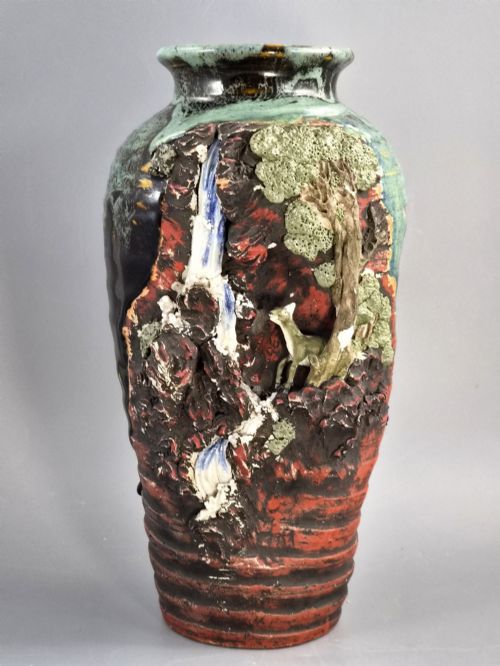
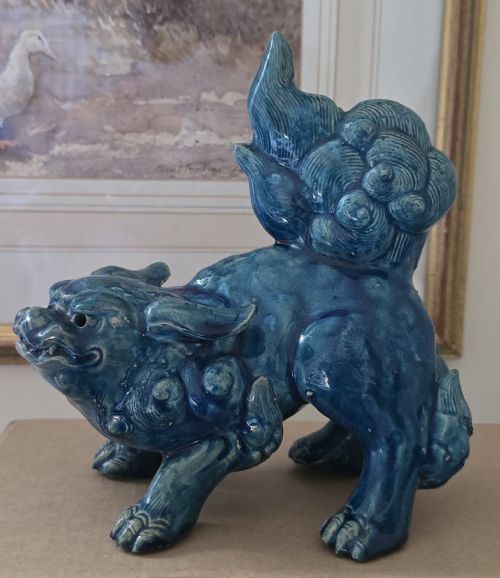
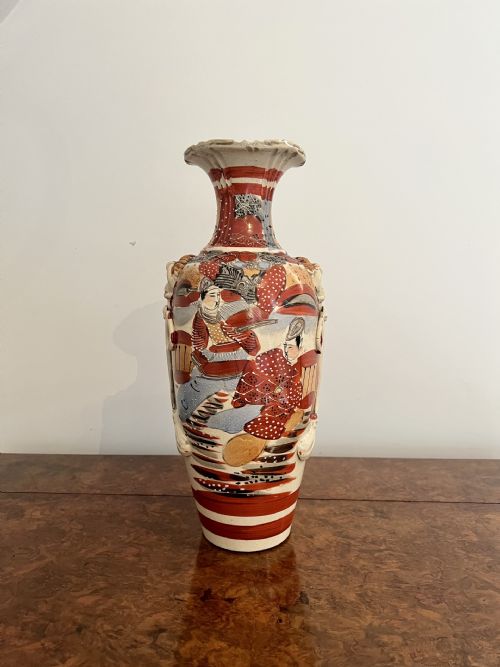
The selections available here lean heavily toward distinct regional and studio traditions, notably the heavily modelled output of the Sumida Gawa potteries alongside refined works by noted makers. Vases, jugs, and cups dominate the forms, frequently adorned with figures, animals, or deeply textured flambe and turquoise glazes.
How they were made
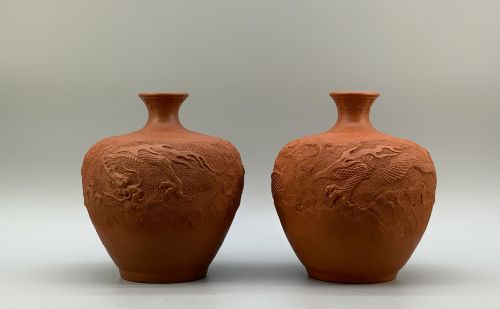
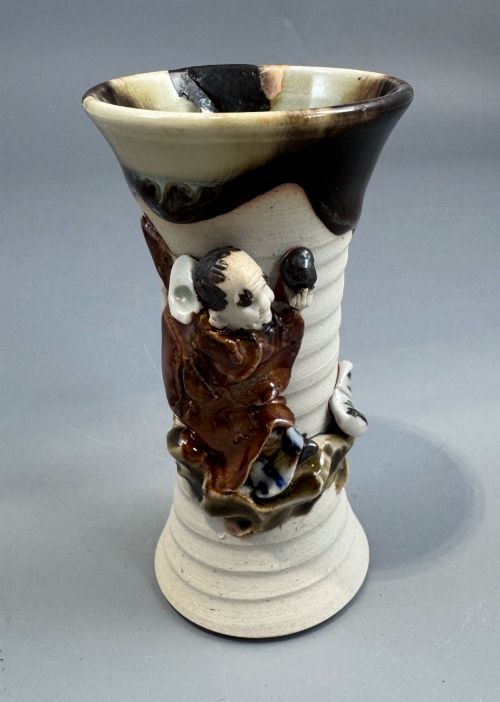
Makers utilised dense stoneware bodies, red clay, and terracotta, often shaping forms by hand or throwing them on the wheel before applying sculptural elements. Figures and landscapes were frequently modelled separately and applied directly to the surface of the vessel prior to firing.
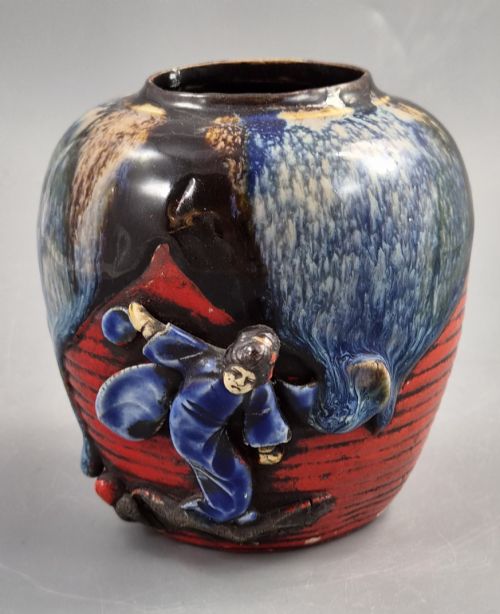
Surfaces were brought to life using fluid flambe glazes, enamels, and selective gold leaf highlights. The interaction between intense kiln temperatures and reactive glazes produced characteristic drips, mottling, and deep colour variations across the body.
Listings feature works from the Meiji, Taisho, and early Showa periods, utilising stoneware, terracotta, and red clay bodies.
What varies in quality
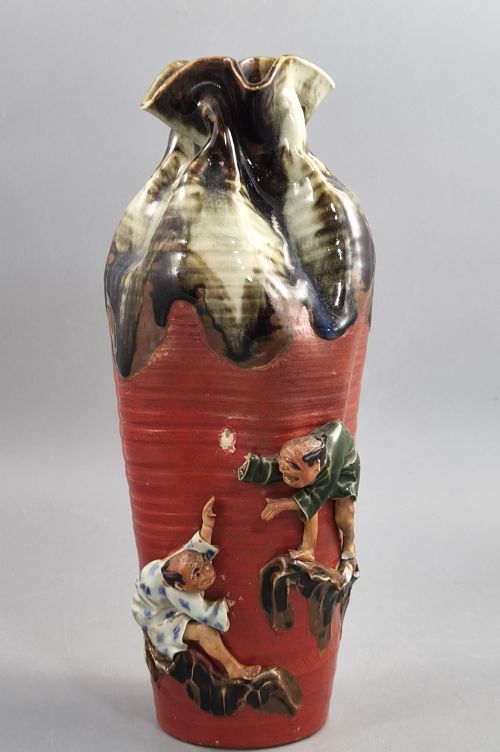
The strength of the modelling dictates much of the visual success in figural wares, particularly where applied figures or animals interact with the body of the vase. Crisp detail in the facial expressions and garments of applied figures separates ambitious studio output from simpler commercial production.
Glaze control and depth determine the refinement of the finished surface, where successful runs of flambe or oxblood create deliberate tonal shifts without muddying the underlying texture. The balance between the raw, exposed clay body and the glazed sections shows the discipline of the maker's hand.
Inoue Ryosai·Makuzu Kozan II·Ishiguro Koko·Hiroshi·Dr Christopher Dresser·Minton
The Antique Japanese Stoneware Glossary
- Stoneware
- A robust ceramic fired at high temperatures until vitrified and impermeable to liquids. It forms a durable, heavy body that resists chipping.
- Flambe glaze
- A streaked or mottled glaze achieved through complex chemical reactions in the kiln under reduction firing. It produces rich, unpredictable pools of colour.
- Sumida Gawa
- A distinctive style of Japanese pottery characterised by heavily textured surfaces and applied figures, often associated with Tokyo workshops active around the turn of the twentieth century.
- Jardiniere
- A large decorative ceramic pot designed to hold a potted plant. These substantial vessels often feature sculptural landscapes or relief decoration.
- Meiji Period
- An era in Japanese history spanning from 1868 to 1912, marked by opening trade with the West and innovative decorative arts.
Antique Japanese Stoneware: Frequently Asked Questions
What is Sumida Gawa pottery?
Sumida Gawa wares are distinct Japanese ceramics known for their thick, drippy glazes and highly tactile applied figures, such as sages, children, and animals clambering up the sides. Originating near Tokyo, these pieces are celebrated for their sculptural, narrative quality.
Unlike smooth porcelain, these vessels wear their handmade character openly, with pinched rims and rough, exposed clay bodies that contrast against glossy turquoise, blue, or oxblood glazes.
How do I care for antique stoneware?
Keep these heavy ceramic pieces out of direct sunlight and clean them gently with a dry or barely damp microfiber cloth to protect the textured surfaces and applied figures. Avoid soaking or using harsh detergents, especially on pieces with enamel or gold leaf details.
Because many of these items feature delicate applied elements or porous unglazed sections, handle them firmly from the base rather than by protruding handles or figures.
How are Meiji period pieces identified?
Meiji period ceramics often bear signatures, studio marks, or stylistic traits associated with the rapid artistic revitalisation between 1868 and 1912. The combination of traditional Japanese forms with inventive Western export appeal helps date these works.
Look for dynamic asymmetry, meticulous relief work, and rich experimental glazes that reflect the technical ambition of late nineteenth and early twentieth-century kilns.
Where were these vessels displayed?
In period interiors, large jardinieres and vases served as focal points in reception rooms, often holding indoor plants or dried arrangements. Smaller cups, pitchers, and figural pieces were meant for close inspection on cabinet shelves and tabletop displays.
The robust weight of stoneware made these vessels practical for everyday use as well as decorative display in both Japanese and Western homes.