


Japanese Sumida Gawa Vase
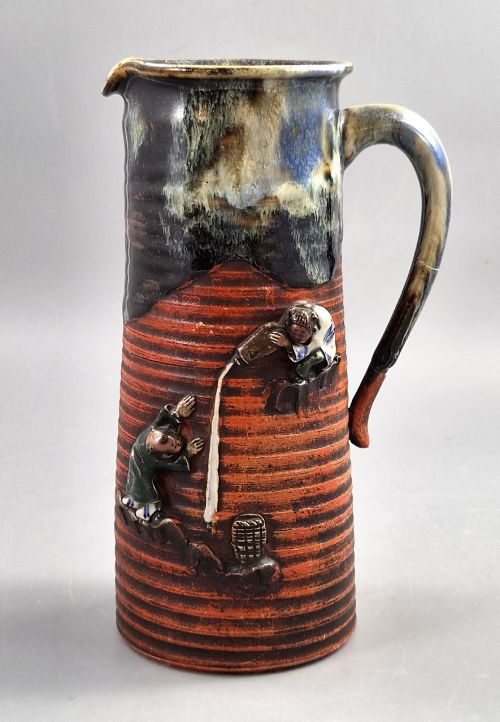
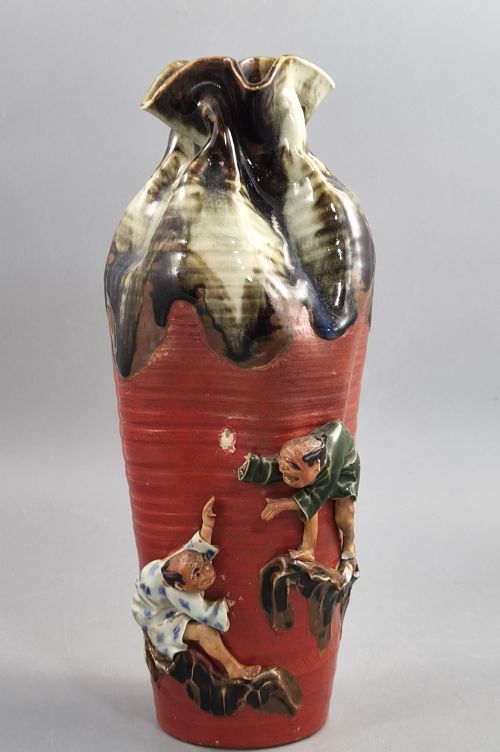
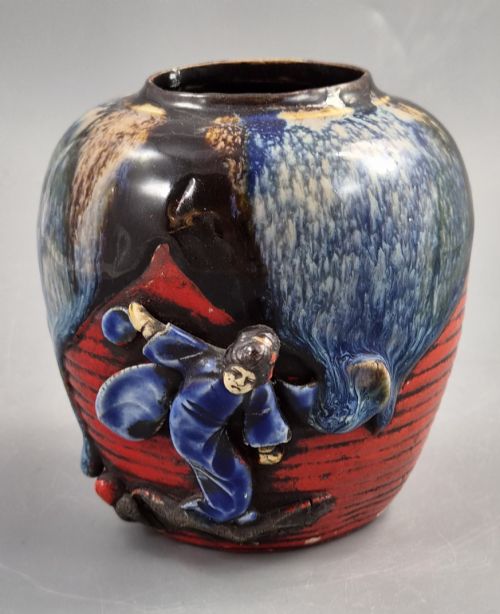
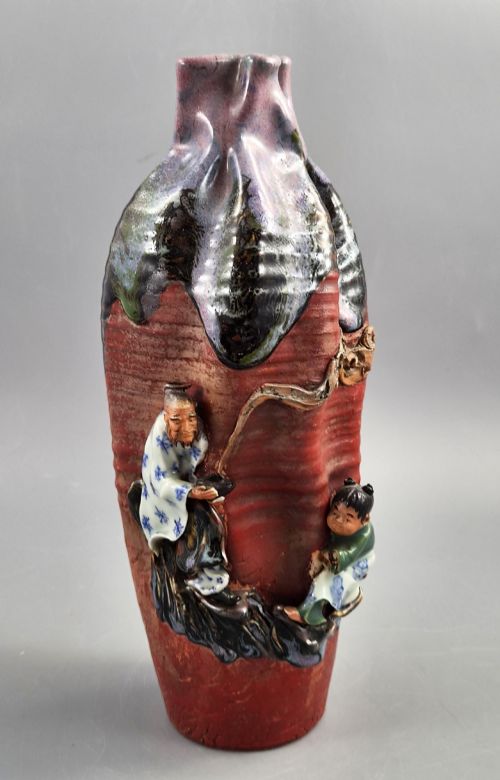
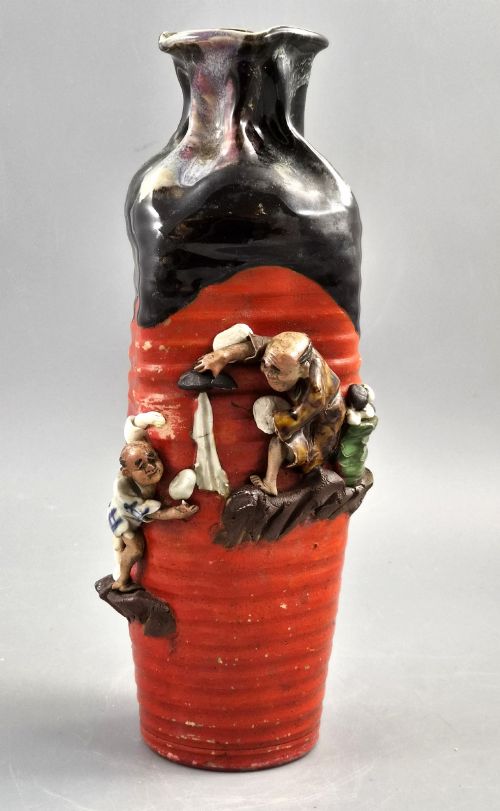
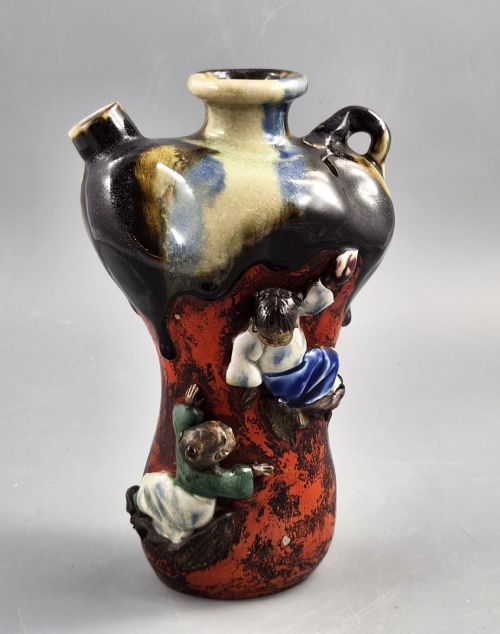
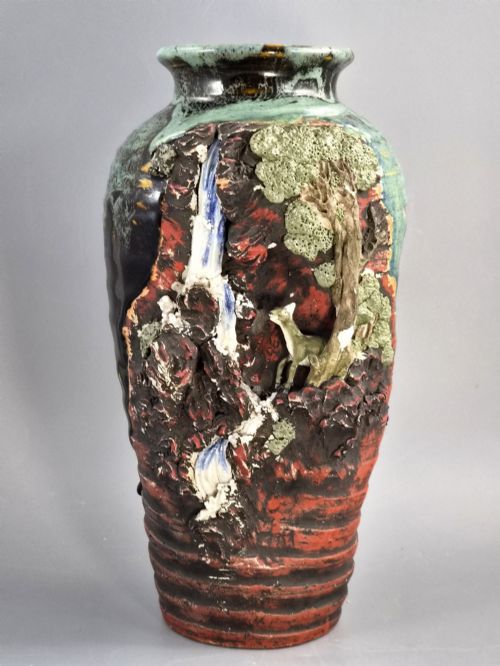
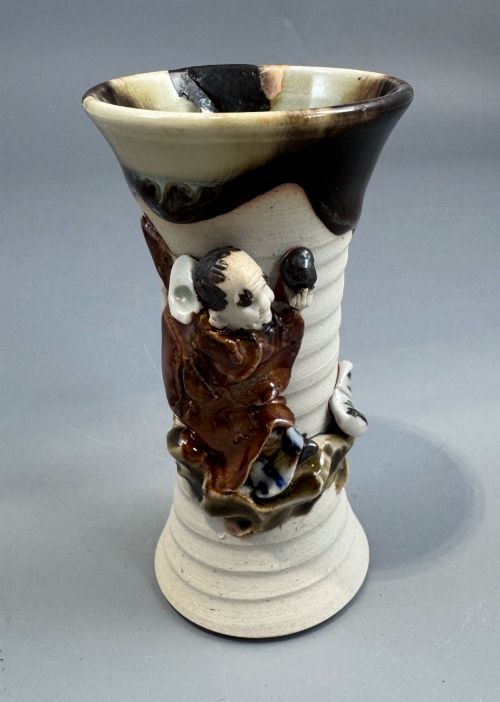
These Japanese sumida gawa vase pieces are heavily modelled ceramic works defined by sculptural applied figures and rich flambe glazes, prized for their striking tactile presence.
Japanese Sumida Gawa Vase
When searching for a japanese sumida gawa vase, a buyer encounters distinct ceramic vessels originating predominantly from the Meiji and Taisho periods around 1900 to 1920. The most frequently met versions take the form of tall baluster vases, jars, and pitchers featuring pinched sack rims.
The defining characteristic of these pieces is the presence of three-dimensional figures applied directly to the body. Sages, karako, rakan, and animals climb across the exterior surfaces amidst waterfalls, trees, and rocky cliffs.
Assessing Quality and Execution
Quality in a japanese sumida gawa vase rests on the vigour and detail of the modelled figures applied to the surface. Stronger examples display expressive, sharply defined faces and dynamic poses rather than static forms.
The application of the glaze also determines the visual success of the piece. Controlled flambe and rich oxblood or lavender tones that pool effectively around the sculptural elements elevate the standard of the work.
Several pieces feature tiny modelled figures permanently scaling the sides of vases, frozen mid-climb beside miniature ceramic trees and waterfalls.
Inoue Ryosai·Ban ni·Hiroshi
The Japanese Sumida Gawa Vase Glossary
- Flambe glaze
- A streaked or variegated glaze achieved through kiln reduction effects, producing dramatic shifts in colour across the ceramic surface. This technique creates the signature moody backdrops found on many vessels.
- Karako
- A traditional Chinese motif depicting a Chinese child at play, frequently utilised as an applied figure on Japanese ceramics. These figures add a narrative element to the sculptural landscape.
- Rakan
- An enlightened disciple of Buddha, commonly represented in traditional art and modelled in high relief on these pottery pieces. Their distinct robes and contemplative expressions appear frequently in the applied decoration.
- Earthenware
- Porous pottery fired at relatively low temperatures, forming the structural base for many of these sculptural vessels before glazing. It provides a tactile, matte contrast to glossy surface treatments.
- Sack rim
- A pinched or manipulated container opening shaped to resemble a gathered bag. This distinctive rim treatment frequently frames the upper section of tall ceramic vessels.
Japanese Sumida Gawa Vase: Frequently Asked Questions
What is a sumida gawa vase?
A japanese sumida gawa vase is a distinctive ceramic vessel originating from Japan around the Meiji to Taisho periods, characterised by heavy glazes and sculptural figures applied in high relief.
These pieces typically showcase narrative scenes involving sages, children, or animals clambering across rocky landscapes and cliffs.
How do I identify a signed piece?
Signatures on these ceramics generally appear as impressed or incised seals and signatures embedded directly into the body or glaze. Artists such as Ryosai, Koko, and Hiroshi marked their creations in this manner.
Examining the base and lower portions of the vessel usually reveals these maker marks alongside the distinct textural clay body.
What periods do these pieces date from?
The examples available span from the Meiji period through the Taisho period and into the early Showa era, centring largely around the year 1900 to the 1920s.
Stylistic shifts during this timeframe moved from traditional Meiji aesthetics toward slightly later Taisho interpretations while maintaining the core sculptural tradition.
How should I display these vases?
Because of their heavy sculptural relief and striking flambe glazes, these vessels require stable placement where light can catch the varied surface textures. Placing them away from cramped shelving allows the applied figures to be viewed clearly from multiple angles.
Keeping them as standalone display objects highlights their complex three-dimensional construction without visual clutter.