





Sumida Ware Pottery
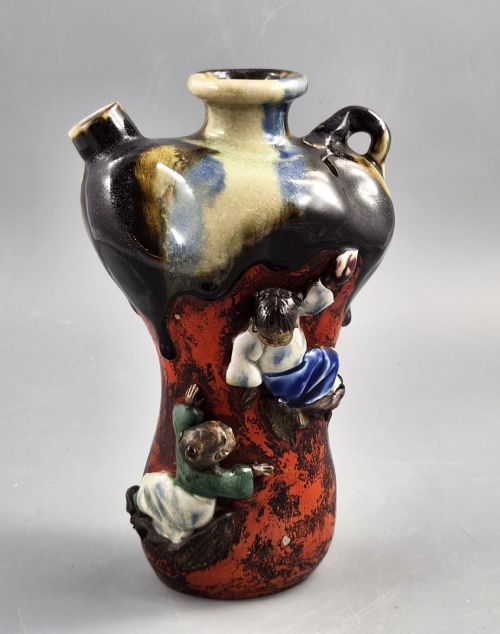
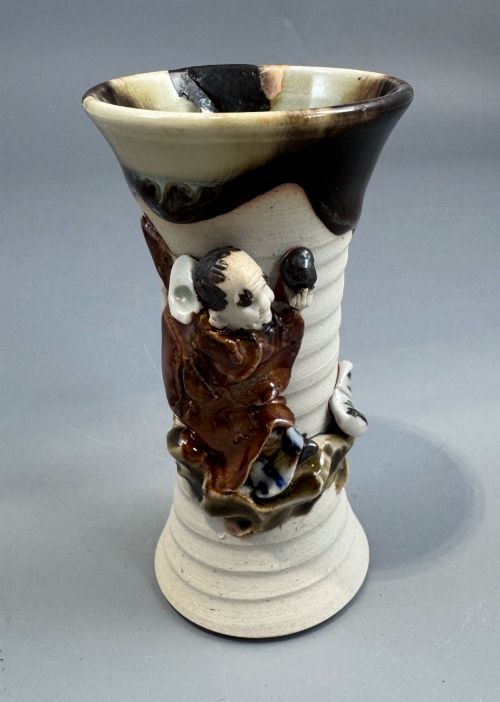
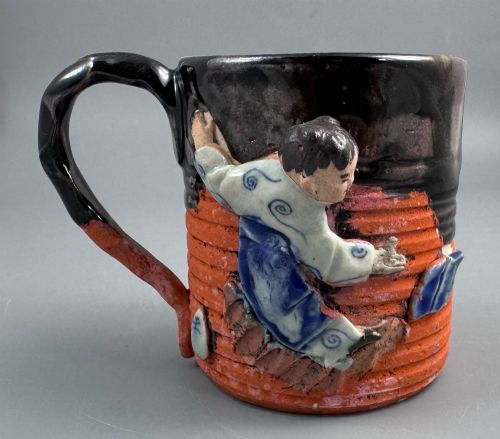
Sumida ware pottery brings tactile, sculptural storytelling to your room through expressive figures modelled in high relief against rich flambé glazes.
Sumida Ware Pottery
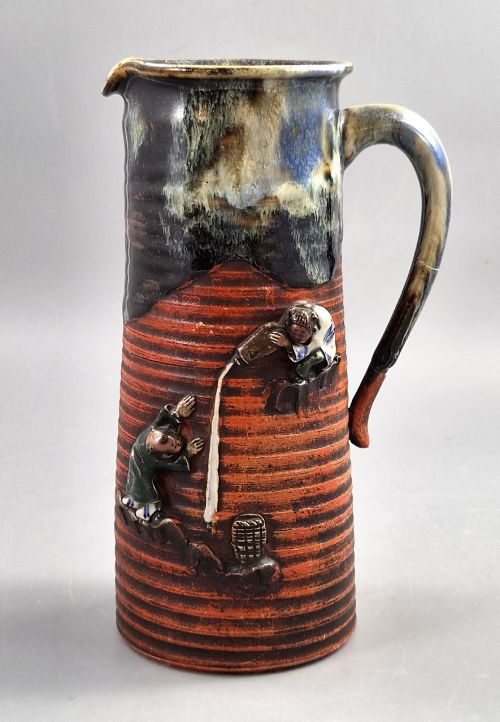
Sumida ware pottery comprises distinctive Japanese vessels created primarily during the Meiji and Taishō periods, spanning the early decades of the twentieth century. When you search for sumida ware pottery, you encounter forms designed for utility and display, ranging from vases and pitchers to teacups, saucers, and decorative bowls.
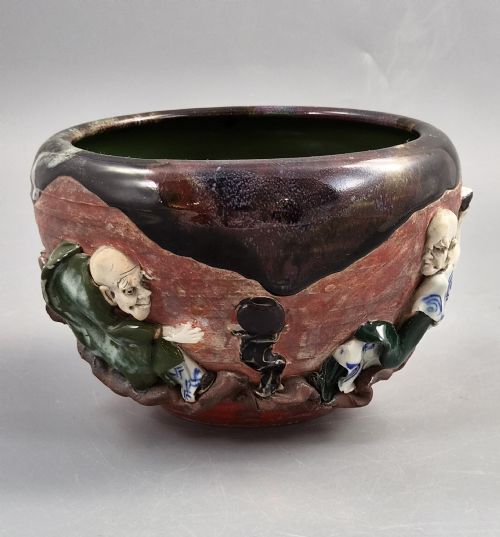
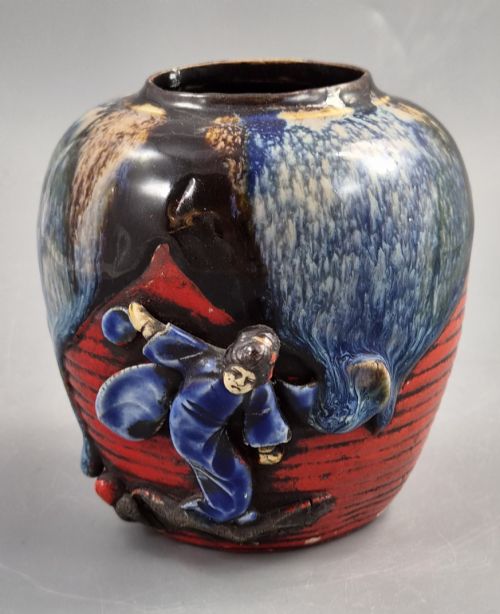
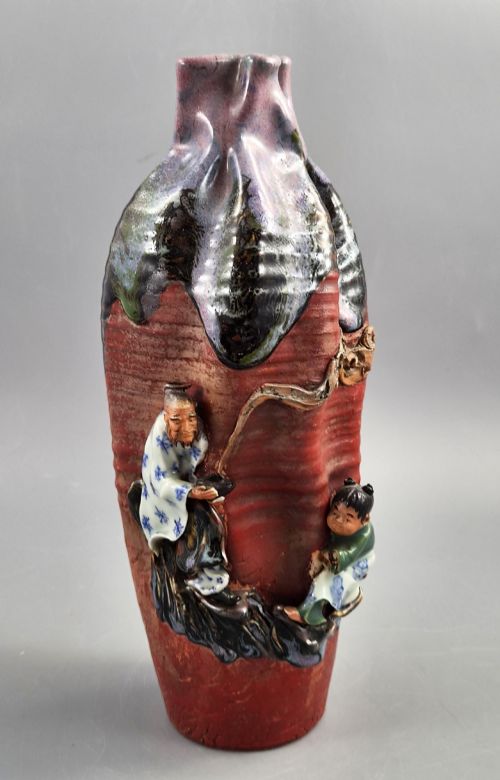
The objects on this page typically feature earthenware, stoneware, or terracotta bodies enhanced by thick, flowing glazes and dramatic applied motifs. Figures clambering across the shoulders of jars or peering over the rims of bowls provide an engaging, three-dimensional narrative that defines the aesthetic of the genre.
Materials and construction
Potters built these vessels using robust ceramic bodies such as stoneware, earthenware, and terracotta, which provided sturdy foundations for heavy ornamentation. Artisans modelled figures of sages, children, and mythical beings separately before applying them by hand directly onto the moist clay surface.
Makers finished the pieces with heavy, often variegated glazes, including blue and lavender flambé or rich oxblood tones. These glazes frequently pooled unevenly around the applied figures, creating distinctive textures and dramatic visual depth during the firing process.
Listings span the Meiji and Taishō periods, utilising earthenware, stoneware, and terracotta bodies finished with heavy flambé and monochrome glazes.
Judging quality and execution
Quality in these ceramics rests upon the animation and anatomical precision of the modelled figures rather than simple decorative abundance. Superior examples demonstrate lively expressions and careful integration between the climbing forms and the underlying vessel wall.
The control and distribution of the thick glaze layers also distinguish finer pieces from simpler workshop output. A successful glaze runs smoothly around the modelled elements without obscuring the fine details of the artisan's handiwork.
Inoue Ryōsai·Ban-ni·Kōko·Hiroshi
The Sumida Ware Pottery Glossary
- Sumida Gawa
- A style of Japanese pottery originating near the Sumida River in Tokyo, known for heavy glazes and applied figures. These wares were largely produced for export during the late nineteenth and early twentieth centuries.
- Flambé glaze
- A streaked or mottled ceramic finish created by metallic oxides reacting in the kiln during high-temperature firing. This technique produces unpredictable shifts in colour, such as deep purples, blues, and reds.
- Terracotta
- A porous, unglazed or glazed red earthenware fired at relatively low temperatures. It provides a sturdy structural base for many of the heavily modelled figures found on these vessels.
- Rakan
- A depiction of an enlightened follower of the Buddha, frequently shown as an ascetic figure in traditional Japanese art. These bearded sages often appear climbing the sides of jars and vases.
- Karako
- A traditional motif representing a Chinese child at play, characterised by distinctive hairstyles and cheerful expressions. Artisans frequently model these figures clambering playfully across the surfaces of teapots and mugs.
Sumida Ware Pottery: Frequently Asked Questions
How were the figures attached?
Artisans modelled the figures of sages, children, and animals separately from the main body using clay or terracotta. They then pressed and luted these sculptural elements by hand onto the surface of the wet or leather-hard vessel before applying the heavy glaze.
This additive construction method ensures that each figure possesses unique posture and expression, as no two applied elements were cast from identical moulds.
How do I identify the period?
The pieces available on this page date predominantly from the Meiji through to the Taishō and early Shōwa periods, reflecting production eras from around nineteen hundred to the nineteen twenties. Stylistic markers include the specific combinations of flambé glazes and the presence of signatures or impressed seals from known workshops.
Examining the base and the interior of the vessel alongside the style of the applied garments helps place the object within its historical manufacturing window.
How do I display these pieces?
Because these ceramics feature complex, three-dimensional relief work and rich coloured glazes, they benefit from placement where directional light can illuminate the textures. Positioning them away from busy backgrounds allows the dynamic silhouettes of climbing figures to stand out clearly.
Ensure that shelves or display surfaces are stable and deep enough to accommodate the often unconventional, bulbous profiles of these striking vessels.