

Terracotta Ceramic Vase
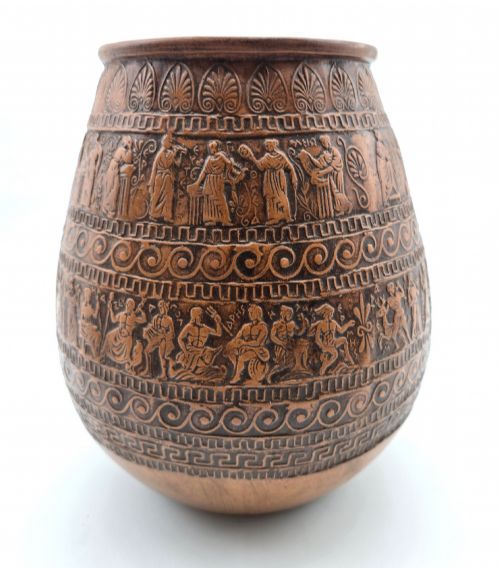
When you handle a terracotta ceramic vase, you hold centuries of fired earth shaped into amphorae, pitchers, and classical urns.
Terracotta Ceramic Vase
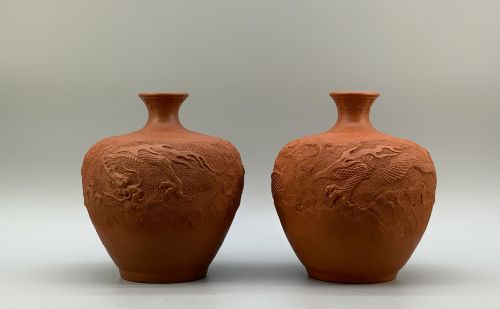
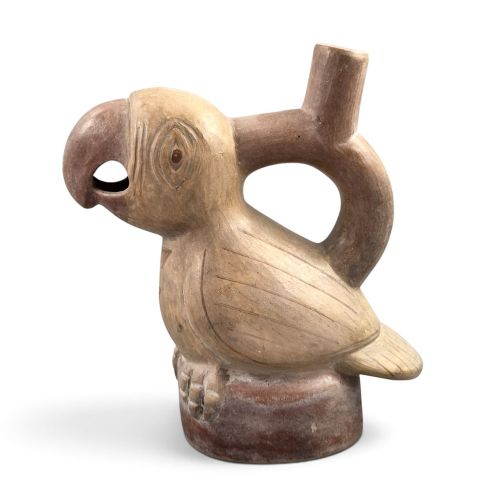
A terracotta ceramic vase brings porous clay and fired earth into domestic spaces, drawing from traditions spanning ancient pre-Columbian vessels, Mediterranean amphorae, and 19th-century European revivals. Buyers encounter forms ranging from rustic olive jars and confit pots to grand tour classical urns and Japanese red clay vessels.
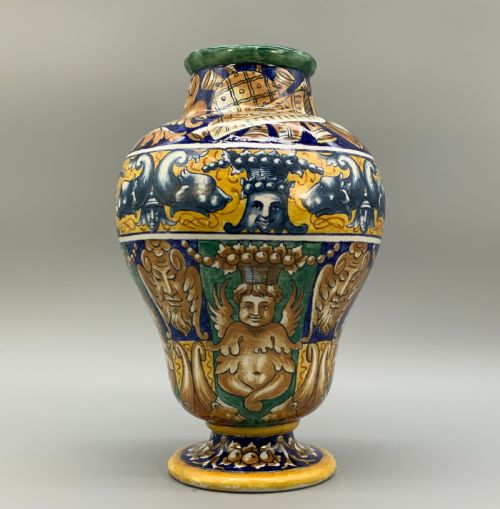
The pieces listed here lean heavily into 19th-century production, incorporating Victorian tastes, Arts and Crafts ideals, and Renaissance revivals alongside earlier archaeological examples. One meets everything from unglazed earthenware bodies to heavily glazed and enamel-painted surfaces adapted for display or practical use.
Materials and construction methods
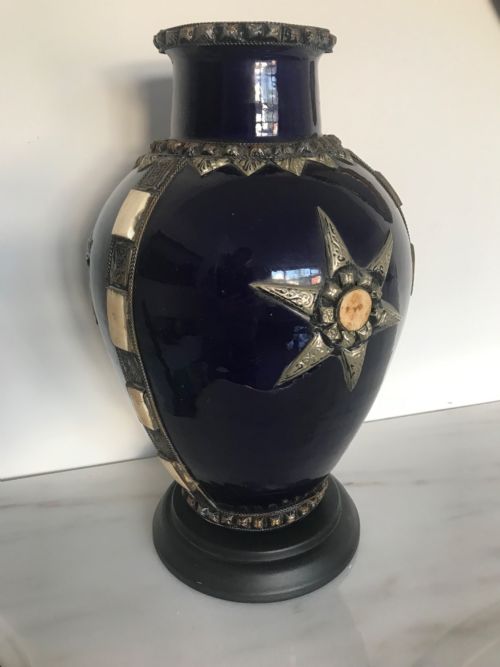
Makers shaped these objects using terracotta, red clay, and earthenware, often leaving the porous body partially exposed or sealing the surface with lead or tin glazes, enamel, and occasional gold leaf. Some pieces incorporate applied motifs, hand-incised details, or silver mounts fixed directly to the ceramic body.
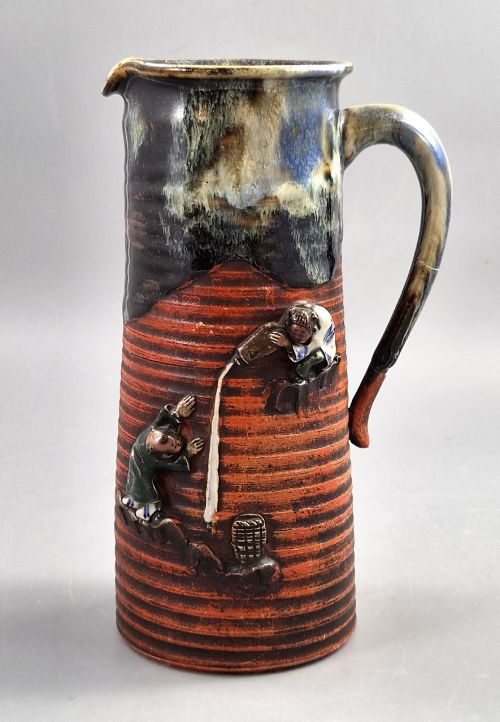
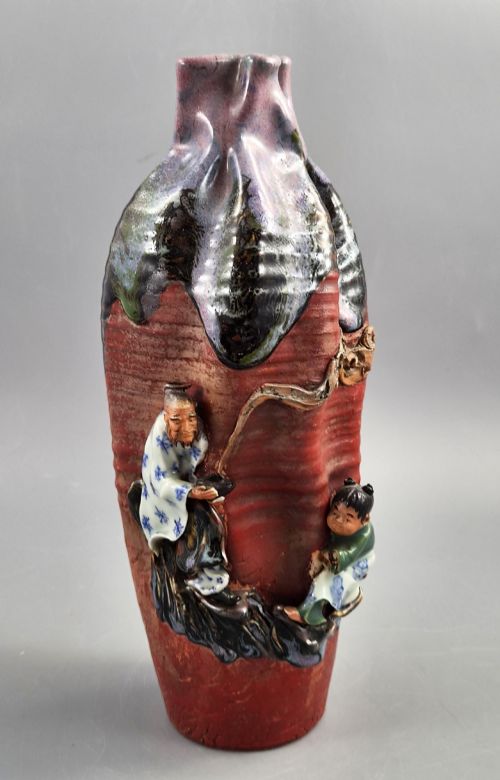
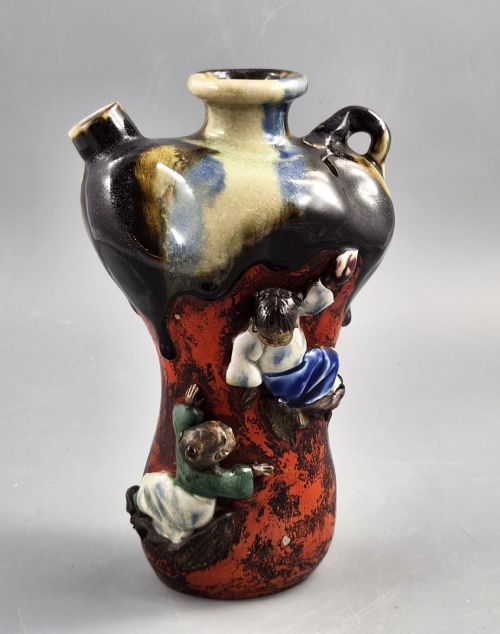
Techniques varied from traditional wheel-throwing and hand-coiling in ancient periods to slip-casting and applied sculptural figures in later Japanese Sumida Gawa and European factories.
Several 19th-century Japanese vases feature tiny applied children clambering up the ceramic walls as if the clay were a playground.
Distinctions in execution and finish
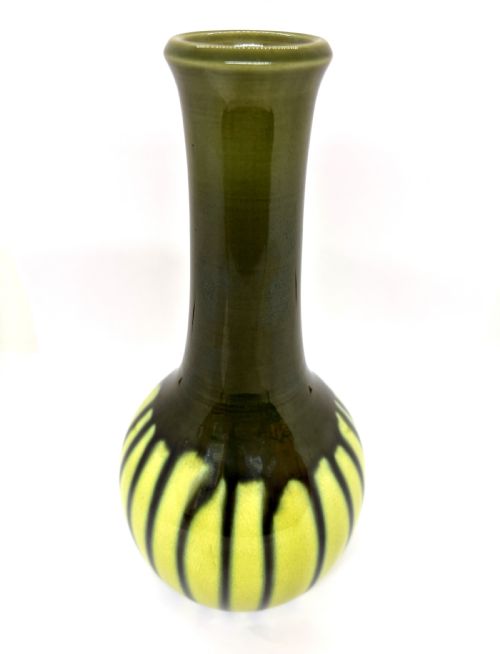
Quality rests in the crispness of applied sculptural elements, the stability of the fired body, and the intentional control of glazes such as oxblood, lavender flambé, or green lead finishes. Finer examples display balanced proportions in large forms like floor vases and amphorae, whereas lesser pieces show uneven shrinkage or clumsy repair.
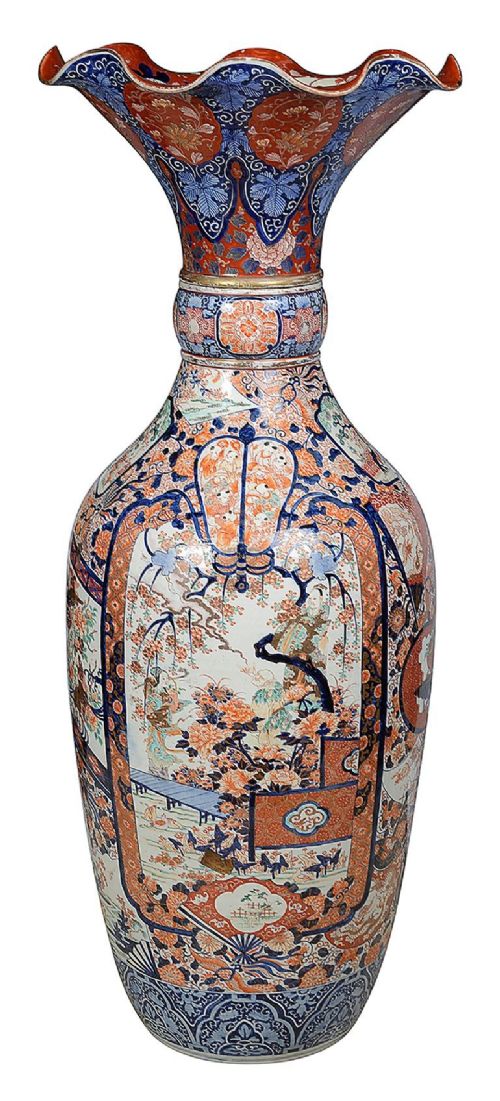
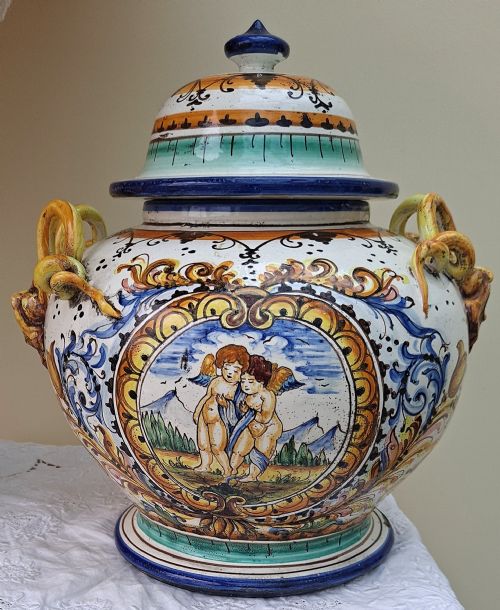
The handling of surface ornamentation - whether hand-painted polychrome majolica, reticulated openwork, or delicate incising - separates standard utilitarian pottery from pieces produced by notable ceramic works and skilled individual potters.
Burmantoft's Pottery·P. Ipsens Enke·Doulton Slater's Patent·Bernhard Bloch
The Terracotta Ceramic Vase Glossary
- Terracotta
- A porous, brownish-red fired earthenware used for sculptural vessels, planters, and decorative vases.
- Majolica
- Tin-glazed earthenware decorated with opaque colourful enamels, popular in Italian and European revival pottery.
- Confit Pot
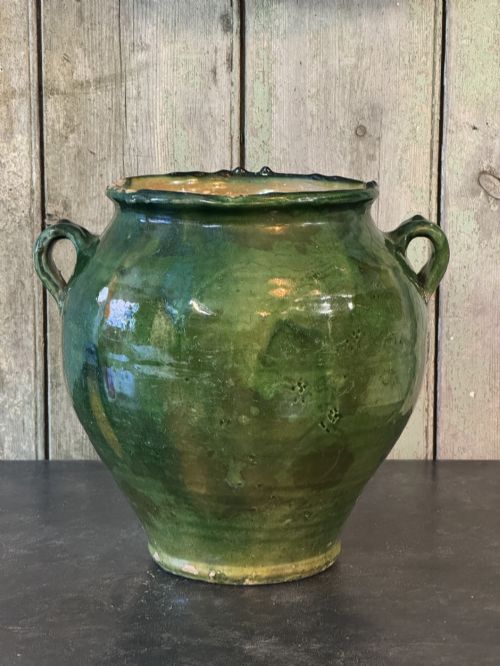
- A French utilitarian earthenware vessel featuring a fully or partially glazed body designed for food storage.
- Amphora
- A tall two-handled ancient vessel shape revived during the 19th century for classical garden and interior ornamentation.
- Slip
- A liquid mixture of clay and water applied to pottery for surface decoration or smoothing before firing.
Terracotta Ceramic Vase: Frequently Asked Questions
Are these vases waterproof for fresh flowers?
Porous terracotta and earthenware absorb moisture and can seep water through the body unless fitted with an internal glass or ceramic liner. Confit pots and fully glazed vessels hold water better, but hairline fractures remain a risk.
Dry stems or artificial arrangements suit unglazed ancient and 19th-century decorative pieces best. Check the interior glaze before filling any vessel.
How can I tell a reproduction from an antique?
Examine the base and interior for tool marks, wear patterns, and the natural oxidation of older clay bodies. Antique pieces show age-appropriate surface consistency and mineral deposits on older archaeological items.
Compare the weight, glaze pooling, and stylistic details against documented examples from the same period. Modern copies often mimic surface wear artificially without matching historical weight distribution.
What is the difference between terracotta and majolica?
Terracotta is unglazed or simply sealed fired red clay that showcases the natural porous earth body. Majolica applies an opaque tin glaze over the earthenware, creating a smooth white surface for colourful painted decoration.
Both use similar base clays, but their surface treatments create entirely different visual textures. Majolica shines with vitreous colour, while terracotta highlights matte earthen warmth.