



Carved Chinese Pottery
Carved chinese pottery brings together centuries of earth, fire, and hand-chiselled detail that anchors a room with quiet substance.
Carved Chinese Pottery
When you search for carved chinese pottery, you encounter a lineage spanning from pre-sixteenth century pieces to the twentieth century. The selection ranges through earthenwares, porcelains, and stonewares, reflecting dynastic shifts from Song to Qing.
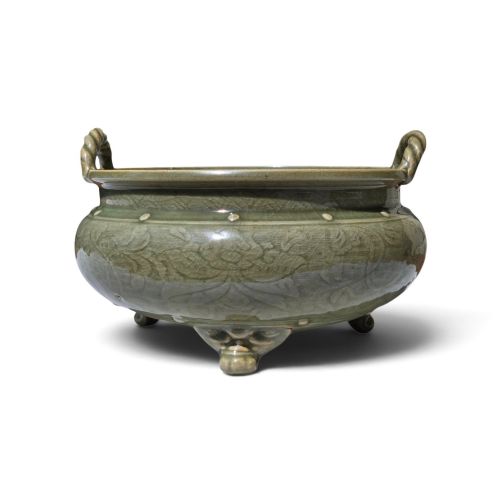
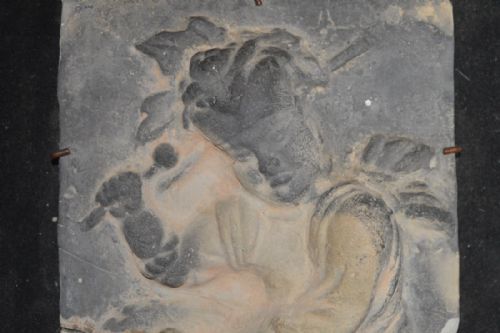
Vessels on this page take the form of tripod censers, conical bowls, and decorative jars alongside figures and tiles. Celadon glazed stonewares and sancai-glazed porcelain pairs appear frequently among these listings.
Origins stretch across classic periods like the Ming and Qing dynasties, alongside later adaptations in the Ming style. Buyers primarily meet robust temple vessels, domestic bowls with incised motifs, and sculptural attendants.
Materials and Working Methods
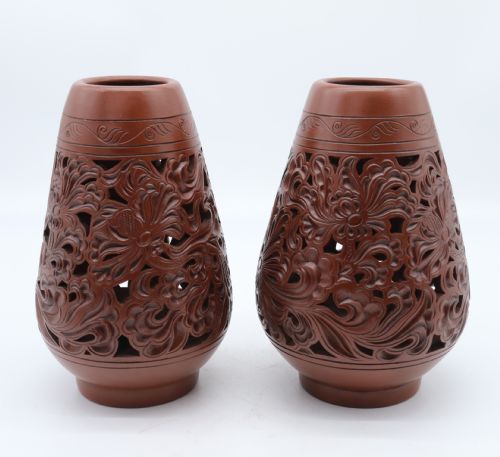
Potters shaped local clays, zisha, and terracotta by hand or on the wheel before applying glazes such as celadon, qingbai, and sancai. Artisans achieved depth by carving, incising, or reticulating the damp surface prior to firing.
Surface decoration relies on direct incision through the slip or glaze to expose contrasting tones beneath. Wood mounts and cinnabar lacquer coatings also appear in the material record as complementary elements.
Materials represented include terracotta, zisha clay, porcelain, and wood.
Evaluating Quality and Execution
Quality rests in the crispness of the carved lines and the control of the glaze pool. Superior pieces display fluid, confident incision that integrates with the form rather than crowding it.
The weight of the body and the harmony of the glaze thickness separate standard production from accomplished work. Subtle variations in tone across celadon surfaces indicate careful kiln temperature management.
The Carved Chinese Pottery Glossary
- Celadon
- A green or grey-green glaze applied to stoneware, often associated with thick, jade-like surfaces. It evolved significantly across the Song and Ming dynasties.
- Sancai
- A three-colour lead glaze tradition featuring amber, green, and cream tones. Potters used it widely for figures and vessels.
- Zisha
- A fine-grained clay from Yixing used for unglazed or reticulated vessels. It matures into a smooth finish with handling over time.
- Qingbai
- A bluish-white translucent glaze applied over porcelain bodies. It pools in carved recesses to highlight incised floral or avian motifs.
- Reticulated
- Openwork decoration cut entirely through the outer wall of a vessel. This technique creates an intricate, cage-like outer layer.
Carved Chinese Pottery: Frequently Asked Questions
How do I clean carved chinese pottery?
Dust surfaces gently with a soft, dry brush to protect delicate glaze edges and carved recesses. Avoid liquid cleaners or submersion, especially on pieces with porous earthenware bodies or applied wood mounts.
Keep pieces away from direct sunlight and fluctuating humidity to protect old glazes and structural integrity.
Are these pieces waterproof?
Many historic ceramic vessels, particularly temple jars, funerary tiles, and unglazed figures, are not intended to hold water. Stonewares and glazed porcelains may hold liquid, but hairline age fissures require caution.
Treat older vessels as decorative objects rather than functional containers to preserve their material condition.
How can I tell a Song piece from a Ming piece?
Song pieces often feature restrained forms with subtle qingbai or celadon glazes and fine incised botanical motifs. Ming and later pieces frequently introduce bolder carving, robust tripod forms, or sancai glazes.
Examine the weight, clay body texture, and glaze pooling characteristics to help distinguish between dynastic periods.
What does reticulated mean on a vase?
Reticulation involves cutting through the outer layer of clay before firing to create an openwork pattern surrounding an inner wall. This demanding technique requires precise control during drying to prevent warping.
It allows light and shadow to interact with the double-walled structure of the vessel.