


Reticulated Floral Vase
A reticulated floral vase brings delicate pierced work and painted botanical detail together, offering a striking centrepiece for a collector of nineteenth and early twentieth-century ceramics.
Reticulated Floral Vase
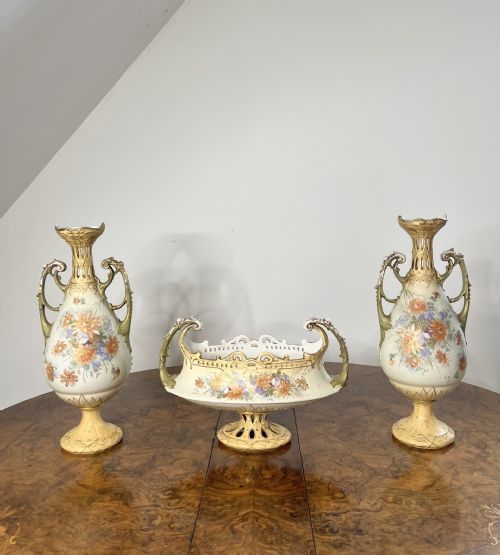
A reticulated floral vase is a ceramic vessel featuring openwork piercing alongside painted or gilded flower motifs, combining intricate structure with decorative artistry. These pieces appear across several distinct periods, most notably the nineteenth century, as well as the opening decades of the twentieth century. Forms range from standard vases and garniture sets to ewers, table lamps, and decorative ewers.
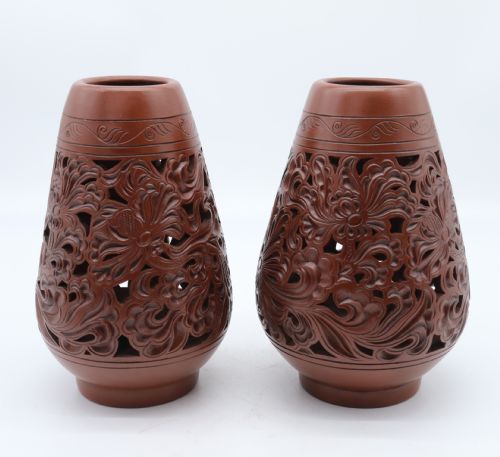
Makers represented on this page span British potteries like Royal Worcester, continental factories including Meissen and Royal Vienna, and Chinese traditions such as Yixing pottery and Qing Dynasty pieces. Styles cross from Victorian and Edwardian aesthetics to Rococo Revival, French Rococo Revival, and Art Nouveau. Buyers will encounter both single vessels and matched pairs finished with hand-painted chrysanthemums, roses, and elaborate gilt decorations.
Materials and construction methods
These vessels rely primarily on fine porcelain and earthenware, alongside terracotta and Zisha clay in Chinese examples. Potters shaped the bodies before cutting away sections of the clay to form the openwork reticulation seen across the surface. This piercing requires considerable skill to prevent distortion during the drying and firing stages.
Surface decoration frequently incorporates enamel painting, gold leaf, and traditional gilding to highlight floral subjects and structural handles. Continental and British workshops applied hand-painted botanical studies, often pairing the intricate pierced sections with solid gilt mounts and handles.
Listings feature works in Porcelain, Earthenware, and Terracotta, spanning periods from the mid nineteenth century through to the Edwardian era.
Factors that separate examples
Quality in a reticulated floral vase rests on the precision of the piercing and the fineness of the ceramic body. Cleanly cut openwork without chipping or glaze pooling marks the work of premier European and Asian kilns, whereas lesser pieces display thicker, coarser walls.
The standard of hand-painted floral detail and the application of gold leaf further distinguish the range. Delicate, lifelike brushwork on subjects like chrysanthemums and roses, paired with crisp gilding, elevates a piece above standard decorative production.
Royal Vienna·Royal Worcester·Meissen·Ernst Wahliss
The Reticulated Floral Vase Glossary
- Reticulated
- Pierced or openwork ceramic decoration resembling a net or lattice. This technique demands careful knife work while the clay remains leather-hard.
- Garniture
- A set of three or more matching vases designed for display together on a mantelpiece or sideboard. These sets frequently share painted floral motifs and pierced handles.
- Ewer
- A large jug with a wide spout and decorative handle, often produced as a decorative display piece rather than for practical use. They appear alongside standard vases in nineteenth-century production.
- Zisha clay
- A fine, unglazed purple or red clay from Yixing used for traditional Chinese pottery. It creates vessels prized for their natural texture and porous qualities.
- Pierced
- Having sections cut through the clay body before firing to create ornamental openings. This term is often used interchangeably with reticulated.
Reticulated Floral Vase: Frequently Asked Questions
What is a reticulated floral vase?
A reticulated floral vase is a ceramic vessel featuring intricate openwork piercing combined with painted or gilded flower designs. These pieces showcase the technical skill of nineteenth and early twentieth-century ceramicists.
They appear in various forms, including standard vases, pairs, and ewers produced by European and Asian potteries.
How do I identify nineteenth-century pieces?
Nineteenth-century examples often display specific stylistic traits such as Rococo Revival curves, Victorian floral painting, or distinct factory marks on the base. Material composition, such as hard-paste porcelain or traditional earthenware, also helps determine the period.
Comparing the painting style and gilding techniques with documented factory output provides further confirmation of age.
Were these vases used for flowers?
Many decorative vases and ewers from this era served primarily as ornamental display pieces on mantelpieces and tables rather than functional flower holders. Their delicate reticulated structures and fine hand-painted surfaces made them susceptible to damage from water and frequent handling.
Garniture sets in particular were designed as balanced decorative groupings for interior display.
What is the difference between porcelain and earthenware?
Porcelain is a vitrified ceramic material fired at high temperatures, resulting in a dense, non-porous body that often rings when struck. Earthenware is fired at lower temperatures, producing a more porous and opaque body that requires glaze to hold liquids.
Both materials were utilised for floral vases depending on the geographic origin and workshop tradition.