



Chinese Carved Lacquerware
Chinese carved lacquerware brings tactile depth and rich cinnabar colour to a room, offering centuries of layered craftsmanship.
Chinese Carved Lacquerware
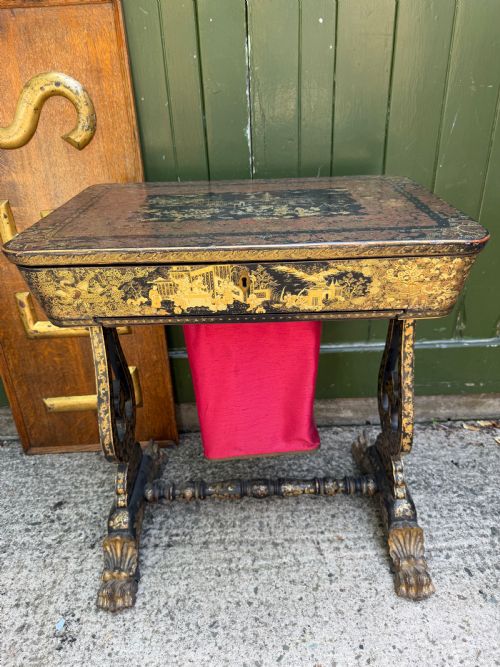
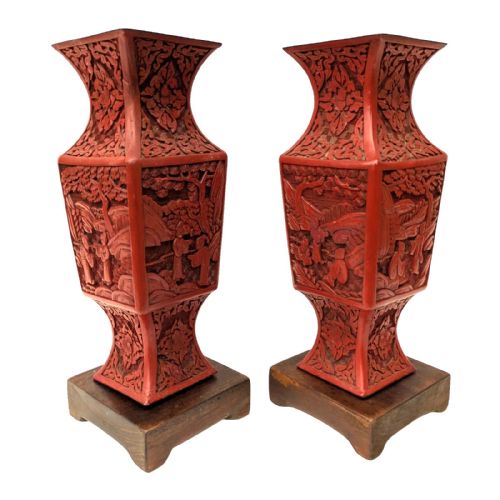
Chinese carved lacquerware encompasses decorative objects and furniture built up from numerous coats of sap before being deeply incised by hand. Buyers searching this phrase will find diverse forms ranging from small trinket boxes and vases to large wedding boxes, console tables, and table cabinets.
Materials and construction
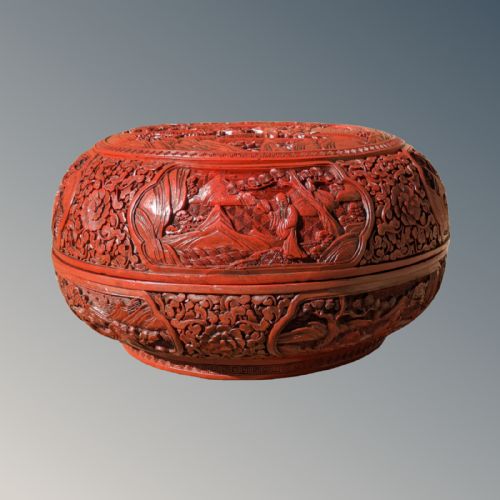
Artisans applied dozens of successive layers of natural tree sap to a sturdy wooden core, allowing each coat to cure before the next was added. This built up a thick, solid bed of material deep enough to carve intricate figural and floral motifs without exposing the foundation.
Master carvers then worked directly into the hardened layers while the substance remained slightly pliable, using specialised blades to create high-relief scenes. Subsequent finishing involved meticulous polishing to achieve the characteristic smooth contours and saturated colour.
A heavy three-kilogram wedding box proves that nineteenth-century couples packed serious cargo for their celebrations.
Judging quality and depth
Quality rests upon the thickness of the lacquer buildup and the precision of the carving. Superior examples display crisp, undercut details in the relief work and a dense, uniform layer of material that demonstrates patience in the workshop.
Finer pieces maintain structural integrity in the underlying wood despite the natural shrinkage of heavy lacquer over generations. The richness of the cinnabar hue and the harmony of the overall composition further separate standard export items from exceptional works.
The Chinese Carved Lacquerware Glossary
- Cinnabar lacquer
- A heavy red lacquer pigmented with mercuric sulphide. This vibrant compound allows carvers to achieve deep, rich tones across intricate surface designs.
- Qing Dynasty
- The final imperial dynasty of China, spanning from sixteen forty-four to nineteen twelve. Pieces from this era often showcase traditional motifs executed in carved red lacquer.
- Export lacquer
- Objects manufactured specifically for trade with Western markets during the nineteenth century. These items frequently blend traditional techniques with forms suited to European interiors.
- Demi-lune
- A half-moon or semicircular furniture shape. Console tables built in this profile sit flush against walls while offering decorative surface area.
Chinese Carved Lacquerware: Frequently Asked Questions
How do I care for carved lacquer?
Keep pieces out of direct sunlight and away from rapid temperature shifts that cause wood and lacquer layers to expand at different rates. Dust gently with a dry, soft cloth.
Avoid using liquid cleaners, polishes, or abrasive cloths that can dull the matte finish of the carved surfaces over time.
What are wedding boxes used for?
Large tiered wedding boxes traditionally transported ceremonial gifts and foodstuffs between families during marriage rituals. Their substantial proportions made them ideal for secure storage.
Today, these heavy lidded boxes serve as striking decorative floor pieces or sculptural storage containers in living spaces.
How can I tell the period?
Dating relies on examining the style of the carved motifs, the construction of the wooden base, and the depth of the lacquer layers. Nineteenth-century examples often display specific Qing Dynasty export characteristics.
Wear patterns, tool marks, and the specific formulation of the cinnabar pigment also provide clues to the workshop era.
Are these pieces purely decorative?
While many items like panels and vases exist primarily for visual display, boxes and table cabinets offer genuine functional storage for small valuables. Console tables provide usable surface space.
Their robust construction means they handle light daily use while acting as focal points in a room.