


Flambe Glaze Pottery Vase
These flambe glaze pottery vase pieces bring rich colour and movement to a room through their striking, molten surfaces.
Flambe Glaze Pottery Vase
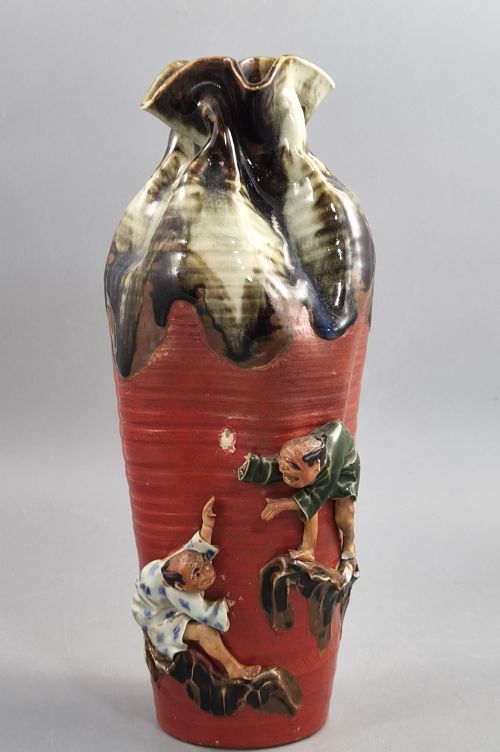
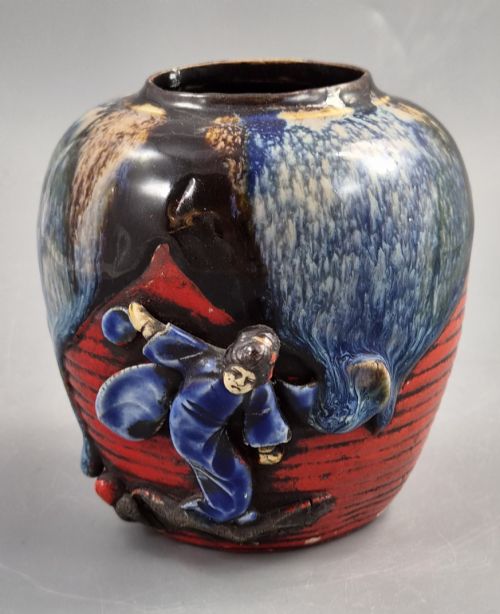
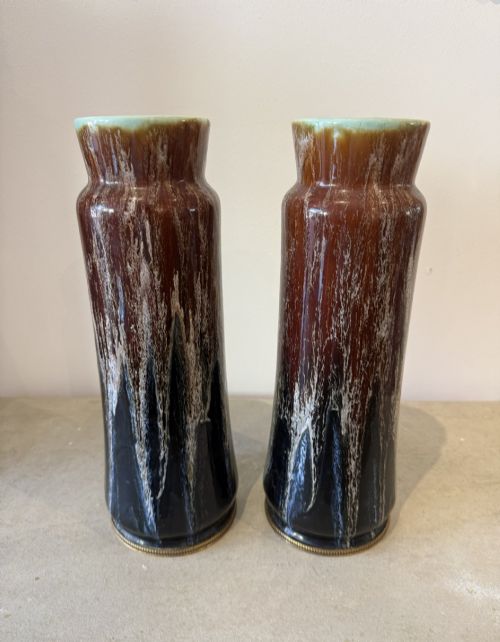
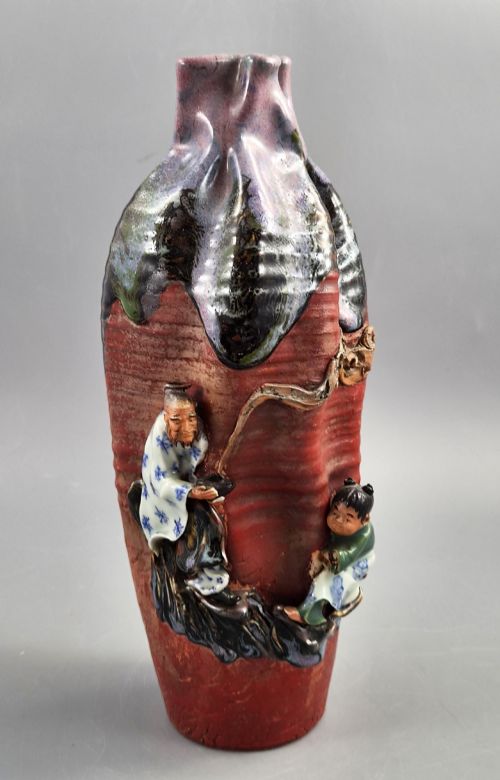
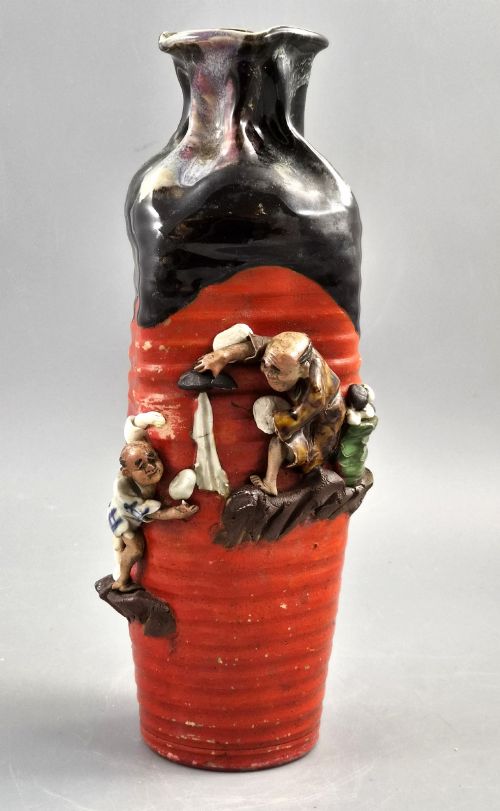
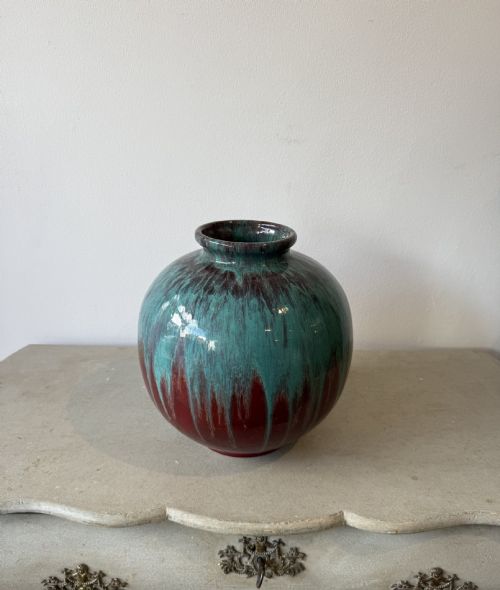
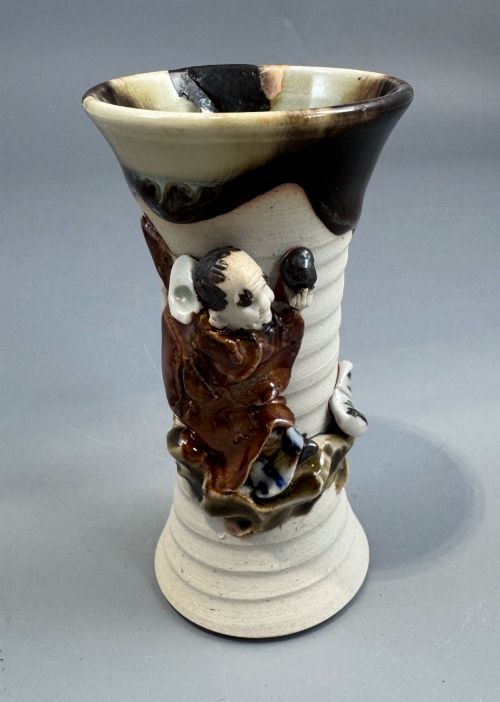
A flambe glaze pottery vase presents a striking visual depth created by complex chemical reactions during firing, yielding streaks and pools of colour. When you search for flambe glaze pottery vase items, you encounter pieces primarily from the Meiji, Taisho, and early twentieth-century periods. These vessels span distinct geographical traditions, including Japanese Sumida Gawa wares featuring applied figures and European studio pottery.
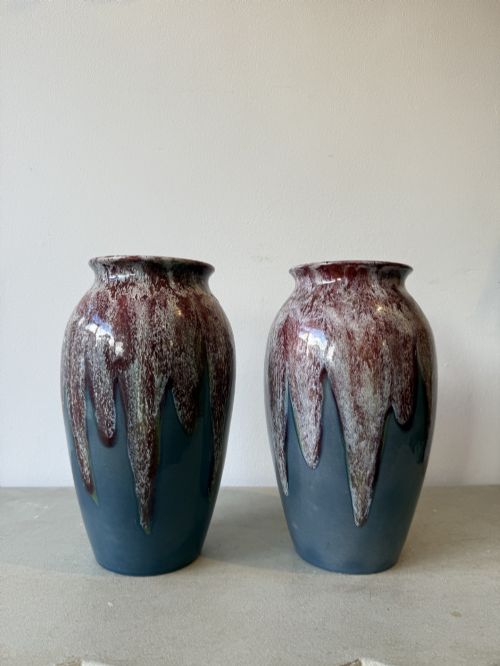
The forms range from tall baluster shapes and jars to adapted lamps and paired vessels. Most examples rely on heavy earthenware or stoneware bodies that provide a sturdy foundation for the vibrant glazes. Collectors often find pieces bearing signatures from notable workshops or individual makers active around nineteen hundred.
How they were made
Makers shaped these vessels using earthenware or stoneware bodies, sometimes adding sculptural elements such as applied figures directly onto the wet clay. The characteristic flambe effect results from metallic oxide glazes, including copper, which react unpredictably in the kiln to produce mottled, streaked, or oxblood colouration.
Artisans applied enamel or secondary glazes to highlight specific details, particularly on Japanese Sumida Gawa pieces where figures stand out against textured backgrounds. The firing process required precise temperature control to achieve the glossy, fluid surface appearance that defines the style.
The selection includes Japanese Sumida Gawa vases with applied figures alongside French ceramic wares and art pottery lamps.
What varies in quality
Quality rests upon the control and richness of the glaze reaction, where superior examples display a balanced distribution of molten colour without dull patches. The crispness of applied sculptural elements and the clarity of signatures from recognised makers also distinguish finer specimens.
The structural integrity of the clay body and the successful integration of decorative glazes determine the overall presence of the vessel. Pieces that maintain a harmonious relationship between form and the unpredictable flambe surface command greater attention.
Inoue Ryosai·Ban-ni·Hiroshi·Boch Freres
The Flambe Glaze Pottery Vase Glossary
- Flambe glaze
- A type of ceramic finish characterised by streaked, variegated colouration produced by metallic oxides shifting during high-temperature firing. This technique creates a fluid, molten appearance across the surface of the vessel.
- Sumida Gawa
- A Japanese ceramic tradition originating near Tokyo, known for heavy earthenware bodies, textured surfaces, and high-relief applied figures. These pieces frequently feature dramatic flambe or drip glazes.
- Baluster
- A vertical architectural form featuring a rounded lower body that tapers toward the neck, commonly adapted for ceramic vases. This shape provides a stable base while showcasing surface glazes.
- Earthenware
- Porous pottery fired at lower temperatures, serving as the foundational body for many sculptural and glazed vessels. It requires an impermeable glaze layer to hold liquids safely.
- Stoneware
- A dense, durable ceramic material fired at higher temperatures until vitrified, making it naturally non-porous. It supports heavy glazes and applied decoration without warping.
Flambe Glaze Pottery Vase: Frequently Asked Questions
How do I clean a flambe glaze vase?
Dust the surface gently with a soft, dry cloth to prevent accumulation within textured areas or applied figures.
Avoid using abrasive cleaners or submerging older pieces in water, as moisture can compromise historic clay bodies and glazes.
Are these vases suitable for holding fresh flowers?
Many stoneware and glazed earthenware vessels can hold water safely, though porous bodies require careful handling.
It is often safer to use a hidden inner container or keep them as decorative display objects to protect the historic interior.
How can I tell the period of a piece?
Examine the base, signature style, and manufacturing materials to align the piece with known production eras like the Meiji or Taisho periods.
Stylistic markers, such as the specific application of relief figures on Sumida Gawa wares, also help narrow down the date of creation.
What causes the varied colours in the glaze?
The distinct red, blue, and purple tones arise from metallic oxides interacting with fluctuating oxygen levels inside the kiln.
Because this chemical process is largely unpredictable, every flambe vessel develops a completely unique surface pattern.