


Japanese Relief Figure Vase
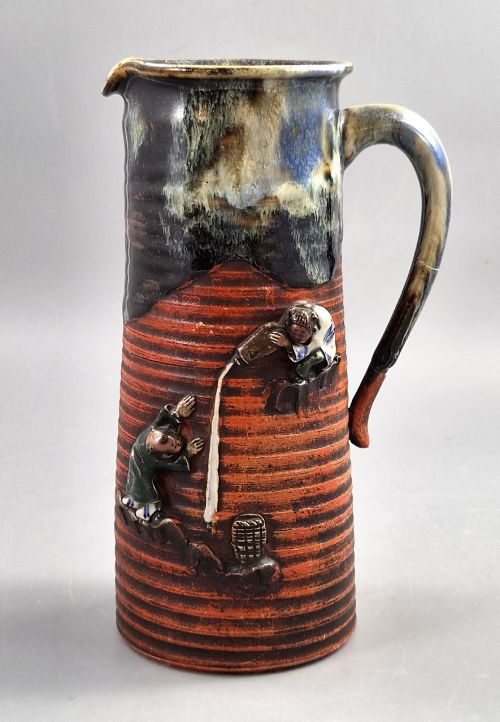
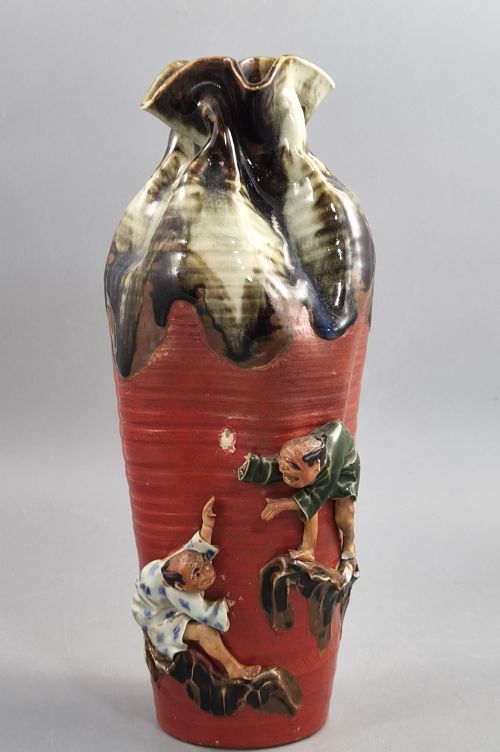
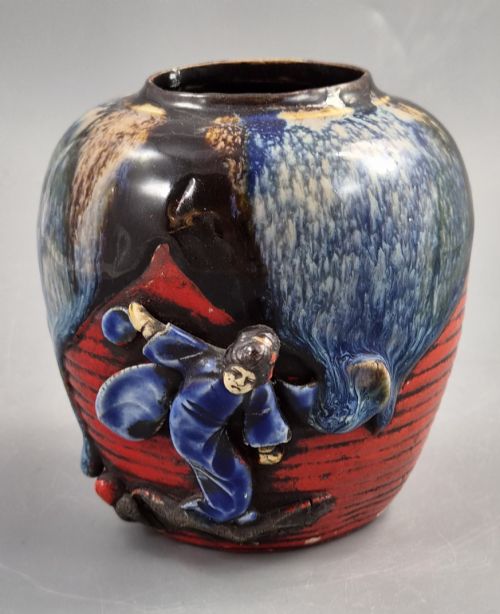
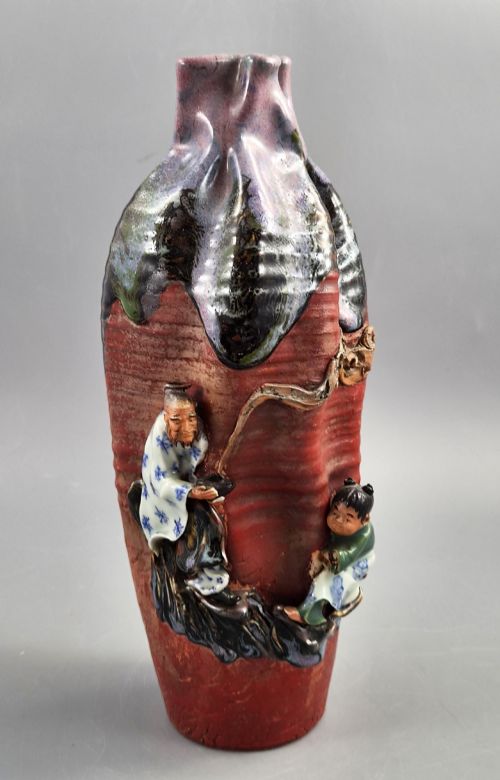
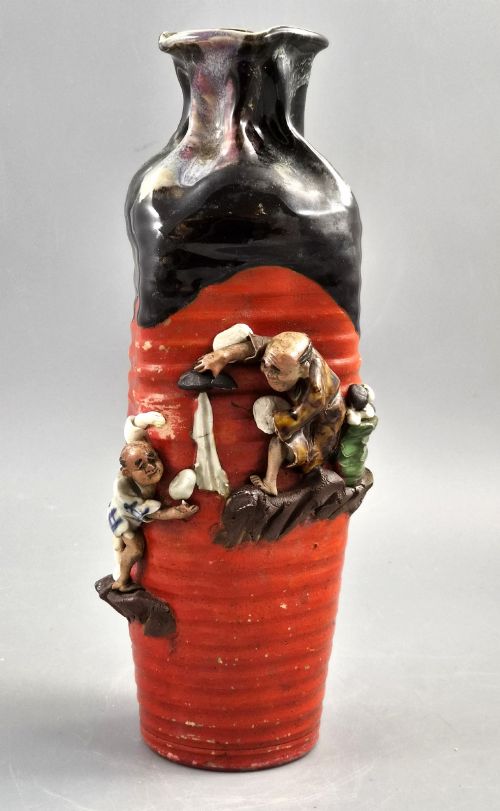
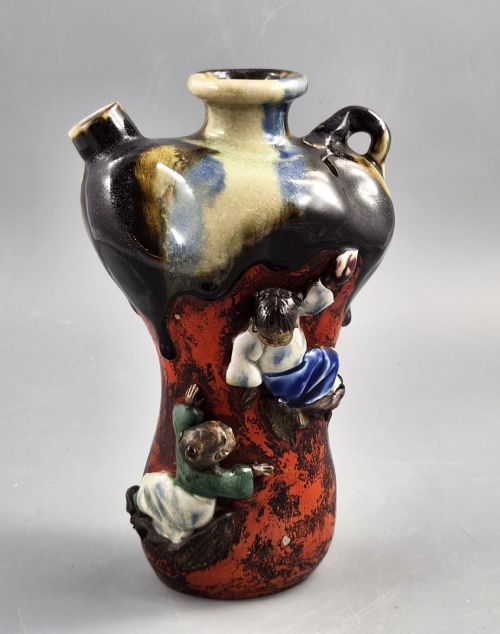
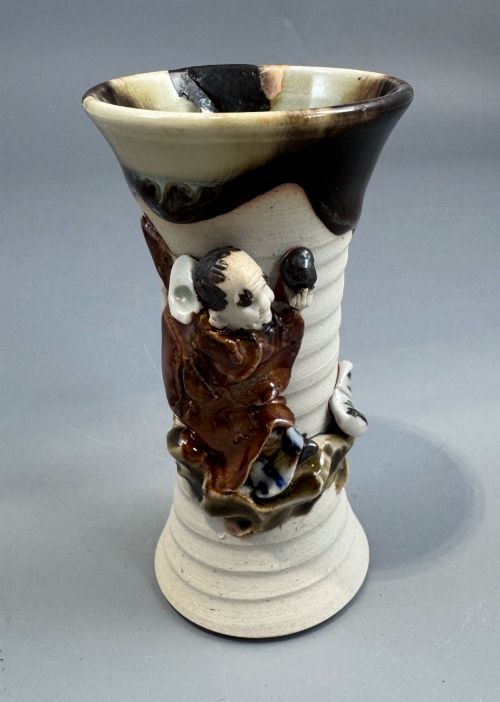
These japanese relief figure vase pieces bring bold sculptural depth to a room, showing modelled figures climbing across textured earthenware bodies.
Japanese Relief Figure Vase
A japanese relief figure vase is a striking ceramic vessel defined by three-dimensional modelled figures applied directly to the body. These works span the late Victorian era through the Meiji, Taishō, and early Shōwa periods, capturing a distinct era of ceramic art.
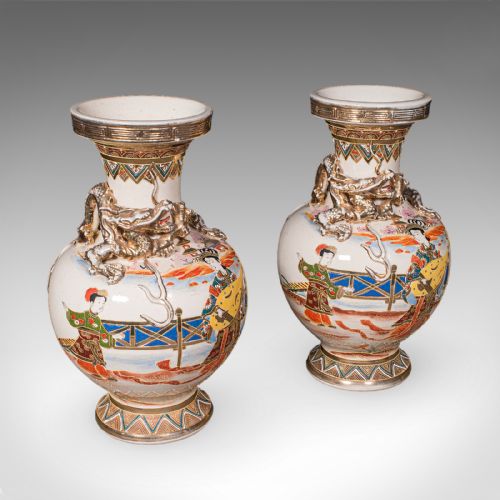
Most examples found here belong to the Sumida Gawa tradition, featuring expressive applied figures such as sages, children, and karako clambering over the surface. Alongside these, traditional Satsuma and Moriage styles appear with high relief ornamentation on baluster forms and jars.
Makers utilised various vessel shapes, from pinched sack rims to tall cylindrical bodies and bulbous pitchers. The union of tactile, dripping glazes and individual sculpted characters creates a powerful sense of movement on each piece.
What varies in quality
The finesse and expression of the modelled figures dictate the artistic standard of each vessel. Finer works display lively, detailed hands and faces on the figures, whereas simpler pieces show coarser modelling with less definition.
Glaze control and application also separate standard production from superior pieces. Successful flambé runs create rich, controlled pools of colour that enhance the relief work rather than obscure the underlying ceramic details.
The listings here span the Victorian era, Meiji, Taishō, and Shōwa periods, executed in earthenware, terracotta, and stoneware.
Inoue Ryosai·Ban-ni·Hiroshi
The Japanese Relief Figure Vase Glossary
- Sumida Gawa
- A distinctive type of Japanese pottery originating from the banks of the Sumida River in Tokyo. It is instantly recognisable for its heavy dripping glazes and applied clay figures.
- Flambé glaze
- A streaky, variegated glaze created by metallic oxides fired under fluctuating conditions. It produces rich pools of oxblood, blue, or lavender across the ceramic surface.
- Karako
- A traditional decorative motif depicting Chinese boys at play. These cheerful figures frequently appear climbing across the bodies of Sumida Gawa wares.
- Rakan
- A representation of a Buddhist sage or ascetic. These wise figures often feature prominently in high relief on Japanese art pottery.
- Moriage
- A ceramic technique involving the piping of slip in raised dots or lines to create textured surface patterns. It is frequently found on Satsuma and late Victorian export wares.
Japanese Relief Figure Vase: Frequently Asked Questions
What is a japanese relief figure vase?
A japanese relief figure vase is a ceramic vessel adorned with hand-modelled sculptural figures that project outward from the body. These pieces rely on tactile glazes and narrative scenes to create a dynamic three-dimensional effect.
Most examples date from the Meiji to Taishō periods and belong to the Sumida Gawa tradition. They showcase distinct artisan craftsmanship through expressive characters clambering across textured earthenware surfaces.
How do I style a japanese relief figure vase?
These vessels possess a strong sculptural presence that allows them to stand alone on a mantelpiece, sideboard, or table. Their textured surfaces and bold glazes pair well with neutral backgrounds that let the intricate relief work stand out.
Because the bodies feature applied figures and dripping glazes, placing them where natural light can catch the varied contours works best. They bring an expressive, artisanal focal point to traditional and eclectic interiors alike.
How can I tell the period of these vases?
Dating relies on stylistic markers, studio signatures, and the specific combination of body materials and glazes used. Pieces spanning the late Victorian era through the Meiji and Taishō periods often bear impressed or painted artisan signatures.
Earlier Meiji examples tend to feature particularly vigorous modelling and rich oxblood or lavender flambé runs. Later Taishō and Shōwa productions continue these traditions while sometimes introducing different glaze variations and vessel proportions.