





Sumida Gawa Relief Pottery
Sumida gawa relief pottery pieces bring tactile Japanese artistry into a room through hand-modelled figures and striking flambé glazes.
Sumida Gawa Relief Pottery
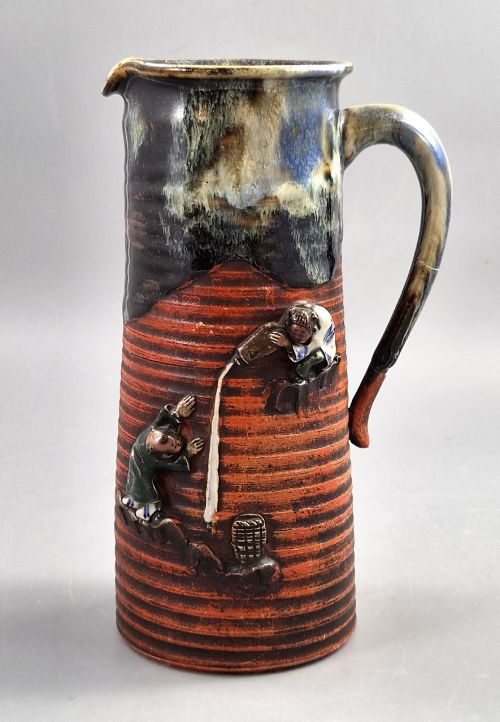
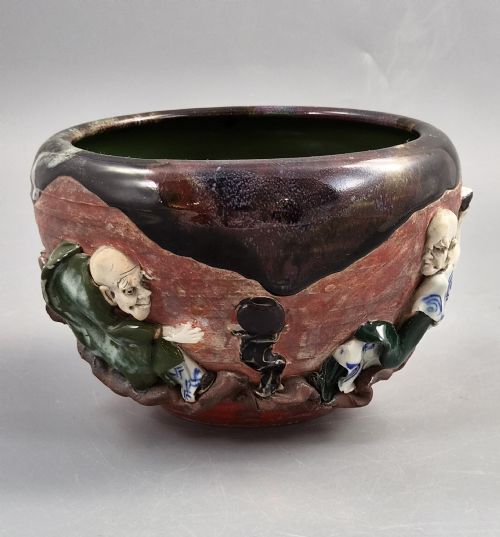
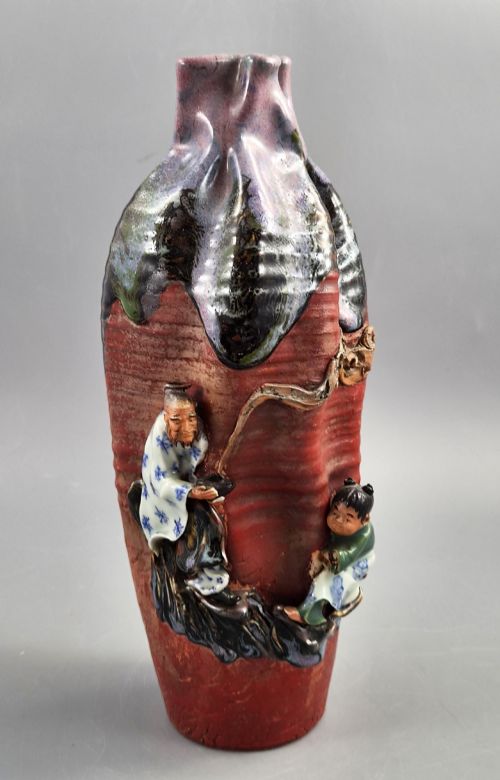
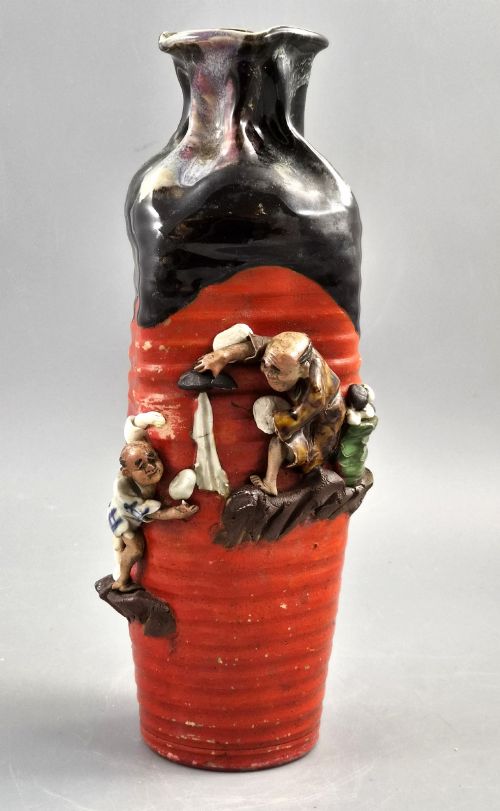
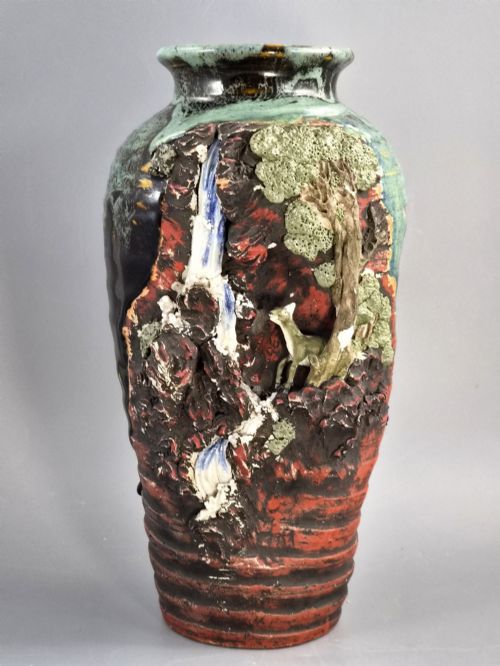
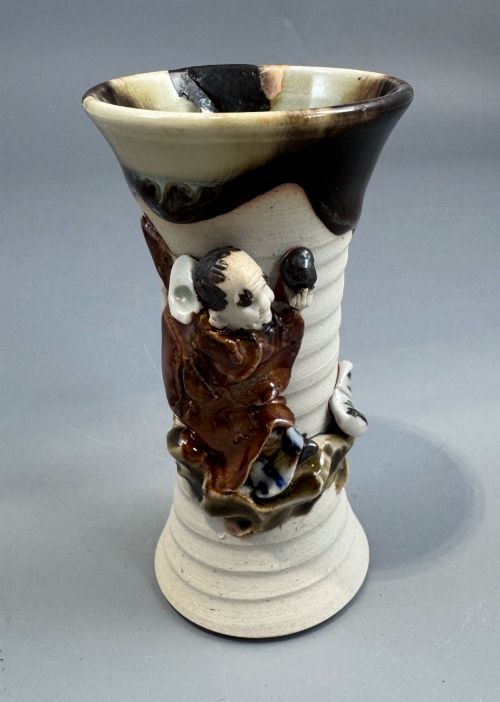
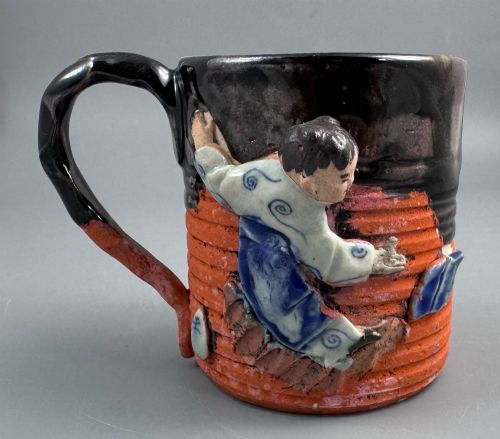
Sumida gawa relief pottery comprises distinctive ceramic vessels decorated with heavily modelled figurative elements applied directly to the body. When collectors search for sumida gawa relief pottery, they encounter vases, pitchers, bowls, and mugs originating from the late Meiji and Taishō periods. These works combine traditional Japanese ceramic forms with sculptural narratives that project outward from the surface.
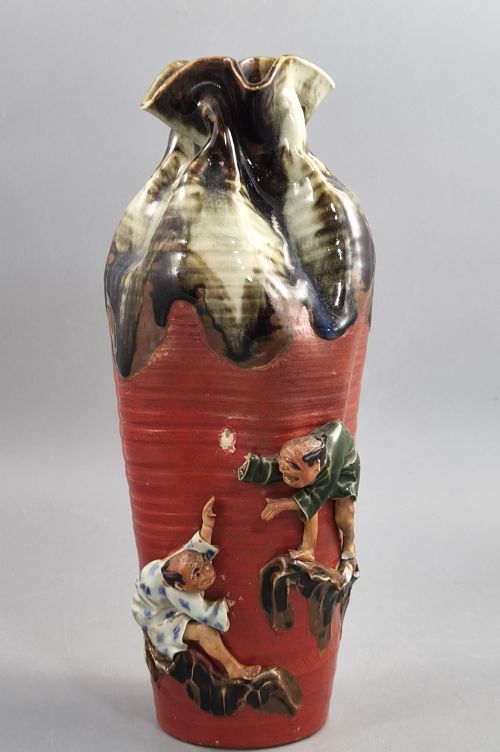
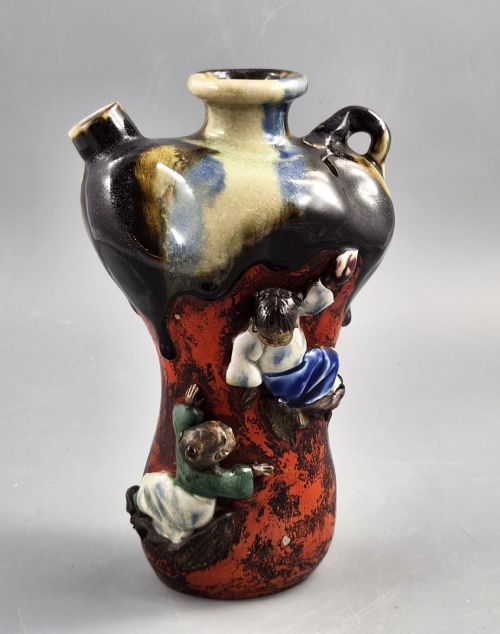
The pieces on this page span the early twentieth century, specifically between nineteen hundred and nineteen twenty. The most common forms met here are tall vases, jars, and mugs featuring applied figures such as sages, children, and rakan climbing along the rims and sides. Distinctive pinched sack rims and textured clay bodies characterise these creations.
Makers working in this tradition utilised earthenware and stoneware as foundations for dynamic glazes. Production centres around this style flourished through the Meiji and Taishō eras, producing domestic and export wares that remain instantly recognisable. Each item displays a direct physical interaction between the potter and the sculptural components.
Materials and Technique
Potters constructed these vessels using earthenware or stoneware clay bodies, often leaving parts of the textured surface unglazed to contrast with the glossy finishes. The core vessel was thrown or formed before artists applied separately modelled figures by hand. This layered method created a high-relief surface where characters emerge directly from the body of the pot.
Stubborn little clay children persistently scale the rims of teapots and vases, refusing to stay on the flat floor of the room.
What Varies in Quality
The standard of modelling in the applied figures separates superior examples from simpler production pieces. Master modellers rendered facial expressions and drapery with anatomical precision and lively gesture, whereas lesser works appear stiff and hastily attached. The vitality of a climbing figure scaling a pinched rim depends entirely on the sculptor's dexterity.
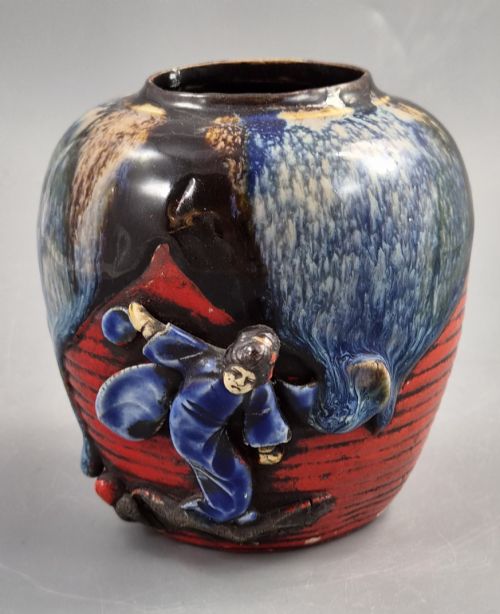
Glaze control and depth also dictate the hierarchy of these ceramics. Successful flambé glazes produce complex, variegated colour transitions across the vessel without obscuring the fine details of the relief work. The harmony between the base clay, the glaze pooling, and the sculptural subject determines the overall presence of the piece.
Inoue Ryosai·Ban-ni·Hiroshi
The Sumida Gawa Relief Pottery Glossary
- Flambé glaze
- A streaky, variegated ceramic glaze produced by high-temperature reduction firings that create unpredictable colour transformations. These finishes often display rich oxblood, blue, or lavender tones.
- Karako
- A traditional depiction of a Chinese child with characteristic hairstyle, frequently shown playing or climbing on Japanese ceramics. These figures add a lighthearted narrative element to the vessels.
- Suiban
- A shallow decorative basin used for holding water, stones, or arrangement displays. These ceramic trays often incorporate applied figures along their borders.
- Meiji period
- The era of Japanese history lasting from eighteen sixty-eight to nineteen twelve, marked by extensive international trade and artistic innovation. Many sculptural ceramics date from the final decades of this reign.
Sumida Gawa Relief Pottery: Frequently Asked Questions
What are sumida gawa vessels made from?
These pieces are formed from earthenware or stoneware clay bodies that provide a sturdy foundation for thick, colourful glazes. The textured surfaces often combine exposed clay with glossy flambé finishes.
Artists built the sculptural elements separately before attaching them firmly to the wet or leather-hard body prior to firing.
How do I identify a signed piece?
Signatures on these ceramics typically appear impressed or painted directly into the clay body near the base or among the relief figures. Master makers such as Inoue Ryosai and Koko marked their creations to denote workshop origin.
Not all authentic items carry a legible signature, as many export pieces relied on general workshop traditions rather than individual artist marks.
Were these items meant for daily use?
While forms like mugs, pitchers, and teapots suggest practical utility, the delicate nature of the high-relief figures made them primarily decorative. Households utilised them as vases, brush washers, or display vessels.
The fragile applied figures require careful handling during cleaning and placement to prevent accidental damage.
How do I date sumida gawa pottery?
Dating relies on stylistic markers associated with the Meiji and Taishō periods, spanning roughly from nineteen hundred to nineteen twenty. Earlier examples often feature more vigorous modelling and deeper flambé glazes.
Transitional pieces bridging the Meiji and Taishō eras share similar construction methods, making precise chronological separation dependent on specific signatures and material weight.