





Japanese Sumida Gawa Pottery
Japanese sumida gawa pottery brings together tactile relief figures and dripping flambe glazes from the Meiji and Taisho periods.
Japanese Sumida Gawa Pottery
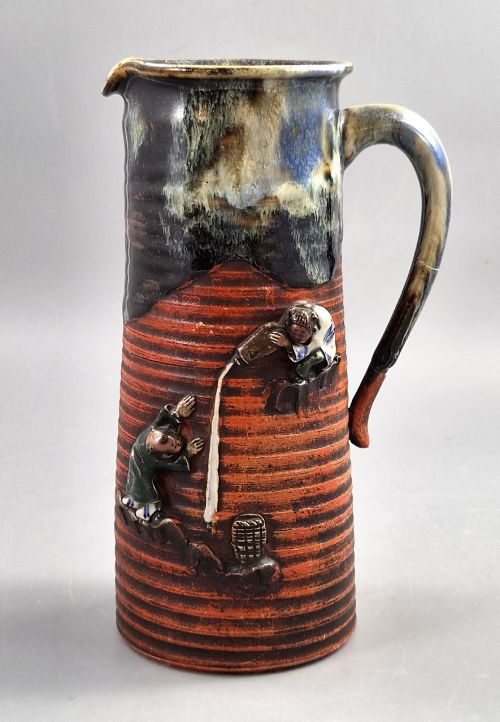
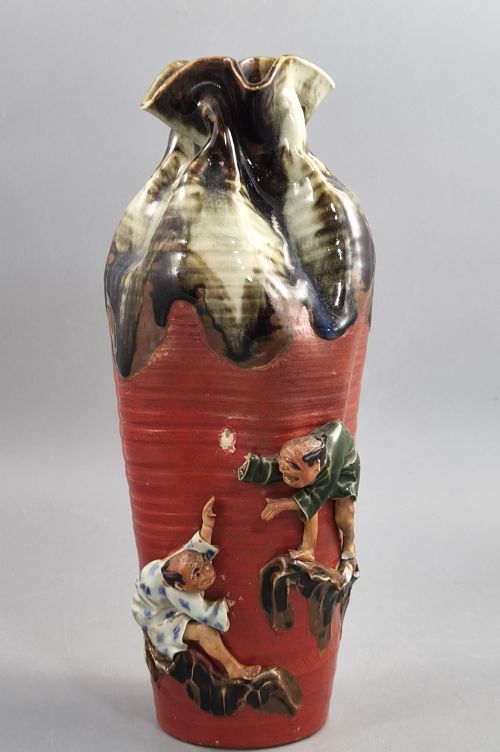
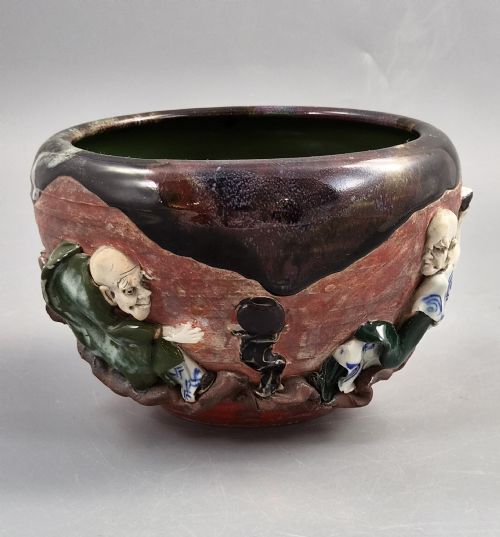
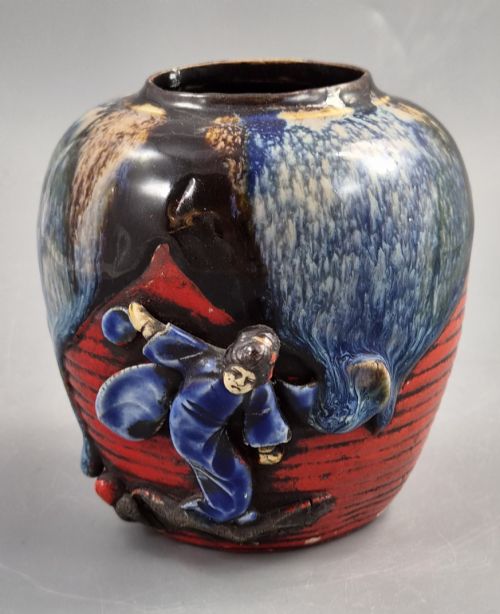
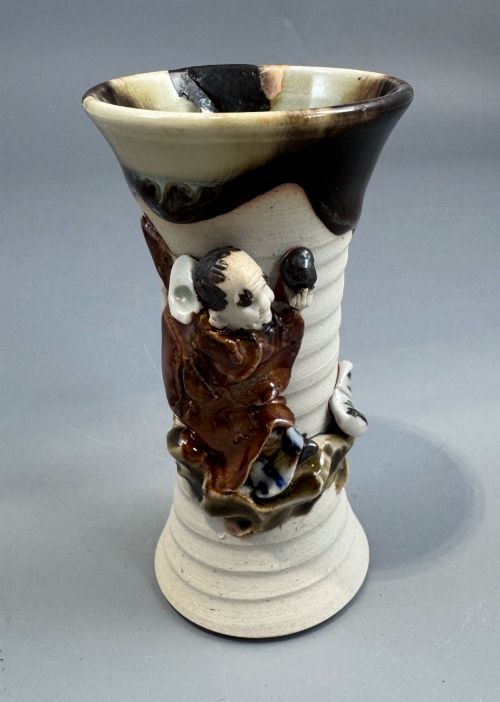
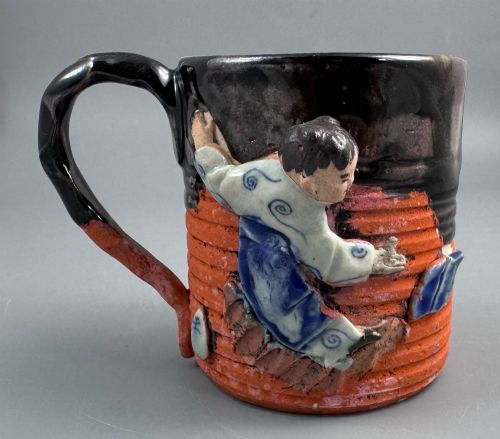
Japanese sumida gawa pottery comprises distinctive vessels decorated with high-relief figurative scenes modelled directly onto the body. When searching for japanese sumida gawa pottery, collectors encounter forms such as vases, pitchers, bowls, teapots and mugs dating from the Meiji and Taisho periods.
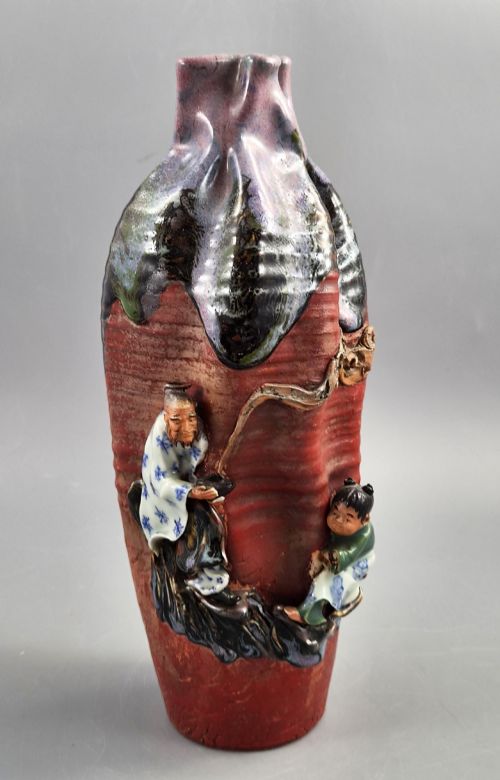
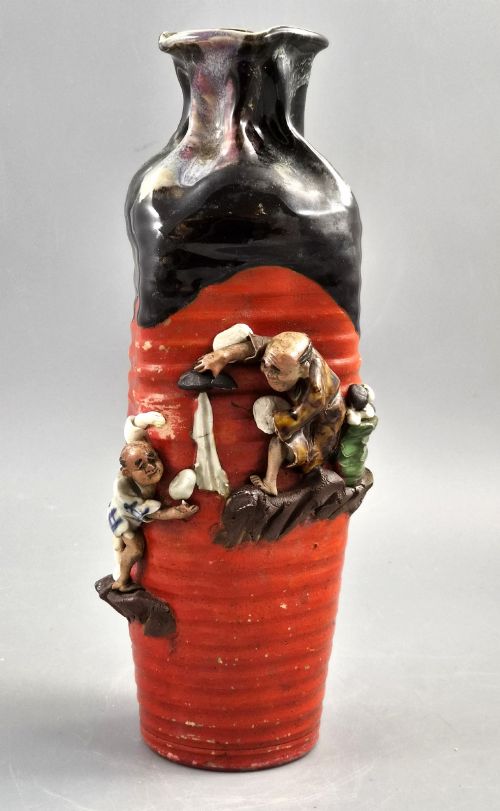
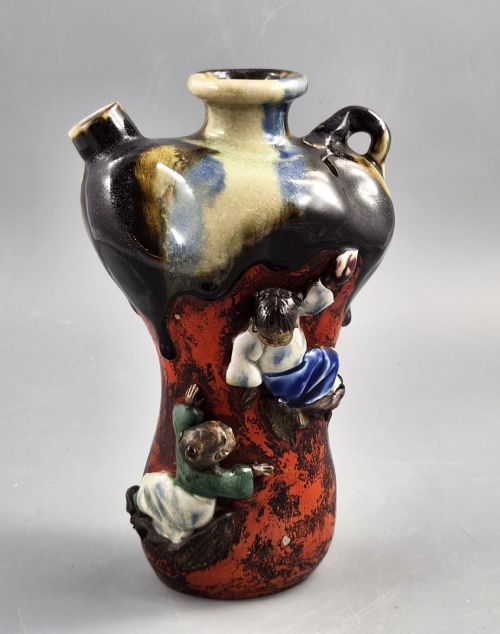
The most common pieces on this page are vases and jugs decorated with applied figures of sages, children or rakan climbing the exterior. These items often feature raw terracotta sections contrasting with glossy pools of coloured glaze.
Vessels span the decades around nineteen hundred, covering the Meiji to Taisho transitions. Makers fashioned these distinctive objects using earthenware and stoneware bodies, applying dramatic glazes to create textured surfaces.
What varies in quality
Control over the flambe and enamel glazes marks the grade of a vessel. Successful pieces display balanced pools of colour that enhance the composition without obscuring the applied figures beneath.
Listings feature items from the Meiji and Taisho periods, predominantly employing earthenware, stoneware, and fluid flambe glazes.
Inoue Ryosai·Hiroshi·Ban-ni·Ishiguro Koko
The Japanese Sumida Gawa Pottery Glossary
- Flambe glaze
- A streaked or mottled glaze achieved by high-temperature firing which causes colours to run and merge. This technique creates dramatic transitions of blue, purple, and oxblood across the ceramic surface.
- Relief
- Sculptural projection from a flat or curved background surface. Makers used this method to attach figures of sages and children climbing the sides of vases and mugs.
- Terracotta
- Unglazed brownish-red fired earthenware clay left visible on specific areas of the vessel. It provides a matte contrast to the glossy glaze pools surrounding the figures.
- Rakan
- Representations of enlightened disciples of Buddha frequently depicted on these ceramics. These figures appear climbing up the bodies of vases and mugs in high relief.
- Suiban
- A shallow decorative basin used for arranging flowers or holding water. These ceramic trays often incorporate applied figures along the rim.
Japanese Sumida Gawa Pottery: Frequently Asked Questions
What is sumida gawa pottery?
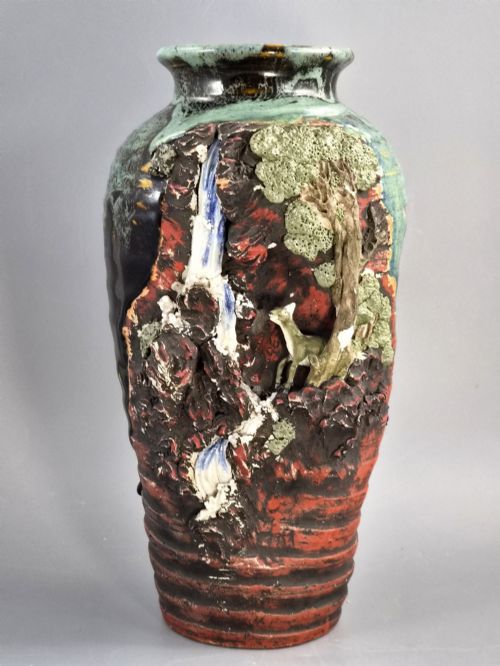
Sumida gawa pottery is a distinctive type of Japanese ceramic originating from the banks of the Sumida River in Tokyo during the late Meiji and Taisho periods. These vessels are immediately recognised by their heavy terracotta bodies, dripping flambe glazes, and hand-modelled figures climbing in high relief.
Potters combined traditional throwing techniques with sculptural modelling to create utilitarian forms such as vases, mugs, and teapots. The style breaks away from strict symmetry, favouring dramatic textures and storytelling scenes.
How do I identify a Meiji period piece?
Meiji period pieces typically display dense figurative modelling and rich flambe glazes associated with workshops operating around nineteen hundred. Signatures impressed or painted into the clay often point to known makers from this era.
Examining the weight, the handling of the terracotta body, and the depth of the glaze pooling helps distinguish these earlier pieces from later variations.
Were these pots used or displayed?
Many of these vessels served decorative functions within Western export markets during the late nineteenth and early twentieth centuries. Objects like large vases and sculptural landscapes were intended primarily for display.
At the same time, forms such as mugs, teapots, and brush washers were built for practical use while maintaining their characteristic high-relief artistic decoration.
How do I care for sumida gawa pottery?
Care involves dusting gently with a dry, soft cloth to protect the delicate raised figures applied to the exterior. Avoiding harsh cleaning agents preserves the fragile enamel and flambe glazes.
Displaying pieces away from direct heat and heavy traffic prevents accidental impact damage to the protruding arms and heads of the modelled figures.