






Sumida Gawa Ware
Sumida gawa ware brings sculptural relief and heavy glaze drips to Japanese pottery, offering tactile storytelling through applied figures.
Sumida Gawa Ware
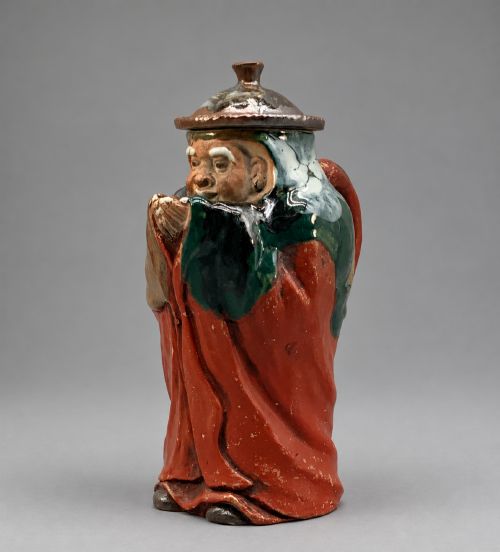
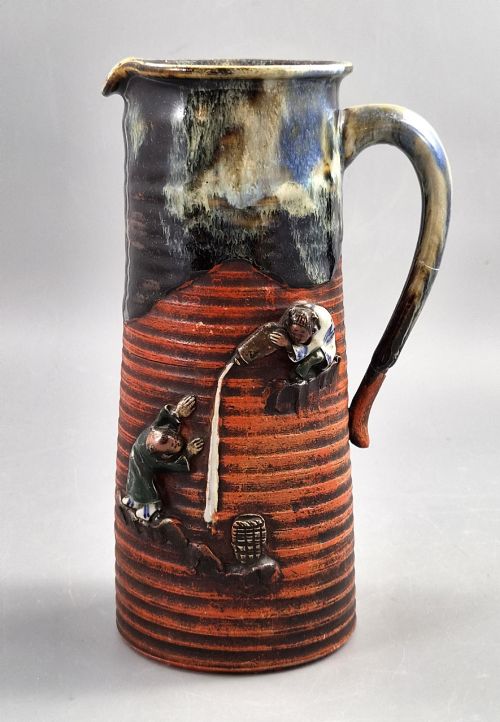
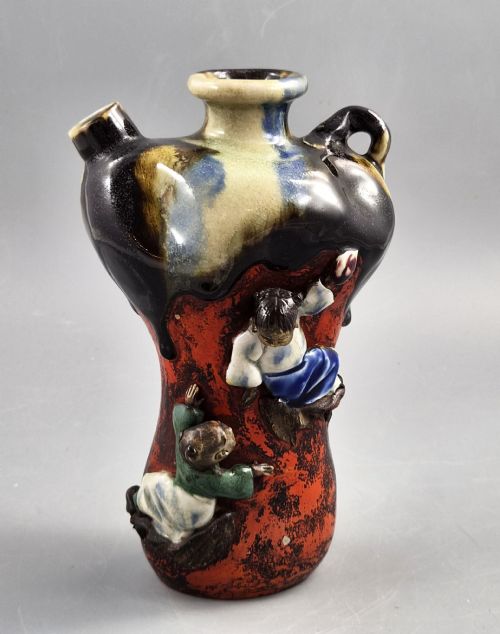
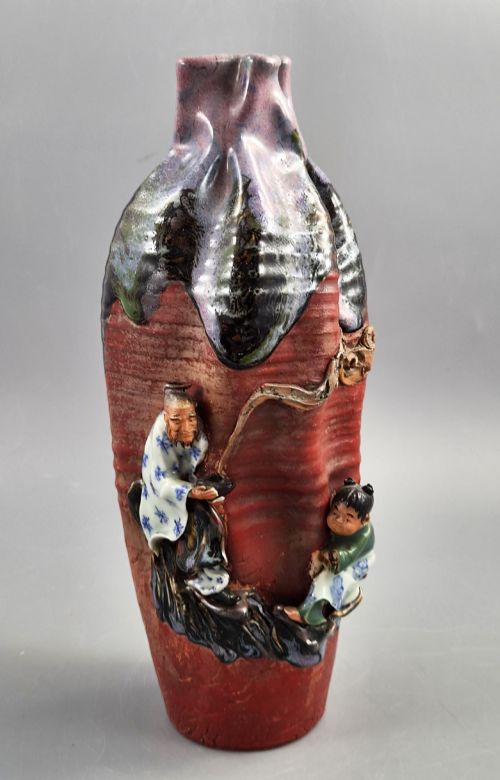
When you examine sumida gawa ware, you encounter distinct Japanese ceramics created mainly during the Meiji and Taishō periods. These pieces are defined by heavy, streaky glazes and modelled figures applied directly to the surface.
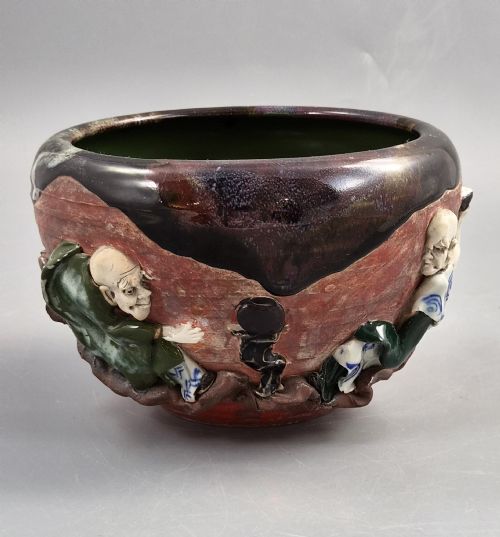
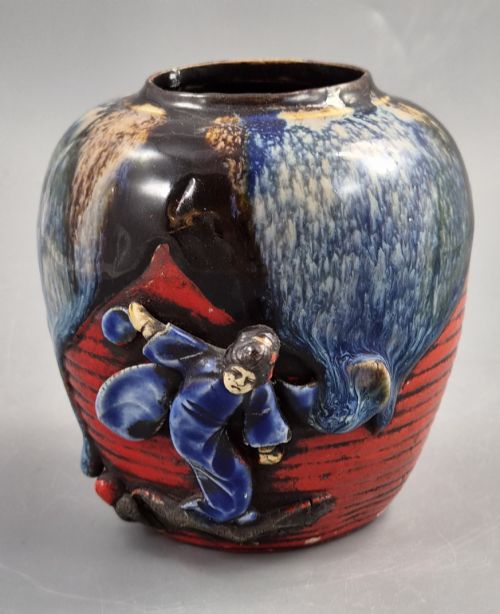
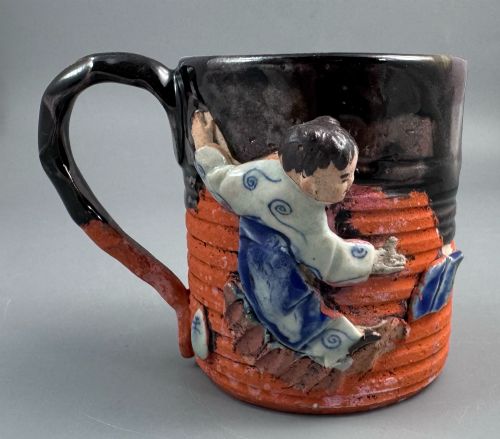
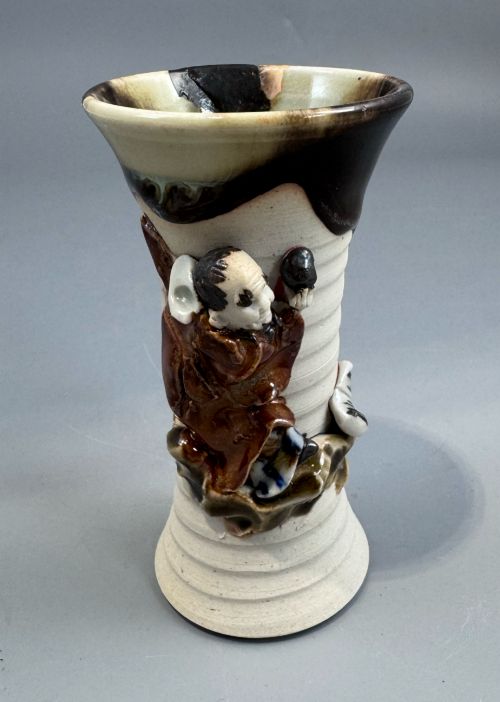
The most common forms on this page include vases, pitchers, bowls, and mugs featuring high-relief figures like sages, arhats, and children. Such vessels bridge the gap between traditional pottery and figurative sculpture.
Originating near the Sumida River in Tokyo, this distinct style served export markets while retaining characteristic Japanese craftsmanship. Each piece provides a snapshot of late nineteenth and early twentieth-century ceramic innovation.
How sumida gawa ware was made
Potters built these vessels using earthenware, stoneware, and terracotta bodies before applying thick, dripping glazes in shades of blue, lavender, and oxblood. These dramatic surface treatments often left sections of the clay body bare or textured.
Makers then sculpted figurative elements separately, attaching sages, rakan, and karako figures directly onto the wet or leather-hard walls of the vessel. The combined piece underwent kiln firing, which fused the applied relief firmly to the glazed body.
Sumida Gawa Ware Retail Price Guide 2026
Typical asking prices for sumida gawa ware among the pieces listed under this phrase on Sellingantiques today, from the lower quarter to the upper quarter. They describe what is for sale here now, not the wider market.
Several pieces feature tiny ceramic figures caught mid-climb, stubbornly scaling the walls of teapots and vases for all eternity.
What varies in quality
Quality in sumida gawa ware rests primarily on the crispness and anatomical detail of the modelled figures. Pieces featuring finely rendered facial expressions and dynamic postures stand above simpler, mass-produced applications.
The control and depth of the flambé glaze also dictate the success of a piece. Successful application creates rich, intentional colour runs that complement the narrative scene without obscuring the applied relief.
Inoue Ryōsai·Ban-ni·Kōko·Ishiguro Kōko·Hiroshi
The Sumida Gawa Ware Glossary
- Flambé glaze
- A streaky, variegated ceramic glaze produced by high-temperature firing and chemical reduction. This technique creates dramatic colour shifts, often combining blues, purples, and reds on sumida gawa surfaces.
- Rakan
- A Sanskrit term for an enlightened follower of Buddha, commonly depicted in East Asian art. These figures appear frequently as applied ceramic reliefs on Japanese vessels.
- Karako
- A traditional motif depicting Chinese children at play, recognisable by their distinct hairstyles. They are frequently sculpted climbing across the bodies of vases and teapots.
- Suiban
- A shallow ceramic basin used for holding water and arranging stones or plants. Examples in this tradition incorporate figurative elements along the rim.
- Meiji period
- The era of Japanese history spanning from 1868 to 1912, characterised by rapid modernisation and the opening of trade with the West. Much of the pottery associated with this style originates from these decades.
Sumida Gawa Ware: Frequently Asked Questions
What is sumida gawa ware?
Sumida gawa ware is a distinct style of Japanese pottery produced around the Tokyo region during the Meiji and Taishō periods. It is instantly recognisable by thick, dripping glazes and high-relief figures applied to the exterior.
These pieces range from functional mugs and pitchers to decorative vases and teapots. They were largely made for export, blending traditional Japanese forms with narrative storytelling.
How do I identify the maker?
Many pieces feature signatures pressed or written into the clay body, often near the base or within the relief scene itself. Names such as Ryōsai and Kōko appear on authenticated works from this tradition.
Studying the quality of the applied figures helps separate signed masterworks from unsigned or workshop pieces. The clarity of the signature alongside the modelling skill confirms the origin.
What materials were used?
Makers utilised earthenware, stoneware, and terracotta as the foundational bodies for these vessels. These clays provided a stable surface for the heavy, tactile glazes applied over them.
Surfaces often combine bare, textured clay with glossy, streaked glazes in oxblood, blue, and lavender. This textural contrast remains a defining characteristic of the ware.
How should I display them?
These pieces require placement on sturdy surfaces where their three-dimensional relief can be appreciated from multiple angles. Good lighting highlights the depth of the dripping glazes and the fine details of the applied figures.
Keeping them away from high-traffic areas protects the delicate protruding elements, such as limbs and robes, from accidental knocks. Allowing space around each vessel lets the narrative scenes stand out.