


Crackle Glaze Satsuma Vase
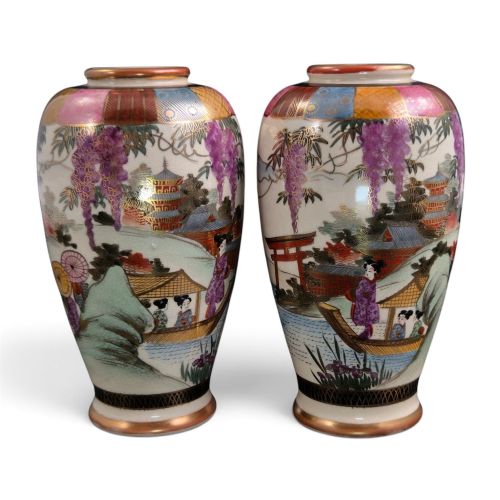
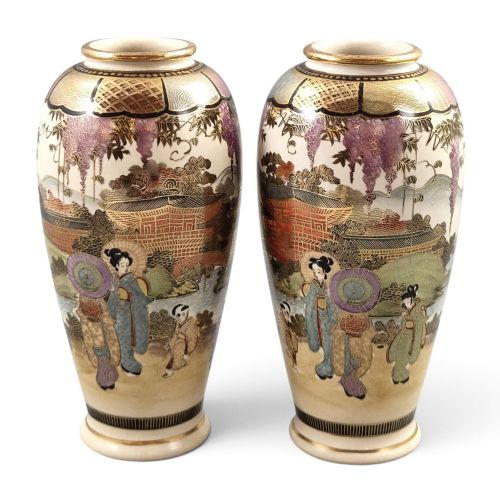
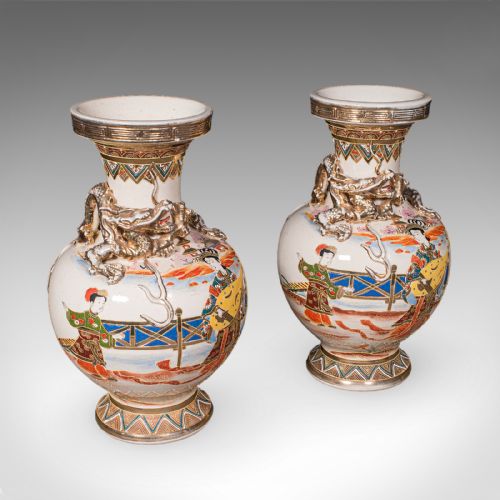
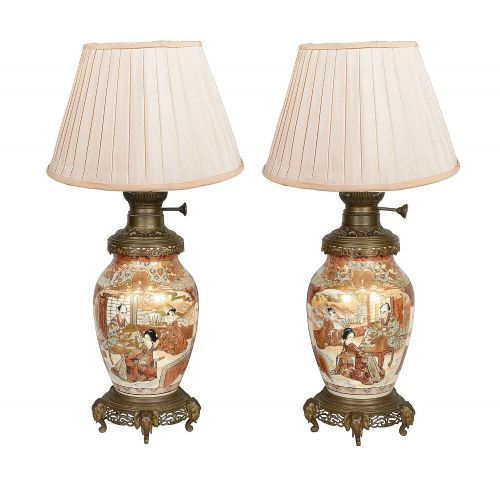
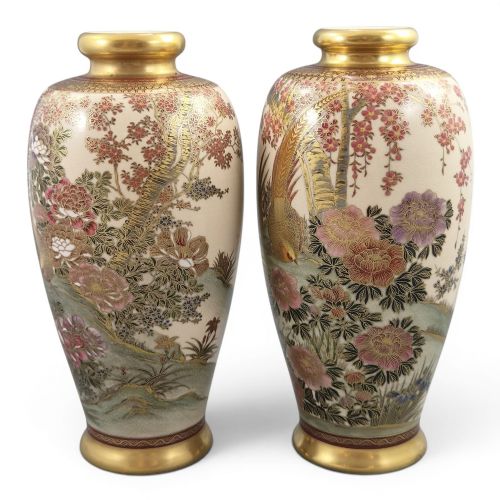
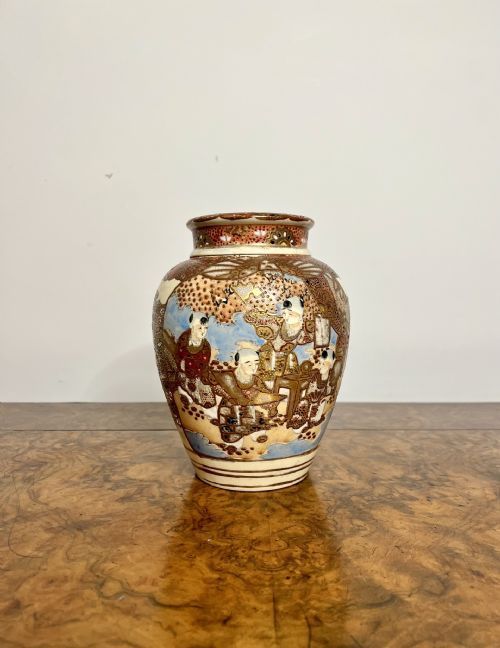
A crackle glaze satsuma vase brings complex network crazing and hand-painted figures into a room.
Crackle Glaze Satsuma Vase
A crackle glaze satsuma vase is a ceramic vessel defined by its distinct network of fine glaze lines and detailed Japanese decoration. When you explore this selection, you encounter pieces spanning from the nineteenth century through the Meiji, Taisho and early Showa periods.
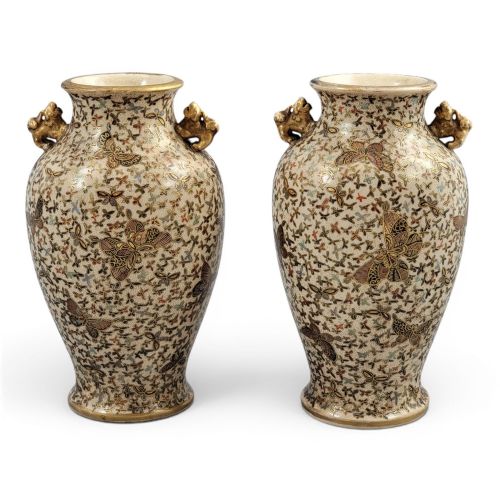
The objects take various domestic forms, including baluster shapes, ginger jars with covers, hexagonal bodies, and miniature vessels. Pairs and garniture sets appear alongside individual vases and mounted table lamps.
Originating primarily from production centres such as Kyoto and Kobe, these pieces reflect the aesthetic standards of late nineteenth and early twentieth-century Japanese export art.
Materials and technique
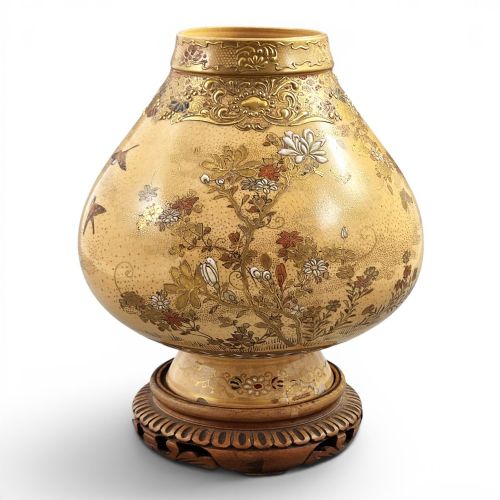
These vessels are built from earthenware bodies covered in specialised crackle glaze that develops a deliberate network of minute fissures during firing. Artisans then apply detailed enamel pigments and gold leaf or gilt detailing over this foundational surface.
Decoration relies on hand-painted scenes featuring court figures, landscapes, wisteria, and thousand butterfly motifs, sometimes enhanced with raised moriage work. Workshops employed skilled painters to execute complex figural processions and deities with precision.
Listings feature earthenware bodies decorated with enamel, gold leaf, and gilt across the nineteenth and early twentieth centuries.
Standards of execution
Quality rests upon the precision of the hand-painted brushwork and the clarity of the crackle pattern across the earthenware body. Superior examples display dense, meticulously rendered court figures or landscapes executed by known workshops and named artists.
The application of gold leaf and enamel also separates standard commercial pieces from exceptional studio works. Clean gilding and well-defined facial expressions on figures indicate a higher tier of Meiji and Taisho production.
Shozan·Manpei·Kinkōzan Workshop·Kinzan·Chosei·Seiko-en Chokei·Choshuzan·Jissei·Hattori·Hayakawa
The Crackle Glaze Satsuma Vase Glossary
- Satsuma ware
- A type of Japanese earthenware featuring a pale, ivory-coloured crackle glaze that accepts detailed enamel and gilt painting. It developed from older provincial traditions into a major export art during the nineteenth century.
- Moriage
- A decorative ceramic technique using piped clay to create raised relief patterns beneath the glaze or enamel. This adds a tangible, three-dimensional texture to robes, dragons, and floral motifs.
- Meiji period
- The era of Japanese history lasting from 1868 to 1912, corresponding to the reign of the Emperor Meiji. Pieces from this time often exhibit the highest complexity in export ceramics.
- Garniture
- A matching set of vases or jars designed to be displayed together on a mantelpiece or sideboard. They typically share identical decorative themes and glaze characteristics.
- Baluster
- A vertical vase form characterised by a rounded body that tapers toward the base and swells below a narrow neck. This traditional silhouette provides a stable canvas for extensive landscape scenes.
Crackle Glaze Satsuma Vase: Frequently Asked Questions
How do I clean a satsuma vase?
Dust the surface gently with a soft, dry brush to protect the delicate enamel and gold leaf decorations. Avoid using water or chemical cleaners, as moisture can penetrate the fine crackle glaze.
Keep the vessel away from direct sunlight and damp environments to preserve the integrity of the earthenware body over time.
What is moriage decoration?
Moriage involves piping liquid clay onto the unglazed or glazed surface to build up raised contours before firing and painting. This technique creates a textured relief effect on garments and borders.
Run your finger lightly across the surface to feel the distinct dimensionality that distinguishes these decorated areas from flat enamel work.
How do I date a satsuma vase?
Examine the base for artist signatures, workshop stamps, and the fineness of the crackle glaze across the earthenware body. Nineteenth-century pieces often display denser crazing and more intricate hand-painted figural work than later iterations.
Cross-reference any visible marks with known Kyoto and Kobe studio signatures from the Meiji and Taisho periods.
Are these vases waterproof?
These earthenware pieces are primarily decorative objects rather than functional vessels for holding cut flowers and water. The porous nature of nineteenth-century bodies and the crackle glaze mean moisture can seep through.
Display them dry on tables, shelves, or fitted as lamps to avoid damaging the interior and exterior finish.