

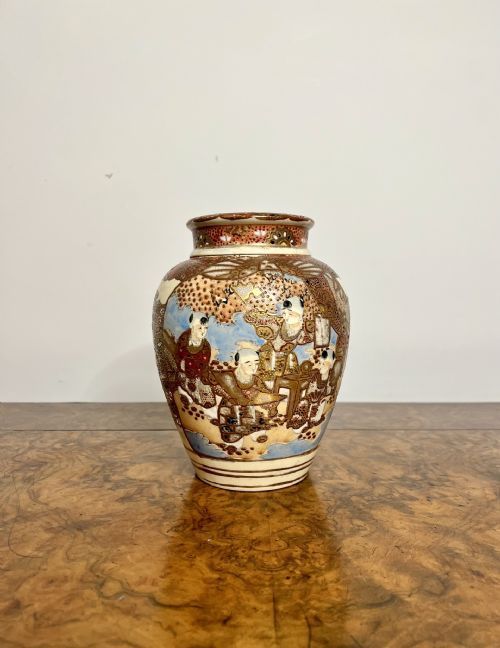
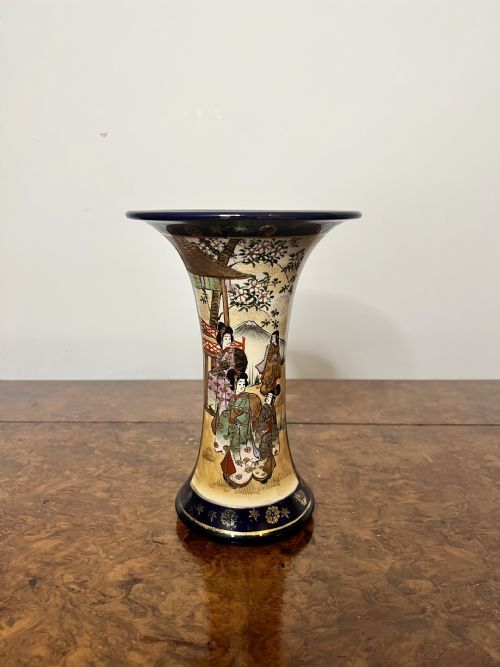


Hand Painted Satsuma Vase
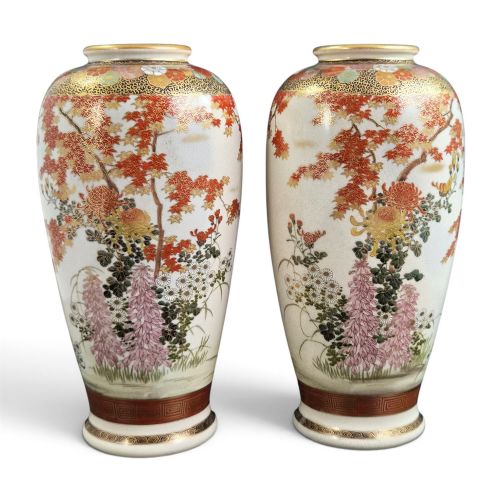
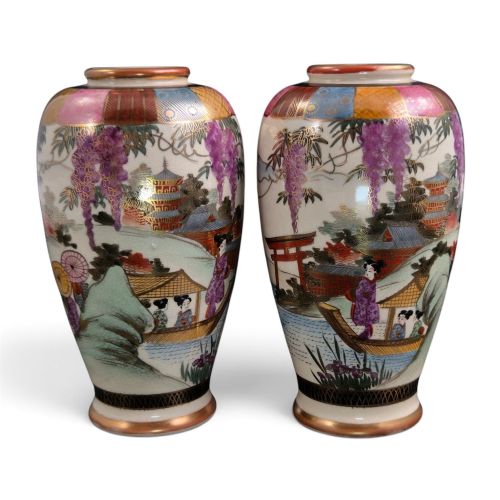
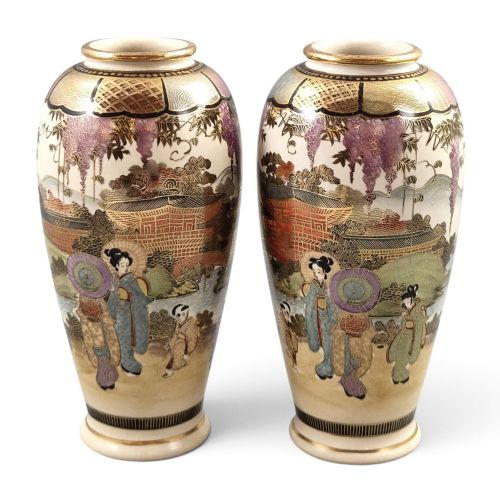
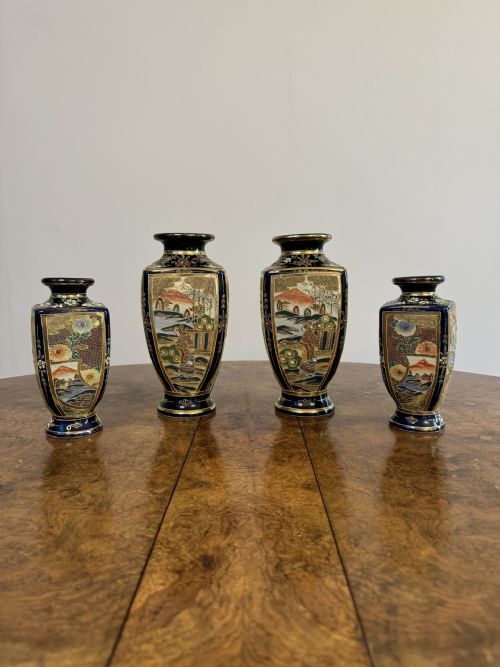
A hand painted satsuma vase brings finely detailed Japanese earthenware into a room, offering intricate figural scenes and rich gilding.
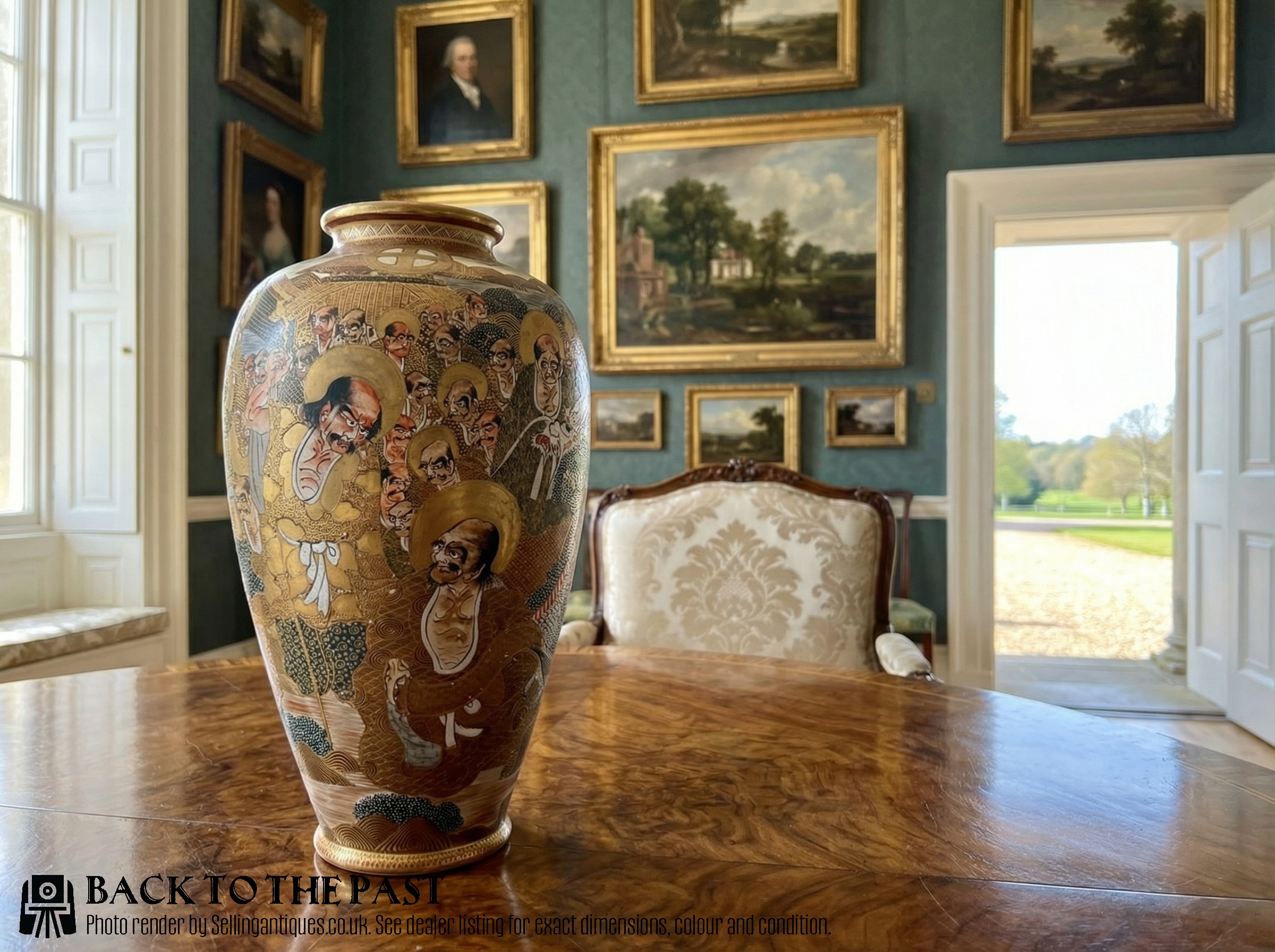
What these pieces are
A hand painted satsuma vase represents a distinct tradition of Japanese ceramic work that collectors prize for its elaborate decoration. These pieces typically take the form of small miniature vessels, large display pieces, footed vessels, or slender bud vases.
The objects on this page span the Meiji period, Victorian era, and nineteen hundred, reflecting the height of traditional export production. Buyers frequently encounter vessels decorated with courtly scenes, traditional figures, and the Seven Gods of Good Fortune.
Originating from Japan, these ceramics often feature intricate depictions executed over a crackle-glaze earthenware body. The forms range from simple bulbous shapes to tripod vessels and matched pairs.
How they were made
Makers shaped these vessels from earthenware clay, applying a distinctive creamy glaze that naturally develops a fine network of cracks during firing. Artisans then painted detailed scenes directly onto this prepared surface using mineral pigments.
Materials recorded across the inventory include earthenware, enamel, and gold leaf.
What varies in quality
The distinction between standard examples and superior work lies in the precision of the brushwork and the complexity of the figural composition. Master painters executed faces, hands, and garments with extreme control, whereas lesser pieces show hurried outlines and repetitive motifs.
The application of gold leaf and enamel also marks the grade of the vessel. Denser, cleaner gilding and well-preserved raised details elevate the visual weight and overall refinement of the piece.
Choshuzan·Jissei·Gyokushu·Hakuzan
The Hand Painted Satsuma Vase Glossary
- Satsuma
- A type of Japanese earthenware originating from Satsuma Province, known for its ivory-coloured crackle glaze. This ceramic body serves as the canvas for elaborate painted scenes.
- Moriage
- A decorative ceramic technique involving piped clay slip applied to the surface to create raised patterns. This method adds a tactile, three-dimensional element beneath the enamel and gold.
- Meiji Period
- The era in Japanese history spanning from eighteen sixty-eight to nineteen twelve, coinciding with a surge in export art. Pieces from this time often display exceptionally fine detail.
- Enamel
- Vitrified glass paste applied to the ceramic surface and fired to achieve vibrant, permanent colours. Artisans use various hues to delineate figures and botanical elements.
Frequently Asked Questions
Are these vases marked?
Many examples bear artist signatures or workshop stamps on the base, often written in black or gold script. These marks indicate the individual painter or the studio responsible for the decoration.
Unsigned pieces remain common, relying on stylistic quality and material characteristics for attribution.
What is crackle glaze?
Crackle glaze is a deliberate network of fine microscopic fissures in the ceramic surface caused by differing rates of contraction between the clay body and the glaze during cooling. Artisans often enhance these lines with dark pigment to create an antiqued pattern.
This characteristic feature provides the classic textured background seen on traditional earthenware from this region.
How do I date a piece?
Dating relies on stylistic indicators, studio signatures, and material traits recorded across the Meiji period and the turn of the twentieth century. The complexity of the courtly scenes and the presence of specific decorative styles offer further chronological clues.
Comparative study with archival records helps narrow the production window for unmarked examples.