



Japanese Painted Pottery Vessel
When you search for a japanese painted pottery vessel, you step into an intricate world of Meiji period craftsmanship and delicate ceramic artistry.
Japanese Painted Pottery Vessel
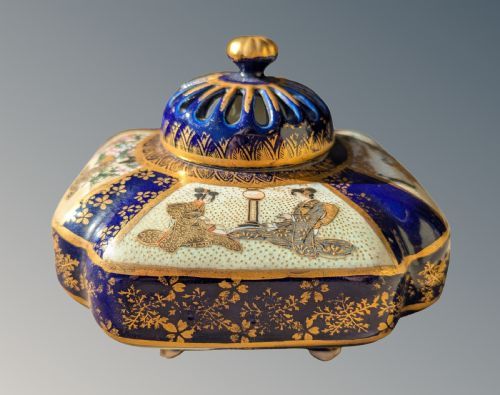
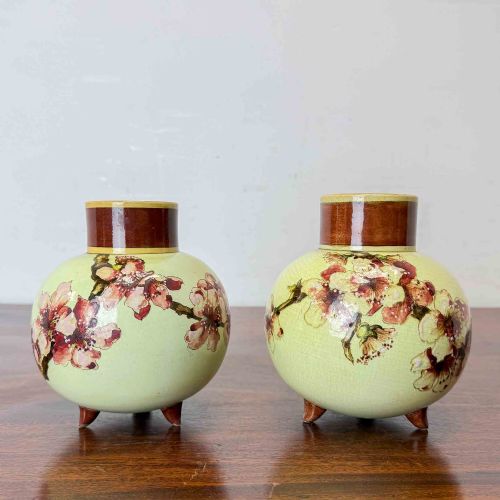
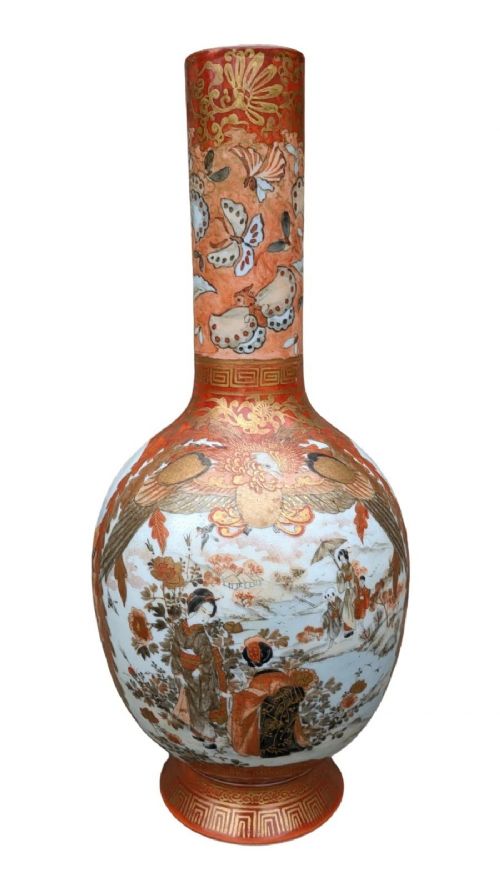
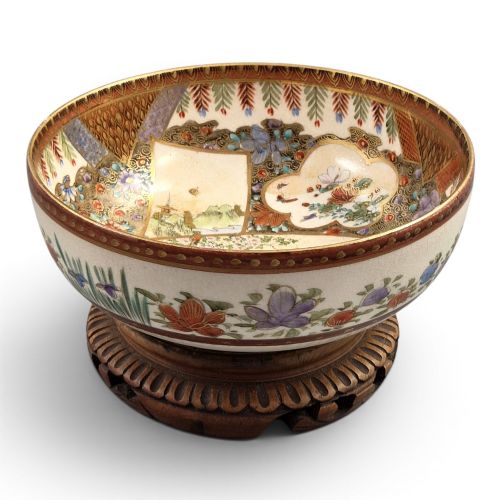
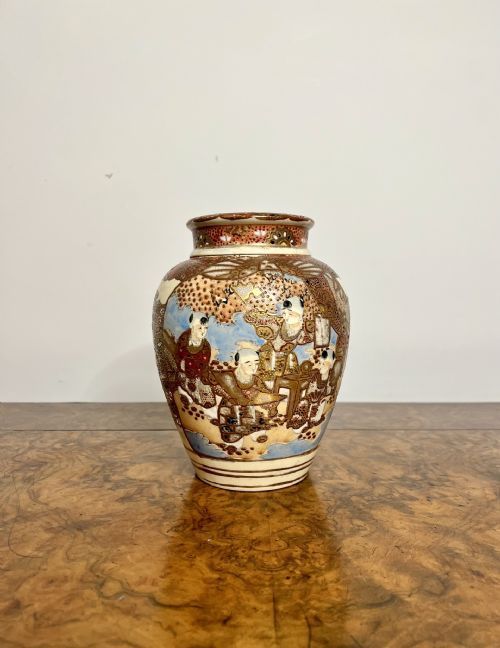
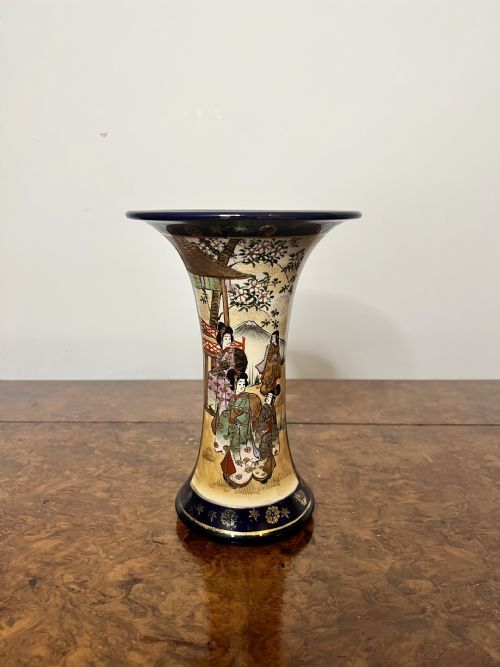
A japanese painted pottery vessel encompasses a varied selection of antique forms including vases, incense burners, tea caddies, ginger jars and decorative bowls. Most examples encountered here originate from the nineteenth and early twentieth centuries, spanning the Meiji and Taisho periods.
The selection ranges from miniature cabinet pieces to monumental bowls and floor vases. Makers from historic ceramic centres such as Kyoto and Tokyo produced these items for domestic use and export during the Victorian era and beyond.
How they were made
Potters shaped earthenware and porcelain bodies before applying intricate enamel decoration, often highlighted with gold leaf and detailed gilding. Techniques such as moriage built up raised paste designs to create tactile surfaces on vases and jars.
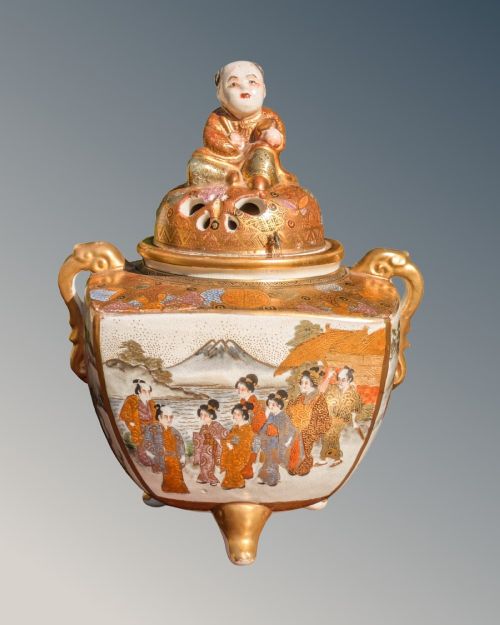
Specialised artists painted complex figural processions, samurai scenes and natural motifs by hand. Many pieces received transparent glazes before secondary firing to fix the vibrant pigments and metallic accents.
Recorded materials in the current selection include earthenware, porcelain, enamel, gold leaf, glaze and wood.
What varies in quality
The refinement of the painted brushwork and the density of the gold leaf application separate standard decorative items from masterworks. Works bearing signatures from notable studios or individual artists display superior precision in miniature detail.
The crispness of moulded elements, such as lion handles and footed burners, indicates the care taken during production. Condition of the delicate enamel and gilding also influences the standing of each piece within its type.
Kizan·Kinkozan·Kozan·Chosei·Kotobuki do·Taizan·Ippo
The Japanese Painted Pottery Vessel Glossary
- Satsuma
- A type of Japanese earthenware featuring a crackle ivory glaze decorated with enamels and gilding. Originating in Satsuma Province, production later flourished in Kyoto workshops.
- Imari
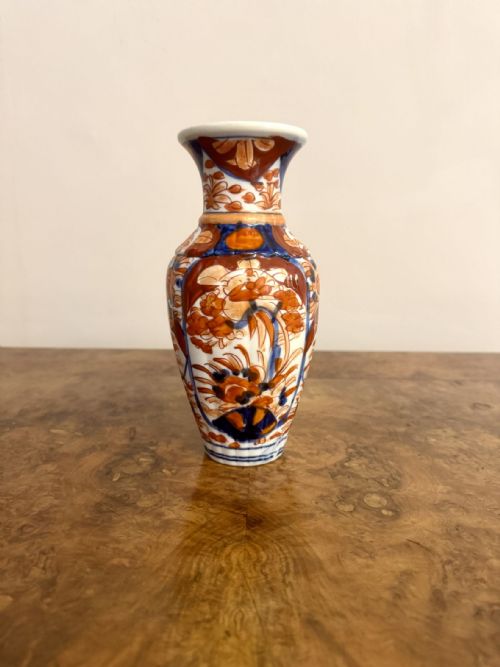
- Japanese porcelain decorated in underglaze blue, iron red and gold. These wares gained widespread popularity in Europe during the nineteenth century.
- Kutani
- Japanese pottery and porcelain known for bold colour palettes and pictorial designs. Kutani wares frequently depict figures, landscapes and natural scenes.
- Koro
- A traditional Japanese incense burner typically featuring a pierced lid and three or more feet. These vessels often incorporate guardian lion handles.
- Moriage
- A ceramic technique using slip to create raised, textured decorative patterns. This method adds significant dimension to painted vessel surfaces.
Japanese Painted Pottery Vessel: Frequently Asked Questions
How do I identify Meiji period pottery?
Meiji period pottery is identified through stylistic markers from the reign of the Emperor Meiji, spanning from 1868 to 1912. Many pieces bear artist signatures or workshop marks on the base.
The inclusion of intricate hand-painted figural scenes, dense gilding and distinct regional styles like Kyoto Satsuma further points to this era.
Where were these vessels made?
These ceramic pieces were produced in various kilns and workshops across Japan, with significant production centres in Kyoto and Tokyo. Studios such as those run by Kinkozan operated in Kyoto to supply both local markets and international export.
Different regions developed distinct aesthetic traditions, ranging from the ivory earthenware of Satsuma to the porcelain of Imari and Kutani.
How should I display a ceramic vessel?
Display these vessels on stable flat surfaces away from direct sunlight to protect the delicate enamel and gold leaf. Miniature pieces and tea caddies suit enclosed cabinets, while larger vases and bowls anchor open shelving.
Handle each item carefully by the body rather than delicate applied elements or lids to prevent accidental damage.