
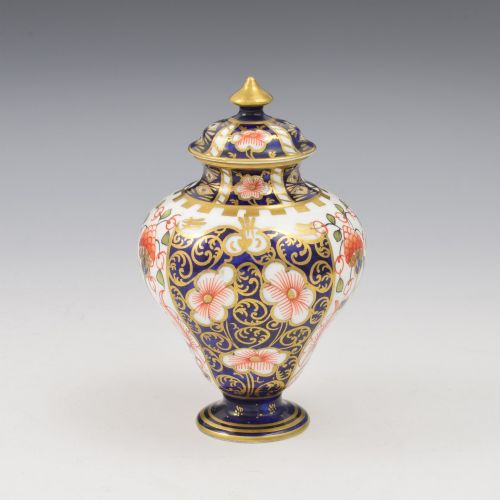
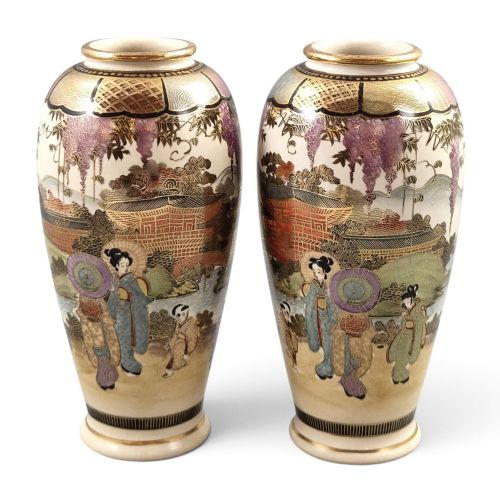
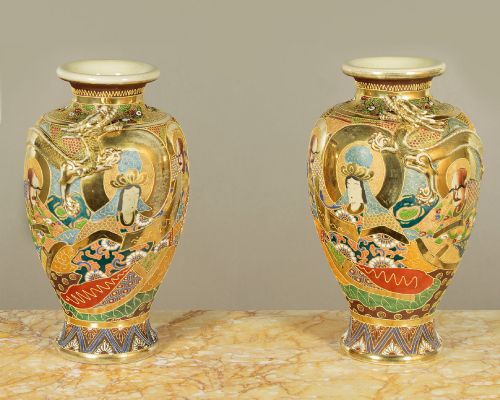
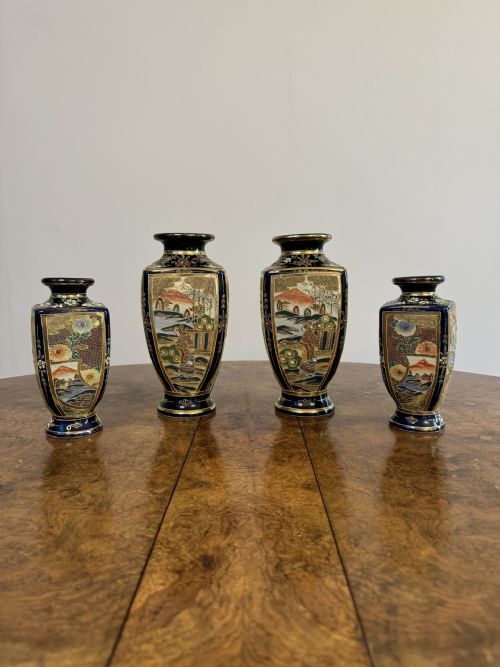



Gold Gilded Japanese Vase
A gold gilded japanese vase brings intricate Meiji period artistry and heavy gilding into a room.
Gold Gilded Japanese Vase
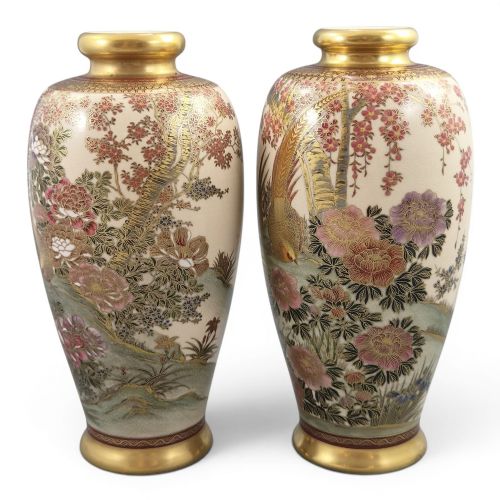
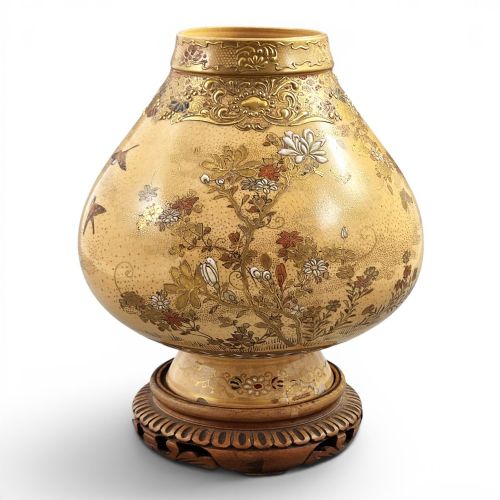
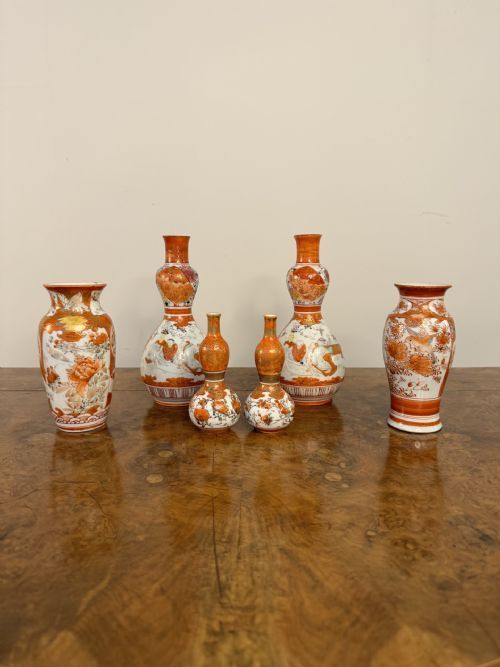
When searching for a gold gilded japanese vase, collectors primarily encounter Satsuma earthenware and Kutani porcelain vessels from the nineteenth and early twentieth centuries. These pieces range from miniature cabinet items to monumental garnitures and table lamps.
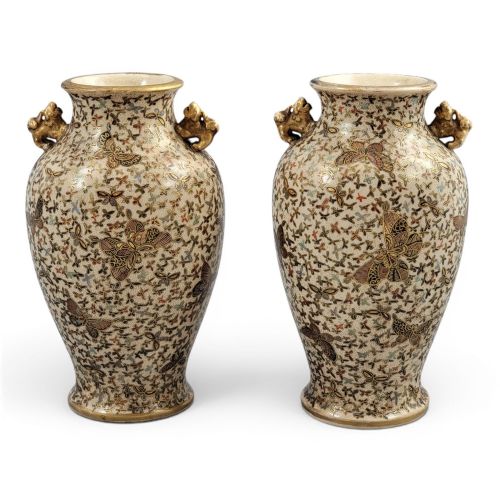
The selection on this page centres heavily on Satsuma wares originating from Kyoto and Kobe, produced during the Meiji, Taisho, and Showa periods. Makers decorated these earthenware bodies with elaborate figural scenes, thousands of butterflies, and religious motifs set against dense gold leaf networks.
How they were made
Potters shaped earthenware and porcelain bodies before applying intricate hand-painted enamels alongside raised moriage details. Artisans then integrated extensive gold leaf and gilding across the panels, framing scenes of samurai, dragons, and landscapes.
Workshops utilised specialised glazes on ceramic and porcelain structures, occasionally mounting vessels as table lamps or pairing them with carved wood components. The combination of fine brushwork and heavy gilt application defined the production standards of major kilns.
Elephants occasionally double as functional handles on nineteenth-century Satsuma vases.
What varies in quality
Quality rests upon the precision of the hand-painted figural detail and the richness of the gilding across the ceramic surface. Workshop attribution also plays a role, with documented pieces from notable makers commanding closer attention.
Exhibition pieces display superior density in their moriage relief work and more complex compositions involving arhats or Shimazu crests. Lesser examples show simpler repeated patterns with standard enamel work and minimal gold application.
Manpei, Kobe·Kinkōzan, Kyoto·Hotoda·Kinrin Workshop·Hattori
The Gold Gilded Japanese Vase Glossary
- Satsuma
- An earthenware ceramic type originating from Satsuma Province, traditionally characterised by a finely cracked cream-coloured glaze and detailed polychrome and gilt decoration.
- Kutani
- A style of Japanese porcelain known for bold enamel colours, particularly iron red and green, often enhanced with gold gilt ornamentation.
- Moriage
- A decorative ceramic technique using piped clay to create raised relief patterns that are subsequently painted and gilded.
- Meiji Period
- The era in Japanese history spanning from 1868 to 1912, marked by opening trade with the West and the export of highly ornate decorative arts.
- Imari
- A traditional class of Japanese porcelain decorated in underglaze blue and contrasting overglaze enamels of red, green, and gold.
Gold Gilded Japanese Vase: Frequently Asked Questions
What is Satsuma ware?
Satsuma ware is a type of Japanese earthenware featuring a distinct network of fine crackles in the pale glaze. Artisans painted these surfaces by hand and added extensive gold leaf.
These ceramics were produced primarily for export during the late nineteenth and early twentieth centuries. They depict traditional figures, landscapes, and floral motifs in dense detail.
How do I date a Meiji period vase?
Dating relies on stylistic markers, historical reign dates, and workshop signatures found on the base. The Meiji period covers the years between 1868 and 1912.
Pieces from this era often carry signatures of renowned Kyoto or Kobe workshops. Heavier gilding and intricate figural scenes became prominent during the later decades of the nineteenth century.
What is moriage decoration?
Moriage is a ceramic technique where liquid clay is piped onto the surface before firing to create raised, three-dimensional patterns. Artisans then highlight these textured areas with vibrant enamels and gold leaf.
This method adds physical depth and a tactile quality to the vase body. It appears frequently on museum-quality Kyoto Satsuma pieces.
Where were these vases made?
These decorative vessels originated in various Japanese pottery centres such as Kyoto, Kaga, and Kobe. Major workshops produced them specifically for international exhibition and export.
Potters utilised local clays and specialised enamel techniques unique to their region. Workshops like Kinkōzan established prominent export houses in Kyoto.