


Hand Painted Satsuma Urn
A hand painted satsuma urn brings intricate Japanese earthenware and porcelain into a room, finished with enamel and gold leaf.
Hand Painted Satsuma Urn
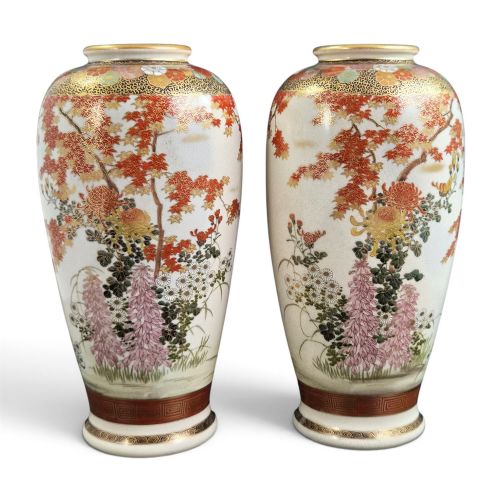
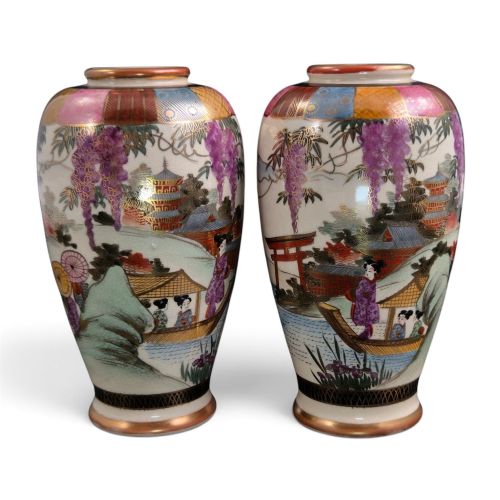
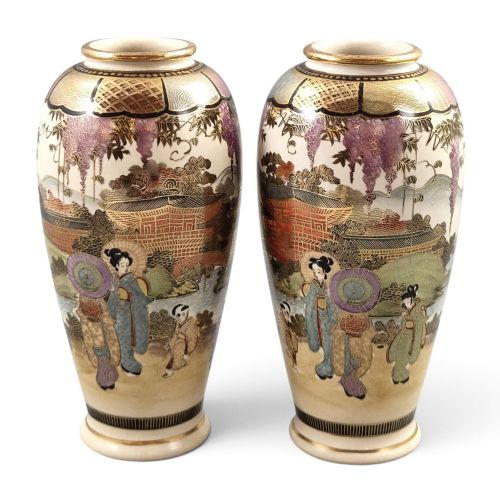
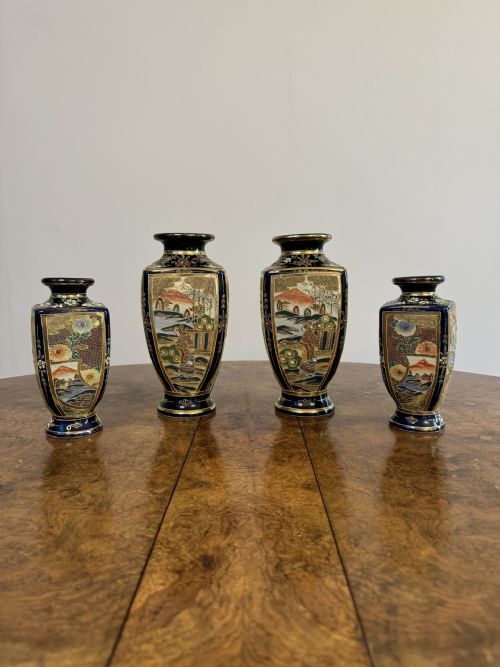
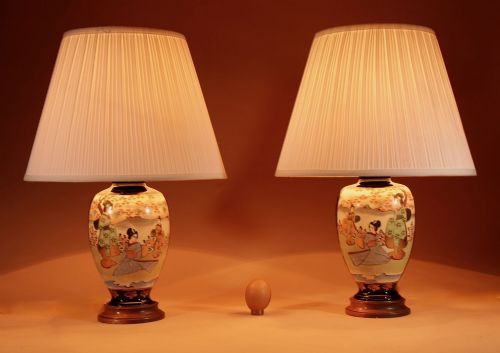
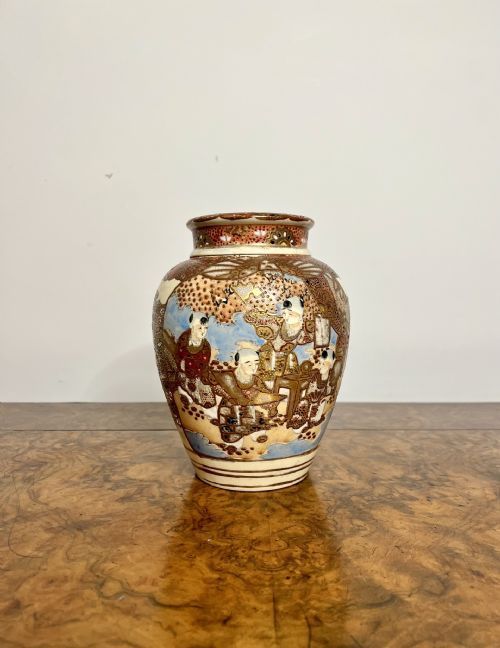
A hand painted satsuma urn encompasses vessel forms decorated during the Meiji period, Taisho period, and Edwardian era. The pieces seen here include vases, ginger jars, table lamps, and floor vases originating from Japan.
Makers produced these ceramics in varying scales, from miniature vases to large floor vases and garnitures of four pieces. Many survive in pairs, decorated with figural processions, women and children, wisteria gardens, and lake landscapes.
How they were made
Potters shaped these objects using earthenware, ceramic, and porcelain, often applying a characteristic crackle glaze to the body. Artisans then hand painted detailed scenes using enamel colours.
Workers added gold leaf and gilt highlights to accentuate the borders, figures, and motifs across the surface of each vessel.
Hand Painted Satsuma Urn Retail Price Guide 2026
Typical asking prices for hand painted satsuma urn among the pieces listed under this phrase on Sellingantiques today, from the lower quarter to the upper quarter. They describe what is for sale here now, not the wider market.
Several miniature vases pack entire crowded battle scenes and figural processions onto bodies scarcely larger than an acorn.
What varies in quality
The fineness of the hand-painted brushwork dictates much of the distinction between pieces, particularly in crowded figural processions and landscape details. Dense application of gold leaf and the precision of the signed potter marks also separate standard production from exhibition-quality works.
Maruni Kobe·Shozan·Chosei·Shuzan·Kinkozan·Hakusan·Hododa·Hayakawa
The Hand Painted Satsuma Urn Glossary
- Satsuma ware
- Japanese pottery originating from Satsuma Province, traditionally characterised by an ivory-coloured earthenware body with a fine crackle glaze. Artisans decorated these surfaces with detailed enamel and gilt designs.
- Meiji Period
- The era of Japanese history lasting from 1868 to 1912, corresponding with the reign of the Meiji Emperor. Many intricate export ceramics date from the latter half of this period.
- Gilt
- A thin layer of gold applied to the surface of the ceramic to highlight specific decorative elements. It catches the light alongside enamel details.
- Garniture
- A set of matching vases or urns designed to be displayed together on a mantelpiece or sideboard. They appear in groups of four in the current selection.
- Ginger jar
- A ceramic vessel with a rounded body and a matching cover, originally used for storage. Examples in this category feature hand-painted Satsuma decoration.
Hand Painted Satsuma Urn: Frequently Asked Questions
How are satsuma urns cleaned safely?
Dust the surface gently with a soft, dry brush to protect the delicate enamel and gilt decoration from abrasion. Avoid using water or liquid cleaning agents, as moisture can penetrate the crackle glaze.
Keep the pieces out of direct sunlight to prevent fading of the hand-painted pigments over time. Handle the urns by the body rather than the handles or rims to reduce strain.
Can these vases be used for water?
These antique earthenware and porcelain vessels are intended for decorative display rather than holding water. Placing fresh flowers inside exposes the porous body and crackle glaze to moisture.
Display the urns empty or use dry botanical arrangements to preserve the integrity of the material. Many collectors also utilise converted examples safely as table lamps.
What is a shimazu mon?
A Shimazu mon is a heraldic crest associated with the Shimazu clan, who ruled the Satsuma Domain in Japan. This symbol often appears on high-quality Satsuma export ware.
Finding this mark helps confirm the regional origin and historical context of the piece. It frequently accompanies detailed hand-painted figural and landscape scenes.
How do I identify the age?
Examine the base for artist signatures, studio marks, and regional stamps that correspond to specific historical periods like the Meiji era. The style of the hand-painted figures and landscape motifs also provides clues to the date of manufacture.
Materials such as earthenware with crackle glaze typically point towards late 19th-century or early 20th-century Japanese export production. Comparing the piece to documented exhibition-quality works helps narrow down the timeframe.