


Cobalt Blue Satsuma Vase
A cobalt blue satsuma vase brings rich ceramic artistry to a room, offering deep dark grounds set against intricate painted panels.
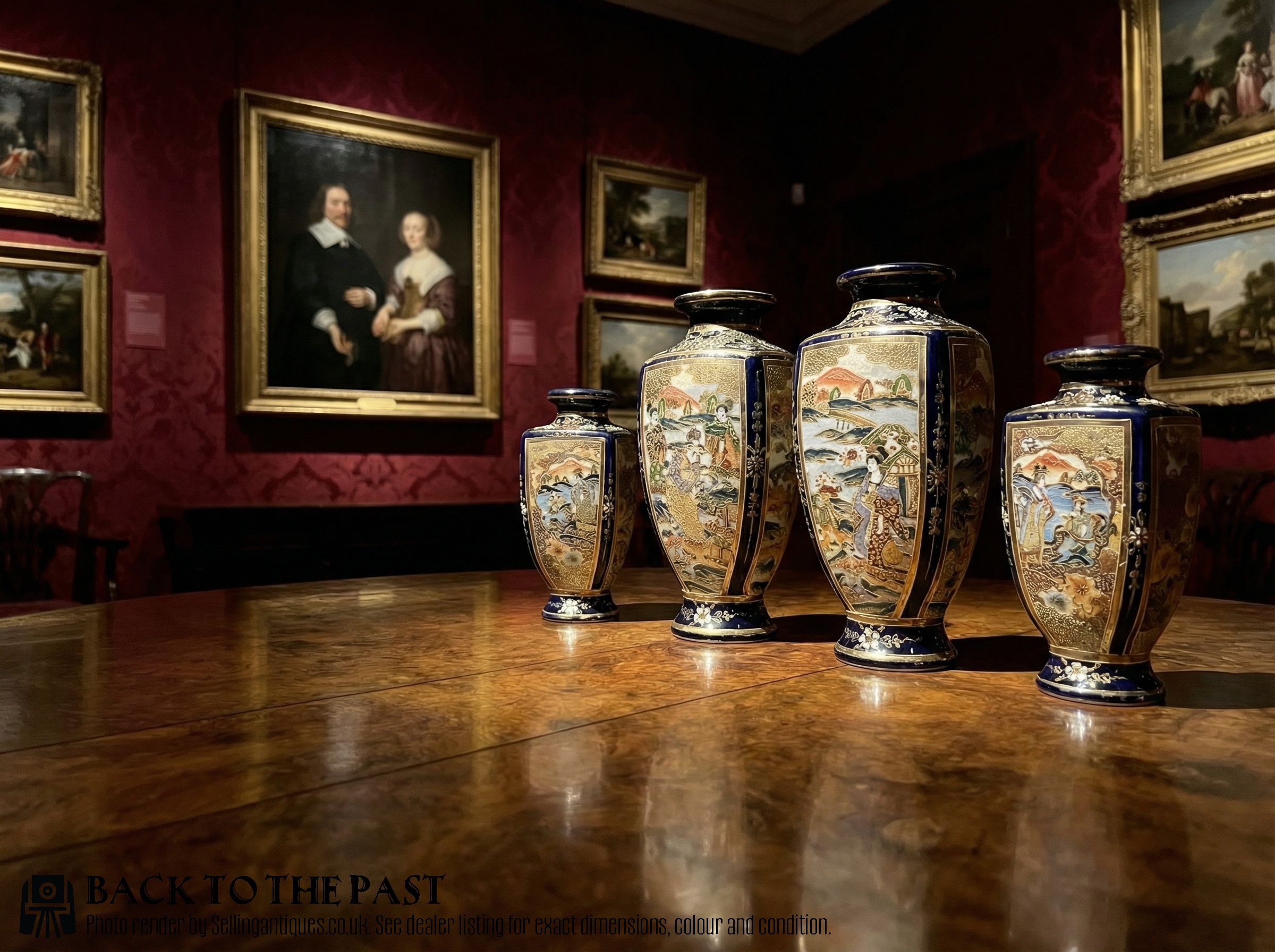
Cobalt Blue Satsuma Vase
A cobalt blue satsuma vase is an earthenware vessel defined by its striking deep blue ground, which contrasts sharply with traditional polychrome decoration and raised gold detailing. These pieces emerge predominantly from the Meiji period and the turn of the twentieth century, carrying the distinct aesthetic of Japanese ceramic export ware from the era.
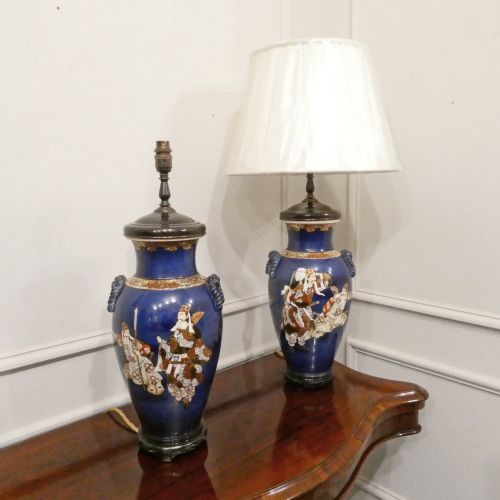
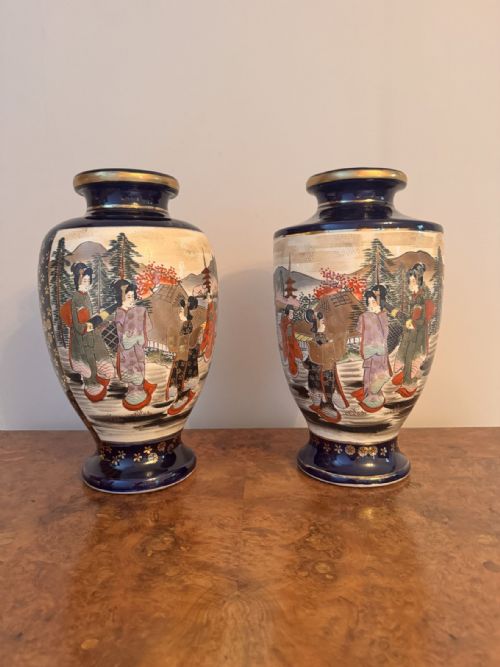
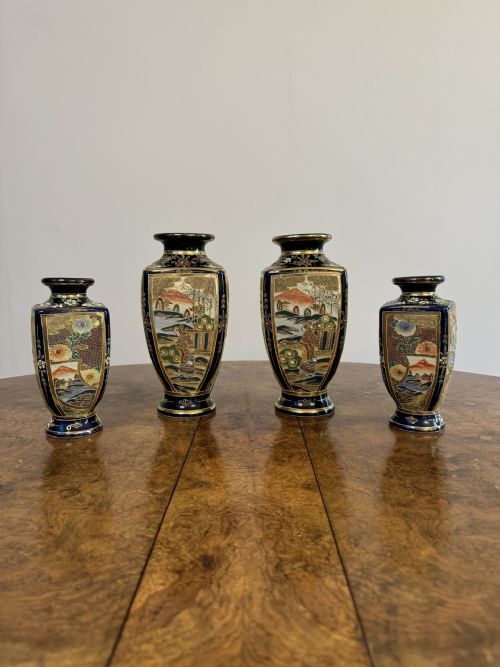
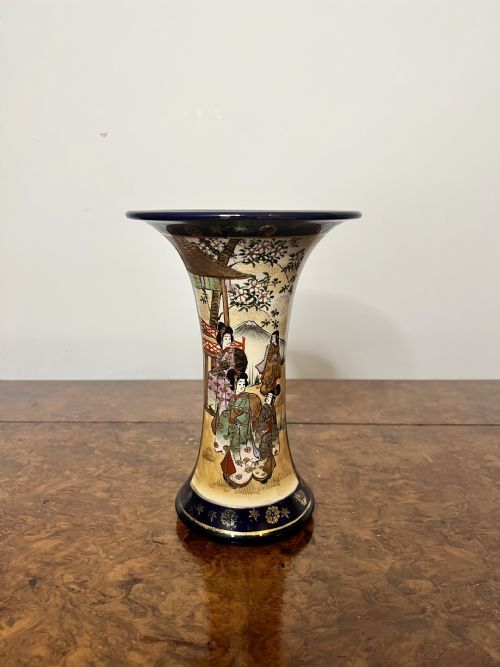
The pieces on this page appear mainly as single decorative vases, balanced pairs, or multi-piece garnitures. Buyers frequently encounter forms featuring court figures, religious scenes, landscapes, and birds rendered within intricate hand-painted panels.
Origins trace directly to Japanese production centres such as Kyoto, where skilled makers utilised the distinctive crackle-glaze earthenware characteristic of Satsuma ware. The addition of a rich cobalt blue ground provides a dramatic backdrop that elevates the overall visual weight of each vessel.
How they were made
Makers formed these vases from earthenware, applying a characteristic glaze that develops a fine, web-like network of minute cracks across the surface. This porous base body required careful firing before artists could begin the detailed surface ornamentation.
Decoration relied heavily on intricate hand-painting combined with enamel and heavy gold gilt. Artisans laid down rich cobalt blue grounds to frame the reserves, adding raised moriage work to give certain figures and decorative elements a distinct, tactile relief.
Listings feature earthenware vessels from the 19th Century, Victorian era, and 1900, employing enamel, gold leaf, and heavy gilt over cobalt grounds.
What varies in quality
The precision and density of the hand-painted brushwork separate ordinary vessels from superior examples. Master workshops executed court figures and landscape panels with remarkable clarity, whereas lesser pieces show rushed or simplified detailing in the faces and garments.
The application of gold gilt and moriage relief also dictates the standing of a piece. Finer items display heavy, crisp gilding and controlled relief work that remains intact, while inferior examples often feature thin, rubbed gold and flat decoration lacking depth.
Kinkozan·Nanzan
The Cobalt Blue Satsuma Vase Glossary
- Satsuma
- A type of Japanese earthenware traditionally recognised by its ivory-coloured crackle glaze and detailed polychrome enamelling. Originally produced in Satsuma Province, production later spread to major urban centres like Kyoto.
- Moriage
- A ceramic technique where slip is piped onto the surface to create raised decorative patterns and textures. This method gives specific elements such as robes or architectural details a tangible, three-dimensional quality.
- Gilt
- A thin layer of gold or gold-coloured material applied to the surface of the ceramic. It provides brilliant highlights that contrast with the deep cobalt ground.
- Meiji Period
- The era in Japanese history spanning from 1868 to 1912, corresponding with the reign of Emperor Meiji. Pieces from this time often reflect the rapid expansion of decorative arts destined for Western export markets.
- Garniture
- A set of matching vases or ornamental jars designed to be displayed together as a symmetrical decorative group on a mantelpiece or shelf.
Cobalt Blue Satsuma Vase: Frequently Asked Questions
What is a cobalt blue satsuma vase?
A cobalt blue satsuma vase is a Japanese earthenware vessel featuring a deep blue glazed ground, typically ornamented with hand-painted panels, enamel work, and raised gold details.
These pieces were produced primarily during the Meiji period and late Victorian era, blending traditional ceramic techniques with designs tailored for international collectors.
How do I date a satsuma vase?
Dating relies on examining the style of the hand-painting, the characteristics of the crackle glaze, and any potter marks present on the base. Pieces from the Meiji period often exhibit refined brushwork and heavy gilt moriage.
Maker marks and signatures can also help narrow down the production period and the specific workshop or artist responsible for the vessel.
How should I display a satsuma vase?
Display these vases in stable locations away from direct sunlight and heavy foot traffic to protect their delicate enamel and gilt surfaces. Placing them where adequate lighting can catch the raised moriage and gold highlights will enhance their visual depth.
Paired pieces and garniture sets work well when arranged symmetrically on a sideboard, mantel, or dedicated display cabinet.