



Gilt Pottery Vase
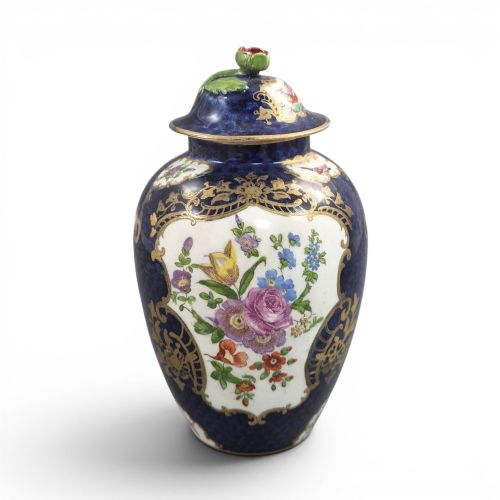
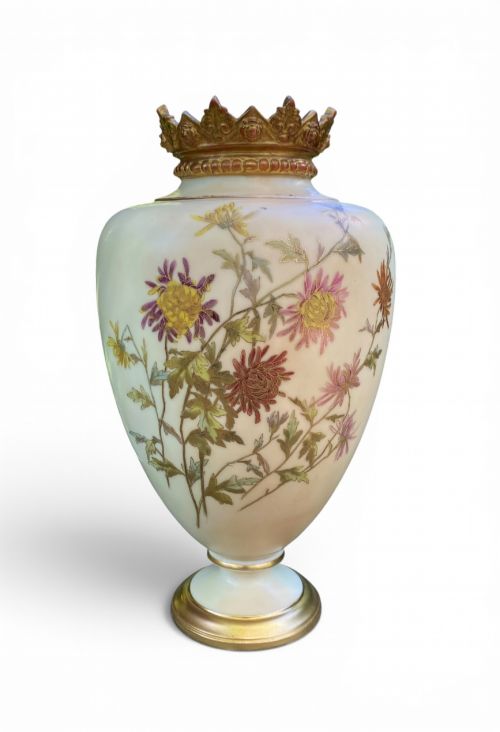
When a collector hunts for a gilt pottery vase, they look for ceramic vessels finished with gold leaf or metallic paint.
Gilt Pottery Vase
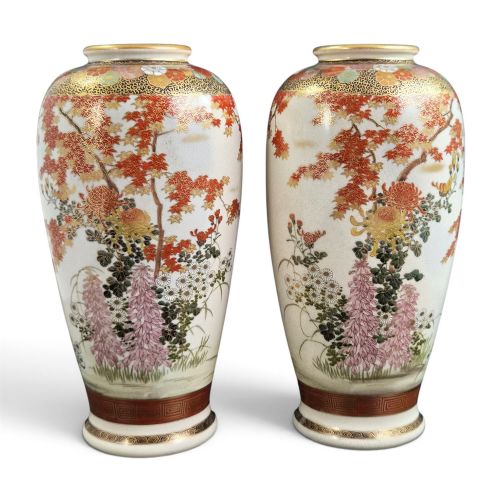
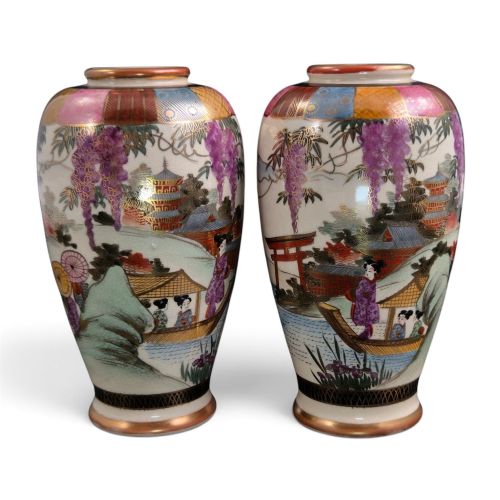
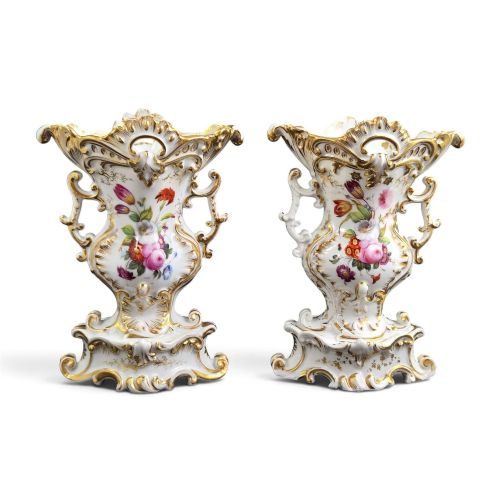
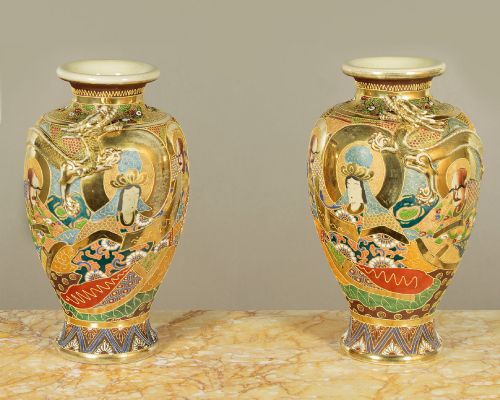
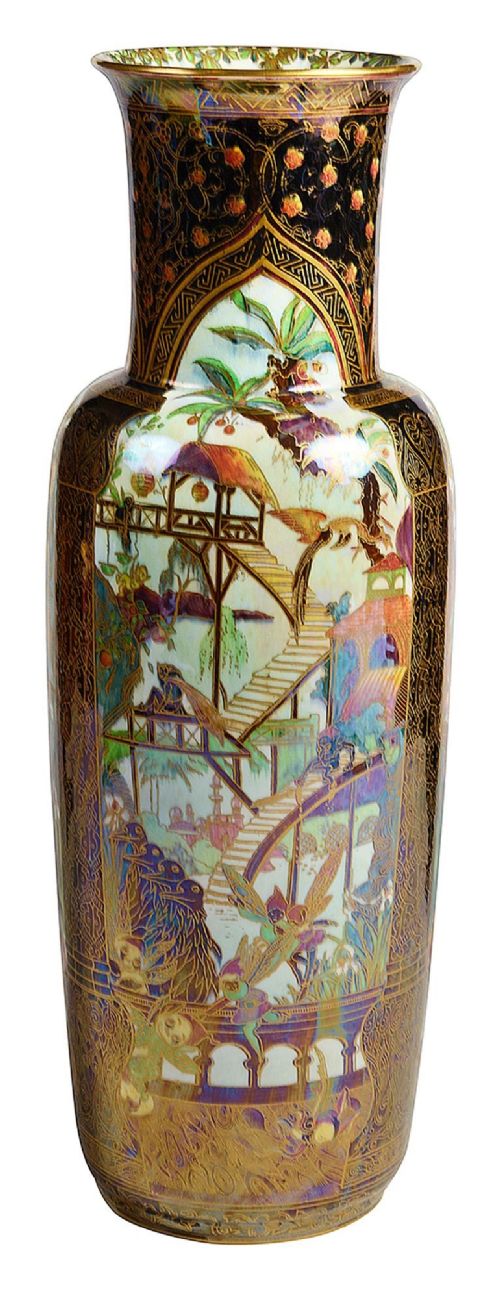
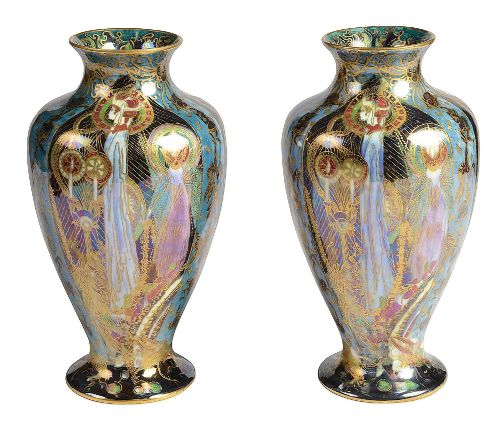
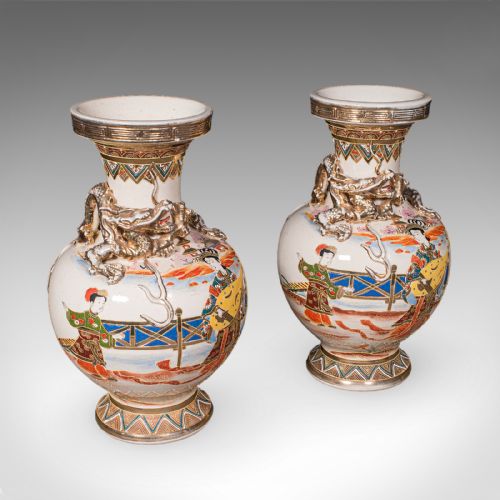
A gilt pottery vase brings together ceramic bodies and reflective metallic enrichment, spanning European factories and Japanese studios.
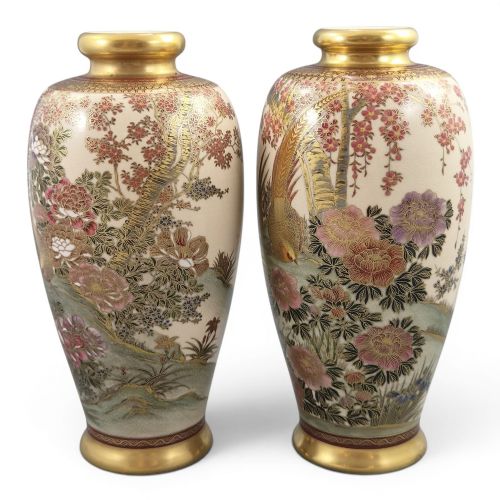
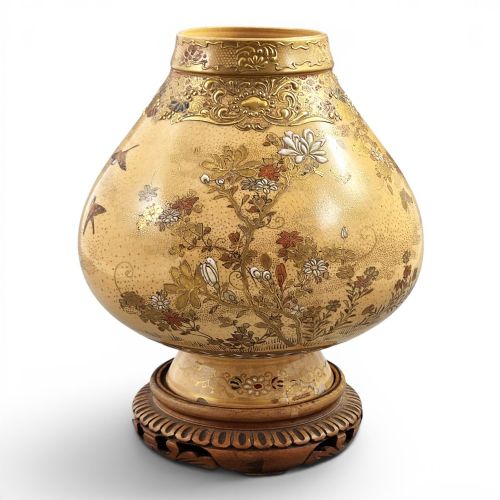
The buyer most frequently meets Japanese Satsuma and Kutani ceramics from the nineteenth and early twentieth centuries alongside British and French earthenware and porcelain.
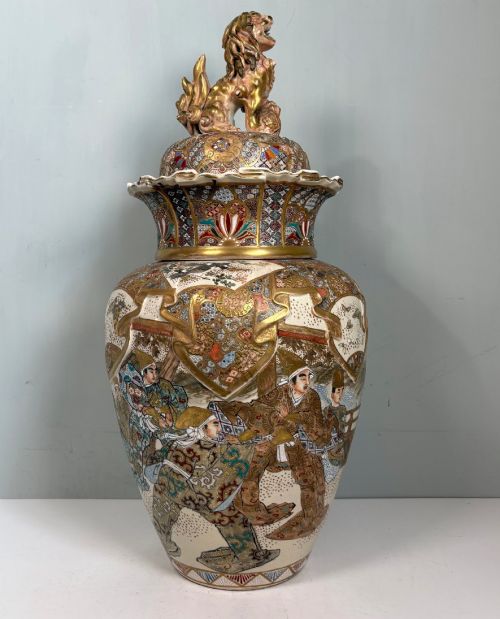
Forms range from baluster urns and table lamps to miniature vessels and covered jars decorated with court figures, landscapes, or birds.
Materials and construction
Potters shaped earthenware, ironstone, and porcelain bodies on the wheel or in moulds before firing them at various temperatures.
Decorators applied enamel colours and gold leaf, gilt, or gold gilt highlights, sometimes using raised moriage paste to create tactile relief before a final low-temperature fix.
Materials recorded across the inventory span porcelain, earthenware, enamel, wood, and gold leaf.
Judging the execution
Quality rests upon the precision of the hand-painted details, from minute facial expressions on court figures to the complexity of floral and geometric borders.
The density and purity of the gold leaf or gilt work distinguish standard production wares from pieces produced by notable workshops and named artists.
Maruni Kobe·Jacob Petit·Daisy Makeig Jones·Manpei·Kinkōzan·Tunnicliffe·Christopher Dresser·John H Plant·Chosei·Nanzan·Seiko-en Chokei·Hakusan·Hododa·Tashiro
The Gilt Pottery Vase Glossary
- Satsuma
- Earthenware originating from the Satsuma province in Japan, typically characterised by a crackle-glaze ivory body heavily decorated with enamel and gold.
- Moriage
- A Japanese ceramic technique using piped clay slip to build up raised decorative patterns before glazing and gilding.
- Baluster
- A vertical architectural form with a rounded lower body and a narrower neck, commonly used for larger vase shapes.
- Kutani
- Japanese porcelain or pottery traditionally associated with iron-red and green enamels enriched with gold.
- Ironstone
- A heavy, durable type of earthenware patented in the nineteenth century as a robust alternative to porcelain.
Gilt Pottery Vase: Frequently Asked Questions
What is a gilt pottery vase?
A gilt pottery vase is a ceramic vessel embellished with gold leaf, paint, or gilt highlights applied over a glazed or unglazed body.
These pieces combine traditional pottery manufacturing with metallic ornamentation across various international styles.
How do I care for antique gilt pottery?
Antique gilt pottery requires gentle dusting with a soft, dry cloth to protect fragile enamel and gold details.
Water and chemical cleaning agents should be avoided because moisture can damage aged ceramic bodies and lift delicate gilding.
How do I date a Satsuma vase?
Dating relies on examining the crackle glaze, the fineness of the hand-painted enamel, and the presence of artist or workshop signatures.
Pieces from the nineteenth century often display denser hand-painted polychrome scenes and refined gold work compared to later export wares.
What is the difference between Satsuma and Kutani?
Satsuma wares typically feature an ivory-coloured earthenware body with a fine crackle glaze and dense gold-accented enamel figures or landscapes.
Kutani pieces are usually porcelain or denser pottery characterised by distinct iron-red palettes and bold pictorial designs.