





Pair of Satsuma Urns
When you search for pair of satsuma urns, you are looking at intricate Japanese earthenware vessels decorated with fine enamel and gilt.
Pair of Satsuma Urns
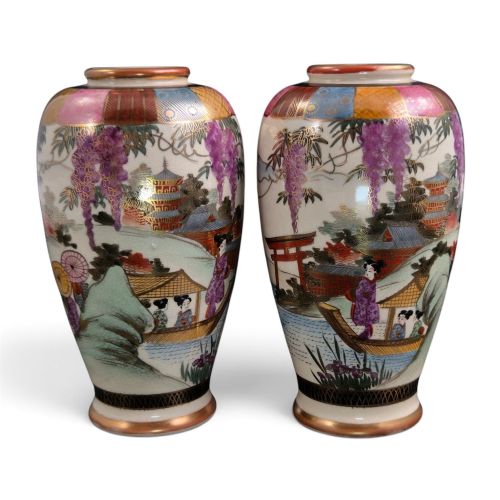
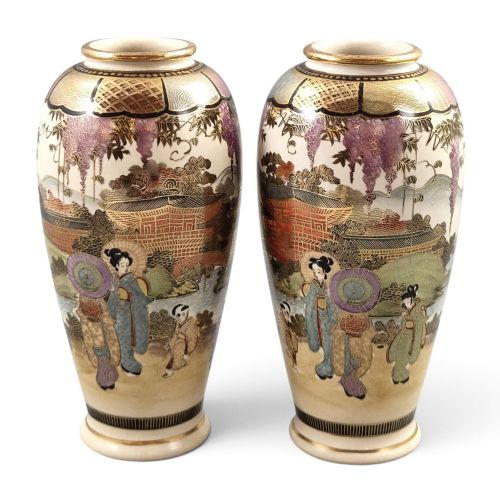
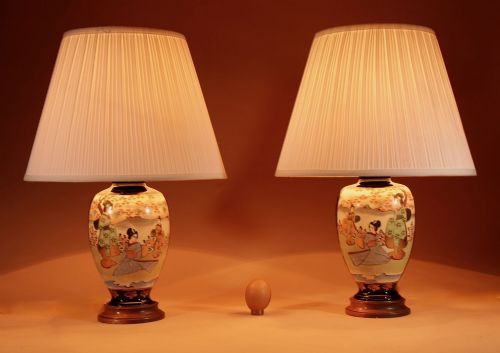
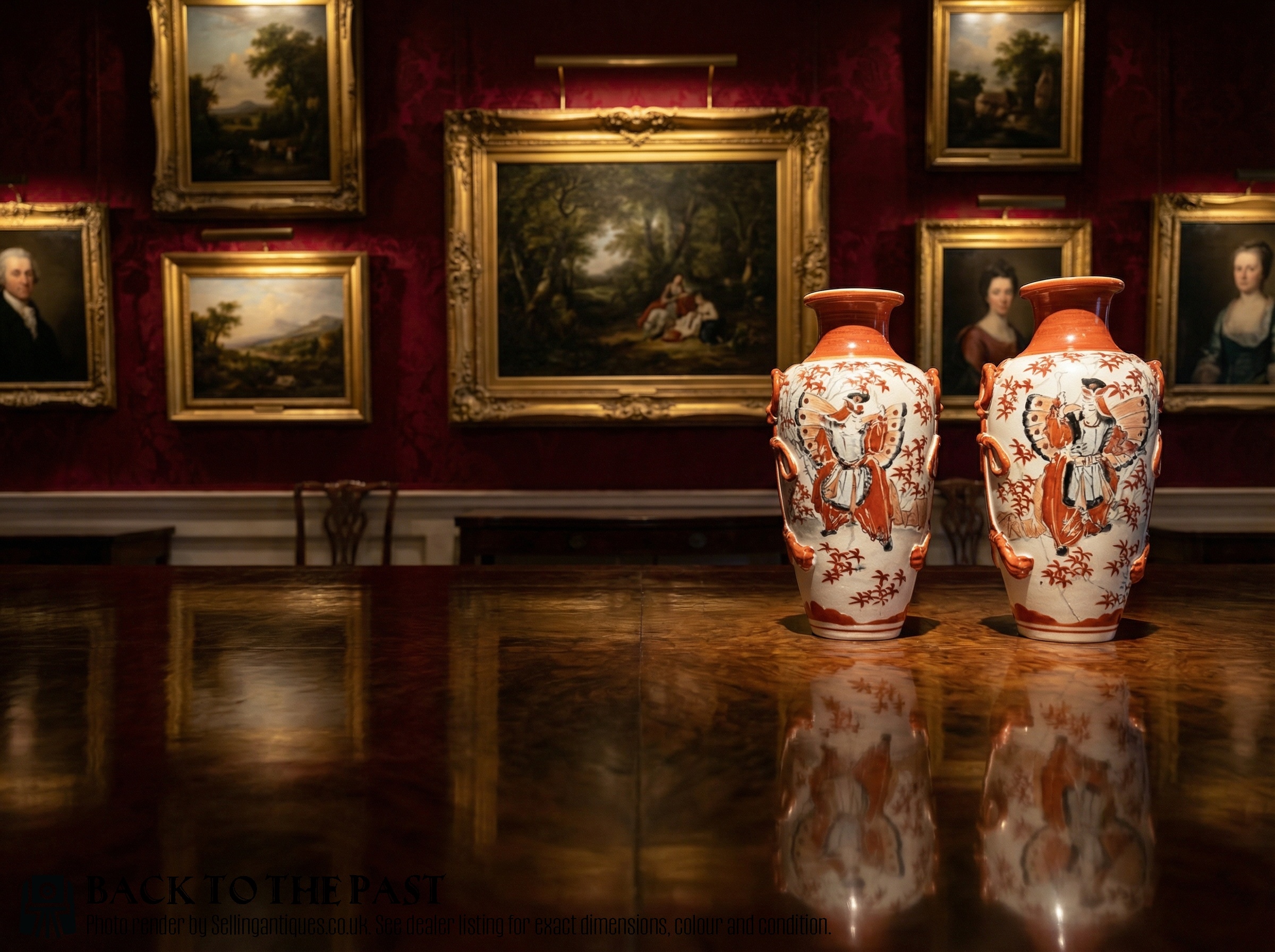
When looking for a pair of satsuma urns, buyers encounter earthenware ceramic vessels originating predominantly from the Meiji, Taisho, and Showa periods. These matching pairs span forms such as baluster vases, lidded jars, and decorative table lamps created in Japan.
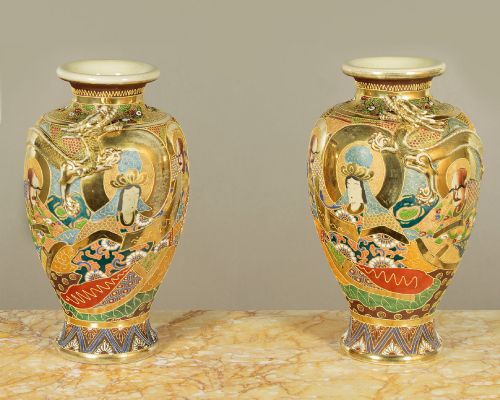
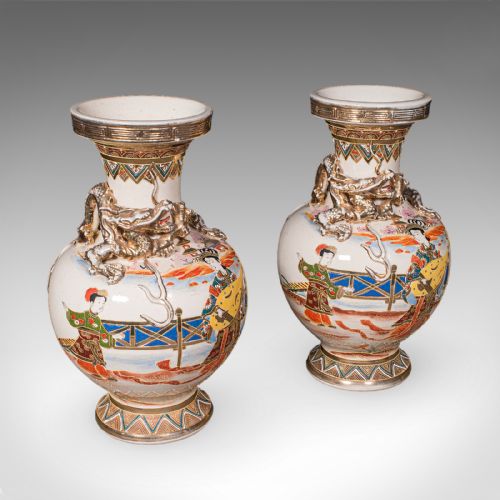
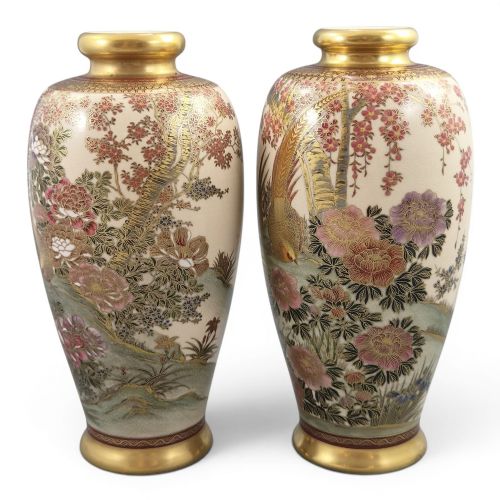
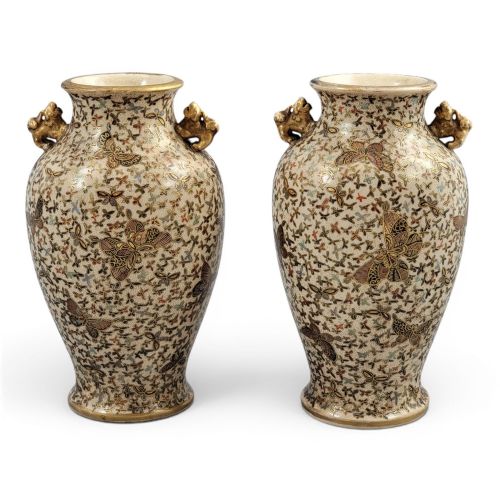
The decorative subjects on these pairs frequently include figures such as arhats, rakan, women and children, alongside natural scenes featuring wisteria, butterflies, and lake landscapes. Originating from workshops in Kyoto and Kobe, these objects reflect both domestic Japanese tastes and export markets.
The dating of these pairs extends from the late nineteenth century through to the early twentieth century, encompassing Victorian and Edwardian cataloguing eras. Buyers often find variations in scale, ranging from small cabinet pieces to large floor vases.
Materials and construction
The foundation of these pieces relies on an earthenware ceramic body, typically finished with a fine crackle-glaze that accepts detailed painting. Artisans applied hand-painted enamel colours directly onto this glazed surface to build up complex figurative and landscape scenes.
Gilt and gold leaf were incorporated extensively into the designs, highlighting borders, robes, and architectural elements to create rich contrast against the ceramic body. Certain workshops utilised raised enamel techniques, known as moriage, to give physical texture and depth to the painted panels.
Object forms span decorative vases, lidded jars, hexagonal vessels, and converted table lamps.
Factors determining quality
Quality across these pairs is determined by the precision of the hand-painted brushwork and the density of the enamel and gilt application. Finer examples display meticulously rendered facial expressions on figures and deeply detailed natural motifs without blurring at the edges.
The reputation of the producing workshop or studio heavily influences distinction, with signed pieces from known Meiji period makers commanding greater attention. The condition of the delicate gilt work and the integrity of the original ceramic glaze remain central to the overall standard of the pair.
Maruni Kobe·Shozan·Manpei·Kinkōzan·Kinzan·Hakusan·Tagawa·Hododa·Tashiro
The Pair of Satsuma Urns Glossary
- Satsuma
- Earthenware pottery originating from Satsuma Province in southern Japan, characterised by an ivory-coloured, crackled glaze. This ceramic body serves as the canvas for detailed polychrome enamel and gilt decoration.
- Moriage
- A decorative technique using piped clay or thick enamel to create raised, three-dimensional patterns on ceramics. It adds tangible texture to floral or geometric borders on the vessel.
- Meiji Period
- The era of Japanese history lasting from 1868 to 1912, marked by the opening of trade with the West. Many of the finest decorative ceramics exported to Europe date from this period of intense artistic production.
- Gilt
- A thin layer of gold applied to the surface of the ceramic to accent patterns and figures. It catches the light and frames the painted enamel panels.
- Shimazu Mon
- The crest of the Shimazu clan, featuring a cross within a circle, frequently found on pottery associated with Satsuma. Its presence denotes patronage or origin linked to the ruling lords of the region.
Pair of Satsuma Urns: Frequently Asked Questions
How do I identify true satsuma ware?
True satsuma ware is distinguished by its characteristic ivory-coloured earthenware body covered in a fine network of crackled glaze. Hand-painted enamel and heavy gilt decoration featuring traditional Japanese motifs are applied over this glaze.
Examining the base often reveals artist signatures or workshop stamps from production centres in Kyoto or Kobe, particularly from the Meiji period.
Were these pieces made for export?
Many of these ceramic pairs were produced specifically for Western export markets during the late nineteenth and early twentieth centuries. European international exhibitions created a high demand for elaborate Japanese art and decorative goods.
Consequently, makers adapted their traditional styles and subjects, such as landscapes and figures, to appeal to Victorian and Edwardian collectors.
How should I display them at home?
These vessels require stable placement away from direct foot traffic and heavy vibrations due to their delicate earthenware construction. Positioning them on sturdy console tables or within cabinets protects the fragile gilt and enamel surfaces from accidental impact.
Keeping them out of direct sunlight helps preserve the vibrancy of the hand-painted colours over time.
What is the difference between Meiji and Taisho pieces?
Meiji period pieces generally exhibit denser ornamentation, heavier gilding, and highly intricate figurative work reflecting the height of traditional craftsmanship. Taisho and early Showa examples often show stylistic shifts towards simpler compositions and broader decorative expanses.
Comparing the fineness of the brushwork and the complexity of the borders helps distinguish between these chronological periods.