




Meiji Satsuma Earthenware Pair
These meiji satsuma earthenware pair pieces bring intricate hand-painted detail and rich gilding into a room.
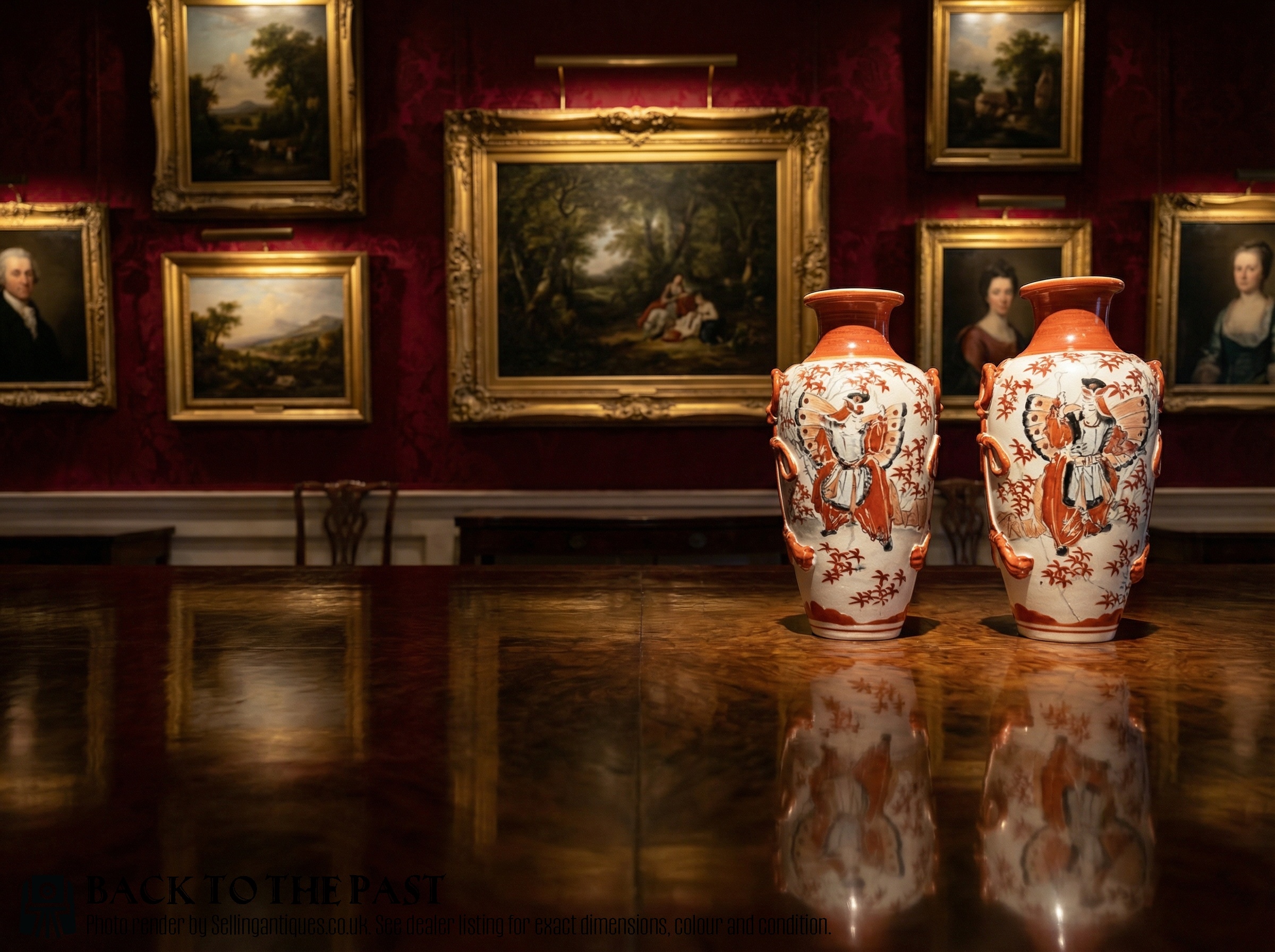
Meiji Satsuma Earthenware Pair
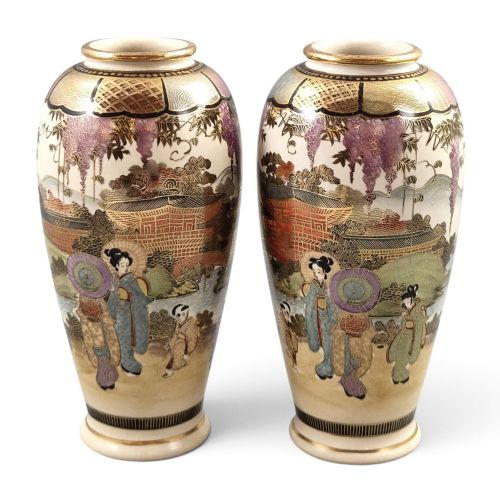
A meiji satsuma earthenware pair consists of matching ceramic vessels created during the late nineteenth and early twentieth centuries. These objects typically take the form of baluster vases, decorative dishes, or lidded jars, often produced in Kyoto or by specific regional workshops.
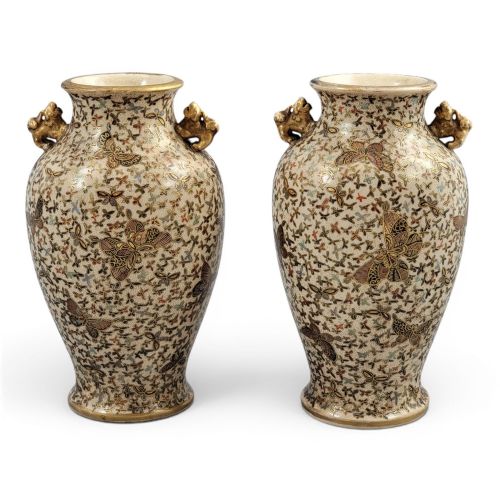
The aesthetic bridges traditional Japanese motifs and the demands of international export markets during the Meiji and Taisho periods. Buyers encounter matching pairs decorated with figures such as women, children, Rakan, and arhats, alongside landscape and floral themes including wisteria and butterflies.
Vessels span various scales, from small cabinet pieces to large floor-standing examples. Many incorporate specific structural forms, such as hexagonal bodies and polygonal shapes, reflecting the diverse output recorded across this period.
Materials and Construction
The foundation of these objects is earthenware, finished with a characteristic finely crackled glaze that provides a stable base for subsequent decoration. Artisans then apply detailed enamel work and extensive gold leaf or gilt ornamentation by hand.
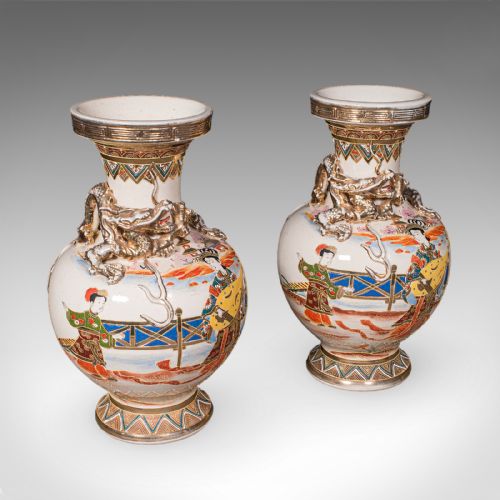
Certain examples incorporate raised paste work, known as moriage, to build up tactile relief on the surface of the ceramic. Supplementary materials such as wood, brass, and silk appear in associated mountings or display elements.
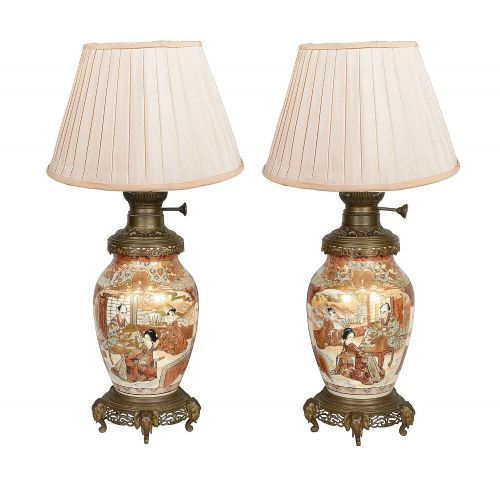
Materials recorded in current stock include traditional earthenware and glaze paired with auxiliary elements of wood, brass, and silk.
Evaluating the Range
Quality in a meiji satsuma earthenware pair is determined by the precision and density of the hand-painted brushwork. Pieces produced by recognised studios or signed by named artists display greater control in facial expressions, robes, and background landscapes.
The application of gold leaf and the execution of heavy gilt work separate standard production from exhibition-grade pieces. The clarity of the glaze crazing and the crispness of moulded details, such as dragons or panel borders, also distinguish finer examples.
Maruni Kobe·Shozan·Kinkōzan·Kinzan·Hododa·Shuzan·Yasuda·Hakusan·Tagawa·Kizan
The Meiji Satsuma Earthenware Pair Glossary
- Earthenware
- Porous pottery fired at lower temperatures than stoneware or porcelain. It requires a glaze to become impermeable to liquids.
- Moriage
- A decorative technique using slip applied in raised dots or lines to create a textured, three-dimensional surface on ceramics.
- Mon
- A Japanese emblem or crest used to decorate objects and identify family lineages or clans. The Shimazu mon appears frequently on Satsuma wares.
- Rakan
- The Japanese term for an arhat, or enlightened follower of Buddha. These figures appear frequently in narrative panel scenes on Satsuma ceramics.
- Baluster
- A vertical architectural form with a swelling lower portion that tapers toward the top, commonly adapted for the shape of ceramic vases.
Meiji Satsuma Earthenware Pair: Frequently Asked Questions
What is Satsuma ware?
Satsuma ware is a type of Japanese earthenware traditionally originating from the Satsuma Province in Kyushu, though much of the export-period production took place in Kyoto. It is recognised by its ivory-coloured body and fine crackle glaze.
Makers decorated these pieces with intricate enamel patterns and heavy gilding, often depicting historical figures, deities, and natural scenes.
How were these vases used?
During the Meiji period, many Satsuma pieces were manufactured specifically for Western export and display in European and American drawing rooms. They served as ornamental centrepieces rather than functional vessels.
Some examples were later adapted into table lamps, incorporating electrical fittings alongside the original ceramic bodies.
How do I date a Satsuma piece?
Dating relies on stylistic markers, signature types, and historical production eras such as the Meiji period or late Victorian era. Pieces often correlate with international exhibitions held between the late nineteenth and early twentieth centuries.
Marks on the base can sometimes connect a piece to specific Kyoto workshops or individual artists active during those decades.
How should I display them?
Display pairs together on sturdy surfaces away from direct sunlight to protect the delicate enamel and gold leaf. Ensure adequate clearance around large baluster vases or lidded jars to let the painted panels remain visible from multiple angles.
Avoid placing them in areas with high humidity or temperature fluctuations, which can affect the underlying earthenware and glaze.