


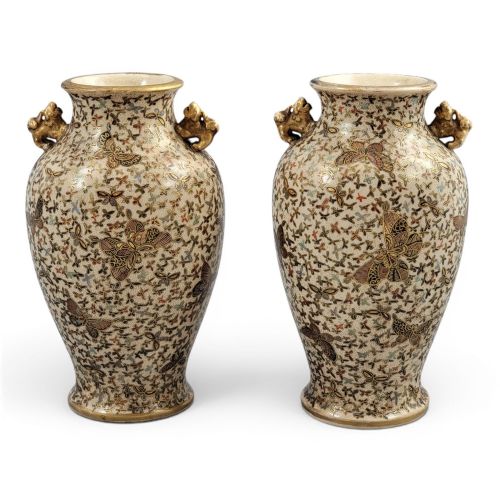


Meiji Satsuma Pottery Vase
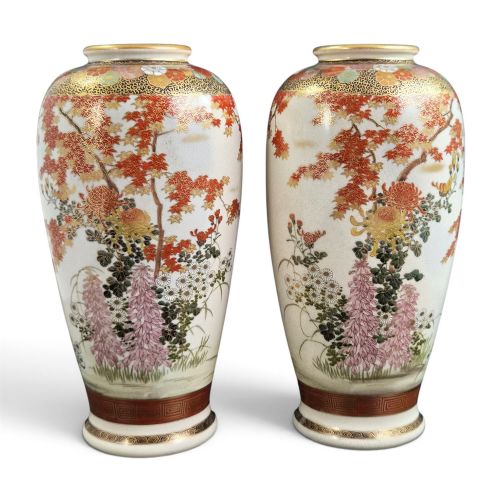
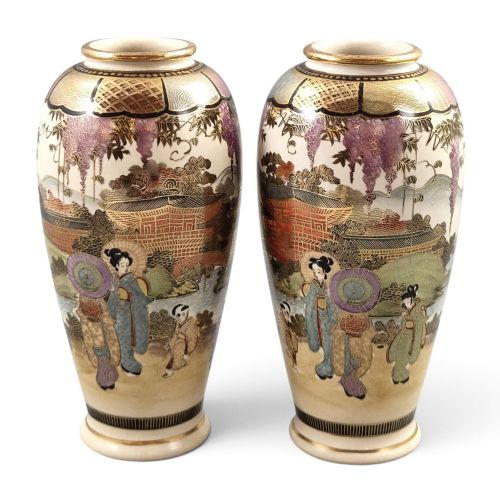
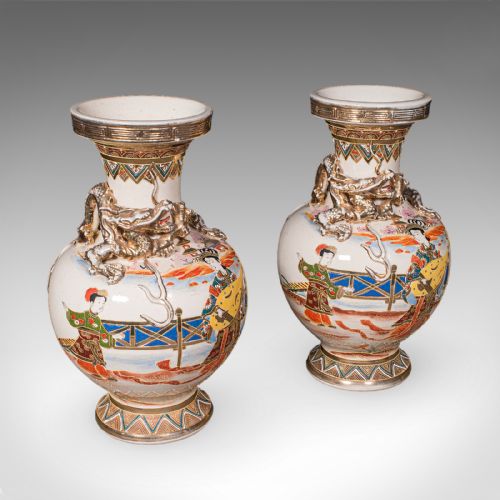
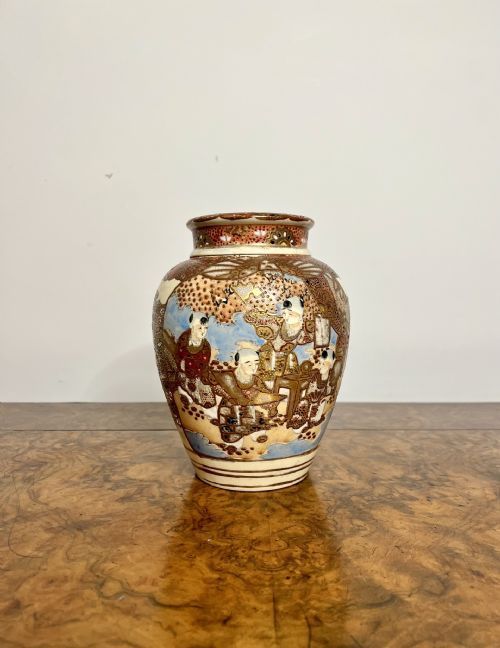
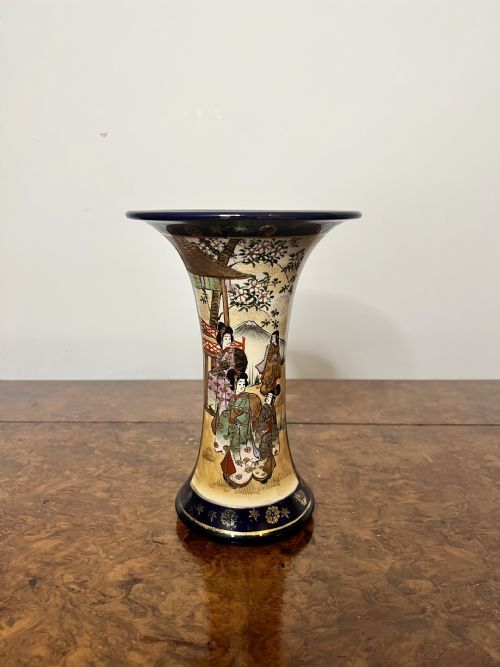
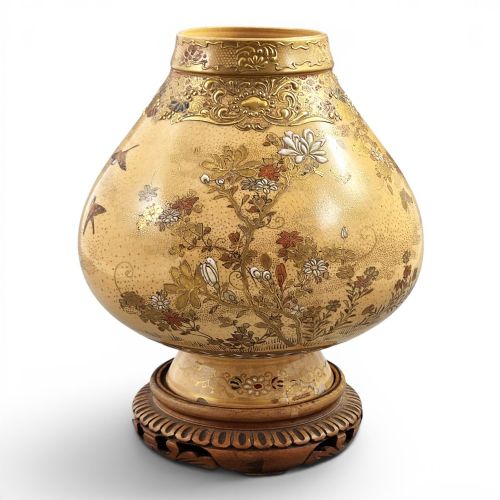
A meiji satsuma pottery vase brings intricate painted court scenes and heavy gilding into a room, made for Western export markets during the late nineteenth and early twentieth centuries.
Meiji Satsuma Pottery Vase
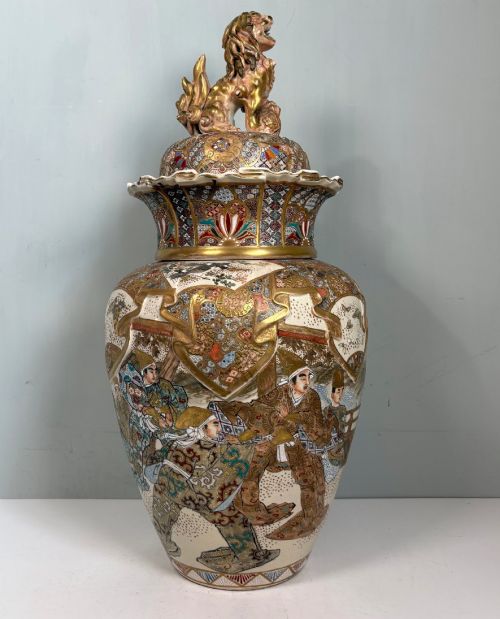
A meiji satsuma pottery vase sits at the intersection of traditional Japanese ceramic craft and the Victorian appetite for ornate decorative arts. Collectors encounter these vessels primarily as baluster shapes, ginger jars, and large decorative urns dating from the late nineteenth century.
The aesthetic bridges Japanese iconography with Western interior tastes, often produced in Kyoto and associated with the Meiji period and subsequent Taisho transition. Many pieces showcase detailed narrative scenes depicting Arhats, dragons, court figures, and thousand butterflies.
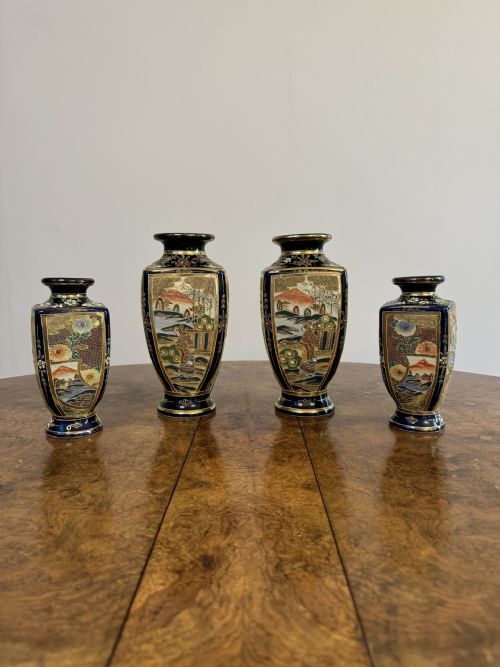
Beyond standard vases, the category encompasses miniature vessels, incense burners, and occasionally adapted table lamps. These objects reflect a specific historical era of exchange between Japanese workshops and international buyers.
Materials and Construction
Potters built these pieces using earthenware bodies covered in a characteristic ivory-coloured, finely cracked glaze that provided a textured canvas for painting. Artisans then applied colourful enamel pigments alongside extensive gold leaf and gilt work.
Raised details, known as moriage, added physical dimension to the surface decoration through piped slip work before final gilding. Workshops in Kyoto utilised these combined techniques to create dense, layered pictorial compositions.
Countless tiny painted butterflies flutter across these porcelain surfaces, frozen in permanent gilt migration since the Victorian era.
Evaluating Craftsmanship
The standard of a meiji satsuma pottery vase rests upon the precision of the brushwork and the complexity of the figural or landscape scenes. Master workshops employed skilled painters whose miniature portraits and architectural backgrounds maintained strict proportion and clarity across crowded compositions.
Execution of the raised moriage and the application of gold leaf further separate standard production pieces from exhibition-grade works. Dense, purposeful gilding and disciplined enamel control distinguish superior examples from simpler decorative output.
Kinkōzan Kyoto·Hotoda·Chosei·Maruni Kobe·Shozan
The Meiji Satsuma Pottery Vase Glossary
- Moriage
- Raised decoration achieved by piping liquid clay onto the ceramic surface before glazing and firing. This technique creates a tactile, three-dimensional effect beneath the enamel and gold.
- Baluster
- A vase form featuring a rounded body that tapers toward a narrow neck and flares slightly at the rim. This profile serves as a standard structural shape across many nineteenth-century examples.
- Shimazu Mon
- The crest of the Shimazu clan, featuring a cross within a circle, frequently found on Satsuma wares. Its presence often indicates a connection to the historic domain that originally patronised the craft.
- Arhat
- Depictions of Buddhist saints or sages, commonly appearing in crowded figurative scenes alongside dragons and divine figures. These narrative subjects demand high skill from the miniature painter.
- Gilt
- Application of gold leaf or gold paint to highlight borders, garments, and background motifs. It provides the characteristic metallic brilliance associated with export-era ceramics.
Meiji Satsuma Pottery Vase: Frequently Asked Questions
What is Satsuma pottery?
Satsuma pottery is a type of earthenware originating from Satsuma Province in southern Japan, characterised by an ivory-coloured glaze covered in fine crackle lines. During the Meiji period, production expanded significantly in urban centres like Kyoto to supply international export markets.
These pieces became renowned for their elaborate polychrome enamel paintings and heavy use of gold leaf, depicting traditional figures, landscapes, and deities.
How do I date a Satsuma vase?
Dating relies on stylistic markers, workshop signatures, and historical context, with the majority of decorative export pieces belonging to the Meiji period. Pieces often bear painted or impressed artist and workshop seals on the base that correspond to specific family kilns.
Later examples transition into the Taisho era, showing subtle shifts in colour palettes and decorative density compared to late nineteenth-century work.
Who were the major Satsuma makers?
Prominent workshops and artists such as Kinkozan, Hotoda, and Chosei dominated the production of high-grade export ceramics in Kyoto. Their studios produced everything from miniature cabinet vases to monumental exhibition pieces.
Signed pieces from these makers frequently incorporate detailed registry marks or artist names written in gold or black enamel beneath the glaze.
How should I display a Satsuma vase?
These vases require stable placement away from direct sunlight to preserve the stability of the enamel colours and delicate gold leaf. Because many feature intricate all-around narratives, placing them where light can sweep across the surface highlights the raised moriage details.
Pairing matching garnitures symmetrically on a mantle or console table reflects their original nineteenth-century interior arrangement.