



Japanese Earthenware Urn
A Japanese earthenware urn brings intricate Meiji period artistry and rich gilding directly into a room.
Japanese Earthenware Urn
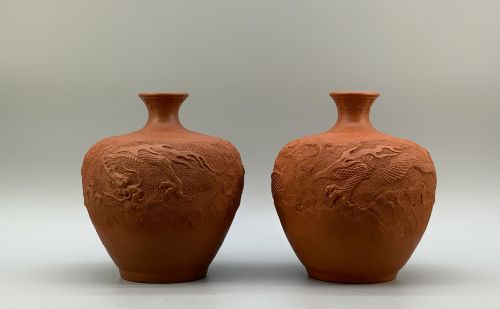
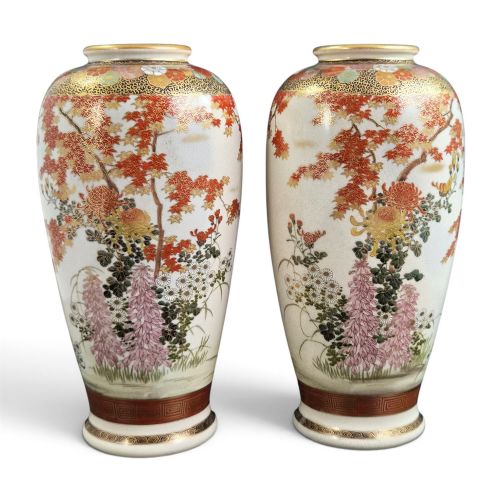
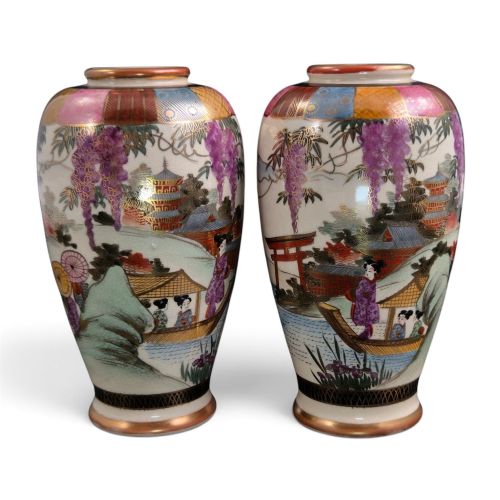
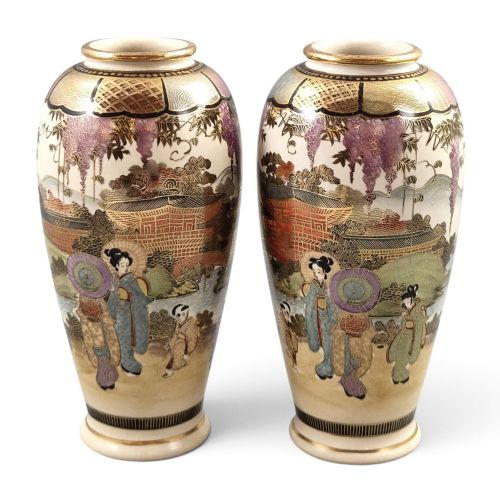
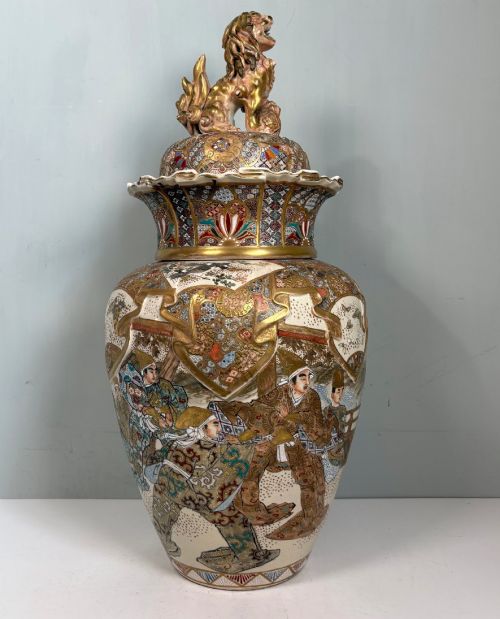
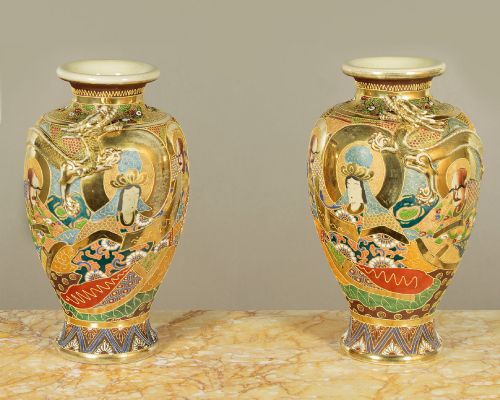
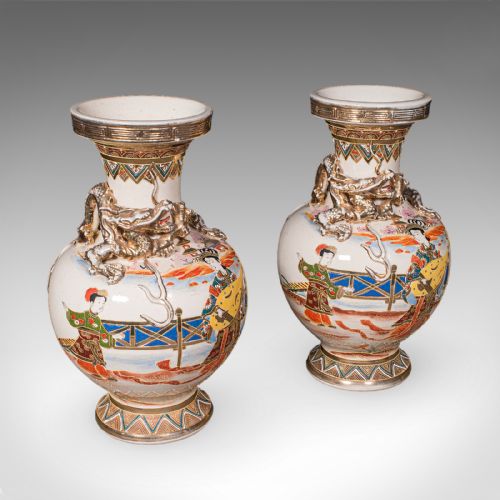
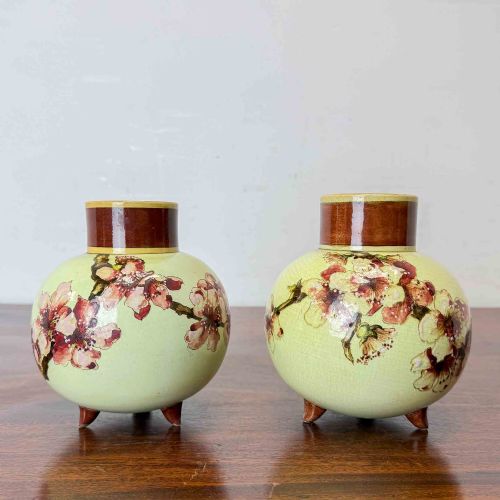
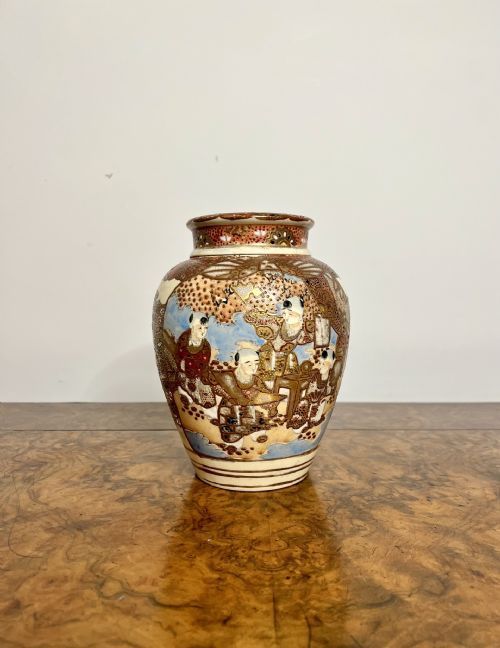
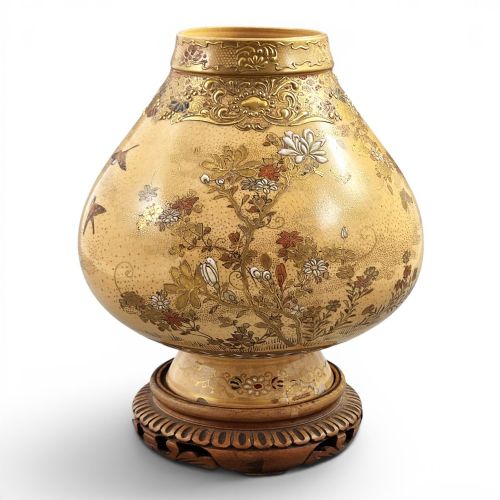
When searching for a japanese earthenware urn, a buyer encounters a diverse group of ceramic vessels primarily dating from the late nineteenth and early twentieth centuries. These objects span the Meiji, Taisho, and Showa periods, reflecting both traditional domestic aesthetics and items produced for export markets. The selection on this page relies heavily on Satsuma ware variations, ranging from miniature cabinet pieces to monumental floor-standing jars.
The physical forms include traditional ginger jars, lidded vessels, decorative vases, and large jardinieres. Many of these items feature characteristic crackle-glaze earthenware surfaces painted with elaborate figural scenes, landscapes, and floral motifs. Makers often utilised cobalt grounds and raised enamel details to depict court figures, arhats, and complex botanical gardens.
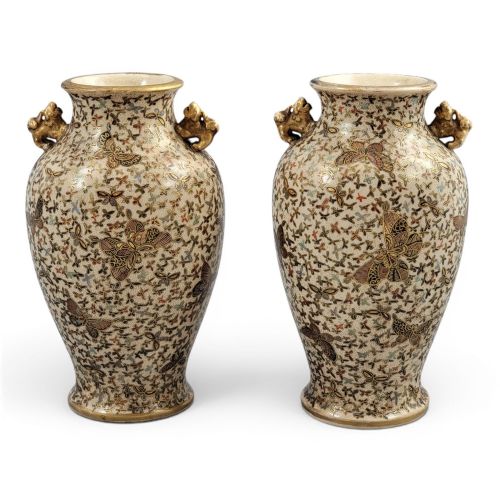
While strictly described as urns or jars, the functional scope encompasses incense burners and ceremonial vessels alongside purely decorative mantle pieces. Pieces from the Kyoto region, alongside works by notable workshops, dominate the available styles. Buyers will find both paired sets and individual statement items representing this specific era of ceramic production.
Materials and Making
Potters constructed these vessels using porous earthenware and stoneware bodies, often coated with a distinctive cream-coloured crackle glaze that formed the base for subsequent painting. Artisans applied detailed hand-painted enamel pigments directly onto this glazed surface, creating complex compositions involving multiple layers of colour.
Gold leaf and heavy gilt work provide the characteristic metallic highlights seen across the surface of these pieces. Relief decoration, known as moriage, involved piping liquid clay onto the body before firing and gilding to build up raised textures for robes, foliage, and architectural details.
Keep an eye out for hidden arhats and tiny butterflies tucked away inside elaborate gold robes.
Assessing Quality
Quality rests primarily on the precision and density of the hand-painted decoration rather than the age alone. Master workshops achieved finer control over facial expressions, robes, and landscape perspective, whereas lesser items relied on repetitive stencilled motifs and hurried brushwork.
The application of gold gilt and the crispness of the raised moriage work also separate standard export wares from exhibition-grade pieces. Heavier bodies with clean potting, distinct workshop signatures, and well-preserved gilt accents indicate superior craftsmanship from prominent Kyoto centres.
Kinkōzan·Hotoda·Chosei·Makuzu Kozan·Maruni Kobe
The Japanese Earthenware Urn Glossary
- Satsuma ware
- Earthenware pottery originating from Satsuma Province, characterised by a pale ivory crackle glaze and elaborate overglaze polychrome and gilt enamel decoration.
- Moriage
- A ceramic technique where slip is piped onto the unglazed or glazed surface to create raised decorative patterns before painting and gilding.
- Koro
- A traditional Japanese incense burner, typically featuring a pierced lid and three or more feet.
- Meiji Period
- The era of Japanese history spanning from 1868 to 1912, marked by opening trade with the West and a flourishing of decorative arts for export.
- Mon
- A Japanese heraldic badge or crest used to identify families, clans, or governmental bodies, frequently found painted on fine ceramics.
Japanese Earthenware Urn: Frequently Asked Questions
What is Satsuma ware?
Satsuma ware is a distinct style of Japanese pottery featuring a characteristic cream-coloured earthenware body covered in a fine network of crackled glaze. Artisans then decorated these surfaces with detailed hand-painted enamel scenes and heavy gold gilt.
Originally produced for local use in Satsuma Province, the style evolved significantly during the Meiji period to satisfy heavy international demand. These pieces often depict court figures, landscapes, and thousand butterfly motifs.
How should I display these vessels?
These ceramic pieces suit prominent placement on mantelpieces, cabinets, or dedicated display tables where adequate lighting highlights the fine gilt work and enamel details. Because the earthenware bodies can be sensitive to moisture, they work best kept away from damp areas.
Pairing matching vases symmetrically creates a formal arrangement, while individual ginger jars or miniature vessels serve as focal points in smaller spaces. Handling should remain minimal to protect the raised enamel and delicate gold leaf from wear.
Are these items signed?
Many fine Japanese ceramic pieces from this era bear painted or impressed artist signatures, workshop marks, or family crests on the base. These signatures often indicate the studio, such as Kinkozan, or the individual artist responsible for the decoration.
Signatures help attribute pieces to specific regional centres like Kyoto or Kobe, though unsigned export pieces of high artistic merit also exist. Examining the base under good light reveals these identifying marks.
What is moriage decoration?
Moriage is a decorative ceramic technique where liquid clay is piped onto the surface of the vessel before firing to create raised, three-dimensional patterns. Artisans then paint and gild these raised areas to accentuate robes, architectural elements, and botanical details.
This technique adds a distinct tactile quality to the piece, catching the light and contrasting with the smooth crackle-glaze background. Heavy moriage work is often a hallmark of higher-quality export items.