
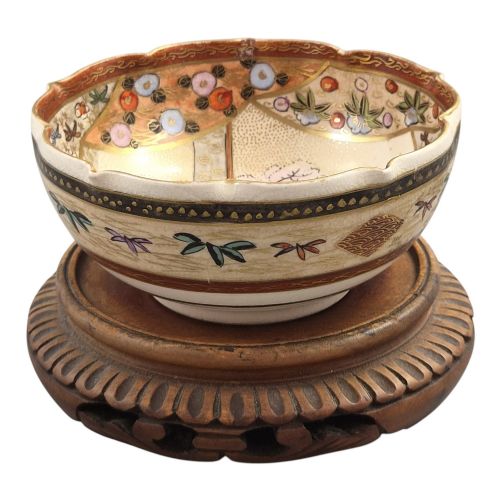


Kyoto Satsuma Ware
Kyoto satsuma ware brings intricate earthenware ceramics painted with gold and enamel straight to your cabinet from nineteenth-century workshops.
Kyoto Satsuma Ware
Kyoto satsuma ware encompasses finely decorated earthenware objects originating from Japan during the nineteenth century, including vases, bowls, jars, and incense burners. These pieces range from small miniature items to monumental vessels.
The objects frequently display elaborate figurative scenes, landscapes, and floral motifs such as wisteria and camellias, often accented with extensive cobalt blue and gold leaf highlights.
How They Were Made
Maker workshops utilised earthenware and porcelain bodies as a base for intricate hand-painted decoration using enamel and gold leaf or gilt. Master artists applied detailed pigments to depict complex family scenes, battle narratives, and garden landscapes.
Individual studios and makers signed their work directly onto the ceramic surface, often incorporating mon insignia such as the Shimazu mon to identify the provenance of the piece.
Some miniature incense burners are small enough to sit comfortably in the palm of your hand yet contain entire samurai battles.
What Varies in Quality
The standard of Kyoto satsuma ware depends heavily on the fineness of the brushwork and the complexity of the painted composition, with master-signed pieces showing exceptional detail in figurative scenes and landscapes.
The application of gold leaf and the depth of the enamel work dictate the visual richness of the vessel, distinguishing standard decorative items from monumental or highly specialised studio productions.
Kinkozan·Chosei·Seiko-en Chokei·Yamashu·Hakusan·Tagawa·Kotobuki-do·Shozan
The Kyoto Satsuma Ware Glossary
- Earthenware
- A porous ceramic material fired at lower temperatures, serving as the primary body for traditional satsuma production before glazing and enamel decoration. This body type allows for specific absorption of fine coloured pigments.
- Enamel
- Opaque or translucent glass-based paints applied over the glazed ceramic surface to create detailed figurative and floral designs. Artists layer these coloured paints to build rich pictorial depth.
- Gilt
- A thin application of gold or gold leaf used to highlight decorative borders, motifs, and backgrounds on the ceramic body. This metallic finish catches the light across painted panels.
- Mon
- A traditional Japanese emblem or crest used to identify noble families or clans, frequently incorporated into the decorative schemes of satsuma ceramics. The Shimazu mon appears regularly on pieces associated with this tradition.
- Koro
- A traditional Japanese incense burner fitted with a lid, often produced in miniature or larger decorative forms. These vessels feature perforated covers designed to release fragrant smoke.
Kyoto Satsuma Ware: Frequently Asked Questions
What is Kyoto satsuma ware?
Kyoto satsuma ware is a category of Japanese ceramic art produced during the nineteenth century, characterised by earthenware bodies decorated with detailed enamel paintings and gold leaf.
These items range from functional sugar bowls and small incense burners to large decorative vases and monumental bowls featuring narrative scenes.
How do I identify a maker?
Makers often signed their pieces directly onto the base or body using painted or gilt characters, sometimes accompanied by studio names.
Studying these signatures alongside specific crests like the Shimazu mon helps pinpoint the originating workshop from the Meiji period.
Were these items used daily?
Many fine pieces served primarily as decorative display objects in domestic settings rather than for heavy practical use, given their delicate enamel surfaces.
Smaller forms like sugar bowls and miniature vases indicate that some items had domestic utility alongside purely decorative incense burners and large vessels.
How should I display them?
Display these ceramics in stable cabinets away from direct sunlight to protect the delicate gold leaf and enamel pigments from fading over time.
Allowing adequate space around monumental vases or detailed bowls ensures the intricate painted scenes remain fully visible.