




Gold Japanese Pottery
Gold japanese pottery brings together intricate earthenware vessels and plates enriched with metallic leaf, spanning Meiji period workshops and later interpretations.
Gold Japanese Pottery
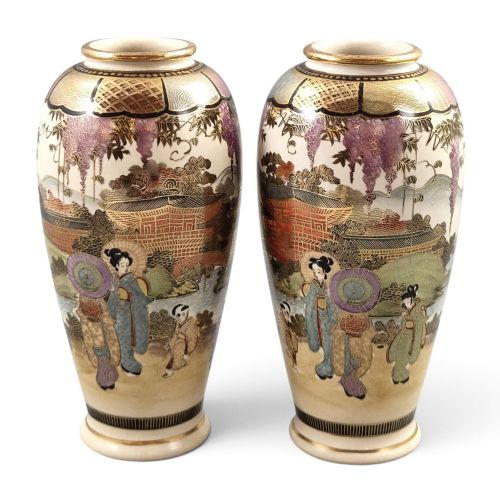
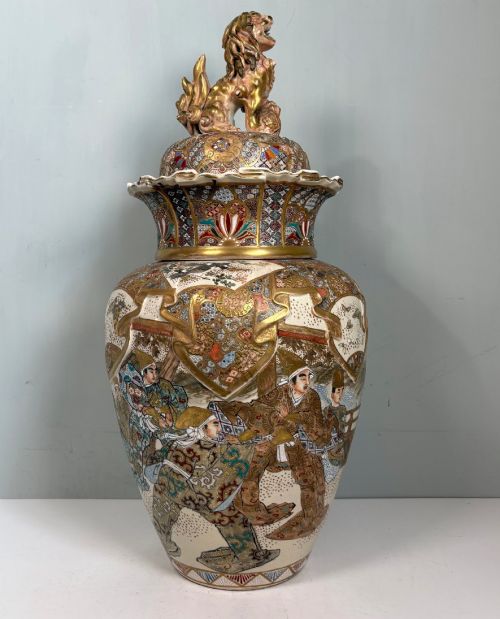
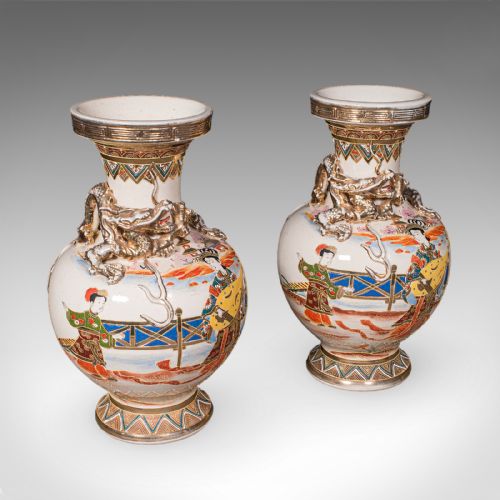
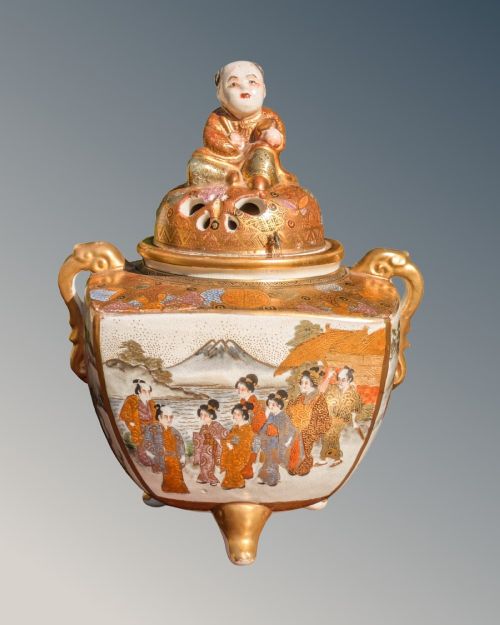
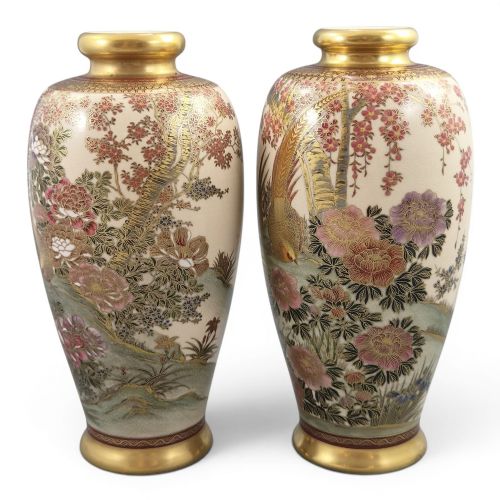
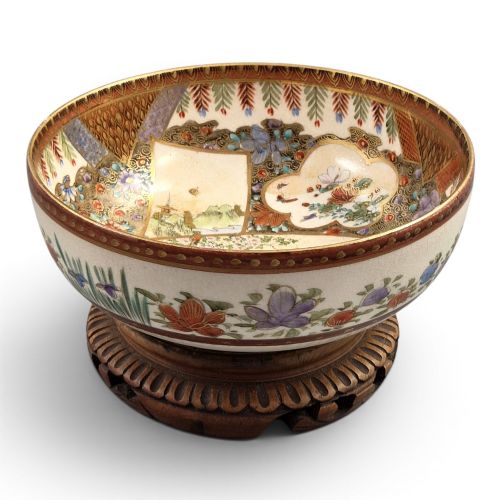
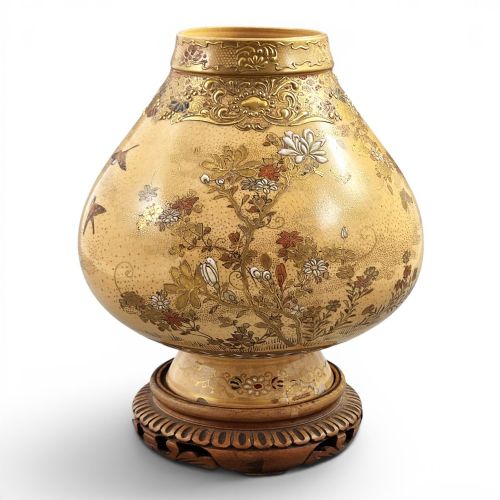
Gold japanese pottery principally encompasses Satsuma ware vessels, bowls, koros, and plates produced during the nineteenth and early twentieth centuries.
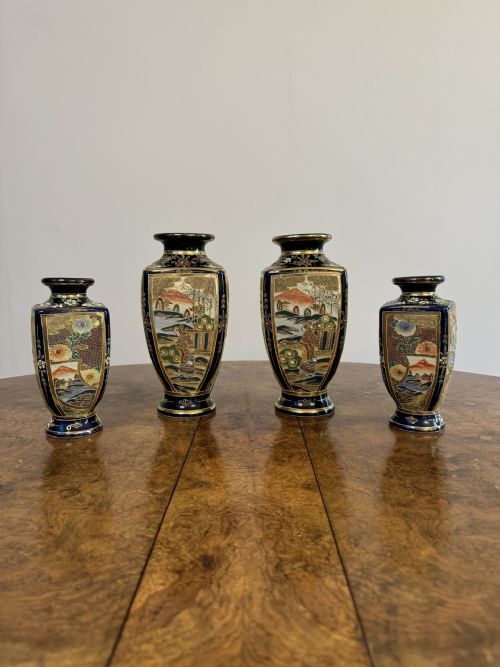
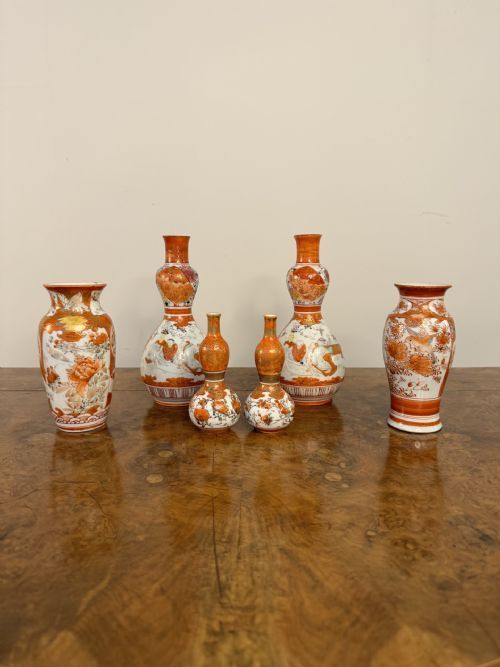
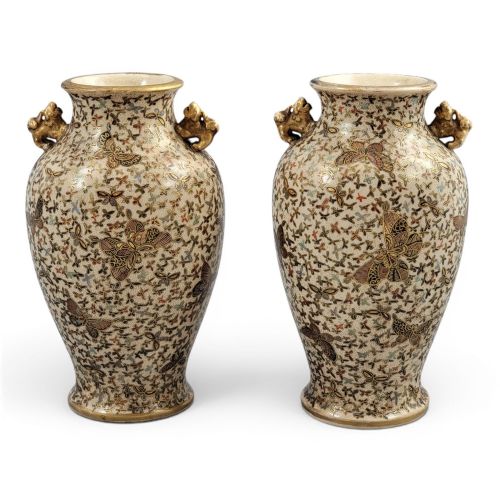
Buyers commonly encounter baluster vases, miniature pieces, and garnitures originating from Kyoto, Yokohama, and Kobe workshops.
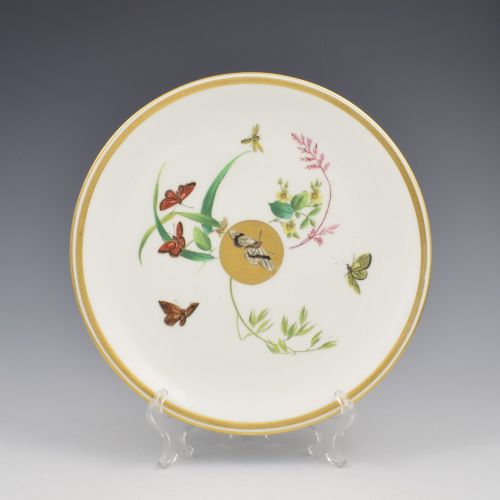
The category also extends to English porcelain pieces influenced by Japanese aesthetic styles utilising gilt decoration.
Materials and Techniques
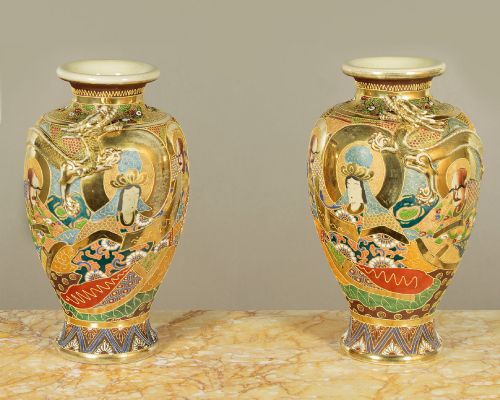
Earthenware and porcelain bodies provide the foundation, decorated with detailed enamel pigments and generous applications of gold leaf, gilt, and moriage relief work.
Kyoto and Yokohama makers utilised refined glazes and hand-painted figural scenes, often incorporating the Shimazu crest alongside intricate cobalt blue and gold motifs.
Several miniature vases squeezed entirely onto their surfaces delicate processions of tiny figures alongside thousand-butterfly motifs.
Distinctions in Execution
The standard of painting on gold japanese pottery determines its standing, separating tightly controlled brushwork in figural processions and arhats from looser execution.
The density, purity, and application of the gilding and raised enamel work further divide standard production items from exhibition pieces produced by notable workshops.
Koshida·Shozan·Manpei·Kozan·Kinkōzan·Hotoda·Toshozan·Chosei·Nanzan·Seiko-en Chokei·Nikko·Kizan·Hakusan·Kotobuki-do
The Gold Japanese Pottery Glossary
- Satsuma
- A type of Japanese earthenware originating from Satsuma Province, traditionally characterised by a cream-coloured, crackled glaze and elaborate enamel and gold decoration.
- Koro
- A traditional Japanese incense burner fitted with a pierced lid, frequently rendered in ceramic or porcelain during the Meiji period.
- Moriage
- A decorative ceramic technique utilising piped clay slip to build up raised designs before applying enamel and gilding.
- Meiji Period
- The era in Japanese history spanning from 1868 to 1912, noted for a surge in export ceramics featuring rich gold ornamentation.
- Okimono
- A small Japanese freestanding ornament or figurine intended for display in a household alcove.
Gold Japanese Pottery: Frequently Asked Questions
What is Satsuma ware?
Satsuma ware is a distinct style of Japanese earthenware featuring a characteristic ivory-coloured crackle glaze beneath intricate polychrome enamel and heavy gold leaf detailing.
These pieces were heavily produced for export during the late nineteenth century, depicting traditional figures, landscapes, and floral motifs.
How do I identify a Meiji period piece?
Meiji period items generally date between 1868 and 1912, often displaying dense hand-painted compositions and artist signatures or studio marks on the base.
Many of these objects incorporate Shimazu family crests and sophisticated gilding techniques that reflect the peak of Japanese export ceramics.
Where were these ceramics made?
The primary production centres for these decorated ceramics included Kyoto, where master workshops like Kinkōzan operated, as well as Yokohama and Kobe.
Regional styles often emerged from these specific cities, distinguishing Kyoto earthenwares from other provincial outputs.
How should I display these items?
These decorative vessels, bowls, and miniature vases suit stable shelving or cabinets away from direct sunlight to preserve the delicate enamel and gold leaf.
Because many are earthenware, they require careful handling and cleaning with a dry, soft cloth rather than water.