





Gilded Satsuma Vase
A gilded satsuma vase brings together intricate ceramic artistry and lavish gold leaf work from the Meiji and Showa periods.
Gilded Satsuma Vase
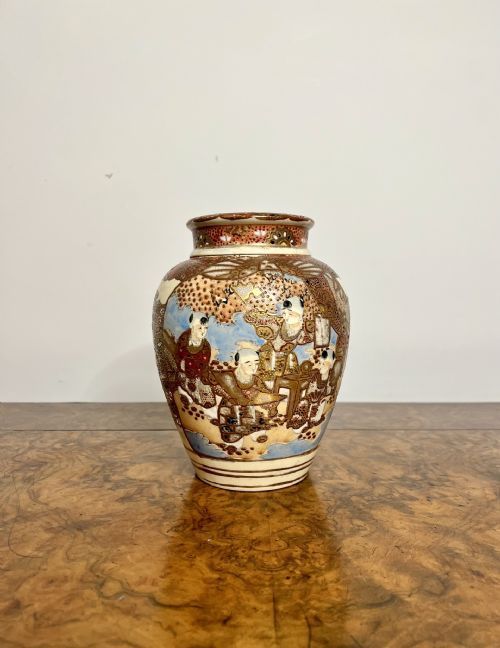
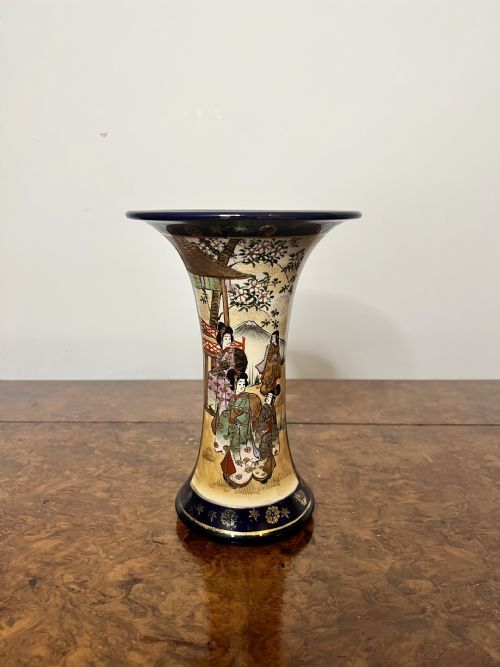
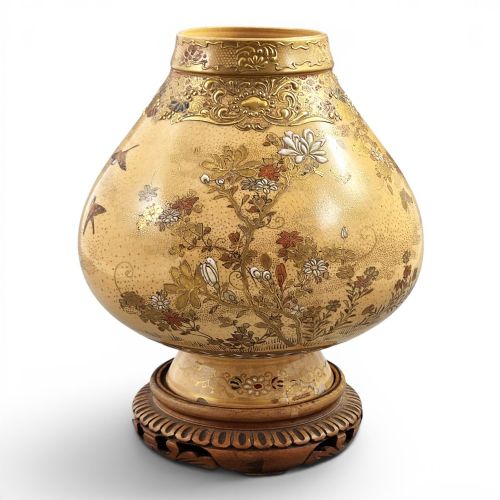
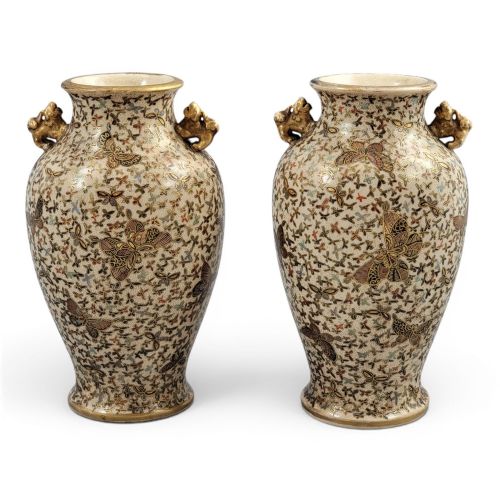
A gilded satsuma vase is a ceramic vessel originating from Japan, commonly featuring earthenware bodies adorned with detailed enamel and heavy gold leaf ornamentation. These pieces range from compact ginger jars and miniature vessels to monumental garnitures and converted table lamps.
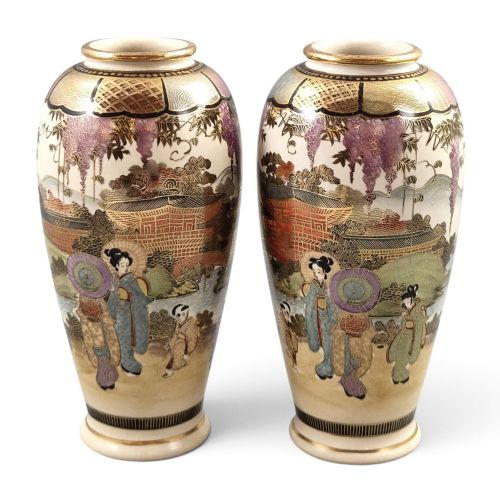
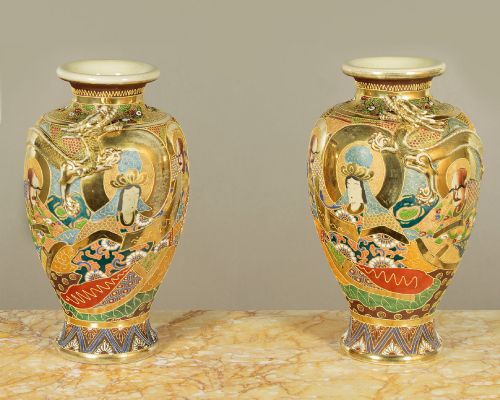
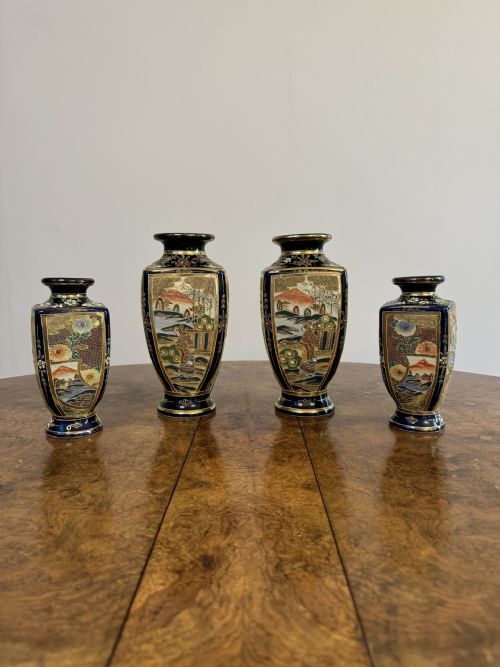
The pieces seen here belong predominantly to the Meiji period, alongside later Showa and Taisho examples, capturing the transition of Japanese ceramic export art. Buyers encounter various forms including hexagonal bodies, globular shapes, and handled urns decorated with court figures, landscapes, or butterflies.
How they were made
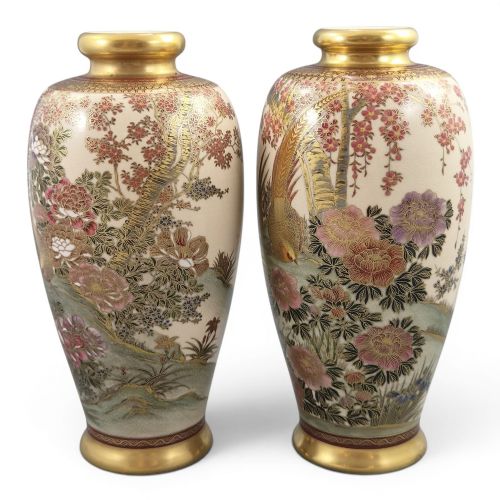
Makers shaped these vessels from earthenware and applied a characteristic crackle-glaze finish as the foundation for subsequent decoration. Artists then hand-painted intricate scenes using vibrant enamel pigments alongside extensive gilt and gold leaf applications.
Many finer examples incorporate moriage technique, building up raised slip details to create textured surfaces before the final gilding is applied. Workshops relied on precise brushwork and controlled kiln firings to secure the complex layers of pigment and gold.
Listings feature earthenware bodies decorated with enamel, gold leaf, and moriage across Meiji and Showa periods.
What varies in quality
Quality rests in the precision of the hand-painted brushwork and the density of the gilding across the ceramic body. Lesser examples display repetitive stencilled motifs and thin enamel, whereas superior pieces show meticulous individual figures and dense, raised moriage work.
The reputation of the workshop also dictates standing, with documented signatures from makers like Kinkozan or Hododa marking out pieces executed with exceptional technical control. Furthermore, the crispness of the underlying crackle-glaze and the balance of the composition separate standard export ware from exhibition pieces.
Shozan·Manpei·Kinkōzan·Kinzan·Hotoda·Chosei·Shuzan·Seiko-en Chokei·Yamashu·Tagawa·Tashiro·Hattori·Hayakawa
The Gilded Satsuma Vase Glossary
- Satsuma
- A type of Japanese earthenware traditionally characterised by an ivory-coloured, crackled glaze. It served as the primary canvas for elaborate enamel and gilt decoration during the Meiji period.
- Moriage
- A ceramic technique where clay slip is piped onto the surface to create raised, textured decorative patterns. This relief work is often highlighted with gilt to enhance depth.
- Gilt
- Gold leaf or powdered gold applied to the ceramic surface to create metallic ornamentation. It highlights specific borders, motifs, and backgrounds on the vessel.
- Garniture
- A set of matching vases or jars designed to be displayed together on a mantelpiece or sideboard. These sets frequently comprise three, four, or five coordinated pieces.
- Shimazu Mon
- The crest of the Shimazu clan, featuring a cross within a circle, which frequently appears on Satsuma ware to denote patronage or regional origin.
Gilded Satsuma Vase: Frequently Asked Questions
What is Satsuma ware?
Satsuma ware is a distinct style of Japanese earthenware featuring a characteristic creamy, crackled glaze that accepts intricate enamel and gold decoration.
Originating from the Satsuma Province, these ceramics became highly sought-after export pieces during the late nineteenth and early twentieth centuries.
How are these vases signed?
Many pieces bear painted or impressed maker signatures, seals, or studio marks on the base, often naming the artist and the Kyoto workshop.
Some signatures are accompanied by family crests, such as the Shimazu mon, which help identify the origin and period of manufacture.
Where should I display a lamp?
Converted table lamps suit sideboards, studies, or living rooms where their decorated ceramic bodies can be appreciated alongside balanced lighting.
Placement should avoid direct, harsh sunlight to protect the delicate enamel colours and gold leaf over time.
Can I use them for flowers?
Most antique pieces function primarily as decorative art objects rather than practical water-holding vessels due to the porous nature of the earthenware.
Dry arrangements or simply displaying them empty preserves the interior and prevents moisture damage to the antique glaze.