



Japanese Satsuma Jars
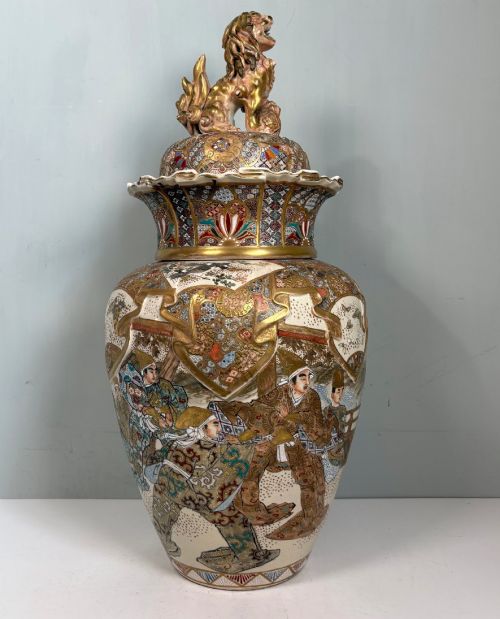
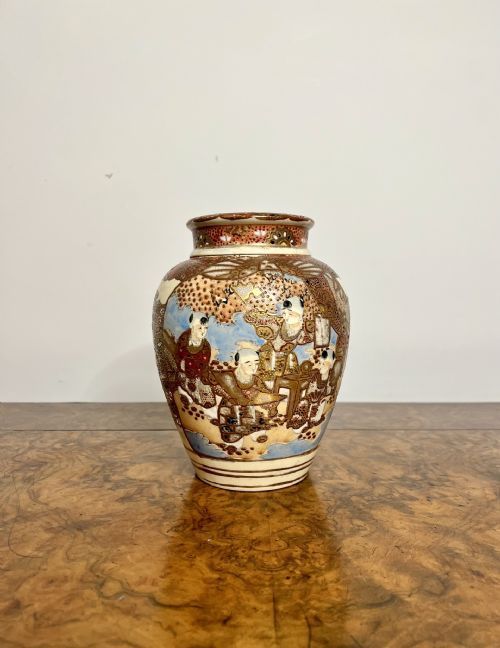
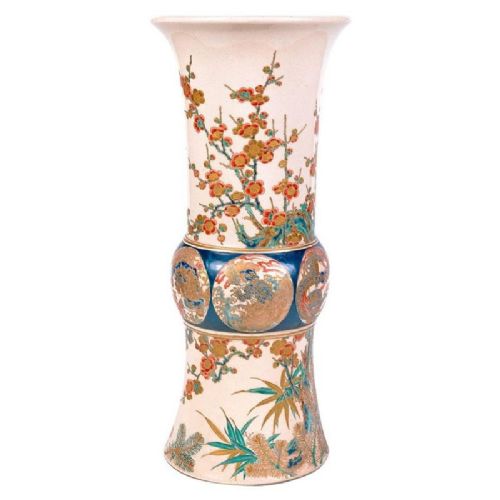
These japanese satsuma jars are hand-painted ceramic vessels enriched with polychrome enamel and gold leaf.
Japanese Satsuma Jars
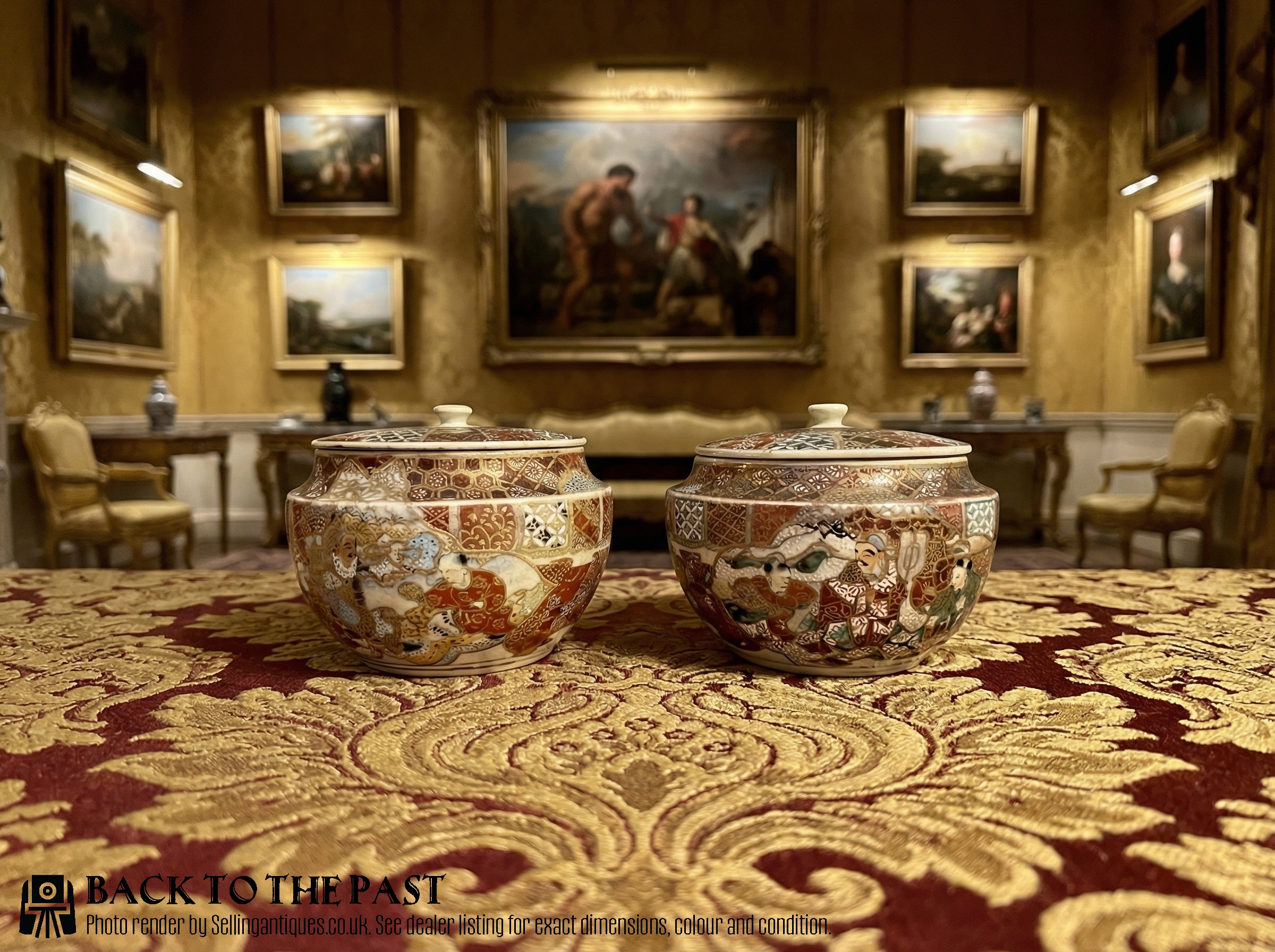
When you search for japanese satsuma jars, you encounter ceramic vessels created primarily during the Meiji period and the nineteenth century. These pieces encompass various forms including lidded jars, ginger jars, tea caddies, vases, urns, and koro incense burners.
The objects appearing on this page originate from Japanese studios such as Kyoto and Tokyo, spanning dates from eighteen eighty to nineteen ten. You will find both miniature vases and large lidded display pieces among the current selection.
How they were made
Potters shaped these vessels from earthenware or porcelain before applying detailed hand-painted designs. Artisans utilised polychrome enamel and fine gold leaf or gilding to decorate the surfaces with figures such as Rakan, landscape scenes, and intricate patterns.
Many examples feature artist signatures or studio marks applied directly to the base during manufacture. Some lidded jars and tea caddies are accompanied by fitted wooden components.
Object forms include tea caddies, sugar bowls, incense burners, and lidded jars originating from Meiji period Japan.
What varies in quality
The standard of painting and the precision of the enamel work distinguish finer examples from standard production. Pieces originating from named studios like Kyoto or signed by recognised artists often display superior detail in the gilding and figural decoration.
Scale and form also influence the character of the piece, ranging from diminutive tea jars to large lidded vases standing significant heights. The presence of original fitted covers and clear signatures adds to the distinction of individual items.
Kizan·Shuzan·Yamashu·Kinkozan·Tokyo Taizan·Shozan
The Japanese Satsuma Jars Glossary
- Satsuma
- A type of Japanese earthenware featuring a crackle glaze, typically decorated with enamel colours and gilding.
- Meiji Period
- The era in Japanese history spanning from eighteen sixty-eight to nineteen twelve, associated with increased export of decorative arts.
- Koro
- A traditional Japanese incense burner, frequently fitted with a pierced cover.
- Natsume
- A small Japanese tea caddy traditionally used in the chanoyu tea ceremony.
- Rakan
- Depictions of the enlightened followers of Buddha, frequently found in Japanese art and ceramics.
Japanese Satsuma Jars: Frequently Asked Questions
How do I identify a Meiji period piece?
Meiji period items generally date between eighteen sixty-eight and nineteen ten, reflecting the craftsmanship of late nineteenth-century Japanese kilns.
Look for characteristic earthenware bodies with fine crackle glazes, polychrome enamel painting, and extensive gold leaf detailing.
What is a koro?
A koro is a traditional Japanese incense burner featuring a bowl and a perforated cover designed to release fragrance.
These ceramic pieces often stand on small feet and display detailed hand-painted figural or landscape scenes.
Are all these jars signed?
Not every piece bears a signature, but many fine examples include artist names or studio marks painted on the base.
Signatures from makers such as Kinkozan or Shuzan indicate specific workshops and periods of production.
How should I display lidded jars?
Display these decorative ceramics on stable surfaces away from direct sunlight to protect the enamel and gilding.
Keep lidded jars and tea caddies paired with their original covers where applicable to preserve their complete form.