



Cream Ceramic Jars
Cream ceramic jars span delicate blush ivory vessels and sturdy stoneware containers, offering both refined display pieces and practical storage.
Cream Ceramic Jars
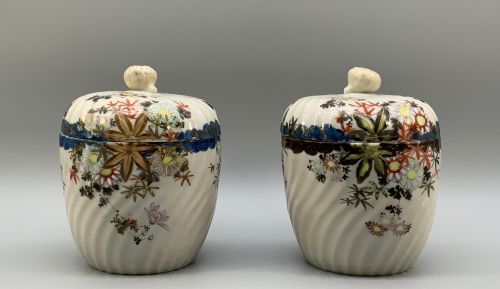
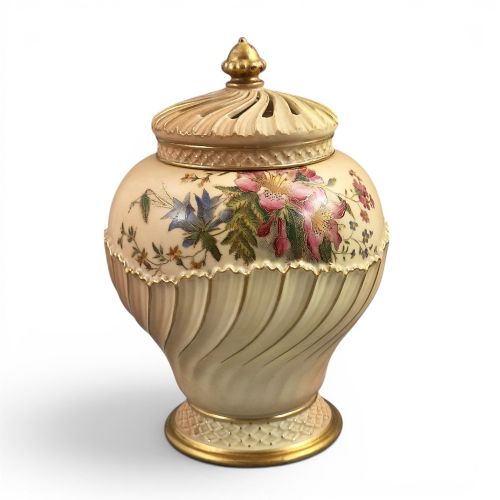
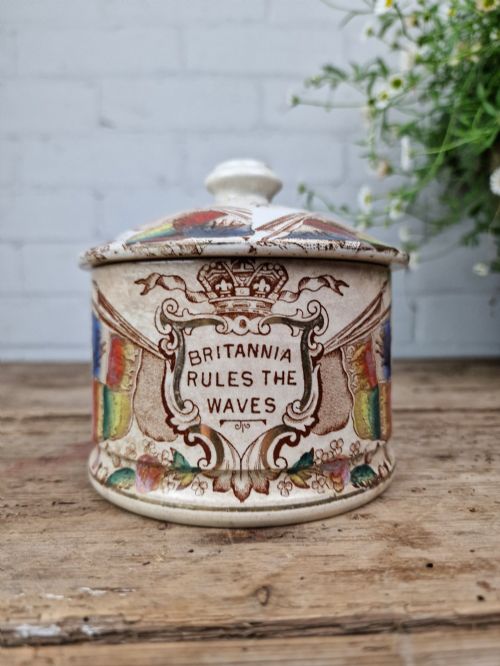
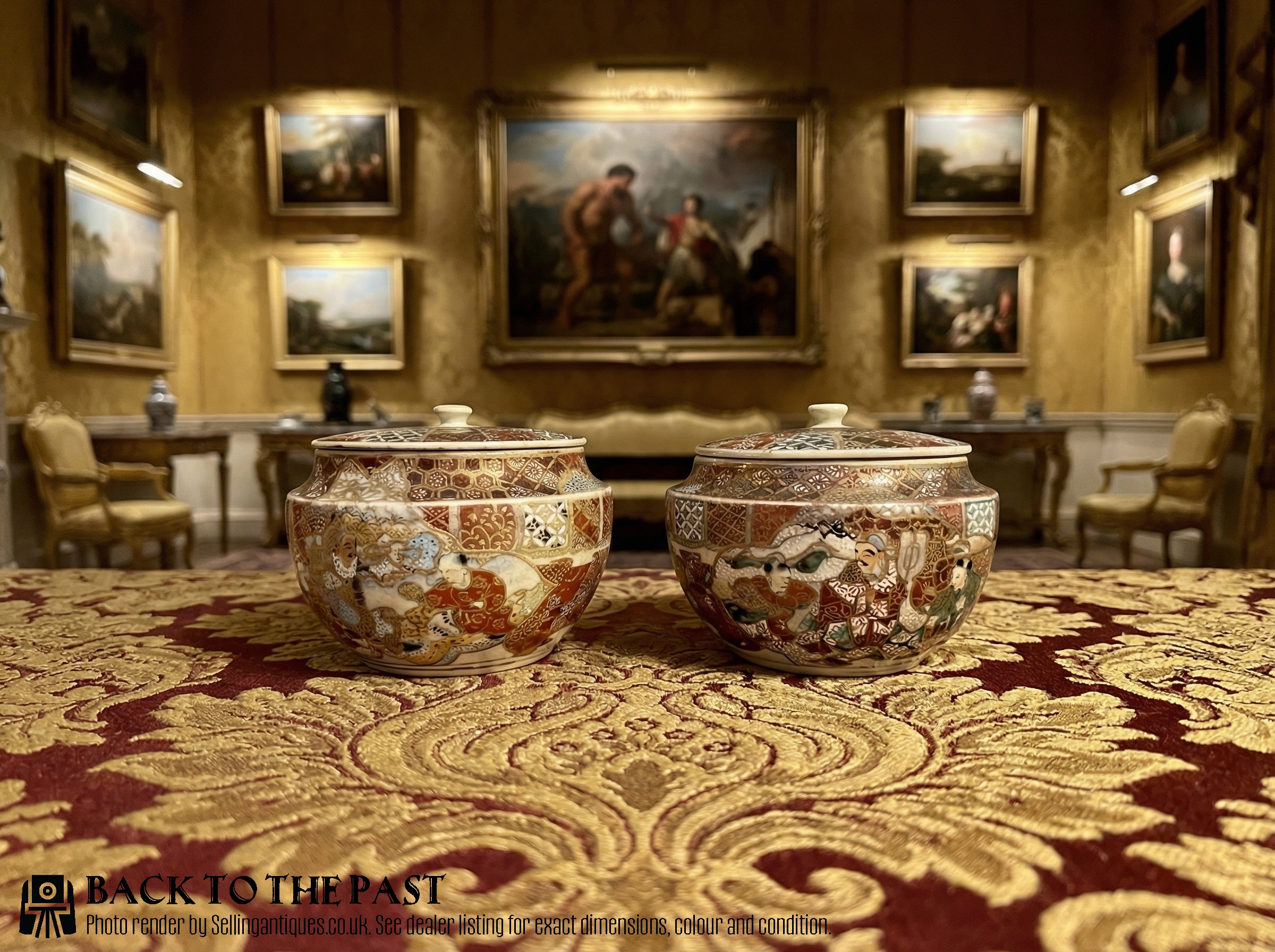
Cream ceramic jars encompass a diverse selection of items, ranging from Victorian blush ivory pieces and Edwardian biscuit barrels to Japanese Satsuma tea caddies and lidded vessels. These containers often feature floral motifs, landscape scenes, or intricate gilding, reflecting the varied design influences of the nineteenth and early twentieth centuries.
The domestic and decorative uses for these objects vary considerably across the periods represented. Lidded jars, tea caddies, and biscuit barrels served functional storage roles in the home, whereas pot-pourri jars and ornamental vases were primarily intended for display.
Origin points stretch from English potteries like Royal Worcester and Doulton to Japanese Meiji period studios and French porcelain manufacturers. This international scope brings together earthenware, stoneware, and fine porcelain under the broad umbrella of cream ceramics.
Materials and methods
Potters utilised earthenware, stoneware, and porcelain bodies, applying smooth glazes to create the characteristic pale surfaces seen across the inventory. Salt glazing and delicate blush ivory finishes provide the durable outer layers that protect the underlying clay.
Decoration often involved hand-painted details, gold leaf application, and raised slip designs. Artisans combined these techniques with precise firing processes to achieve the intricate patterns and subtle colour gradients characteristic of Satsuma and Royal Worcester productions.
Materials across these listings include fine porcelain, salt-glazed stoneware, and delicate earthenware bodies finished with gold leaf and enamel.
Assessing quality and craftsmanship
The standard of a piece rests largely on the precision of its hand-painted details and the clarity of its glaze. Fine brushwork, particularly on Japanese Satsuma wares and Royal Worcester bird and landscape scenes, distinguishes superior examples from standard production items.
The crispness of moulded elements, such as sprigged stoneware details or relief patterns on biscuit barrels, indicates the skill involved in the manufacturing process. Well-preserved gilding and intact covers further elevate the standing of individual jars and vessels.
Royal Worcester·Doulton of London·Carlton Ware·Crown Devon·Port Dundass
The Cream Ceramic Jars Glossary
- Blush ivory
- A matte cream ceramic ground developed by Royal Worcester, typically decorated with soft floral motifs and gilding. This finish gives the porcelain a warm, understated appearance.
- Satsuma
- A type of Japanese earthenware featuring a crackle glaze and elaborate polychrome and gold enamel decoration. Pieces from the Meiji period are particularly notable for their dense figurative scenes.
- Bisque
- Unglazed ceramic fired once, providing a porous, matte texture. It differs from finished glazed porcelain by retaining a chalky appearance.
- Stoneware
- A dense, vitreous ceramic fired at high temperatures, making it waterproof and exceptionally durable. It is frequently utilised for large storage jars and industrial vessels.
- Pot-pourri
- A decorative jar or vase with a pierced cover designed to diffuse scent from dried plant material. These vessels often feature ornate handles and painted motifs.
Cream Ceramic Jars: Frequently Asked Questions
How do I date an antique cream ceramic jar?
Dating relies on maker marks, base stamps, and stylistic cues specific to periods like the Victorian era or the Meiji period. Examining the type of glaze and manufacturing technique also helps narrow down the production decade.
Familiarising yourself with the specific signatures of studios and factories provides a reliable framework for establishing the age of a piece.
What is the difference between earthenware and stoneware?
Earthenware is fired at lower temperatures and remains porous unless glazed, making it suitable for decorative items and lighter vessels. Stoneware is fired much hotter, resulting in a dense, non-porous material.
This structural difference means stoneware jars were traditionally chosen for heavy-duty storage, while earthenware served more ornamental or domestic tabletop functions.
How should I clean my ceramic jar?
Dust gently with a soft, dry cloth to prevent accumulation without risking the delicate glaze or surface gilding. Avoid harsh chemical cleaners and do not submerge antique pieces with painted enamel or gold leaf.
If washing is essential for unglazed or durable stoneware interiors, use lukewarm water and mild soap, ensuring the piece dries thoroughly afterwards.
Were these jars used for food storage?
Many items, including biscuit barrels, tea caddies, and sugar bowls, were originally designed to hold consumables in the Victorian and Edwardian home. Others served purely decorative functions such as holding pot-pourri or displaying floral arrangements.
Assessing the interior glaze and construction usually indicates whether a particular jar was intended for pantry use or parlor display.