


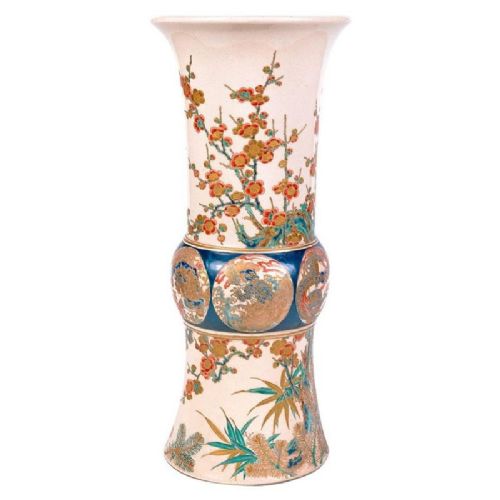


Cream Satsuma Jar
These cream satsuma jar pieces are finely painted Japanese ceramics from the nineteenth century, sought after by collectors for their delicate earthenware bodies and intricate gilt decoration.
Cream Satsuma Jar
When you search for a cream satsuma jar, you encounter nineteenth-century Japanese earthenware vessels that often double as tea caddies, lidded jars, or miniature vases. These ceramics hail predominantly from the Meiji period, reflecting a distinct aesthetic of intricate surface work.
The objects on this page span forms such as tea caddies, lidded jars, sugar bowls, and incense burners. Most examples emerge from studios in Kyoto and Tokyo, carrying the signatures of notable makers from the late nineteenth century.
Buyers frequently find that these cream satsuma pieces present characteristic crackle-glaze earthenware surfaces adorned with polychrome enamel and gold leaf. The forms range from compact miniature vases to substantial lidded vessels.
How they were made
These pieces begin as earthenware bodies covered in a distinctive cream-coloured glaze that develops a fine network of tiny cracks during firing. Artisans then apply detailed polychrome enamel designs directly onto this absorbent surface.
Gilding and gold leaf finish the decoration, highlighting figures, landscapes, and floral motifs. Signature panels and intricate borders are meticulously painted by hand in studios operating during the Meiji period.
Listings feature earthenware materials combined with enamel, gold leaf, and gilt, spanning the late nineteenth century and the Meiji period.
What varies in quality
The finesse of the brushwork and the precision of the gilding set superior pieces apart from standard production. Master painters working in renowned Kyoto and Tokyo studios achieved a depth of detail in human figures and landscapes that lesser workshops omitted.
The clarity of the earthenware body and the evenness of the crackle glaze also influence the overall character of the piece. Crisp signatures from recognised artists distinguish finer examples within the range.
Kizan·Shuzan·Yamashu·Tokyo Taizan·Shizan·Shozan
The Cream Satsuma Jar Glossary
- Satsuma
- A type of Japanese earthenware featuring a pale, ivory crackle glaze that accepts detailed enamel and gilt painting. It originated in Satsuma Province before production spread to major urban centres like Kyoto and Tokyo.
- Meiji Period
- The era in Japanese history spanning from 1868 to 1912, characterised by intense artistic production aimed at international export. Pieces from this period frequently display elaborate polychrome and gilt decoration.
- Natsume
- A traditional Japanese tea caddy, often shaped like a棗 or jujube fruit, utilised in the presentation of powdered green tea. These vessels typically feature tightly fitted lids.
- Koro
- A traditional Japanese incense burner, usually supported on legs and fitted with a pierced cover to release fragrance. These decorative ceramics often display fine enamel work.
Cream Satsuma Jar: Frequently Asked Questions
What is a cream satsuma jar?
A cream satsuma jar is a nineteenth-century Japanese earthenware vessel featuring an ivory crackle glaze and detailed polychrome enamel painting. These pieces were produced primarily during the Meiji period for both domestic use and export.
They take forms such as tea caddies, lidded jars, and sugar bowls, often signed by studio artists from Kyoto or Tokyo.
How do I identify a Meiji period piece?
Meiji period ceramics are identified through their characteristic materials, styles, and signatures dating between 1868 and 1912. The presence of fine gold leaf and complex pictorial scenes often points to this era of intense artistic output.
Studio signatures and specific regional traits from Kyoto or Tokyo further help confirm the period of manufacture.
How were these jars used originally?
These ceramic vessels served practical roles in Japanese domestic life and tea ceremonies, holding items like tea leaves or sugar. Incense burners were likewise utilised for diffusing scents within interior spaces.
Many pieces were also created purely for decorative display, showcasing the meticulous skill of Japanese ceramic artists to international buyers.
How should I care for antique earthenware?
Antique earthenware requires gentle handling to protect its delicate glaze and raised enamel decoration. Keep these items away from direct sunlight and extreme moisture fluctuations to preserve the integrity of the surface.
Dust them softly with a dry cloth, avoiding abrasive cleaning agents or immersion in water that might penetrate the crackle glaze.