


Japanese Landscape Vases
Japanese landscape vases bring scenes of lakes, rivers and mountains into the home through intricate ceramic and bronze work.
Japanese Landscape Vases
Japanese landscape vases are vessels decorated with scenic views, ranging from quiet lakes and waterfalls to detailed mountain vistas. When searching for japanese landscape vases, buyers encounter various forms including jars, urns and trumpet-shaped beaker vases.
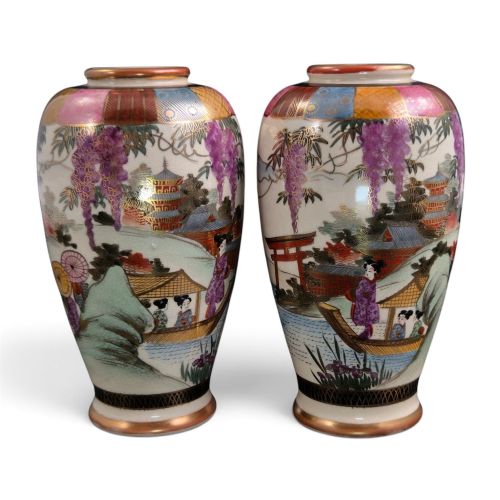
The pieces on this page span several eras, originating from the Edo period through to the Meiji, Taisho and Edwardian periods. Makers utilised distinct regional styles such as Satsuma, Kyoto Satsuma, Kutani and Sumida Gawa.
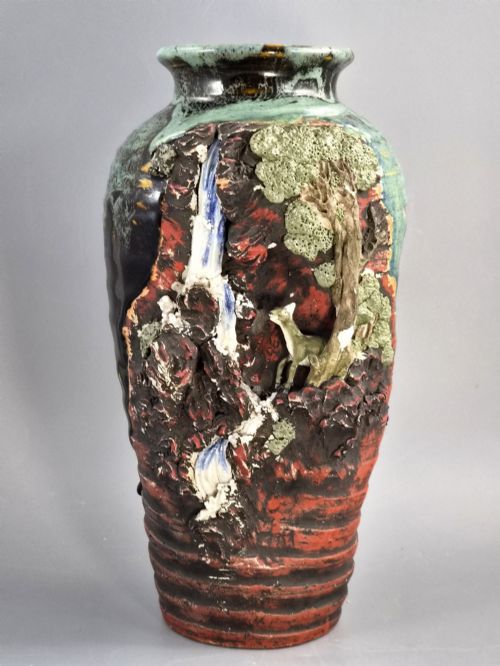
Forms vary from pairs of boxed Satsuma vessels to large sculptural vases featuring stags, trees and religious panels. Earthenware, porcelain, stoneware and bronze provide the primary structural foundation for these detailed landscape scenes.
Materials and Techniques
Craftsmen shaped these vases from earthenware, porcelain, stoneware and bronze, applying enamel, glaze and gold leaf for surface decoration. Gilt and heavy gilding frequently highlight specific motifs within the landscape panels.
Techniques range from the raised enamel work known as moriage to sculptural elements integrated directly into the body, as seen in Sumida Gawa pieces. Blue and white underglaze painting defines earlier examples from the Edo period.
Listings feature ceramics and bronze from the seventeenth century onwards, with a strong concentration of Meiji period Satsuma and Kutani wares.
Assessing Quality
Quality in these vases rests on the precision of the painting and the execution of the landscape panels. Finer examples display meticulous brushwork in depicting natural scenes, wisteria and lake settings.
The application of surface enrichment, such as heavy gilding and detailed moriage work, distinguishes standard production from exceptional pieces. Signed works by notable makers indicate a higher level of artistic oversight.
Makuzu Kozan·Ando·Yamashu
The Japanese Landscape Vases Glossary
- Satsuma
- A type of earthenware with a crackled ivory glaze, traditionally decorated with elaborate enamel and gilt scenes. This style appears frequently across late nineteenth and early twentieth-century examples.
- Moriage
- A ceramic technique where slip is piped onto the surface to create raised decorative patterns and textures. It is often found on Satsuma vases to accentuate borders and landscape elements.
- Cloisonne
- A metalwork technique where enamel colours are separated by thin metal wires soldered to a bronze or copper base. Ando is a prominent name associated with this method.
- Edo period
- A historical era spanning from the early seventeenth to the mid-nineteenth century. Vases from this period often feature blue and white porcelain designs.
Japanese Landscape Vases: Frequently Asked Questions
How do I identify Satsuma ware?
Satsuma ware is generally recognised by its distinct cream-coloured earthenware body covered in a fine network of crackled glaze. Artisans painted these surfaces with detailed polychrome enamels and heavy gold leaf.
Many pieces feature pictorial panels depicting landscapes, figures and religious scenes. The style evolved significantly during the Meiji period for export markets.
What is Sumida Gawa pottery?
Sumida Gawa pottery originates from the banks of the Sumida River in Tokyo and stands out for its highly sculptural aesthetic. These pieces often feature raw, unglazed clay areas combined with dripping, heavy coloured glazes.
Artisans applied three-dimensional figures, animals and natural motifs directly onto the vessel body. This tactile approach creates a stark contrast with smooth porcelain vases.
How are bronze landscape vases decorated?
Bronze vases utilise metalworking techniques such as casting, relief work and patination to depict natural scenery. Artisans carved or applied scenes of trees, mountains and wildlife directly into the metal surface.
Unlike ceramic counterparts relying on enamel, bronze vessels achieve tonal variation through chemical patinas and metal finishes. They range from urns to slender beaker forms.
What distinguishes Meiji period vases?
Meiji period vases reflect a surge in technical mastery and artistic production driven by international exhibitions. Craftsmen pushed the boundaries of earthenware, cloisonne and bronze to create intensely detailed landscape compositions.
Works from this era often bear artist signatures or workshop marks on the base. The decoration became increasingly elaborate, incorporating heavy gilding and complex moriage.