

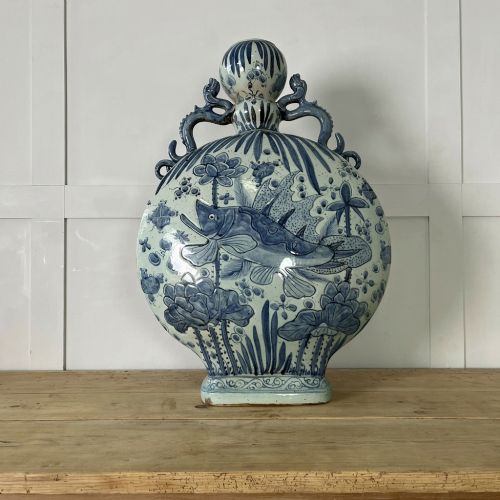


Dragon Motif Vase
A dragon motif vase brings powerful mythic energy to a room, channelling centuries of Asian artistry in bronze, porcelain, and enamel.
Dragon Motif Vase
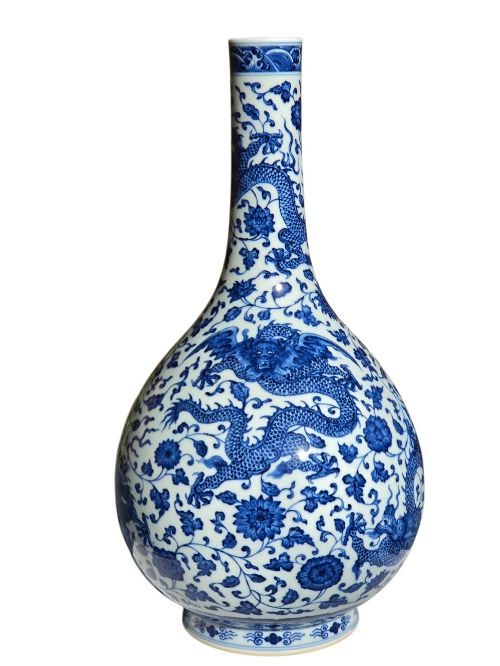
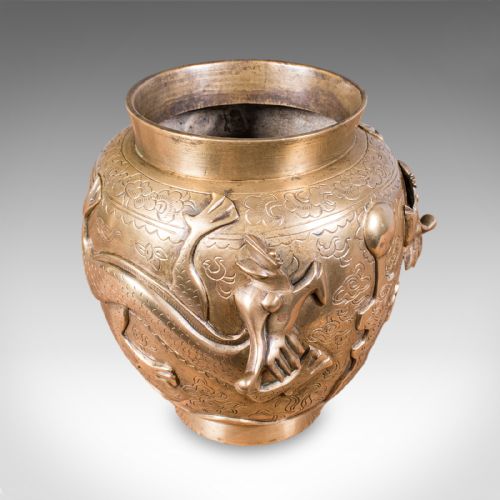
A dragon motif vase draws the eye with dynamic serpent forms winded across ceramic bodies or heavy metal surfaces. When searching for a dragon motif vase, a buyer encounters pieces originating from Chinese and Japanese workshops spanning the nineteenth and early twentieth centuries.
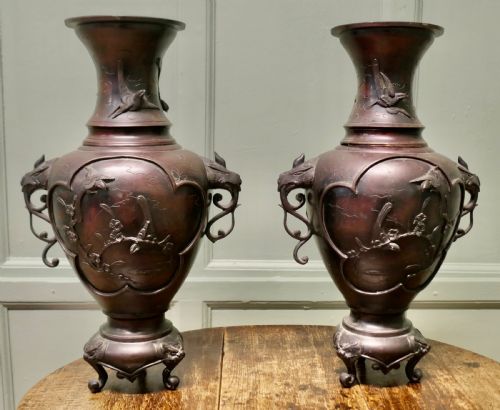
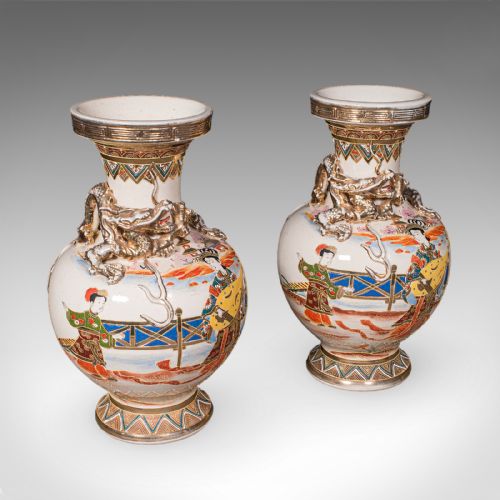
The selection here ranges from grand temple urns and monumental garden vessels down to pairs of bronze altar pieces and porcelain table lamps. Satsuma ceramic balusters and blue and white porcelain vessels appear frequently alongside cast bronze forms.
Victorian tastes brought many of these East Asian pieces into Western homes, blending exotic craftsmanship with period domestic interiors. Floor lamps and standard lamp conversions also feature among the heavier bronze and earthenware pieces.
Materials and construction
Bronze casting forms the backbone of the heavier metal pieces, often detailed with intricate champlevé enamel or gilded highlights. Artisans poured molten metal into complex moulds before chiselling fine scales and claw details onto the writhing dragon bodies.
Porcelain and earthenware vessels rely on careful throwing and hand-painting underglaze blues, famille rose enamels, or polychrome Satsuma glazes. Ceramic pieces require precise kiln firing to fix the detailed mythological scenes without warping the tall baluster or moon flask shapes.
Dragon Motif Vase Retail Price Guide 2026
Typical asking prices for dragon motif vase among the pieces listed under this phrase on Sellingantiques today, from the lower quarter to the upper quarter. They describe what is for sale here now, not the wider market.
Listings feature bronze, porcelain, earthenware, and champlevé enamel across Chinese and Japanese aesthetic traditions.
Markers of execution
Quality rests in the crispness of the dragon's relief and the depth of the metal chasing or ceramic pigment application. Finer pieces display confident, fluid brushwork on porcelain and sharp, undercut casting on bronze rather than soft, blurred details.
The weight and balance of the vessel, especially in monumental garden urns and heavy altar bronzes, indicate the substance of the original manufacture. Intact enamel work and well-preserved gilding or gold leaf elevate the standing of any piece.
The Dragon Motif Vase Glossary
- Baluster
- A vase form with a rounded body that tapers toward the base and flares at the neck. This classic shape provides a generous surface for wrapping dragon motifs.
- Satsuma
- A type of Japanese earthenware featuring a pale, ivory-crackled glaze decorated with polychrome enamels and gilding. These ceramics often depict detailed narrative scenes alongside mythical beasts.
- Champlevé
- An enamelling technique where troughs are dug into a metal surface and filled with vitreous paste before firing. This method creates vibrant, durable coloured patterns across bronze vessels.
- Famille Rose
- A palette of opaque rose-pink enamel introduced to Chinese porcelain decoration during the Qing dynasty. The soft pink tones contrast sharply with bolder cobalt blues and greens.
- Moon Flask
- A flattened circular flask form set upon a small base, sometimes fitted with twin handles. The broad flat faces suit elaborate painted dragon compositions.
Dragon Motif Vase: Frequently Asked Questions
What periods do these vases come from?
The pieces span the nineteenth and early twentieth centuries, capturing late Qing dynasty China and the Japanese Meiji period. Victorian trade brought many of these works westward.
Later adaptations into lamps often date to the early decades of the twentieth century, reflecting ongoing domestic enthusiasm for East Asian design.
How do I care for bronze and enamel?
Bronze requires very little intervention beyond occasional dusting with a soft, dry cloth to protect the natural patina. Avoid harsh chemical cleaners that strip the historic finish.
Enamelled and ceramic surfaces should similarly be kept away from abrasive materials. Handle heavy altar pieces with two hands, supporting the base rather than the rim.
Are these pieces functional for water?
While many started as temple vessels, garden urns, or altar vases, their age and material composition demand caution. Antique bronzes and antique ceramics can develop hairline fractures or porous seals over time.
It is generally wiser to display them dry or utilise a hidden interior liner if holding fresh stems.
How do I distinguish Chinese from Japanese pieces?
Chinese examples often utilise deep blue and white underglaze painting, heavy famille rose enamels, or substantial bronze casting. The dragon motifs tend to be fierce and imperial in design.
Japanese Meiji pieces frequently show intricate Satsuma earthenware with elaborate crackled glazes, or bronze work featuring meticulous surface chiselling and distinct signatures.