

Asian Ceramic Vase
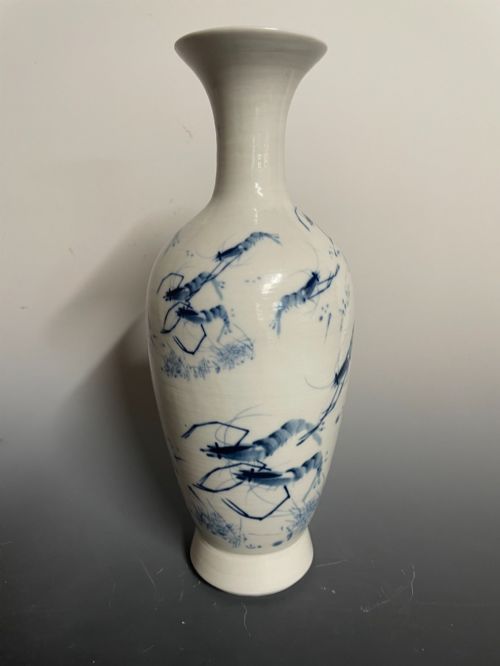
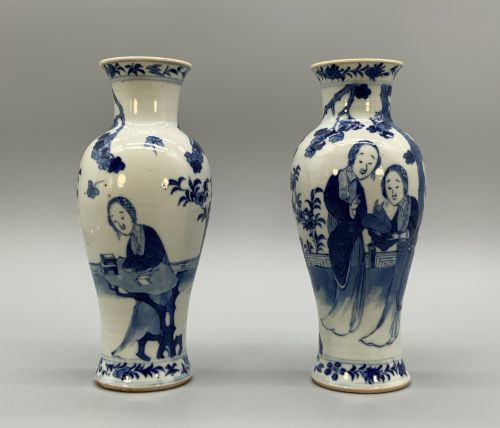
An asian ceramic vase brings centuries of East Asian kiln craft into a room, spanning delicate blue and white porcelain and heavily detailed Satsuma earthenware.
Asian Ceramic Vase
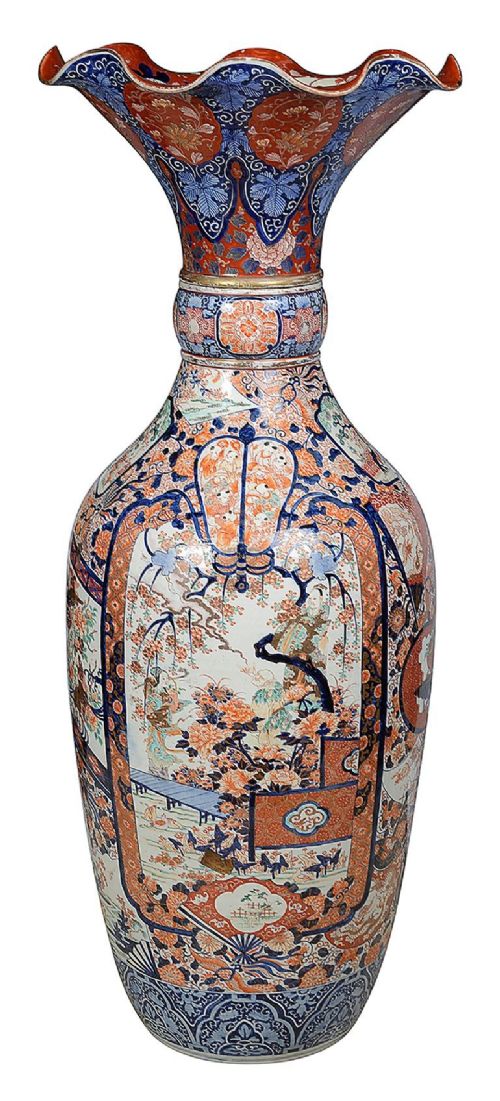
An asian ceramic vase encompasses centuries of production from Chinese and Japanese kilns, taking forms from ginger jars and baluster vessels to large floor-standing pieces. The selection on this page leans heavily toward Japanese Satsuma and Imari wares from the Meiji period alongside Chinese blue and white and famille verte porcelain. Buyers encounter both traditional display vessels and pieces subsequently converted into table lamps.
Vessels range from modest nineteenth-century Kutani table shapes to monumental floor-standing Imari jars and covers dating back through the seventeenth century. Makers utilised earthenware, porcelain, and stoneware, frequently applying glazes, enamel, and occasionally wood or brass mounts. Many examples reflect historical export markets, combining traditional domestic aesthetics with forms intended for European interiors.
How they were made
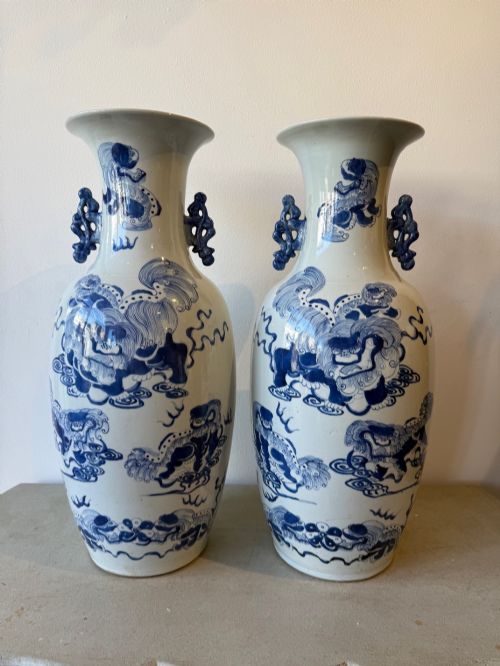
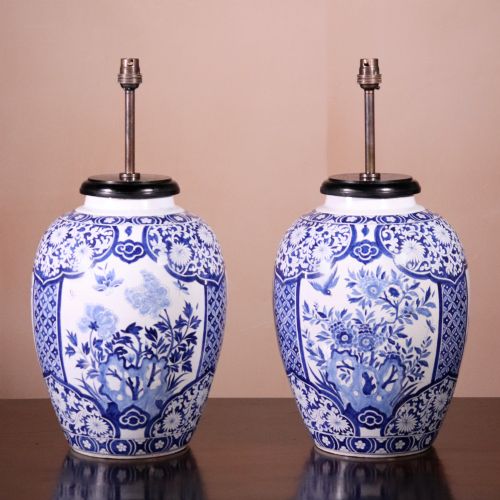
Potters shaped porcelain and earthenware bodies on the wheel or pressed them into moulds before applying underglaze pigments, notably cobalt blue for traditional Chinese and Arita wares. Artisans then added overglaze enamels, gilt, and sometimes gold leaf, firing the pieces multiple times to fix the colours and metallic accents.
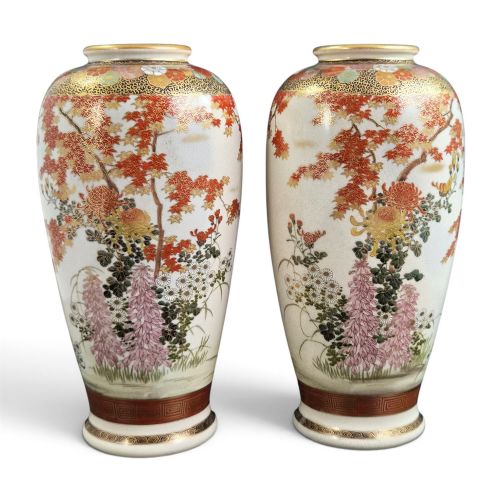
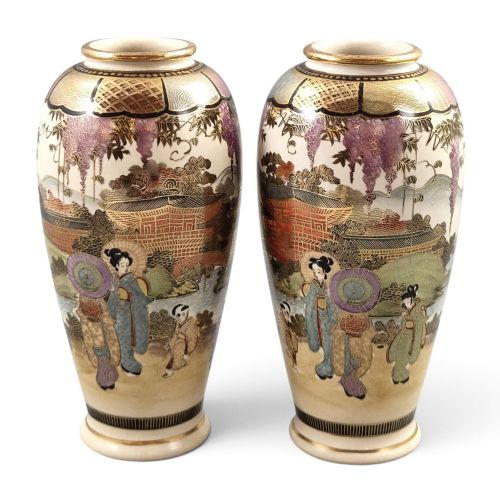
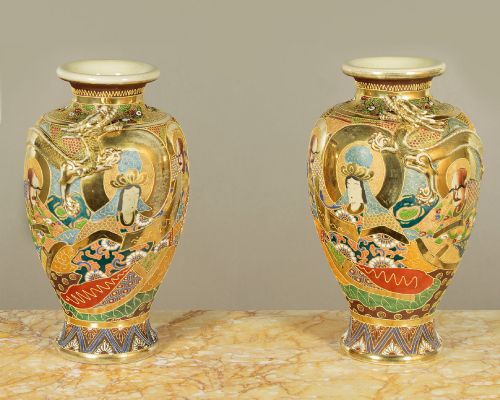
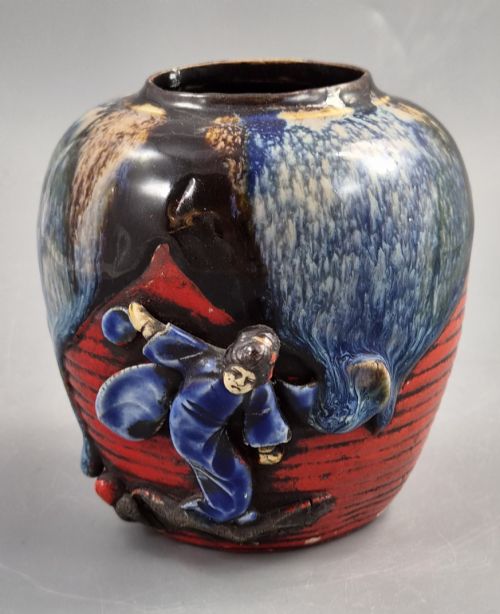
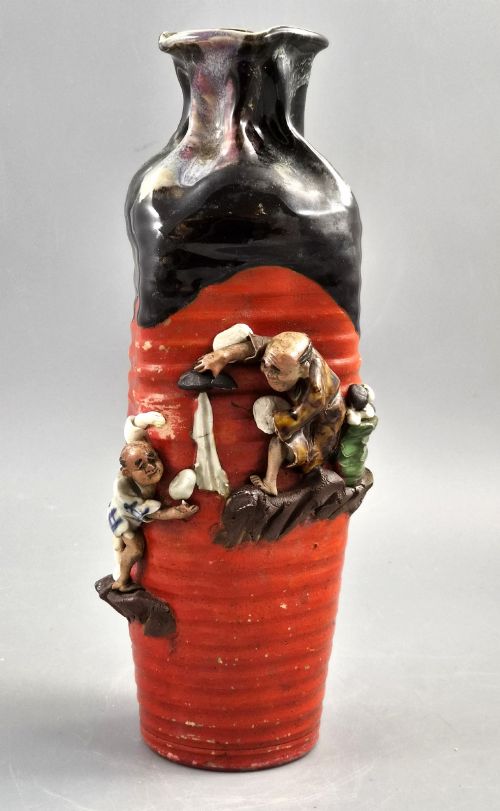
Specialised workshops produced distinct surface effects, such as the crackled creamy glaze characteristic of Satsuma pottery or the textured, applied figures seen on Sumida Gawa pieces. Hardwood stands, brass fittings, and wooden lids frequently complemented the ceramic bodies, particularly on items adapted for domestic lighting during later periods.
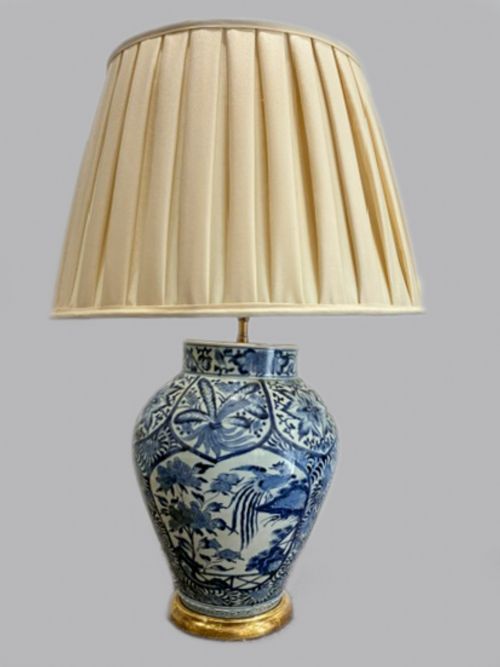
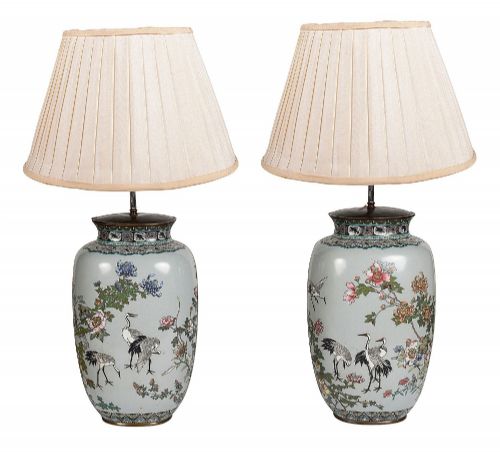
Several traditional lidded jars and vases on this page have been converted into table lamps.
What varies in quality
Quality rests upon the crispness of the initial throwing or moulding and the precision of the hand-painted decoration, where fine brushwork distinguishes workshop output from standard commercial production. The depth and clarity of the glaze, the richness of the gilding, and the complexity of figural or floral motifs dictate the standing of an individual vessel.
Signed works from notable Kyoto workshops or recognised artists command attention through superior control over kilns and enamels. The survival of original covers, matching pairs, and complementary hardwood stands also influences the desirability and completeness of the piece.
Maruni Kobe·Shozan·Inoue Ryōsai·Manpei·Kinkōzan·Hotoda·Makuzu Kozan·Kinzan
The Asian Ceramic Vase Glossary
- Imari
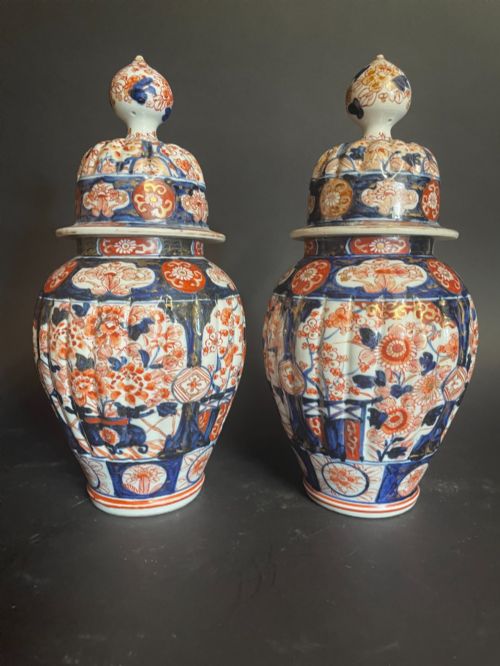
- A style of Japanese porcelain originating from Arita, typically decorated in underglaze blue, iron-red, and gilt. These pieces gained immense popularity across European export markets during the seventeenth and eighteenth centuries.
- Satsuma
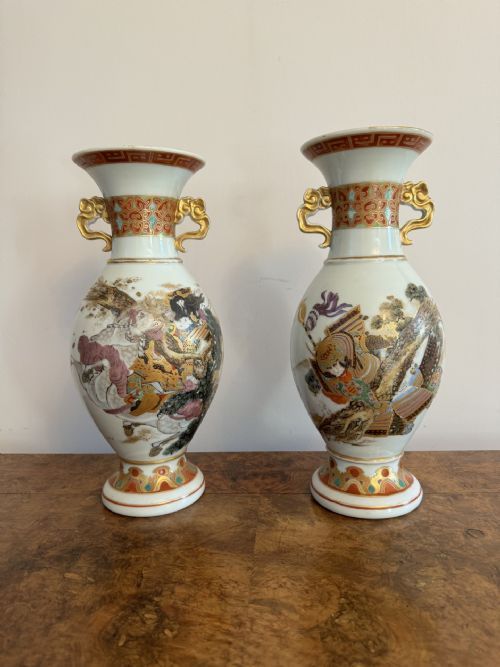
- An earthenware pottery type featuring a pale, ivory-coloured crackle glaze, usually heavily decorated with polychrome enamels and gilding. Production expanded significantly during the Meiji period for international trade.
- Famille Verte
- A Chinese porcelain palette dominated by green enamel overglaze, developed primarily during the Kangxi reign. Artisans combined this dominant green with iron-red, yellow, and blue pigments to create detailed pictorial scenes.
- Sumida Gawa
- A distinct Japanese pottery style characterised by thick, flowing flambe glazes and heavily modelled, applied figures climbing the exterior. These tactile pieces often emerged from Tokyo kilns during the late Meiji and Taisho periods.
- Kutani
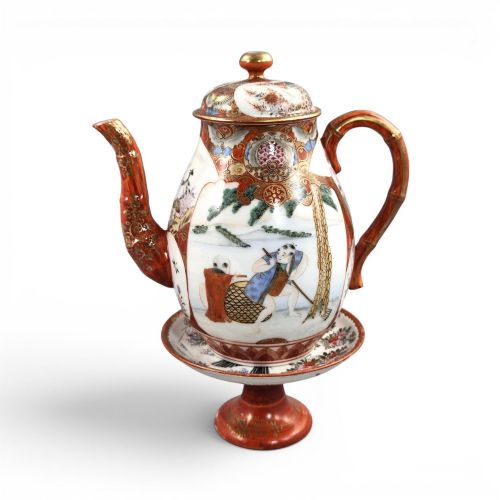
- Japanese coloured porcelain and stoneware originating from Ishikawa prefecture, known for bold designs and extensive use of iron-red and gold. Antique Kutani pieces frequently depict figurative panels alongside intricate floral borders.
Asian Ceramic Vase: Frequently Asked Questions
How do I date an antique Asian ceramic vase?
Dating relies on combining stylistic evidence, kiln marks, glaze characteristics, and historical export periods. Meiji pieces often display distinct registration or workshop signatures, while earlier dynastic items show specific underglaze blue tones and potting techniques.
Examining the foot rim and the wear on the base provides further clues regarding age. Comparing the decorative palette against known production eras helps narrow down the decade of manufacture.
Were these vases made for export?
Many surviving examples were explicitly produced for Western markets following the reopening of international trade routes during the nineteenth century. These export pieces often adapted traditional Japanese and Chinese motifs to suit European domestic interiors.
Earlier items, such as seventeenth-century jars, also travelled via trade companies to European royal courts and wealthy households. This history means many pieces exhibit a blend of Eastern craftsmanship and Western functional adaptation.
What is the difference between Satsuma and Imari?
Satsuma is an earthenware pottery featuring a warm, crackled ivory glaze decorated with dense enamel and gold leaf. Imari is a hard-paste porcelain characterised by a distinct palette of underglaze cobalt blue, iron-red, and extensive gilding.
While Satsuma focuses on intricate figurative and nature scenes across textured surfaces, Imari relies on crisp geometric and floral patterns on a white porcelain ground. Their weight, resonance when tapped, and underlying ceramic bodies differ entirely.