



Antique Bronze Compote
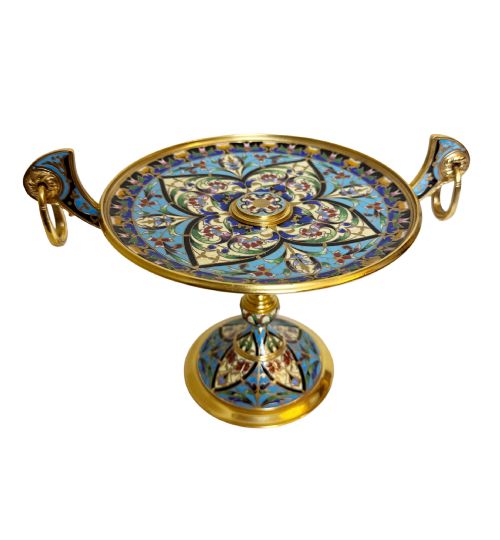
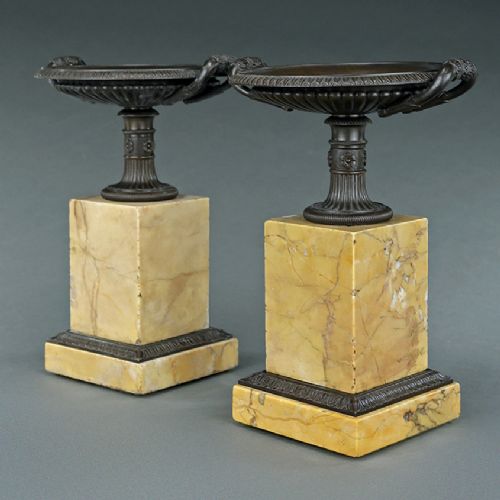
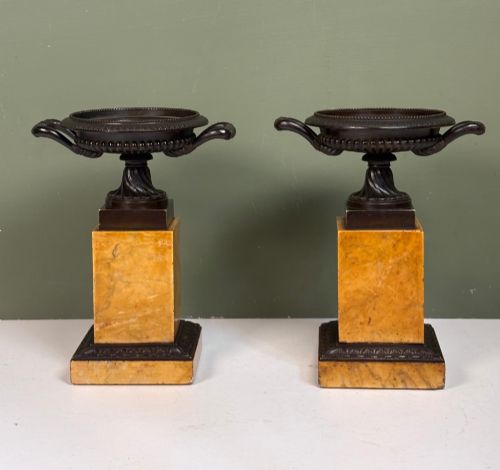
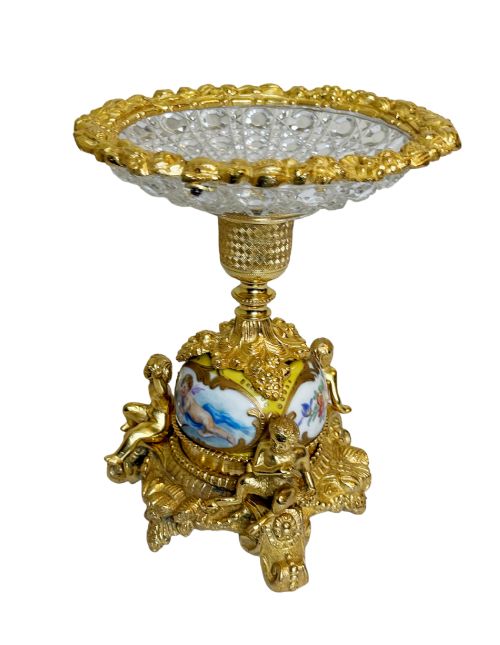
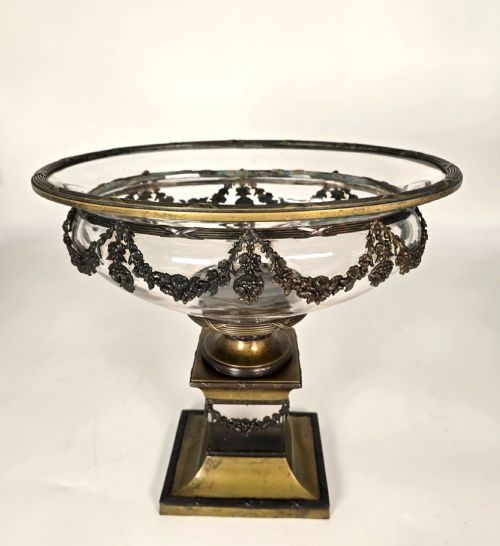
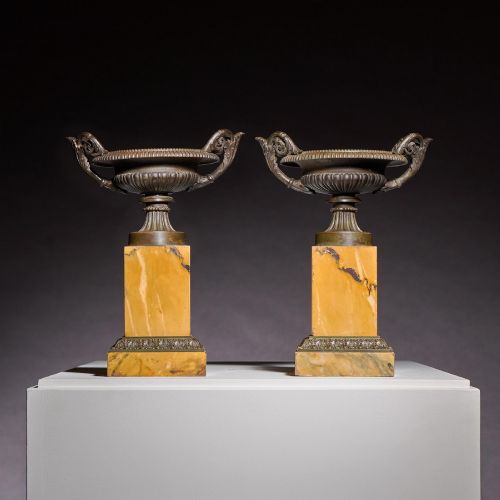
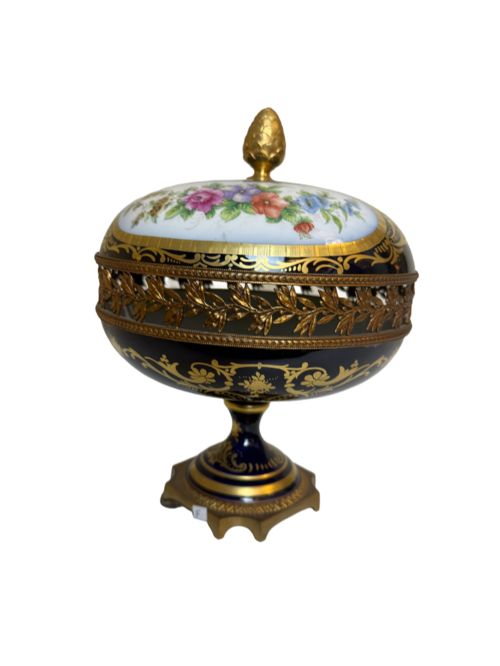
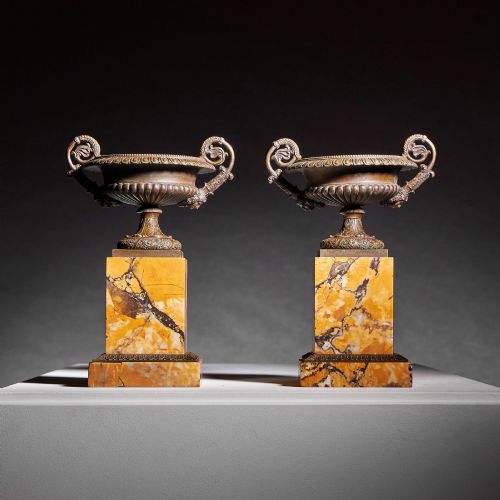
An antique bronze compote is a raised display vessel for fruit or flowers, merging metalwork with glass, marble or porcelain.
Antique Bronze Compote
An antique bronze compote functions as a decorative centrepiece or tazza, elevated on a formal stand for display upon a dining table or sideboard.
The pieces on this page span the Regency, Victorian and late nineteenth century periods, originating predominantly from French workshops alongside examples from China and Japan.
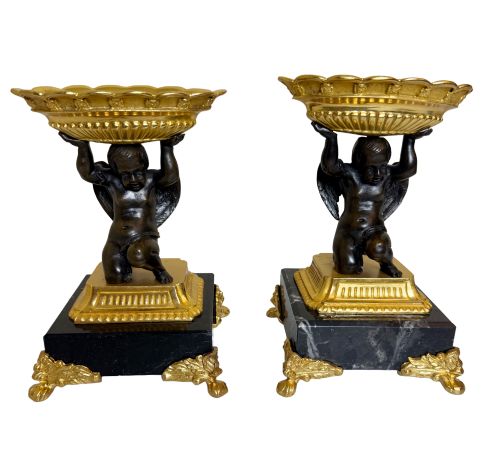
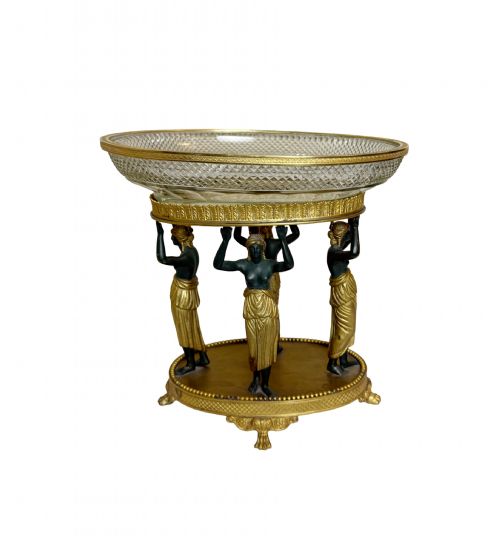
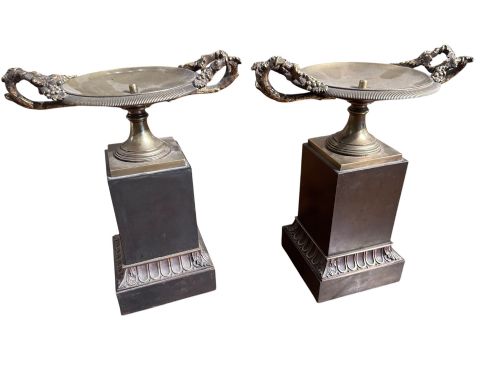
Forms range from simple patinated bronze bowls to elaborate multi-material comports incorporating cherubs, mermen and classical mounts.
Materials and construction
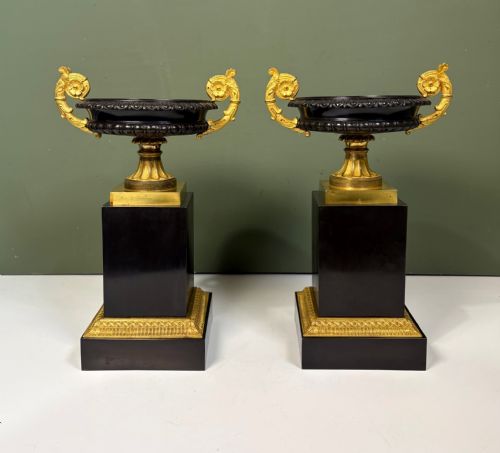
Foundries cast the metal components in bronze, utilising gilt bronze or ormolu finishes to create bright contrast against darker patinated sections.
Makers integrated contrasting natural elements into the metal framework, combining Siena marble, green onyx, banded agate, malachite and blue John with cut crystal or porcelain bowls.
Decorative surface details involve champlevé and cloisonné enamel work, alongside inset semi-precious stone cabochons and mother-of-pearl dishes.
Assessing quality
The refinement of the cast metalwork dictates the distinction between standard production and exceptional examples, particularly in the crispness of figural details like cherubs and mermen.
The selection of secondary materials elevates a piece, separating simple bronze dishes from elaborate compositions utilising hardstones, high-grade porcelain and heavy marble bases.
Christofle·Christofle et Cie·Samson
The Antique Bronze Compote Glossary
- Compote
- A raised bowl used for serving fruit or sweets, identical in function to a comport or tazza.
- Ormolu
- Finely ground high-carat gold applied to a bronze base using a mercury amalgamation technique, common in French decorative arts.
- Champlevé
- An enamelling technique where troughs are dug into the metal surface and filled with vitreous paste before firing.
- Grand Tour
- Cultural travel undertaken by wealthy young Europeans in the eighteenth and nineteenth centuries, yielding classical souvenir bronzes and marbles.
Antique Bronze Compote: Frequently Asked Questions
What is an antique bronze compote used for?
These vessels served primarily as decorative centrepieces on dining tables or sideboards, holding fruit, flowers or sweetmeats during formal meals.
Today they function as sculptural display objects in domestic interiors, placed on mantels, tables or cabinets to catch the light.
How do I identify French Empire style?
French Empire pieces draw heavily on classical Roman, Greek and Egyptian motifs, featuring strict symmetry, laurel wreaths and patinated bronze paired with bright ormolu.
Look for architectural lines, winged figures and military trophies that reflect the taste of the early nineteenth century.
What is the difference between a compote and a tazza?
In historical terms, both refer to a raised shallow vessel on a foot or pedestal, though compotes often feature deeper bowls intended for fruit.
Maker terminology varied by region and period, with French pieces frequently described as comports or centrepieces.
How should I clean bronze and ormolu?
Dust gently with a soft, dry brush to prevent the accumulation of dirt in recessed crevices without disturbing the metal surface.
Avoid chemical polishes and water, which can strip gilding from ormolu or damage porous stone and enamel elements.