


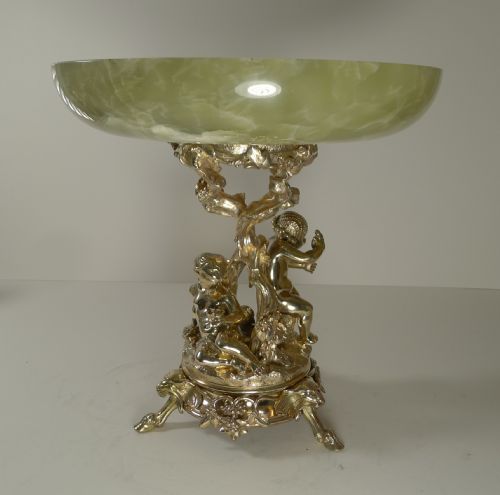

Napoleon III Centrepiece
A Napoleon III centrepiece brings dramatic Second Empire presence to a dining table or console, combining heavy gilt bronze with enamel, marble, and crystal.
What They Are
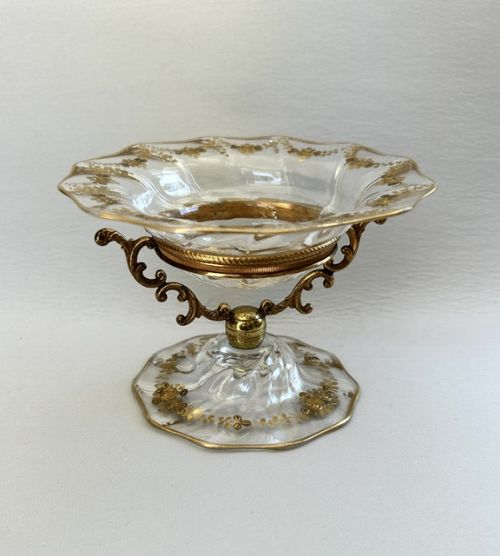
When you search for a Napoleon III centrepiece, you are looking at ornate table vessels and tazzas created during the late nineteenth century in France. These pieces typically take the form of bowls, trays, or footed dishes designed to sit proudly in the middle of a room.
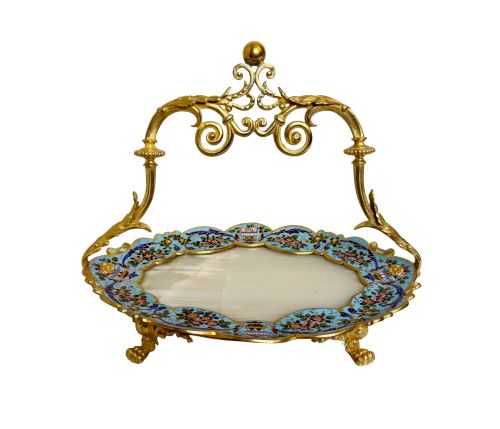
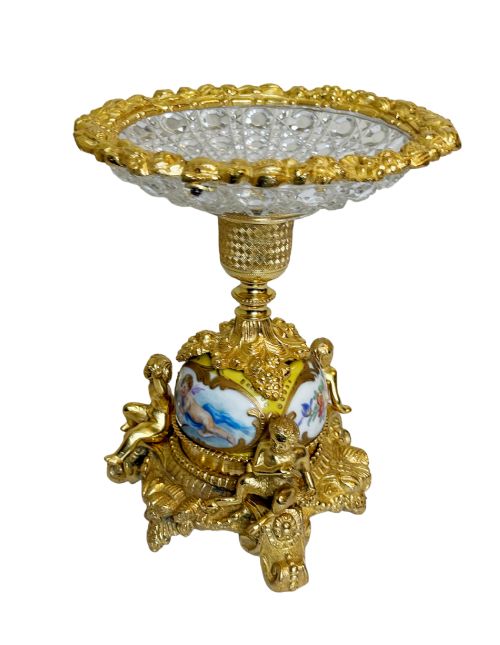
The versions most commonly met on this page combine cast metal with decorative inserts of onyx, marble, or cut crystal. Makers drew heavily upon French Rococo Revival styles, incorporating figures such as cherubs and mermen into the metalwork.
Originating predominantly from French workshops in the decades spanning eighteen seventy to eighteen ninety, these items reflect the lavish tastes of the Second Empire. They function as both decorative objects and functional display vessels.
How They Were Made
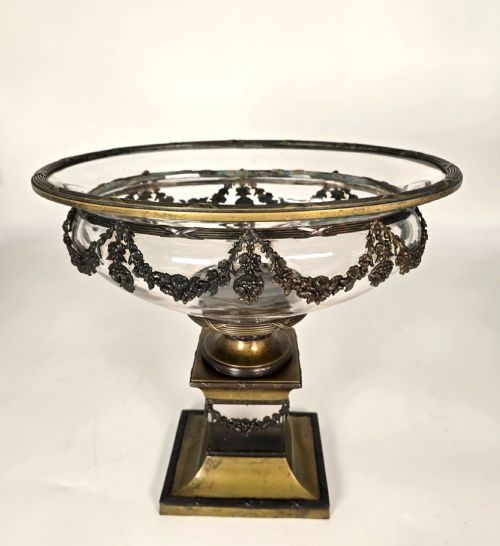
The structural frames rely upon cast bronze, often treated with a gilt or silvered finish, alongside ormolu details. Artisans shaped these metals into complex, sculptural forms featuring mythological creatures, scrolling foliage, and cherubs.
Vessel bodies and bases incorporate contrasting natural materials including green onyx, white marble, and heavy cut crystal. Many examples feature champlevé enamel work, where coloured glass paste is fused into recessed metal channels.
Components were assembled mechanically using threaded posts and screws, allowing diverse materials like glass and stone to be fitted securely within the bronze framework.
Retail Price Guide 2026
Typical UK retail prices for napoleon iii centrepiece, calculated from the Sellingantiques database of over a million retail prices indexed since 2003. This retail price guide relies exclusively on Sellingantiques data; no external sources or auction records are used, so the figures do not describe the wider market.
Several pieces feature earnest little mermen and cherubs keeping watch over your fruit.
What Varies in Quality
Material selection dictates the upper tier of the range, where flawless cut crystal, genuine hardstones like green onyx, and intricate polychrome champlevé enamel are employed. Lesser examples utilise simpler cast mounts with minimal decorative enrichment.
The integration of design elements also separates the tiers, with superior pieces displaying harmonious proportions between the metal mounts and the central crystal or stone bowls.
The Napoleon III Centrepiece Glossary
- Champlevé Enamel
- A technique where troughs or cells are hollowed out of a metal surface and filled with vitreous enamel before firing. This method creates rich, colourful patterns set flush against the bronze body.
- Ormolu
- A metallic alloy resembling gold, applied as a surface finish to bronze mounts and decorative hardware. It provides a bright, durable golden lustre characteristic of nineteenth-century French luxury goods.
- Tazza
- A shallow saucer-like dish mounted on a stem and foot, used historically for serving fruit or display. In this period, they function purely as decorative centrepieces.
- Gilt Bronze
- Bronze that has been coated with a thin layer of gold or gold-colored alloy to impart a rich metallic sheen. This finish protects the underlying metal while offering a luxurious appearance.
- Green Onyx
- A translucent banded variety of chalcedony displaying green tones, utilised for the bowls and bases of nineteenth-century decorative wares. It provides a cool, polished stone contrast to the warm gilt metal.
Frequently Asked Questions
How were these centrepieces used?
These objects served primarily as decorative focal points for grand tables, often holding fruit, flowers, or simply standing alone as sculptural art.
They were statement pieces meant to showcase the host's taste and wealth during formal dining occasions.
How do I style one at home?
Place a centrepiece on a large dining table, a heavy wooden sideboard, or a marble console where its reflective bronze and crystal can catch the light.
Keep surrounding decor minimal to allow the complex casting and coloured enamel details to remain the visual focus of the room.
How do I date these pieces?
Dating relies upon stylistic markers such as the presence of French Rococo Revival motifs, the specific style of champlevé enamel, and materials like green onyx.
Most surviving examples date from the eighteen seventies through the eighteen nineties, often corresponding to the late nineteenth century.