

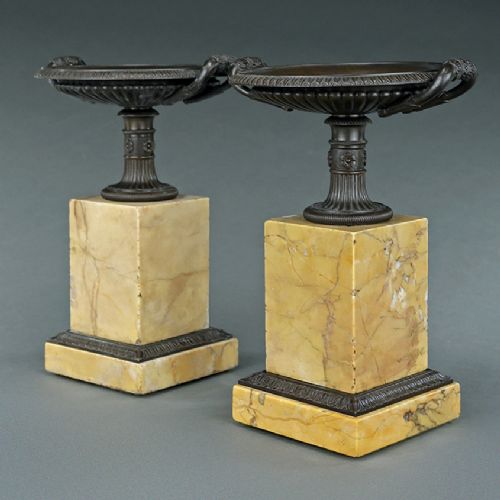
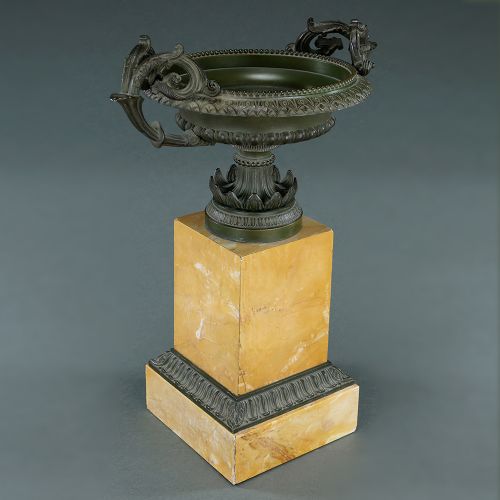
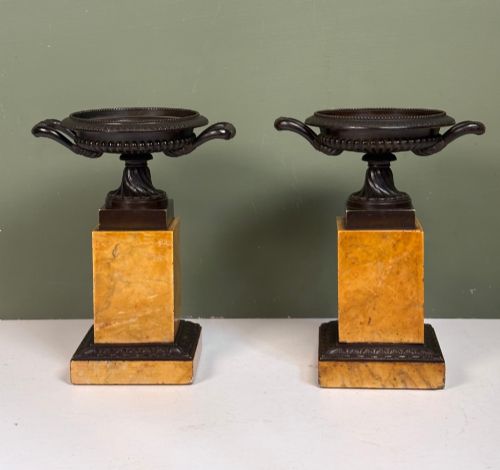
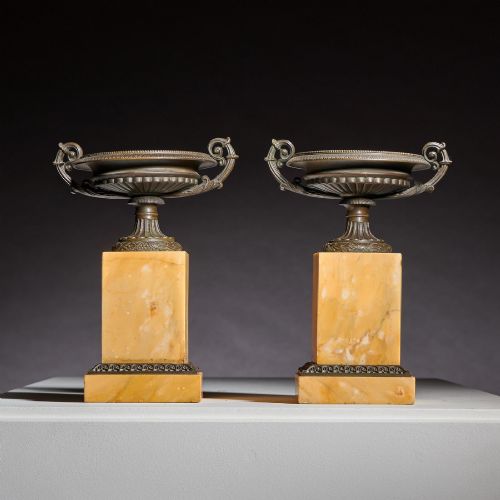



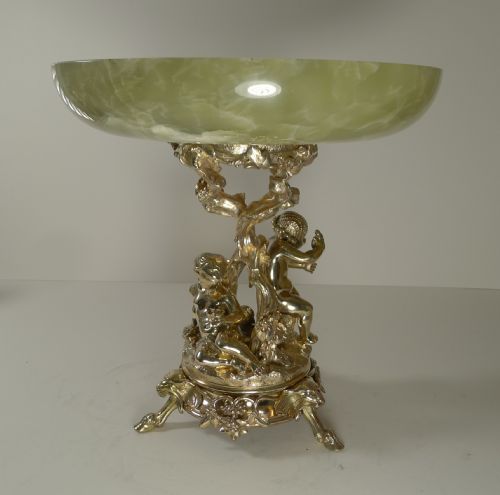
Empire Bronze Tazzas
Empire bronze tazzas combine classical form with rich patination, offering striking neoclassical display vessels for sophisticated interiors.
Empire Bronze Tazzas
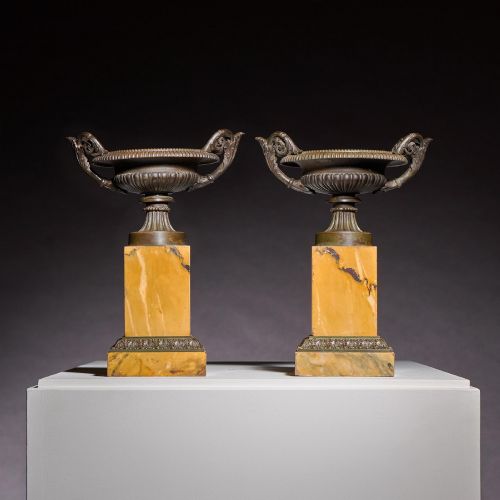
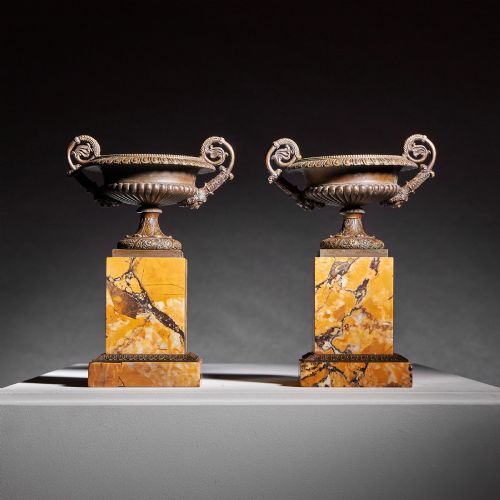
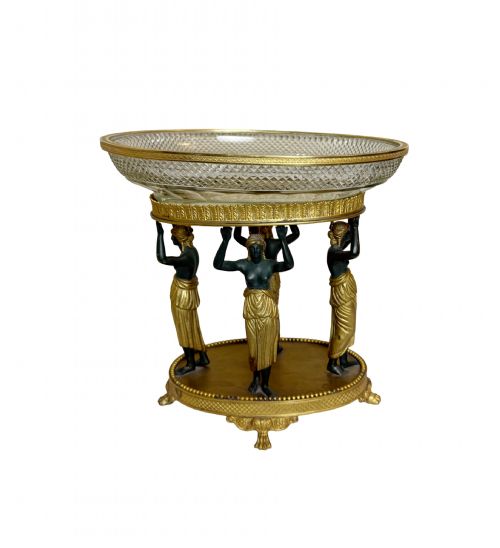
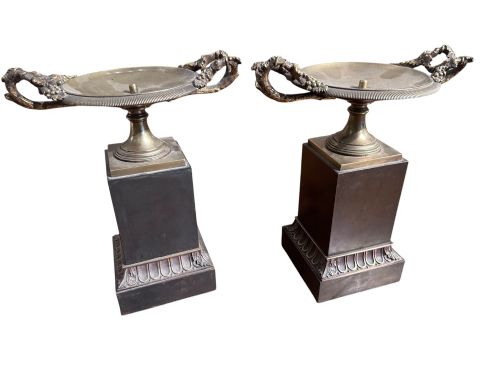
These empire bronze tazzas are classical decorative vessels modelled on ancient forms, combining shallow bowls with substantial pedestals and bases. When you search for empire bronze tazzas, you encounter pieces designed for grand interior display, originating primarily from the nineteenth century.
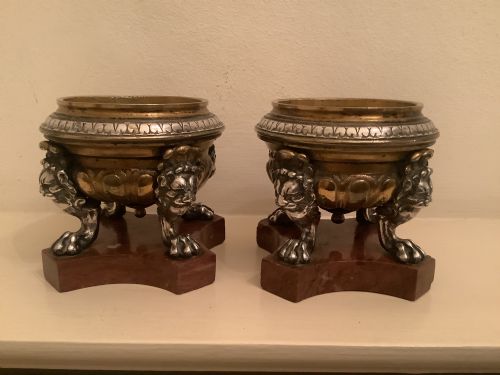
The selections on this page encompass various interpretations of the French Empire and Regency styles. You will find matched pairs and individual pieces utilising contrasting materials for visual impact.
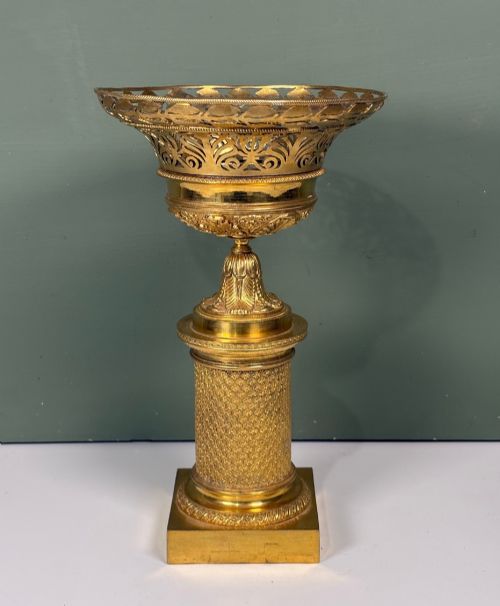
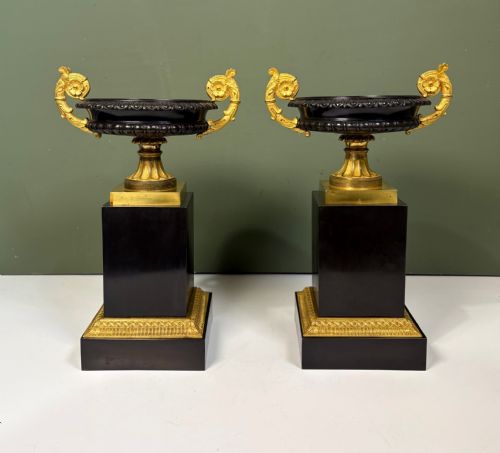
Most examples merge patinated bronze bowls with gilt bronze or ormolu mounts and marble plinths. Forms often integrate classical motifs, echoing Grand Tour souvenirs and formal nineteenth-century decorative schemes.
How they were made
Maker workshops utilised traditional metalcasting techniques to produce the primary bronze components, employing both dark patination and mercury gilding. The resulting ormolu and gilt bronze details provide sharp contrast against the deep brown or black surfaces of the cast metal.
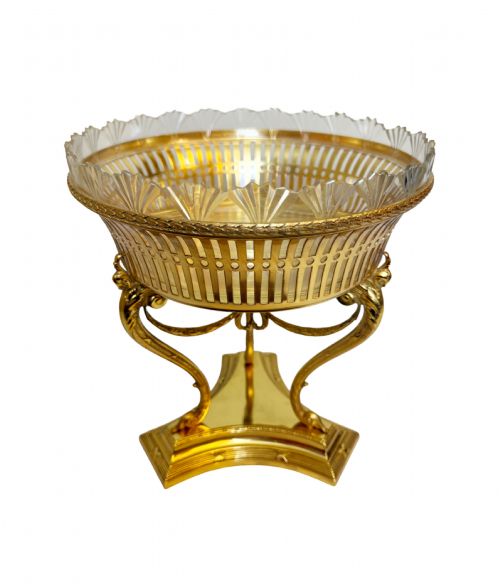
Many items incorporate turned marble elements, utilising Siena marble, black marble, and rouge marble for the bases and columns. Cut crystal and glass inserts occasionally form the central bowl, secured by fitted metal collars and decorative mounts.
Empire Bronze Tazzas Retail Price Guide 2026
Typical asking prices for empire bronze tazzas among the pieces listed under this phrase on Sellingantiques today, from the lower quarter to the upper quarter. They describe what is for sale here now, not the wider market.
Certain nineteenth-century makers ventured into abolitionist themes, naming decorative compotes after the 'Au Bon Sauvage'.
What varies in quality
The refinement of the casting and chasing separates standard production from exceptional examples. Superior items exhibit crisp detail in applied neoclassical ornaments and cleanly finished mounts.
The choice of secondary materials dictates the stature of the piece. Dense, finely figured marble bases and heavy fire-gilt ormolu elevate the overall presence beyond simpler cast-bronze compositions.
Christofle Paris
The Empire Bronze Tazzas Glossary
- Tazza
- A shallow ornamental cup or bowl mounted on a stem and foot, traditionally used for display. These vessels trace their lineage back to classical antiquity.
- Ormolu
- Finely ground high-carat gold mercury-gilded to a bronze object, creating a brilliant golden finish. This technique defines much of the French Empire decorative vocabulary.
- Patinated bronze
- Bronze treated with chemical solutions to produce a controlled surface colour, typically dark brown or black. This finish contrasts with bright gilded highlights.
- Grand Tour
- A cultural journey undertaken by wealthy young Europeans through France and Italy, returning with classical art and decorative objects. Many nineteenth-century tazzas commemorate these travels.
- Siena marble
- A distinctive yellow Italian marble featuring dark grey or purple veining, frequently utilised in Regency and Empire decorative arts. It provides a warm, colourful base for bronze mounts.
Empire Bronze Tazzas: Frequently Asked Questions
What were empire bronze tazzas used for?
These decorative vessels served primarily as formal centrepieces and ornamental displays on sideboards, mantelpieces, and libraries.
They functioned as aesthetic statements rather than practical tableware, reflecting classical taste in nineteenth-century interiors.
How do I style these tazzas at home?
Place matched pairs symmetrically on large console tables, chests of drawers, or mantels where their classical proportions can anchor the surrounding space.
Allow sufficient clearance around each piece to highlight the contrasting tones of the bronze, marble, and gilt metal.
How do I identify French Empire style?
French Empire pieces rely on strict symmetry, militaristic motifs, and direct references to ancient Greek, Roman, and Egyptian art.
Look for austere classical profiles combined with lavish use of contrasting patinated bronze and bright ormolu mounts.
What is the difference between ormolu and bronze?
Bronze is the base copper alloy used to cast the structural body and sculptural elements of the object.
Ormolu refers specifically to the applied layer of gold amalgam that adds brilliant metallic highlights to the patinated bronze framework.