


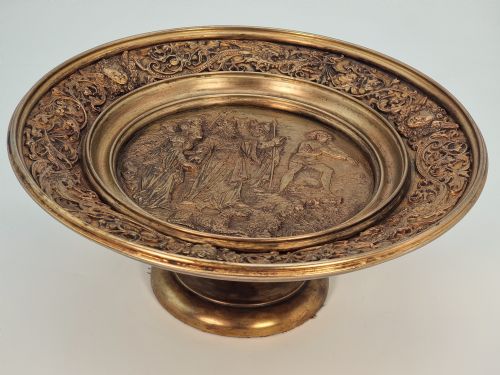


Bronze Pedestal Dish
These bronze pedestal dish selections offer raised display vessels uniting cast metalwork with marble, hardstones, and porcelain.
Bronze Pedestal Dish
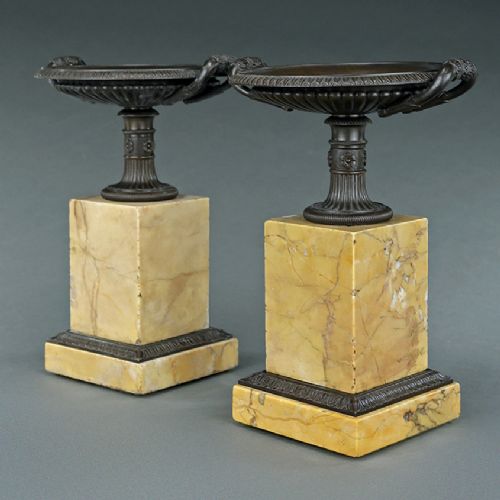
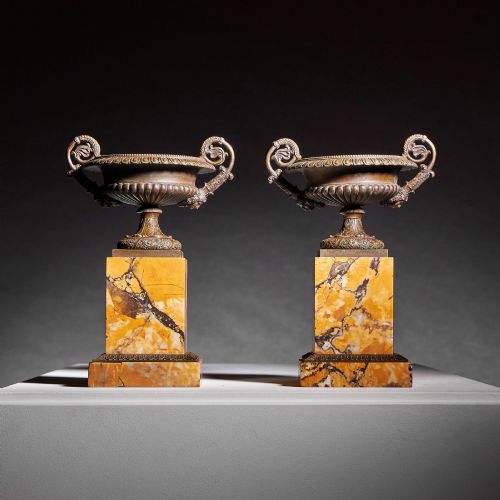
A bronze pedestal dish elevates a shallow bowl, tazza, or comport above a foot or column to showcase fruit, sweets, or decorative details. These pieces function as centrepieces on dining tables and consoles, drawing the eye through their elevated silhouettes.
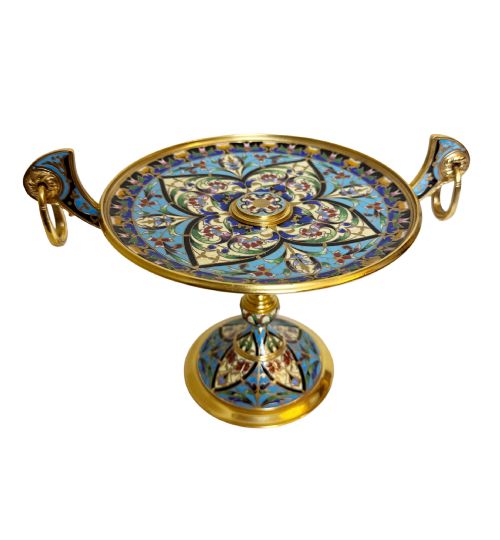
Most examples found in this range span the nineteenth century, including French Empire, Regency, and Victorian interpretations alongside Japanese Edo period cloisonné and Aesthetic movement designs. Makers drew upon classical tazza forms, mounting shallow basins upon cast shafts.
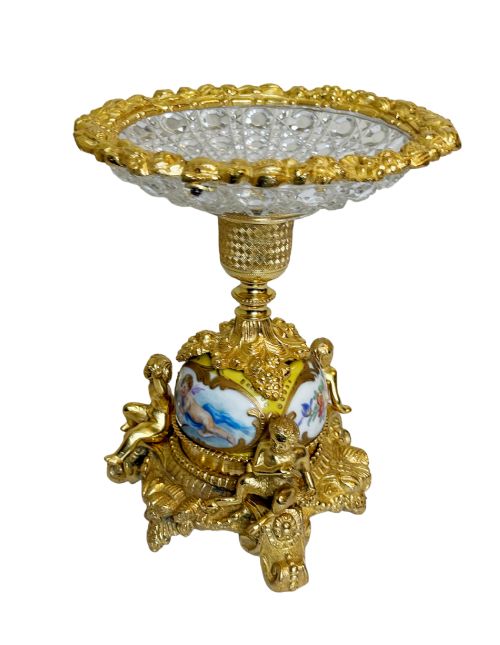
Compositions range from simple patinated bronze bowls to elaborate garnitures set with enamel plaques, porcelain panels, and cabochons of agate, malachite, and Blue John.
Materials and construction
Foundry casting forms the structural core of each bronze pedestal dish, utilising patinated bronze, gilt bronze, or ormolu to shape the feet, stems, and mounts. Metalworkers chased and finished these surfaces by hand to sharpen the cast details.
Basins combine metal frames with inset materials, incorporating cut crystal, Limoges porcelain, mother-of-pearl, and champlevé or cloisonné enamel. Stones such as banded agate and malachite are shaped and polished to fit within the metal borders.
Cherubs frequently peer over the rims of nineteenth-century tazzas, keeping a watchful eye on the fruit or sweets.
Quality variations in bronze pedestal dishes
The standard of a bronze pedestal dish rests upon the crispness of the metal casting and the depth of the subsequent chasing. Superior examples retain sharp relief in ornament, whereas lesser pieces display softened contours from worn or secondary moulds.
Material selection dictates value at the upper end, where natural hardstones like Blue John and banded agate replace standard glass or plain metal. The integration of hand-painted enamel plaques or fine porcelain adds significant complexity to the construction.
Ferdinand Preiss
The Bronze Pedestal Dish Glossary
- Tazza
- A shallow saucer-shaped vessel mounted upon a stem and foot, traditionally used for serving food or displaying small objects. The form derives from classical antiquity and remains central to nineteenth-century decorative metalwork.
- Ormolu
- Gilded brass or bronze produced by applying an amalgam of gold and mercury to a base metal, then heating to drive off the mercury. This technique creates a durable golden finish characteristic of French decorative objects.
- Cloisonné
- An enamelling technique where metal strips are soldered to a metal base to form compartments, which are then filled with vitreous paste and fired. The resulting surface displays intricate coloured patterns divided by thin wire outlines.
- Comport
- A large standing dish or bowl used on a dining table for fruit or dessert. These pieces share the elevated format of pedestal dishes but often feature wider, shallower basins.
Bronze Pedestal Dish: Frequently Asked Questions
What is a bronze pedestal dish used for?
These elevated vessels served primarily as table centrepieces for displaying fruit, confectionery, or decorative items during nineteenth-century dining.
Today they function as standalone decorative objects on sideboards, mantels, or tables, where their raised profiles draw attention to the materials of the bowl.
How do I distinguish ormolu from gilt bronze?
Ormolu specifically denotes objects finished with mercury gilding, a historic technique that produces a deep, warm golden lustre. Gilt bronze often covers a broader range of applied gold finishes used across the nineteenth century.
Both terms describe cast bronze surfaces treated to simulate solid gold, though close inspection under magnification reveals the method of application.
What periods do these pieces come from?
The selection spans the nineteenth century, encompassing Regency, Victorian, and French Empire styles alongside Japanese Edo period works.
Manufacturing dates stretch from the early nineteenth century through to Art Deco creations of the early twentieth century.
How should I clean a bronze pedestal dish?
Dusting with a soft, dry cloth is sufficient for routine maintenance of patinated and gilt surfaces. Avoid commercial metal polishes, as they strip away the historic gilding and patination.
Inseminated stones like malachite or agate require gentle wiping with a damp cloth, keeping moisture away from metal mounts.