
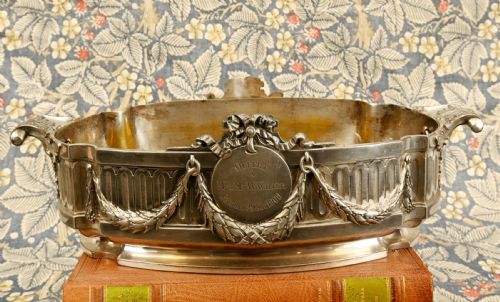


French Decorative Metal Bowl
A French decorative metal bowl brings nineteenth-century neoclassical and empire refinement directly to a table centrepiece.
French Decorative Metal Bowl
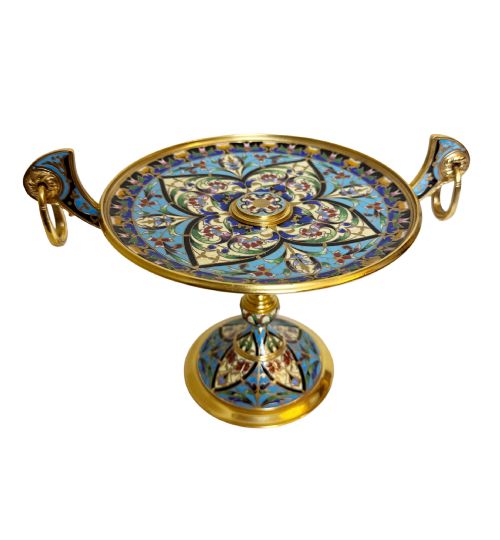
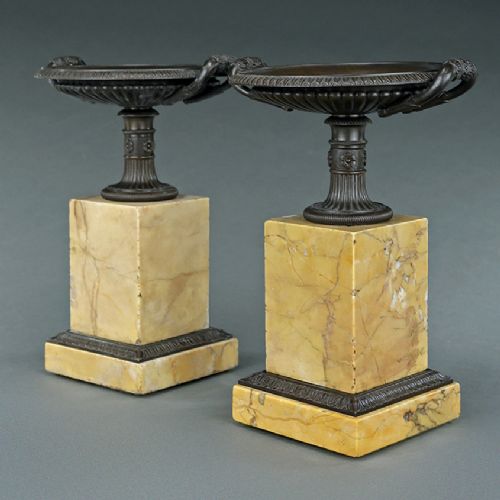
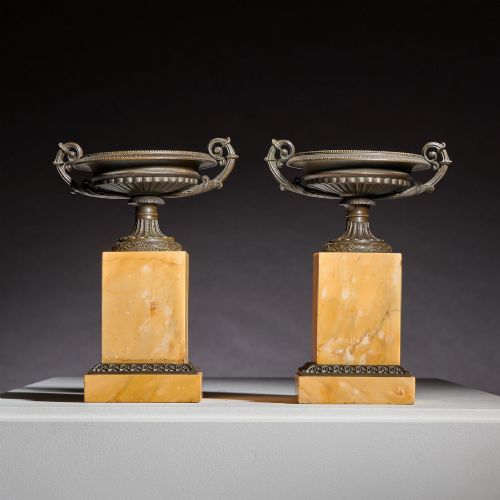
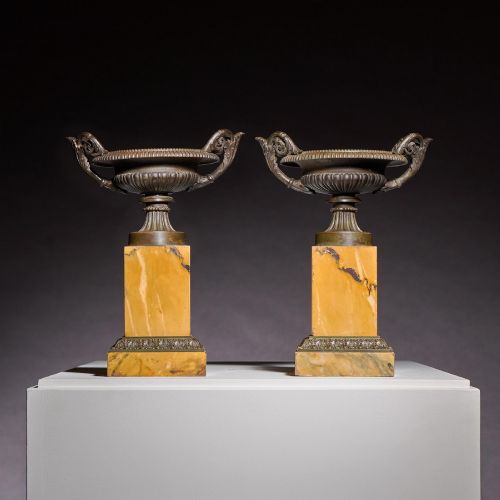
When you search for a french decorative metal bowl, you encounter a specialised selection of nineteenth-century tazzas, planters, jardinieres, and centrepieces. These objects range from compact library tazzas to large grand tour pairs intended for display on prominent tables.
The versions most frequently met on this page date across the nineteenth century, including specific years like eighteen hundred, eighteen fifty, eighteen seventy, eighteen eighty, and eighteen ninety. Forms take shape primarily as tazzas, ornamental urns, and centrepieces.
Originating within French stylistic traditions such as empire, neoclassical, second empire, and chinoiserie, these decorative metal bowls serve as striking focal points for a room. Their construction frequently incorporates classical motifs, winged cherubs, and architectural proportions.
How they were made
Makers utilised cast bronze, patinated bronze, gilt bronze, and ormolu as the primary metallic foundations for these vessels. Techniques involved precise metal casting followed by surface gilding, patination, or silver plating to achieve distinct decorative finishes.
Many examples integrate natural stone elements, specifically pairing cast bronze and ormolu with siena marble, red marble, or solid marble plinths. Other workshops incorporated decorative glass, champleve enamel, cloisonne enamel, and Limoges enamel plaques into the metal framework.
Listings feature items spanning the nineteenth century, utilising bronze, marble, ormolu, silver plate, and enamel.
What varies in quality
The standard of ciselure and the crispness of the bronze chasing separate standard production from superior examples. Master metalworkers achieved exceptional depth and definition in cast figures like winged cherubs and classical foliage.
The combination of materials also dictates the calibre of the piece, particularly where rich ormolu meets figured siena marble or detailed enamel work. Pieces featuring intact fire gilding, complex champleve enamel, and well-matched marble bases occupy the highest tier.
The French Decorative Metal Bowl Glossary
- Tazza
- A shallow bowl or cup mounted on a stem and foot, frequently used as a centrepiece or decorative display object.
- Ormolu
- Finely ground high-carat gold applied to a bronze base using a mercury amalgamation technique, common in nineteenth-century French metalwork.
- Champleve
- An enamelling technique where troughs are carved into the metal surface and filled with vitreous enamel before firing.
- Cloisonne
- Enamelling created by soldering flat metal wires to a metal base to form compartments that hold coloured enamel paste.
- Jardiniere
- An ornamental receptacle designed to hold plants or flowers, often matching the materials of a table centrepiece.
French Decorative Metal Bowl: Frequently Asked Questions
What is a tazza used for?
A tazza served primarily as an ornamental centrepiece on dining tables, sideboards, or libraries during the nineteenth century. Wealthy households used them to display fruit, flowers, or simply as sculptural works of art.
In modern settings, these metal bowls function effectively as standalone decorative objects on consoles or coffee tables. Their elevated pedestals draw the eye and create vertical interest within a room scheme.
How do I identify French Empire metalwork?
French Empire pieces typically exhibit strong neoclassical influences inspired by ancient Greek and Roman design. Look for strict symmetry, classical architectural motifs, and patinated bronze contrasting with bright gilt bronze.
Subjects often include mythological figures, winged cherubs, and stylized acanthus leaves. The overall aesthetic feels formal, solid, and grand in proportion.
What is the difference between bronze and ormolu?
Bronze is an alloy of copper and tin that forms the structural body of many nineteenth-century French decorative objects. It can be left with a dark patinated finish or treated with further processes.
Ormolu refers specifically to the application of gold to that bronze surface. This technique produces a bright, rich golden finish that does not tarnish easily and highlights chased details.
Are these bowls suitable for fresh flowers?
While jardiniere and planter centrepieces were originally designed to hold plants, many antique metal bowls feature delicate interior gilding or enamel plaques that require careful handling. Using a modern waterproof liner protects the historic metal and enamel surfaces from moisture damage.
For pieces with open stonework like siena marble or intricate champleve enamel, keeping moisture away from the joins preserves the structural integrity of the object over time.