




Bronze Footed Bowl
A bronze footed bowl brings classical weight and sculptural presence to a room, offering a solid vessel for display.
Bronze Footed Bowl
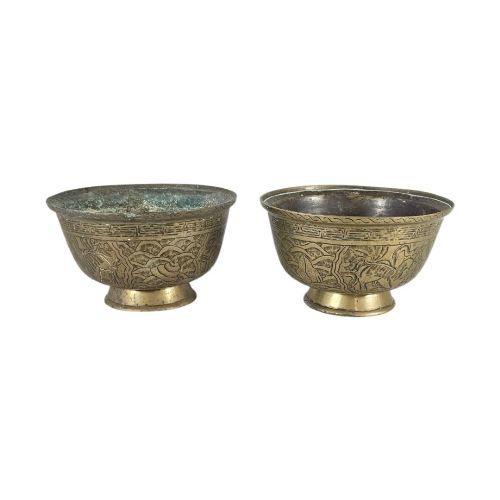
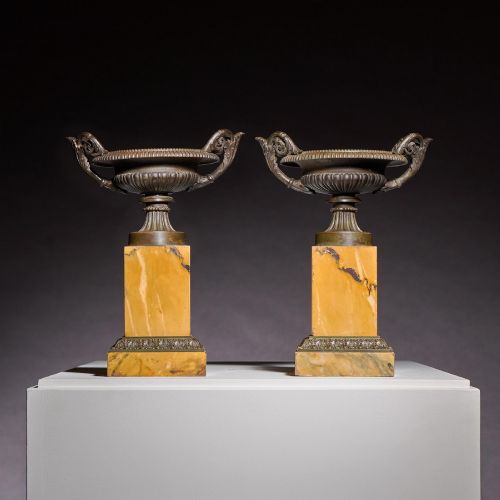
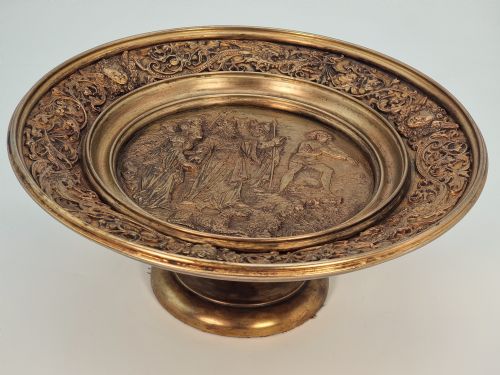
A bronze footed bowl is an elevated decorative vessel designed to sit on a table, sideboard, or mantelpiece. These pieces take various forms including tazzas, comports, centrepieces, and planters, often raised on circular pedestals or multiple feet.
The selections span the nineteenth century, drawing on diverse aesthetics from French Empire and Napoleon III designs to Japanese Meiji and Chinese Qing Dynasty pieces. Buyers frequently encounter French Grand Tour souvenirs, Aesthetic Movement gilt works, and twin-handled classical styles.
Makers and workshops across Europe and Asia utilised traditional casting methods to produce these display items, incorporating porcelain inserts, enamel, and marble bases. Each piece reflects the decorative priorities of its period, whether through classical revival motifs or exotic ornamentation.
Materials and construction
Foundry work relied on bronze, gilt bronze, and silvered bronze, sometimes combined with contrasting Siena marble or heavy silver plating. Artisans cast these metals to create robust footed forms that could support additional decorative elements without losing stability.
Surface decoration frequently involved intricate chasing, cloisonné enamel, or Japonesque detailing applied directly to the metal body. Where porcelain or enamel featured, such as Sevres style inserts or Samson porcelain, these components were carefully fitted into the bronze framework.
Judging quality and execution
Quality rests in the crispness of the cast and the depth of the chasing, where finer examples display sharp relief and clean lines without smoothing or soft edges. The integration of mixed media, such as the precise fit of a marble plinth or porcelain bowl, reveals the skill of the workshop.
Weight and structural balance separate superior pieces from simpler utilitarian items, ensuring the vessel sits firmly on its foot. Surface finishes, whether fire gilt, silvering, or patination, show varying degrees of preservation and hand-finishing that dictate the visual impact of the object.
The Bronze Footed Bowl Glossary
- Tazza
- A shallow bowl or cup mounted on a stem and foot, commonly used for display in nineteenth-century interiors. These pieces often feature classical motifs or decorative handles.
- Comport
- A large decorative dish or bowl elevated on a base, frequently utilised as a table centrepiece. They appeared in various materials including porcelain and mounted bronze.
- Cloisonné
- An enamelling technique where thin metal wires form compartments on a bronze base to hold coloured enamel pastes. This method produces vibrant patterns seen on Asian decorative vessels.
- Japonesque
- A nineteenth-century western design style influenced by Japanese art and craftsmanship, incorporating asymmetric motifs and natural subjects. It appears across various European decorative objects.
Bronze Footed Bowl: Frequently Asked Questions
Where should I place a bronze footed bowl?
These vessels suit dining tables, sideboards, and open shelving where their elevation and form can be appreciated from multiple angles. They add sculptural weight to a room without occupying excessive surface area.
Because many examples incorporate delicate materials like porcelain or enamel, placing them away from high-traffic zones prevents accidental knocks and preserves the finish.
How do I clean a bronze footed bowl?
Dusting with a dry, soft cloth is generally sufficient for regular maintenance, avoiding abrasive cleaners that might strip gilding or silvering. Moisture should be kept away from mixed-media pieces to protect marble and porcelain elements.
Specialist metal cleaners should be avoided unless the exact surface treatment is known, as aggressive polishing can remove historic patination.
Are these bowls suitable for holding food?
Most nineteenth-century decorative pieces were intended purely for visual display rather than culinary use, particularly those with gilt or silvered surfaces. Enamelled and composite vessels may also have delicate internal joins that are not watertight.
Using them as dry containers for fruit or potpourri is acceptable, but direct contact with liquids or acidic foods should be avoided.
How do I identify nineteenth-century pieces?
Examination of the casting methods, patination, and stylistic markers helps determine the era, with nineteenth-century works often showing specific revivalist influences. Marks or signatures, such as foundry stamps or artist ciphers, provide further clues to origin.
Comparing the weight, chasing quality, and material combinations against known examples from the period confirms authenticity.