


Antique Bronze Tazza
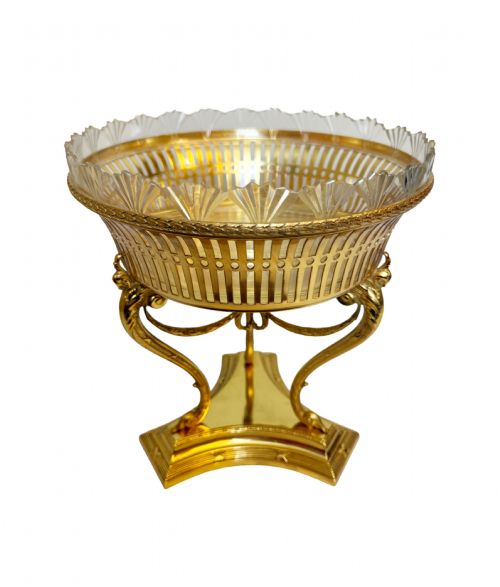
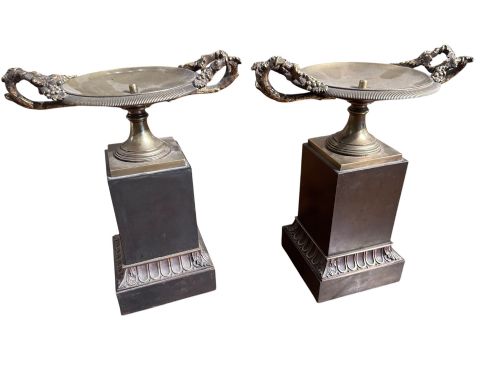
An antique bronze tazza brings classical proportion and metalwork skill into a room, serving as a striking centrepiece or display vessel.
Antique Bronze Tazza
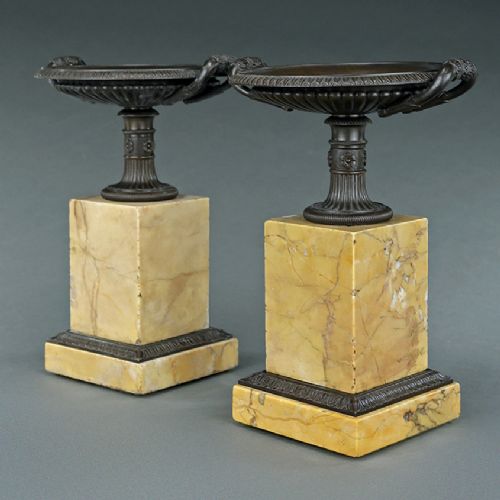
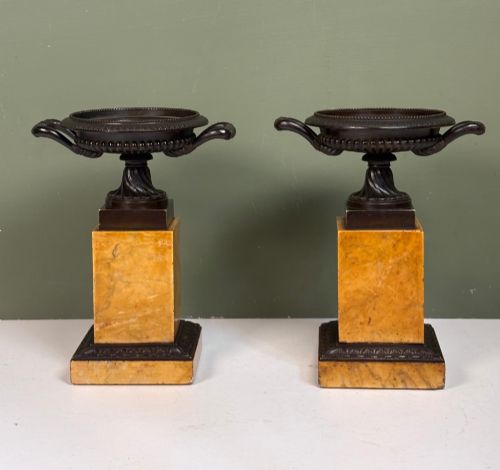
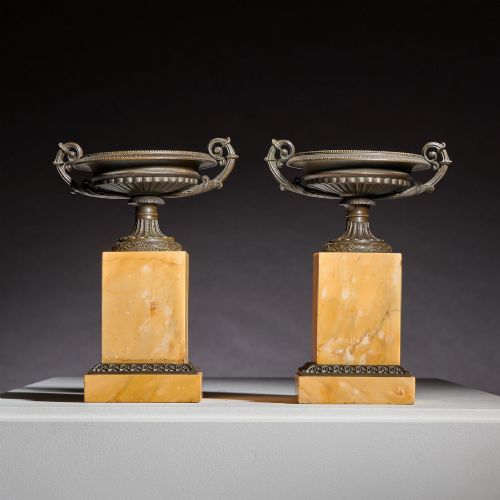
An antique bronze tazza is a low, wide-bowled decorative vessel raised on a central stem and foot, drawing inspiration from classical antiquity. The form functions primarily as a centrepiece or decorative bowl on tables, sideboards and mantelpieces. Buyers encounter these pieces frequently in nineteenth-century French iterations, often associated with Grand Tour travels to Italy or designed in Regency and Empire styles.
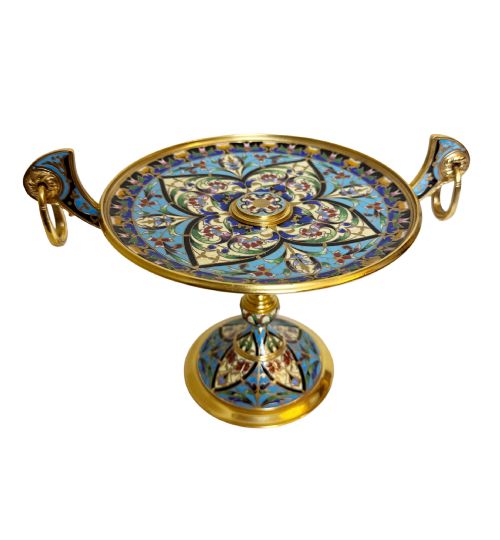
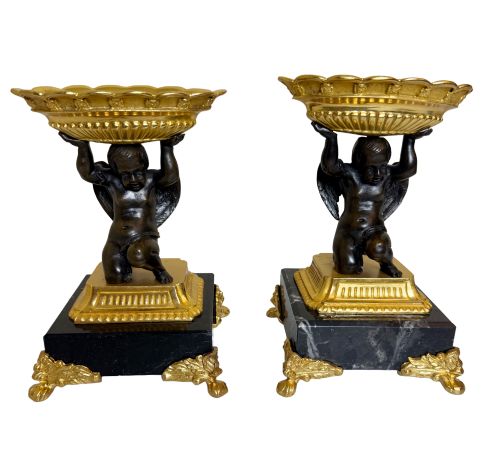
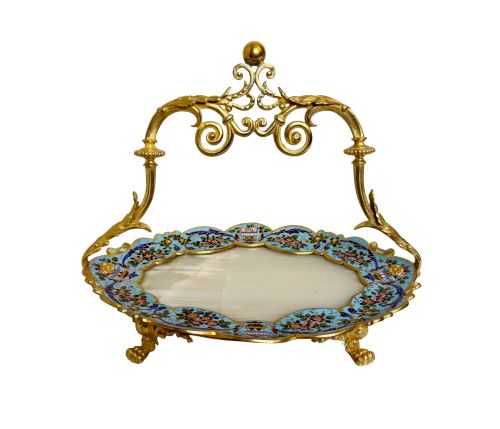
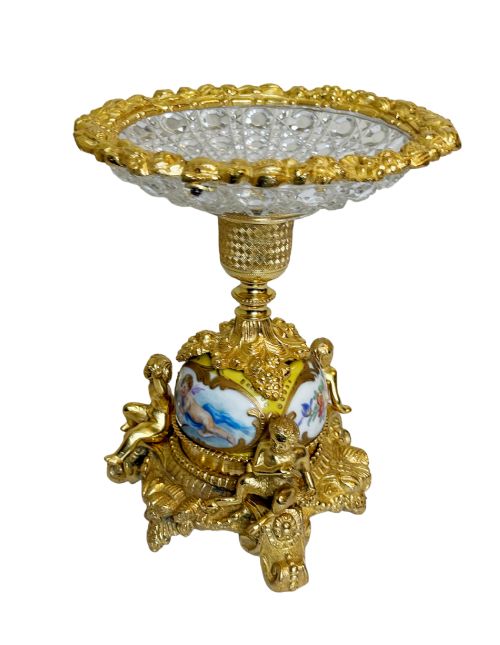
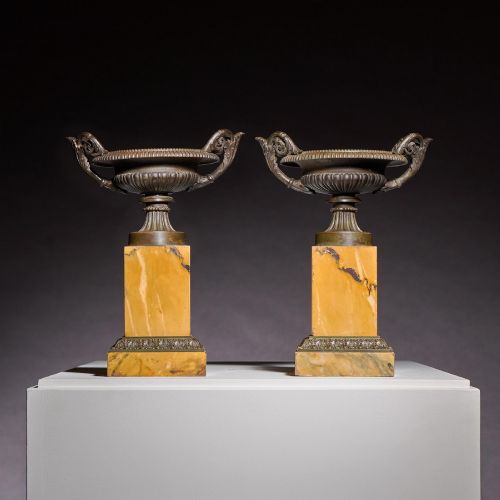
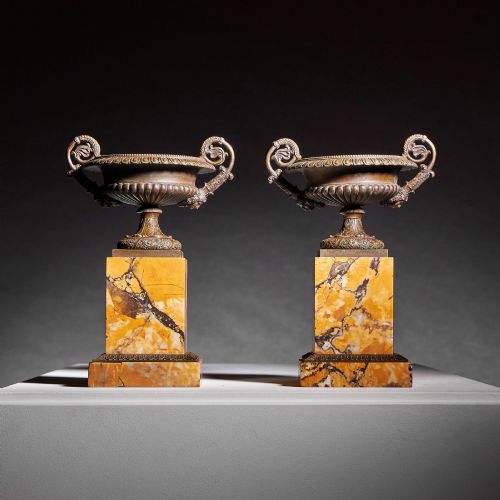
Many examples combine cast bronze with contrasting materials such as Siena marble, rouge griotte marble, green onyx and crystal inserts. Makers frequently integrated gilt bronze, ormolu, and champlevé enamel detailing to enhance the visual impact of the footed dish. While some function as fruit bowls or lidded cups, others serve purely as sculptural display objects ornamented with cherubs, mermen and classical motifs.
Materials and methods of manufacture
Foundries produced these vessels using traditional metal casting methods, utilising bronze, patinated bronze, and fire-gilded ormolu. Artisans often combined these metal elements with turned stone pedestals, incorporating marble, alabaster, malachite, and banded agate into the base or bowl. Further decorative enrichment involved champlevé enamel work, inset porcelain plaques, and applied agate cabochons.
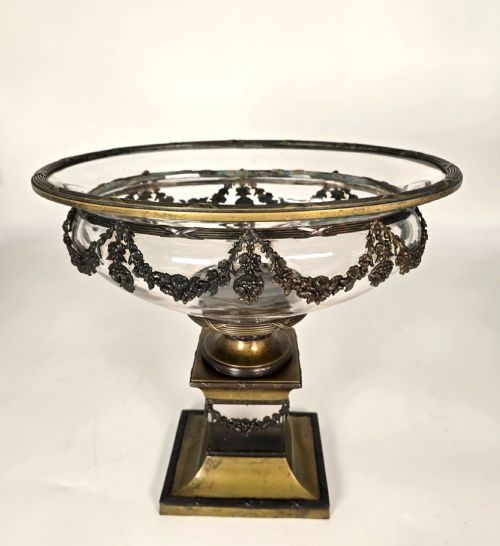
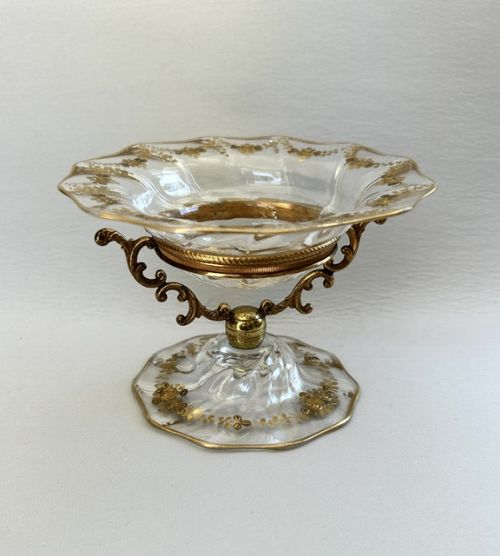
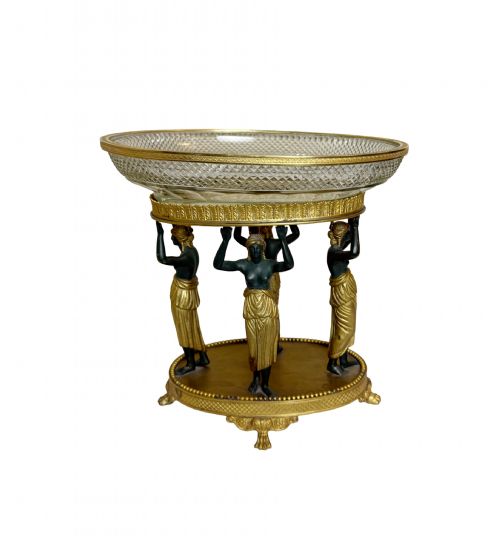
Glass and crystal components appeared frequently, shaped as insert bowls or pedestals held within metal mounts. Skilled metalworkers applied silver plating, gilding, and fine chasing to surface details, creating strong textural contrasts between polished gilt areas and dark patinated bronze figures.
Materials recorded across the inventory include gilt bronze, ormolu, champlevé enamel, Siena marble, green onyx, and cut crystal.
Distinctions in quality
The standard of a piece rests upon the crispness of the metal casting and the precision of the chasing work on figures and foliage. Higher quality examples display sharp definition in complex motifs such as cherubs, mermen, and classical scrollwork, rather than soft or smoothed-over surface details.
The selection and combination of materials also set tiers apart, with solid marbles, heavy ormolu mounts, and intricate champlevé enamel marking superior production. Integrated stones like Blue John, malachite, or finely figured Siena marble indicate ambitious workshop output intended for wealthy patrons.
Ferdinand Preiss·Sevres
The Antique Bronze Tazza Glossary
- Tazza
- A shallow bowl or vase mounted on a stem and foot, originating from ancient drinking vessels. The form became popular in the nineteenth century as a decorative centrepiece.
- Ormolu
- Finely ground high-carat gold applied to a bronze object using a mercury amalgamation technique, common in French decorative arts. This process produces a rich, durable golden finish.
- Champlevé
- An enamel technique where troughs or cells are hollowed out of a metal surface and filled with vitreous enamel before firing. It creates vibrant coloured patterns across bronze mounts.
- Grand Tour
- A cultural journey of Europe undertaken by wealthy young men in the eighteenth and nineteenth centuries. Souvenirs from these trips included classical bronze tazzas and marble souvenirs.
- Comport
- A decorative dish or pedestal bowl used for serving fruit or sweets on a dining table. The term is frequently used interchangeably with large tazzas.
Antique Bronze Tazza: Frequently Asked Questions
What is an antique bronze tazza used for?
These vessels were originally designed to hold fruit, sweetmeats or decorative items on dining tables and sideboards. Today, collectors place them on mantelpieces or tables as standalone decorative centrepieces.
Their shallow bowls and raised pedestals make them well suited for displaying small collections or functioning as sculptural focal points in a room.
How do you identify a Grand Tour tazza?
Grand Tour tazzas typically date from the nineteenth century and incorporate classical architectural elements inspired by ancient Roman and Greek antiquities. They frequently pair patinated bronze figures with Italian marbles such as Siena or rouge griotte.
These pieces served as high-end souvenirs for travellers returning from Italy, often reproducing excavated artefacts or classical monuments.
What materials are combined with bronze in these pieces?
Makers frequently paired bronze and ormolu with natural stones including marble, green onyx, malachite, agate, and Blue John. Glass and crystal inserts also appear as bowls or central columns supported by metal mounts.
Additionally, many examples feature decorative surface work such as champlevé enamel, porcelain plaques, and silver plating.
How do you date a nineteenth-century tazza?
Dating relies on stylistic markers such as French Empire, Regency, Rococo Revival, and Aesthetic Movement design idioms recorded in the piece's construction. Material choices, such as specific marble types and enamel styles, provide further chronological context alongside foundry marks where present.
Many examples date broadly across the nineteenth century, reflecting stylistic shifts from classical severity to ornate Victorian and Second Empire tastes.