
Bronze Mantel Urns
Bronze mantel urns bring formal nineteenth-century display and neoclassical presence to a mantelpiece.
Bronze Mantel Urns
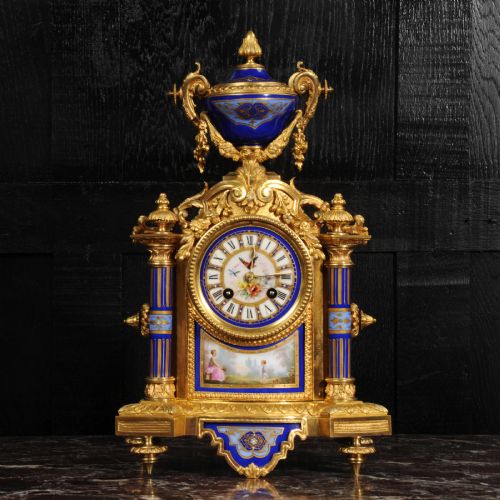
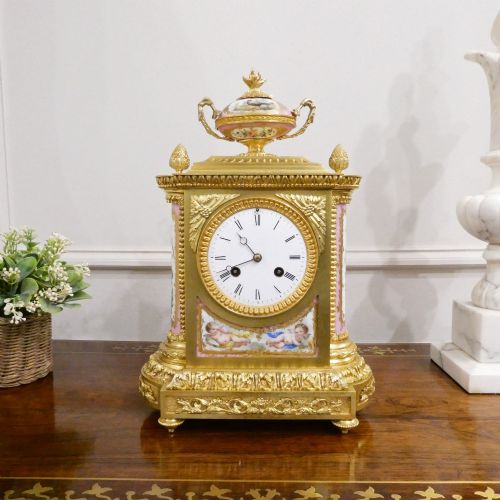
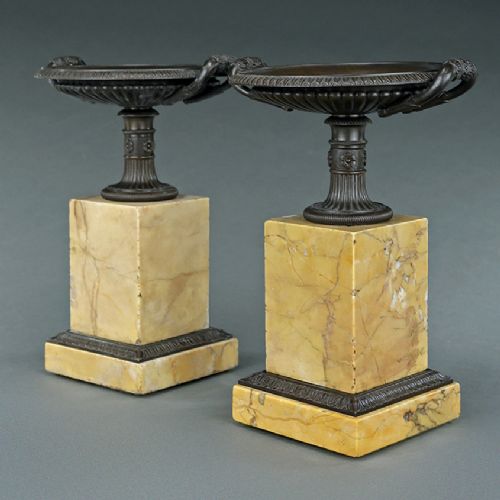
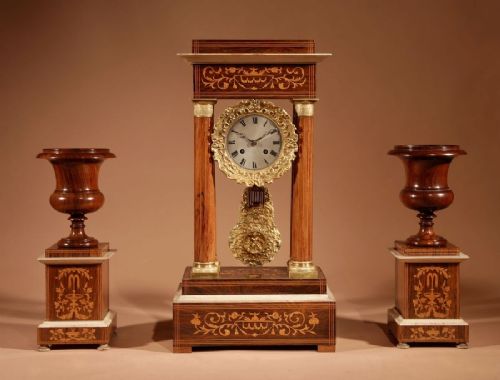
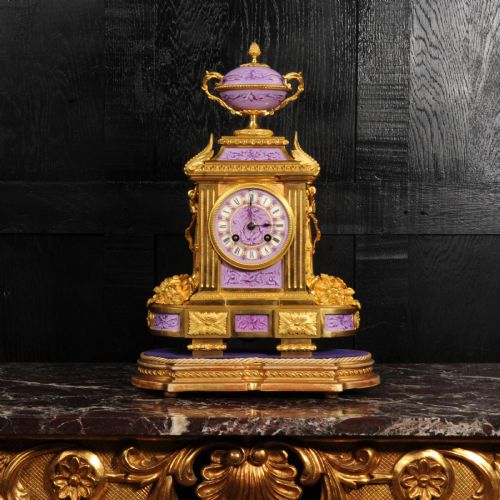
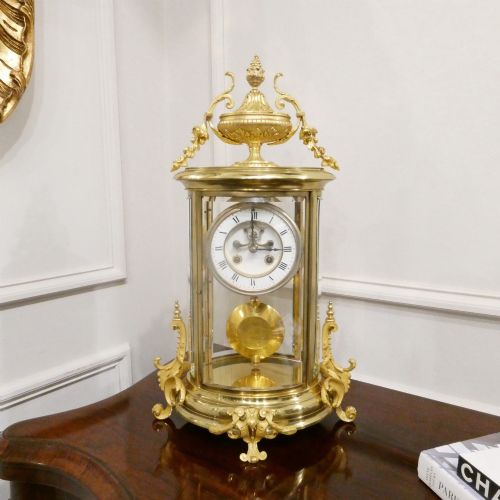
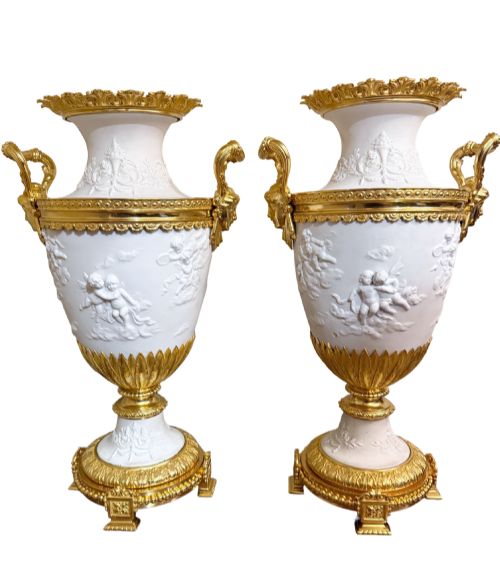
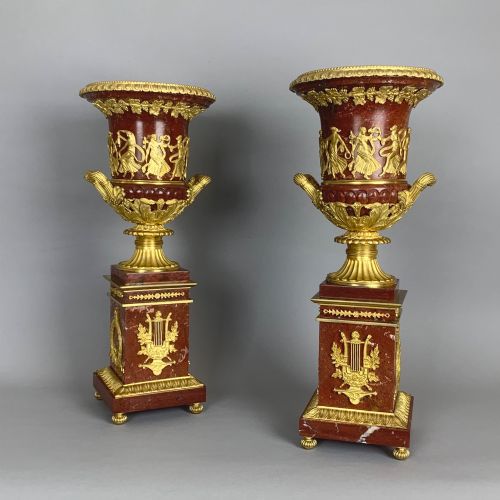
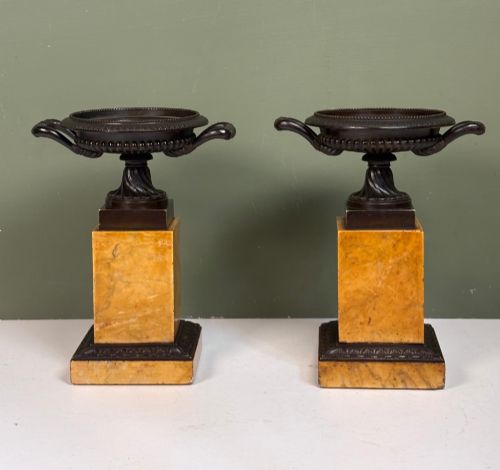
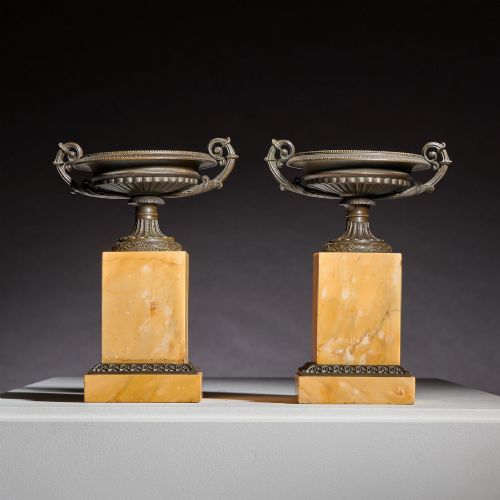
When you search for bronze mantel urns, you encounter decorative vessels designed for domestic display during the nineteenth century. These pieces appear frequently in French Neoclassical, Louis XVI revival, and Empire styles, often arranged as pairs or alongside matching mantel clocks. The listings show forms ranging from campana shapes to tazzas and ewers intended for shelf or mantel placement.
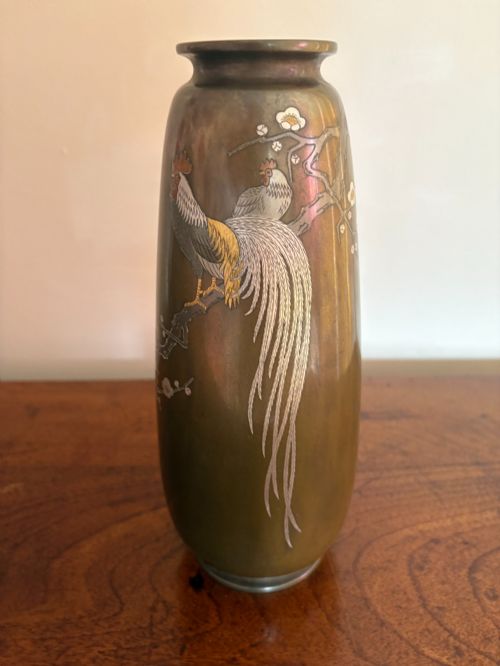
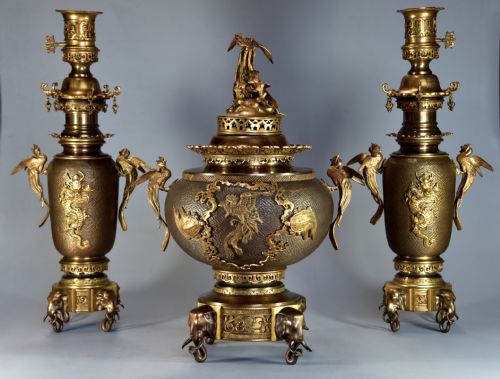
Many of these objects combine cast metal with contrasting media such as marble bases, porcelain panels, or onyx columns. The selection spans the Victorian era through to the early twentieth century, drawing on Grand Tour influences and Japanese Meiji period metalwork.
Materials and construction methods
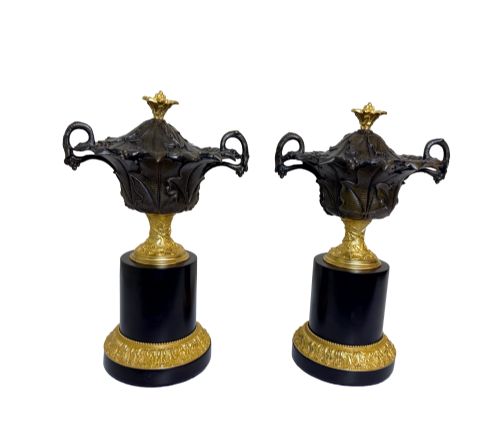
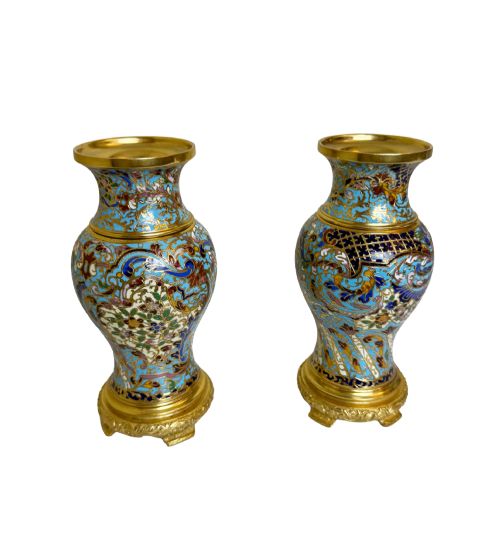
Makers utilised cast bronze, gilt bronze, and ormolu combined with natural stone components including Siena marble, white onyx, and brass. Champlevé enamel and porcelain inserts provide colour and surface decoration.
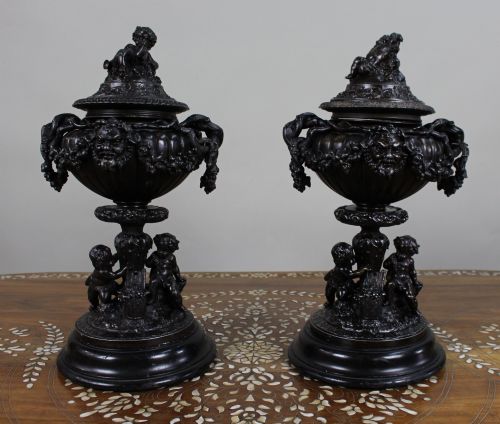
Foundries employed traditional casting techniques to shape figural details, Bacchic masks, and botanical motifs, finishing the metal with patination or fire gilding.
Bronze Mantel Urns Retail Price Guide 2026
Typical asking prices for bronze mantel urns among the pieces listed under this phrase on Sellingantiques today, from the lower quarter to the upper quarter. They describe what is for sale here now, not the wider market.
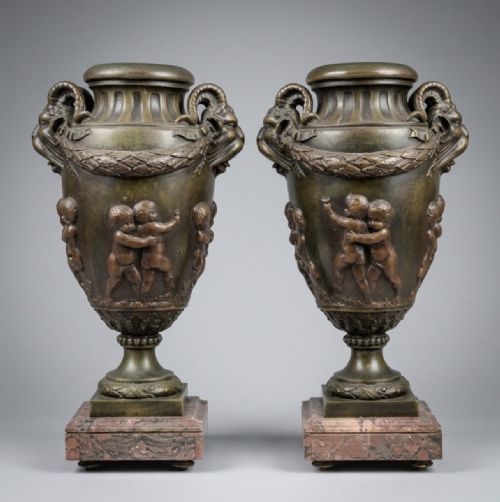
Bacchic masks and playful putti peer out from handles on nineteenth-century bronze urns.
Assessing craftsmanship and design
The standard of a piece depends on the crispness of the metal chasing and the depth of the casting detail in handles, foliage, and figures. Superior examples integrate stone and metal components securely with balanced proportions.
Finer items demonstrate careful hand-finishing on gilt surfaces and use high-grade decorative elements such as hand-painted porcelain or intricate champlevé enamel work.
Japy Freres·Jean-Baptiste Delettrez·Achille Brocot·Samuel Marti·Thomas Hope·Louis Goret
The Bronze Mantel Urns Glossary
- Ormolu
- Gilt bronze produced by applying a mercury-gilding amalgam to cast brass or bronze. This technique creates a durable golden finish seen on French decorative objects.
- Campana urn
- A classical bell-shaped vessel with a flared rim and footed base. Originating in antiquity, this form was widely reproduced during the nineteenth century.
- Tazza
- A shallow saucer-like ornamental vessel raised on a stem and foot. These pieces frequently appear in marble and bronze combinations.
- Champlevé
- An enamelling technique where troughs are dug into a metal surface and filled with vitreous enamel before firing. It creates patterned coloured details on nineteenth-century vases and clocks.
- Garniture
- A set of matching decorative ornaments designed to sit together on a mantelpiece, typically comprising a central clock flanked by urns or candelabras.
Bronze Mantel Urns: Frequently Asked Questions
How do I style bronze mantel urns?
These vessels suit traditional fireplace mantels, console tables, or cabinet tops where their height and metallic finish stand out against a wall.
Pair them symmetrically or use them alongside matching clocks and candelabras to recreate nineteenth-century interior arrangements.
Were these urns used for flowers?
Most pieces serve a purely ornamental function rather than holding water or botanicals. Their design emphasises sculptural quality, classical motifs, and decorative materials.
Some variants with liners functioned as incense burners or potpourri containers during the nineteenth century.
How can I tell a nineteenth-century piece apart?
Examine the construction methods, casting weight, and material combinations such as fire-gilt bronze and natural marble bases. Nineteenth-century examples often reflect revival styles inspired by the Grand Tour or Louis XVI periods.
Look for foundry marks or the specific movement signatures found on associated clock garnitures.
What is a clock garniture set?
A garniture comprises a central mantel clock accompanied by two matching side pieces, such as urns, vases, or candelabras. These sets were manufactured as cohesive decorative suites for formal rooms.
Individual pieces sometimes get separated over time, making matched pairs desirable finds.