


Patinated Bronze Cassolettes
Patinated bronze cassolettes are reversible decorative vessels that shift from a lidded urn to a flame-topped burner.
Patinated Bronze Cassolettes
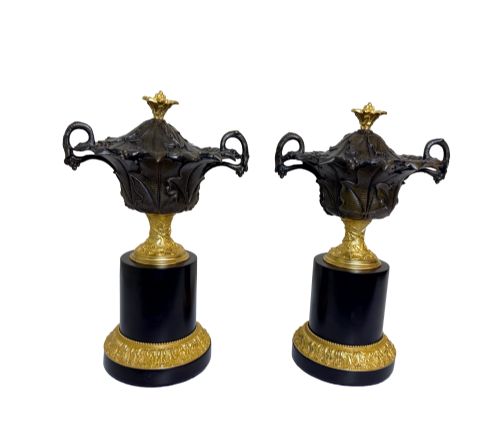
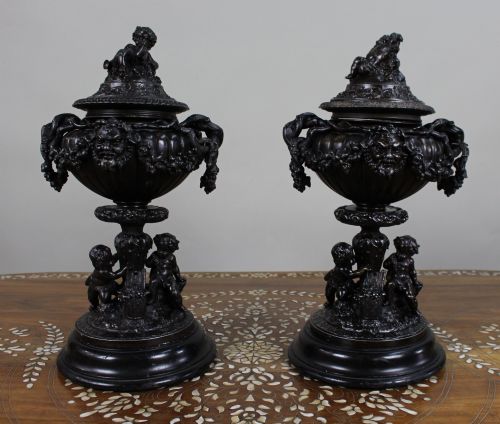
When you search for patinated bronze cassolettes, you encounter neoclassical lidded vessels and decorative urns rooted in Regency and nineteenth-century French design. These pieces often arrive in matched pairs, utilising classical campana shapes and classical motifs like Bacchic masks.
The versions most frequently met on this page combine dark patinated bronze bodies with contrasting ormolu, gilt bronze, or slate elements. They span from the Regency period through the late nineteenth century, including Grand Tour and Neoclassical Revival interpretations.
How they were made
Makers shaped these vessels through metal casting, employing bronze and bronzed spelter to form the primary urn bodies and covers. Artisans then applied dark chemical patination to the bronze surfaces to create a rich, tactile contrast against bright metal mounts.
Gilt bronze and ormolu details were cast separately, chased by hand to sharpen the leaf and figural ornaments, and fire-gilded or plated before mechanical assembly. Bases frequently incorporate turned black marble or slate pedestals to ground the composition.
Patinated Bronze Cassolettes Retail Price Guide 2026
Typical asking prices for patinated bronze cassolettes among the pieces listed under this phrase on Sellingantiques today, from the lower quarter to the upper quarter. They describe what is for sale here now, not the wider market.
Many of these miniature classical urns hide a secret personality by flipping their lids to transform from solemn monuments into perfume burners.
What varies in quality
Quality also rests in the harmony of the mixed media, where the depth of the dark bronze patina balances the precision of the gilt ormolu mounts and the stability of the marble bases.
Auguste Cain
The Patinated Bronze Cassolettes Glossary
- Cassolette
- A dual-purpose decorative vessel featuring a reversible lid that transforms an ornamental urn into a perfume burner. The inverted cover reveals a small receptacle or nozzle for aromatics.
- Campana
- A bell-shaped classical vessel profile with a flared rim and a waisted lower body. This silhouette originates from ancient Roman pottery and bronze wine-mixing vessels.
- Ormolu
- Finely ground high-carat gold applied to a bronze base through a mercury amalgamation process or modern electroplating. The technique yields a brilliant golden surface that resists tarnishing.
- Spelter
- A zinc-based alloy utilised as an economical alternative to bronze for decorative metalwork. It accepts patination and metallic paint finishes well, though it is softer and lighter than true bronze.
- Bacchic
- Pertaining to Bacchus, the classical deity of wine, featuring iconography such as grapevines, ivy wreaths, and theatrical masks. These motifs frequently decorate the handles and friezes of neoclassical urns.
Patinated Bronze Cassolettes: Frequently Asked Questions
What is a cassolette?
A cassolette is a decorative vessel with a reversible lid designed to function either as a closed classical urn or an open burner. Rotating the cover reveals a small well intended for diffusing scented materials.
These dual-purpose objects gained popularity during the neoclassical revivals of the eighteenth and nineteenth centuries. They served primarily as mantelpiece ornaments in formal domestic interiors.
How do you use a cassolette?
In historical settings, users placed fragrant resins or scented oils within the inverted lid or internal bowl to perfume the room. Today, they remain decorative objects valued for their sculptural silhouette.
Most owners display them on consoles, mantelpieces, or pedestals as pairs. The reversible lid is typically left in the closed position to showcase the unified design of the urn.
How do you distinguish bronze from spelter?
Bronze is a heavy, durable copper alloy that takes a deep, stable chemical patina and produces a clear ring when struck gently. Spelter is a softer zinc-based substitute that feels noticeably lighter in the hand.
Examining the underside or interior often reveals the paler grey metal beneath a worn surface finish on spelter pieces. Bronze maintains its metallic integrity and weight throughout the structure.
What is Grand Tour style?
Grand Tour refers to the souvenirs acquired by wealthy young travellers touring the cultural sites of Italy, France, and Greece during the eighteenth and nineteenth centuries. These objects replicated classical antiquities in miniature scale.
Bronzes produced in this manner focused on classical architecture, mythology, and sculpture. They allowed collectors to display their classical erudition within their home studies and drawing rooms.